
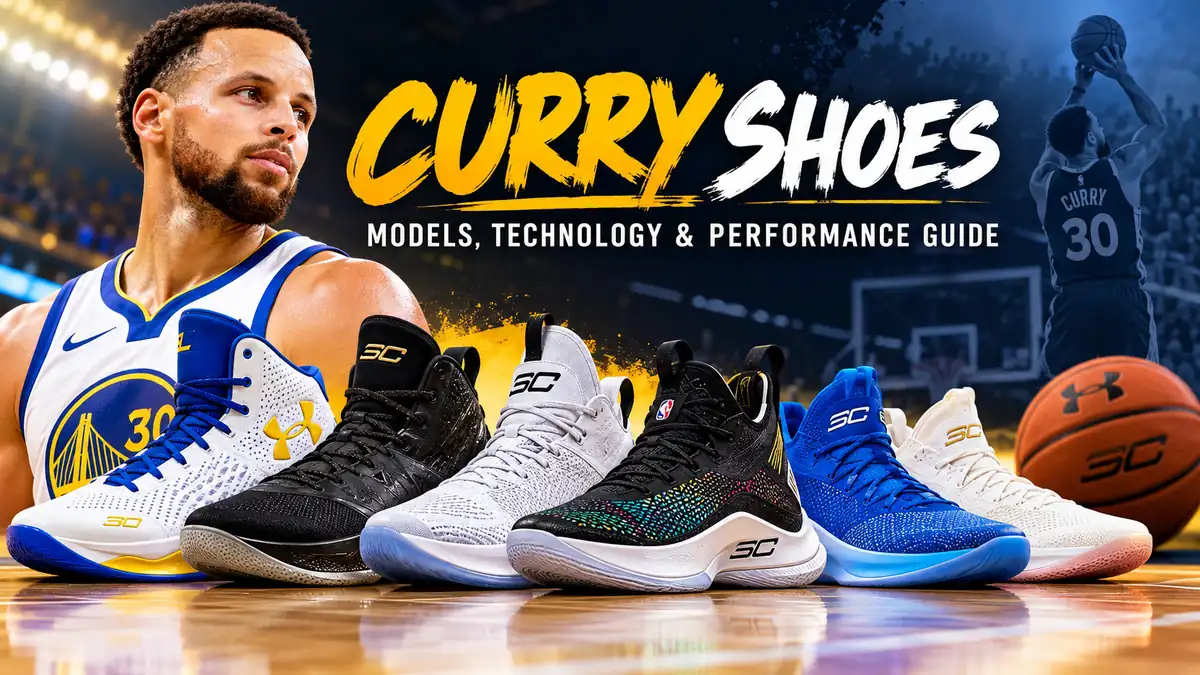
Stephen Curry changed basketball with his extraordinary shooting ability, quick footwork, and creative movement. His signature basketball shoes reflect those same qualities, emphasizing traction, responsiveness, lightweight construction, and stability.
From the original Curry 1 to the Curry 13 released in 2026, the footwear collection has evolved through different cushioning systems, outsole designs, and performance technologies.
curry shoes are signature basketball sneakers developed for NBA superstar Stephen Curry, primarily through his longtime partnership with Under Armour. Designed for quick movements, sharp cuts, and controlled footwork, the collection includes 13 numbered signature generations, alongside additional models and retro releases. The Curry 13 marked the final signature release from the Under Armour partnership in 2026.
UA Newsroom
+1
Understanding the differences between models helps explain why these sneakers became popular among guards, shooters, recreational players, and basketball enthusiasts.
What Are curry shoes?


7
Curry shoes are performance basketball sneakers associated with Stephen Curry of the Golden State Warriors.
The signature line began in 2015, following Curry’s move from Nike to Under Armour in 2013. Over the following decade, the collection became closely associated with his playing style, especially his quick releases, off-ball movement, changes of direction, and three-point shooting.
Unlike basketball footwear built primarily around maximum cushioning or a bulky silhouette, many Curry models emphasize a close connection to the court.
Their defining characteristics often include:
- Responsive traction for sudden stops and directional changes.
- Lightweight uppers that allow natural foot movement.
- Cushioning designed to balance comfort with court feel.
- Lateral stability during defensive slides and sharp cuts.
- Secure foot containment for high-speed basketball movements.
- Distinctive colorways inspired by Curry’s career and personal interests.
Not every generation delivers these qualities in the same way. Earlier models used conventional rubber outsoles and foam midsoles, while later releases introduced Under Armour’s innovative Flow technology.
Why are they called Curry shoes?
The name comes directly from Stephen Curry, the four-time NBA champion and two-time NBA Most Valuable Player.
Signature footwear carries an athlete’s name because the products are developed around their identity, performance preferences, and influence on the sport.
Curry’s footwear line also reflects the growth of athlete-driven branding. In December 2020, Under Armour introduced Curry Brand as a dedicated platform for footwear, apparel, and community basketball initiatives.
History of curry shoes: From Curry 1 to Curry 13
The history of the signature line reveals how basketball footwear technology has changed since 2015.
Early releases emphasized structured support and traditional traction. Later models experimented with knit materials, lower profiles, and integrated foam outsole systems.
Curry 1 and Curry 2: The beginning

The Curry 1 arrived in 2015, establishing the signature line with a recognizable silhouette and performance-oriented construction.
Its design featured Charged Cushioning, supportive upper materials, and a traditional traction pattern intended for multidirectional movement.
The Curry 2 followed later that year with refinements to the upper and overall foot containment.
These early releases were significant because they established Under Armour as a serious competitor in the signature basketball footwear market.
Curry 3 and Curry 4: Greater emphasis on stability
The Curry 3 continued the focus on support and containment, using structural elements to help stabilize the foot during aggressive basketball movements.
The Curry 4, introduced in 2017, represented a more noticeable design shift.
Its distinctive knit upper, sculpted silhouette, and supportive tooling made it one of the visually recognizable shoes in the collection.
Curry also wore the model during the 2017 NBA Finals, connecting it to another important moment in his career.
Curry 5, Curry 6, and Curry 7: Lightweight evolution
The Curry 5, released in 2018, moved toward a lower-cut profile and introduced containment features intended to secure the foot without excessive bulk.
The Curry 6 followed in 2019, incorporating HOVR cushioning to provide a responsive underfoot experience.
Later that year, the Curry 7 combined HOVR and Micro G cushioning technologies, continuing the effort to balance comfort, stability, and quick movements.
These models helped establish the low-profile design direction that would characterize much of the later signature line.
416 Shoes starting from $23.97
+1
Curry 8, Curry 9, and Curry 10: The Flow era

The Curry Flow 8, released in December 2020, introduced one of the most important innovations in the collection: a lightweight foam-based outsole that eliminated the need for a conventional rubber traction layer.
This construction allowed the cushioning material itself to contact the playing surface.
The Curry 9 continued using Flow technology and featured supportive upper construction designed to improve lockdown.
The Curry 10 refined the concept with UA Warp technology, which helped support the foot during dynamic movements.
Together, these generations helped establish Flow as a defining characteristic of modern Curry basketball footwear.
The Fresh Press by Finish Line
+1
Curry 11 and Curry 12: Refining the formula
The Curry 11, introduced in 2023, continued the focus on traction, foot containment, and lightweight performance.
The Curry 12 arrived in 2024 with further refinements to the cushioning and outsole system.
Independent performance reviewers praised the Curry 12 for its indoor grip, responsive feel, and overall balance of performance characteristics.
However, as with other Flow-based models, outdoor durability remained an important consideration.
21 Shoes starting from $64.97
+1
Curry 13: The final Under Armour signature model

The Curry 13 launched on February 13, 2026, marking the final numbered signature sneaker developed through the partnership between Stephen Curry and Under Armour.
Under Armour described the model as combining improved cushioning, lightweight stability, and advanced grip.
Its release followed the November 2025 announcement that Curry Brand and Under Armour would separate.
The companies confirmed that additional Curry 13 colorways and apparel would continue through October 2026.
UA Newsroom
+1
Complete Curry signature shoe timeline
| Model | Release year | Notable development |
|---|---|---|
| Curry 1 | 2015 | Original signature design |
| Curry 2 | 2015 | Refined support and cushioning |
| Curry 3 | 2016 | Structured stability |
| Curry 4 | 2017 | Distinctive knit construction |
| Curry 5 | 2018 | Lower-profile design |
| Curry 6 | 2019 | HOVR cushioning |
| Curry 7 | 2019 | HOVR and Micro G combination |
| Curry 8 | 2020 | Introduction of UA Flow |
| Curry 9 | 2021 | Flow traction and improved containment |
| Curry 10 | 2022 | UA Warp upper technology |
| Curry 11 | 2023 | Refined Flow performance |
| Curry 12 | 2024 | Updated cushioning and traction |
| Curry 13 | 2026 | Final Under Armour signature model |
The numbered series does not represent every shoe associated with Curry. Other models include the Curry 2.5, Curry 3Zer0 collection, Curry HOVR Splash, Curry Series releases, and FloTro reinterpretations.
Technology Behind curry shoes
The performance of a basketball shoe depends on more than its appearance.
Traction, cushioning, torsional stability, upper materials, and foot containment all affect how the shoe behaves during play.
UA Flow traction technology
UA Flow is one of the signature line’s most recognizable innovations.
Traditional basketball shoes generally combine a cushioning midsole with a separate rubber outsole.
Flow uses a specially engineered foam material that can function as both the cushioning system and the traction surface.
This construction can reduce weight and create a responsive connection between the player’s foot and the court.
Its main advantages include excellent potential grip on clean indoor hardwood, reduced outsole bulk, and smooth transitions during quick movements.
However, the exposed foam can wear faster than durable rubber when repeatedly used on abrasive concrete or asphalt.
Flow should therefore be understood as a performance trade-off rather than a universally superior outsole.
Charged Cushioning and Micro G
Earlier Curry models used Under Armour’s Charged Cushioning and Micro G foam technologies.
Charged Cushioning was developed to provide responsive impact absorption while maintaining a supportive platform.
Micro G emphasizes a relatively low-profile cushioning experience, helping players maintain awareness of their foot placement.
The exact sensation depends on the shoe’s construction, foam thickness, and surrounding support components.
HOVR cushioning
HOVR technology appeared in models such as the Curry 6 and Curry 7.
It was developed to combine impact protection with responsive energy return.
A cushioning system can help manage repeated landings and running impacts, but it does not automatically prevent injury.
The effectiveness of any basketball shoe also depends on fit, playing conditions, training load, and individual movement mechanics.
UA Warp upper technology
UA Warp technology, featured in the Curry 10, uses strategically arranged supportive elements within the upper.
Its purpose is to help hold the foot in position during lateral movements without requiring a particularly heavy construction.
This matters during crossovers, defensive slides, and rapid changes of direction, when the foot can otherwise shift inside the shoe.
Heel counters, plates, and lateral containment
Basketball footwear must resist unwanted foot movement while allowing natural flexibility.
Curry models have used different combinations of heel counters, supportive plates, reinforced upper sections, and sidewall structures.
A heel counter helps maintain rearfoot stability, while lateral containment features limit excessive sliding inside the shoe.
A supportive plate may also influence how the shoe bends and twists.
These elements work together, but their effectiveness varies by model and by the player’s foot shape.
How Do curry shoes Perform on the Basketball Court?
The most useful way to evaluate basketball footwear is to examine how it performs during actual movement.
A shoe may feel comfortable while standing but behave differently during sprinting, jumping, landing, and lateral cutting.
Traction and grip
Traction is particularly important for guards who frequently accelerate, stop, and change direction.
Many Flow-based Curry models perform especially well on clean indoor hardwood courts.
Their foam outsole construction can create a strong connection with the floor, allowing controlled stops and quick changes in direction.
However, dusty courts can affect grip. Players may need to wipe the outsole periodically to remove accumulated debris.
Cushioning and impact protection
Curry footwear traditionally emphasizes responsiveness and court feel rather than extremely thick cushioning.
This can appeal to players who prefer a lower-to-the-ground sensation.
However, athletes who prioritize plush cushioning, particularly heavier players or those who experience discomfort during repeated landings, may prefer certain newer models or alternative basketball shoes.
The Curry 13, for example, uses HOVR+ cushioning and has been described by independent reviewers as offering a more comfortable underfoot experience than some earlier models.
21 Shoes starting from $64.97
Stability during lateral movement
Basketball requires constant sideways movement.
A well-designed basketball shoe should hold the foot securely during defensive slides, crossovers, and changes of direction.
Curry models typically address these requirements through upper containment, heel structure, and supportive sole geometry.
However, a shoe’s collar height alone does not determine ankle protection. Proper fit, muscular control, and movement mechanics also matter.
Breathability and comfort
Many Curry models use mesh, knit, or other lightweight textile materials.
These materials can improve airflow and reduce the restrictive feeling sometimes associated with heavier basketball shoes.
Breathability varies by model, especially when reinforced materials are added for stability.
Comparing Popular Curry Basketball Shoe Models
Different Curry generations emphasize different aspects of basketball performance.
The following comparison highlights their general characteristics rather than declaring one model universally superior.
| Model | Main strength | Potential limitation |
|---|---|---|
| Curry 4 | Structured support and distinctive design | Less modern cushioning |
| Curry 6 | Lightweight feel and HOVR responsiveness | Cushioning may feel firm |
| Curry 8 | Excellent indoor Flow traction | Outdoor wear resistance |
| Curry 9 | Foot containment and responsiveness | Fit may feel snug |
| Curry 10 | UA Warp upper and court feel | Abrasive surfaces can wear the outsole |
| Curry 11 | Lightweight indoor performance | Less suitable for frequent outdoor use |
| Curry 12 | Balanced traction and cushioning | Fit and durability depend on use |
| Curry 13 | Updated cushioning and stability | Not ideal for every foot shape |
Independent basketball shoe reviewers have rated the Curry 12 particularly well for indoor performance, while the Curry 13 offers a different cushioning experience.
21 Shoes starting from $64.97
Which Curry shoes have the best traction?
The Curry 8 through Curry 13 generations are notable for their use of Flow technology.
The Curry 12 has received especially positive assessments for grip on clean indoor courts.
However, traction performance depends on floor cleanliness, outsole condition, and the wearer’s movement.
Which Curry shoes offer the most cushioning?
The Curry 13 and certain Curry Series models are worth examining when comparing cushioning systems.
Earlier Flow generations generally emphasize lightweight responsiveness and court feel.
Players should distinguish between cushioning softness, impact protection, and responsiveness. These characteristics are related but not identical.
Are Curry shoes good for point guards?
Yes. Many models are particularly well suited to the movement demands of point guards and shooting guards.
Their low-profile construction, traction, and supportive uppers can complement frequent changes of direction and perimeter play.
However, basketball position alone should not determine footwear. Foot shape, court conditions, and personal comfort are equally important.
curry shoes Sizing, Fit, and Comfort
Correct sizing is essential for both comfort and performance.
Basketball involves rapid movements that can cause the foot to shift inside a poorly fitted shoe.
Do Curry shoes run true to size?
Many Curry models fit relatively snugly, particularly around the midfoot.
Some players find their usual athletic shoe size comfortable, while others prefer additional room.
Fit can vary between generations because the upper materials, internal shape, and containment systems change.
A model that fits comfortably in one size does not guarantee the same fit in another.
Are Curry shoes suitable for wide feet?
Players with wider feet may find certain Curry models restrictive.
A snug midfoot can improve containment, but excessive pressure may cause discomfort during extended play.
Trying a wider-fitting model is often preferable to automatically increasing the shoe length.
Going up half a size may create additional room, but it can also introduce unwanted heel movement.
How to check the fit
A practical fitting process involves more than checking the number printed on the size label.
- Measure both feet while standing, preferably later in the day.
- Wear the socks normally used for basketball.
- Check that the toes have sufficient space without excessive movement.
- Make sure the midfoot feels secure without painful compression.
- Walk, bend, and perform gentle lateral movements.
- Confirm that the heel remains stable without significant slipping.
A basketball shoe should feel secure, not painfully tight.
If numbness, rubbing, or pressure develops, the fit may be unsuitable.
Do Curry shoes need a break-in period?
Some models soften slightly as the upper materials adapt to movement.
However, a break-in period should not be necessary to eliminate significant pain.
A shoe that causes severe pressure or persistent discomfort is unlikely to become ideal simply through extended wear.
Are curry shoes Good for Outdoor Basketball?
Outdoor suitability is one of the most important distinctions between Curry models.
Many modern Curry shoes were developed with indoor hardwood performance as a priority.
Indoor versus outdoor performance
| Feature | Indoor hardwood | Outdoor concrete or asphalt |
|---|---|---|
| Flow outsole grip | Often excellent on clean floors | Varies by surface |
| Outsole durability | Generally better preserved | Faster abrasion is possible |
| Court feel | Responsive | Surface-dependent |
| Cushioning | Model-dependent | Model-dependent |
| Maintenance | Dust removal | Greater wear inspection |
The key issue is the outsole material.
Flow-based shoes expose cushioning foam directly to the playing surface. While this can produce excellent indoor traction, abrasive outdoor courts may wear the material relatively quickly.
Older rubber-outsole Curry models and certain outdoor-oriented basketball shoes may offer greater durability.
Can Curry shoes be worn casually?
Yes. Curry sneakers can also be worn for everyday activities.
Their athletic silhouettes, distinctive colorways, and connection to basketball culture make them appealing beyond competitive play.
However, using Flow-based models extensively on sidewalks and rough surfaces can reduce the outsole’s remaining life for indoor basketball.
Are Curry shoes good for running?
Curry shoes are primarily designed for basketball rather than distance running.
Basketball footwear emphasizes multidirectional stability, lateral containment, and court traction.
Dedicated running shoes generally prioritize forward-motion efficiency and cushioning characteristics appropriate for repetitive running strides.
Occasional short runs may be comfortable, but basketball sneakers are not necessarily ideal for regular distance training.
Curry Brand, Under Armour, and Li-Ning: What Changed in 2026?
One of the most significant developments in the history of Curry footwear occurred when Stephen Curry’s long-running partnership with Under Armour ended.
Why did Curry leave Under Armour?
On November 13, 2025, Under Armour and Stephen Curry announced their separation.
The decision ended a partnership that began in 2013 and had produced more than a decade of signature basketball footwear.
Under Armour continued with its planned Curry 13 release and associated collections through October 2026.
The announcement also established Curry Brand’s future as an independent operation.
UA Newsroom
Who makes Curry shoes now?
In June 2026, Stephen Curry and Curry Brand announced a long-term partnership with Li-Ning.
The agreement covers collaborative product development across basketball, golf, and lifestyle categories.
Li-Ning was founded in 1990 by former Olympic gymnast Li Ning and has an established presence in professional basketball footwear.
Curry described the company’s product quality and performance technology as important factors in the new partnership.
The announcement represents a new chapter for Curry Brand rather than another generation of the previous Under Armour product line.
PR Newswire
+1
Does the partnership change existing Curry shoes?
Existing Under Armour Curry models retain their original construction and performance characteristics.
For example, a Curry 10 still uses its established UA Flow and UA Warp technologies.
Future Li-Ning-developed Curry Brand products may introduce different materials, cushioning systems, and design approaches.
It would be inaccurate to assume that every future Curry shoe will use Under Armour Flow technology.
Curry Shoes Colorways and Special Editions
Basketball sneakers have become an important part of sports culture, and Curry’s signature collection reflects that connection.
A colorway refers to the combination of colors and visual details used on a particular shoe design.
Curry releases have featured themes connected to his career, family, community, and personal interests.
Championship-inspired designs
Certain Curry releases commemorate significant moments in Stephen Curry’s basketball career.
These may reference NBA championship victories, memorable performances, or milestones associated with the Golden State Warriors.
Such designs can have cultural significance beyond their technical performance features.
FloTro editions
FloTro is a name used for Curry footwear that combines elements of earlier signature silhouettes with newer performance technology.
For example, a retro-inspired upper may be paired with a more modern cushioning and outsole system.
This approach allows recognizable historical designs to be reinterpreted for contemporary basketball.
However, a FloTro model may perform differently from the original shoe on which its appearance is based.
Curry 3Zer0 and alternative lines
The Curry 3Zer0 series offered additional performance options alongside the main numbered collection.
Other related models, such as Curry HOVR Splash and Curry Series releases, expanded the range of designs and performance characteristics.
These products should not be confused with the main Curry 1 through Curry 13 signature sequence.
How to Clean and Maintain curry shoes
Proper maintenance helps preserve traction, appearance, and overall usability.
This is particularly relevant for Flow-based models, where the outsole material plays an important role in performance.
Cleaning the upper
For mesh or knit uppers:
- Remove loose dirt using a soft brush.
- Mix a small amount of mild detergent with lukewarm water.
- Gently clean affected areas using a soft cloth.
- Remove remaining detergent with a slightly damp cloth.
- Allow the shoes to air-dry away from direct heat.
Avoid aggressive scrubbing, especially around delicate textile sections.
Cleaning the outsole
Dust accumulation can reduce grip on indoor courts.
Use a clean, slightly damp cloth to remove dust and surface dirt from the outsole.
Avoid harsh chemicals or abrasive tools that could damage the traction surface.
Allow the outsole to dry before returning to the court.
Proper storage
Store basketball shoes in a cool, dry, ventilated location.
Avoid prolonged exposure to intense sunlight or high temperatures, which can affect adhesives and some footwear materials.
Allow shoes to dry naturally after use rather than placing them directly beside a heater.
When should Curry shoes be replaced?
Replacement depends on use, surface conditions, and the condition of the shoe.
Signs of excessive wear include:
- Noticeably reduced traction despite cleaning.
- Significant outsole abrasion.
- Separation between upper and sole components.
- Loss of structural support.
- Persistent discomfort caused by deteriorating cushioning.
- Damaged heel containment or torn upper materials.
There is no universal replacement interval that applies to every player.
A recreational player using clean indoor courts may experience a different lifespan from someone playing frequently on outdoor concrete.
What Makes Curry Shoes Different From Other Basketball Sneakers?
Curry footwear has developed a recognizable performance identity.
Compared with some traditional basketball shoe designs, many Curry models emphasize minimal outsole bulk, lightweight construction, and responsive court contact.
Curry shoes vs Nike basketball shoes
Nike produces basketball footwear with a wide variety of cushioning and traction technologies, including Zoom Air and different foam systems.
Certain Nike basketball models prioritize substantial impact protection, while others emphasize responsiveness and agility.
Curry shoes, particularly Flow-based models, are notable for integrating traction and cushioning into a foam outsole.
Neither approach is automatically better. Performance depends on the specific models being compared.
Curry shoes vs Adidas basketball shoes
Adidas offers basketball shoes using different cushioning compounds, supportive structures, and outsole patterns.
Some Adidas models emphasize substantial cushioning, while others focus on lightweight movement.
The main distinction with many modern Under Armour Curry models is the use of Flow technology instead of a conventional separate rubber outsole.
Curry shoes vs other signature sneakers
Signature lines associated with players such as LeBron James, Kevin Durant, and Kyrie Irving have developed different design identities.
Those differences reflect a combination of athlete preferences, brand engineering, and target performance characteristics.
A player’s signature shoe is not necessarily suitable only for people who play the same position.
For example, a forward may appreciate the traction and lightweight feel of a Curry model, while a guard may prefer the cushioning of a shoe associated with a different athlete.
Individual fit and performance requirements remain the deciding factors.
How to Evaluate Basketball Shoes for Your Playing Style
The most useful approach is to match shoe characteristics to the conditions in which they will be used.
For quick guards and perimeter players
Players who frequently handle the ball, change direction, and move around screens may prioritize:
- Reliable multidirectional traction.
- Secure lateral containment.
- Lightweight construction.
- Responsive cushioning.
- Comfortable heel lockdown.
Many Curry models are designed around these characteristics.
For players who jump frequently
Players who perform repeated jumps and landings may place greater emphasis on cushioning comfort and impact management.
A shoe with more cushioning may feel preferable, although personal comfort and stability remain important.
The Curry 13 and certain other recent models provide alternatives to the firmer, lower-profile sensation associated with some earlier generations.
For recreational basketball players
Recreational players should consider their typical court surface, playing frequency, and comfort requirements.
A player who uses indoor hardwood once a week may have different priorities from someone playing daily on outdoor asphalt.
Choosing the correct outsole material and fit is often more useful than selecting a shoe solely because it is the newest release.
For younger players
Youth basketball shoes should provide an appropriate fit, adequate traction, and sufficient support for the player’s activities.
Growing feet require regular sizing checks.
Parents and coaches should avoid assuming that tighter shoes automatically provide better stability.
Comfort, natural movement, and appropriate sizing matter more than reproducing a professional athlete’s exact footwear setup.
Common Misconceptions About curry shoes
Several assumptions about Curry footwear can lead to unrealistic expectations.
Do Curry shoes improve shooting accuracy?
No basketball shoe can directly improve shooting accuracy simply through its technology.
Shooting depends primarily on technique, coordination, balance, repetition, and decision-making.
Appropriate footwear may help a player feel stable and comfortable, but it does not replace shooting practice.
Do low-top Curry shoes cause ankle injuries?
Low-top construction alone does not establish that a shoe causes ankle injuries.
Ankle injury risk depends on multiple factors, including previous injuries, strength, landing mechanics, court conditions, and exposure to unpredictable contact.
Collar height is only one footwear characteristic.
Players with recurring ankle instability may benefit from individualized advice from a qualified healthcare professional.
Are newer Curry models always better?
Not necessarily.
Newer models may introduce improved technologies, but they can also change fit, cushioning firmness, or traction characteristics.
Some players prefer older designs because they match their feet and movement preferences more closely.
A well-fitting older model can be more comfortable than a newer model with unsuitable proportions.
Are all Curry shoes made by Under Armour?
Historically, the signature collection was developed through Under Armour.
However, that arrangement changed following the companies’ separation in 2025.
Curry Brand announced its partnership with Li-Ning in June 2026, establishing a different manufacturing and product-development relationship for its future.
PR Newswire
The Legacy and Future of curry shoes
Stephen Curry’s influence extends beyond the number of signature models carrying his name.
His footwear helped popularize a design approach centered on quick movement, traction, and lightweight responsiveness.
The introduction of UA Flow in 2020 was particularly significant because it challenged the conventional separation between cushioning foam and rubber outsole materials.
The Curry 13 brought the Under Armour signature era to an end in February 2026, while the subsequent Li-Ning partnership created a new direction for Curry Brand.
The brand’s long-term development will depend on how effectively future products combine performance engineering, fit, durability, and the identity associated with Curry’s basketball career.
For players interested in understanding curry shoes, the most useful lesson is that the right basketball sneaker depends on the foot, the court, and the player’s movement needs—not simply the model number.
From the original Curry 1 to the Curry 13, the collection illustrates how basketball footwear can evolve while maintaining a consistent focus on traction, responsiveness, and controlled movement.
