
A good pair of shoes can make a long day feel easier. The wrong pair can leave your feet aching, even when the shoes look perfect and appear to be the right size.
Understanding men’s shoes means looking beyond appearance. Different designs serve different purposes, from walking and running to formal occasions and demanding work environments. Knowing how footwear construction, materials, and fit affect comfort helps you make more informed decisions.
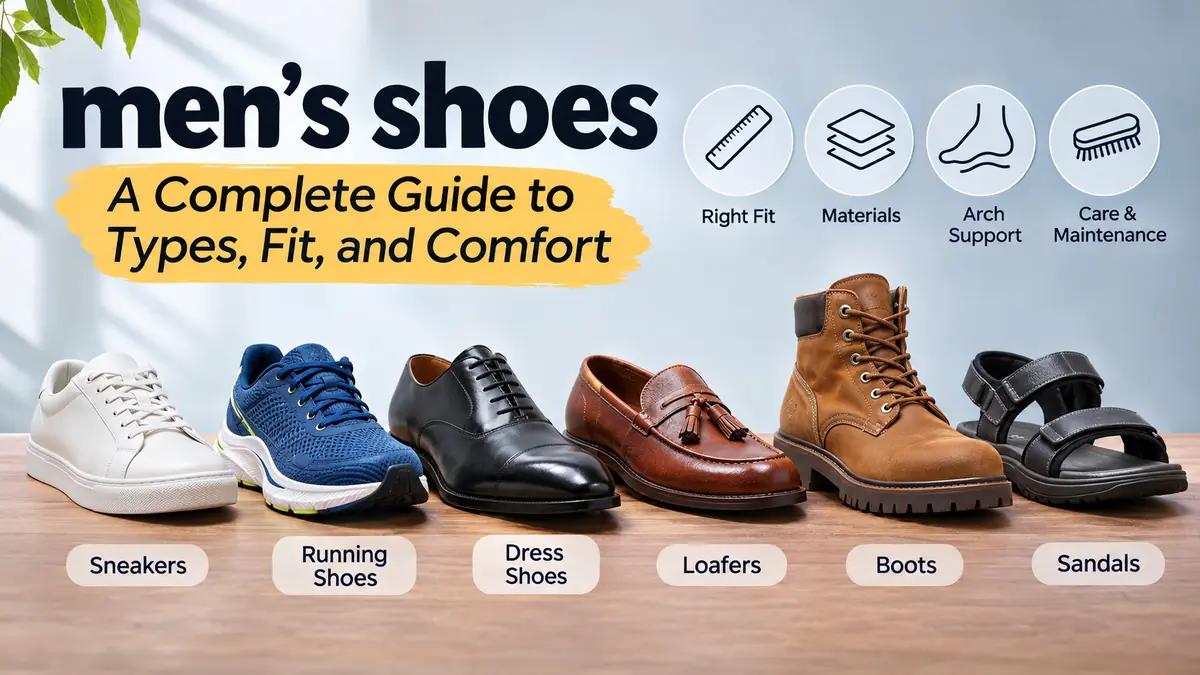
men’s shoes come in several main categories, including sneakers, running shoes, dress shoes, boots, loafers, sandals, and work shoes. Each category differs in support, cushioning, materials, and intended use. The right footwear should fit your foot shape, suit your daily activities, and provide adequate comfort without restricting natural movement.
Types of men’s shoes and Their Uses
Men’s footwear covers a wide range of designs. Some prioritize flexibility and cushioning, while others focus on structure, durability, or formal appearance.
Understanding these differences makes it easier to recognize which features actually matter.
Sneakers and Casual Shoes
The Sneaker 02 – White Leather | Handmade in Portugal | MORJAS
The Suede Shoes You Can Wear with a Suit And Your Favorite Sweatpants | GQ
Top 5 thương hiệu giày sneaker Việt Nam đáng mua nhất 2025
10
Sneakers are among the most versatile types of casual footwear. They typically have flexible uppers, rubber outsoles, and cushioned footbeds.
Common styles include low-top sneakers, high-top sneakers, canvas shoes, and leather trainers.
Leather sneakers often have a more structured appearance and can be easier to wipe clean. Canvas shoes tend to feel lighter and more breathable, although they may provide less protection against rain.
Everyday sneakers are generally suitable for commuting, casual workplaces, travel, and light walking. However, not every lifestyle sneaker provides the stability or shock absorption needed for prolonged athletic activity.
Running and Athletic Shoes
Saucony Men’s Ride 17 Running Shoes | SportChek
Running Shoe Ftw Response M Bk/Gy – Uno Sports
9
Running shoes are designed to accommodate repeated impact and the forward motion of running.
Their construction commonly includes an engineered mesh upper, foam midsole, rubber outsole, and supportive heel structure.
Several categories exist:
- Neutral running shoes: Designed for runners who do not require additional motion-control features.
- Stability shoes: Incorporate design features intended to guide or moderate foot movement.
- Trail running shoes: Use more aggressive outsole patterns for traction on uneven surfaces.
- Racing shoes: May use lightweight foams and stiff plates to improve running efficiency.
Some performance models use EVA (ethylene-vinyl acetate), TPU (thermoplastic polyurethane), PEBA-based foams, or carbon-fiber plates. These technologies influence weight, cushioning, responsiveness, and stiffness.
Brands such as Nike, Adidas, ASICS, Brooks, New Balance, and HOKA offer different approaches to running shoe design.
Cushioning alone does not determine whether a running shoe is suitable. Fit, stability, comfort, terrain, and individual movement patterns also matter.
Dress Shoes and Formal Footwear
Eleganckie buty skórzane – jak je wybrać, dopasować i stylowo nosić? Praktyczny przewodnik
Monk Strap Shoe Tan Brown | Thomas Bird | tblon.com
The Burton Double Monk Strap – Marrone – Paul Evans
7
Formal shoes generally have a more structured silhouette and are commonly made with leather or leather-like materials.
The most recognizable styles include:
Oxford shoes: Feature a closed-lacing system, where the eyelet sections are sewn beneath the vamp. Their clean appearance makes them particularly suitable for formal business attire and traditional suits.
Derby shoes: Use open lacing, allowing the eyelet sections to move more freely. This design may accommodate certain foot shapes more comfortably.
Monk straps: Fasten with one or two buckles instead of conventional laces.
Brogues: Have decorative perforations along the leather. Broguing is a decorative treatment rather than a separate shoe construction type, so both Oxfords and Derbies can feature brogue detailing.
Wholecut shoes: Have an upper made from a single principal piece of leather, creating a minimal appearance.
Black leather Oxfords are traditionally associated with more formal outfits, while brown Derbies and brogues often work in business-casual settings.
Loafers and Slip-On Shoes
Skolyx Penny Loafer Dunkelbraun Wildleder | Skolyx
Ludlow Tassel Loafers For Men | J.Crew
Dark oak Belgravia | Men’s | 184 Last | Edward Green
10
Loafers are laceless shoes that can bridge casual and formal clothing.
Penny loafers have a distinctive strap across the vamp, while tassel loafers feature decorative tassels. Horsebit loafers use a metal ornament across the upper.
Suede loafers usually have a softer, more relaxed appearance. Polished leather loafers can look appropriate with tailored trousers and some suits, depending on the dress code.
Because loafers lack adjustable laces, heel fit is particularly important. Excessive heel slipping can make walking uncomfortable, even when the toe area feels correct.
Boots for Different Conditions
Chelsea Boots For Men Collection – Arden Teal
What Distinguishes Chukka Boots From Desert Boots? Your Guide To Style & Function – 3515
Caterpillar Threshold Chukka Mens Casual Lace Up Ankle Boots – ShoeStation Direct
9
Boots provide varying levels of ankle coverage, weather protection, and durability.
Chelsea boots have elastic side panels and a pull-on design. Chukka boots are ankle-height lace-up boots, often with two or three pairs of eyelets. Desert boots are a casual chukka variation traditionally associated with suede uppers and crepe soles.
Hiking boots prioritize traction, protection, and stability on outdoor terrain. Work boots may incorporate protective toe caps, puncture-resistant components, or slip-resistant outsoles.
Not all boots are waterproof or suitable for industrial work. Their actual protection depends on construction, materials, and applicable safety certifications.
Sandals and Open Footwear
Sandals, slides, and flip-flops are useful in warm conditions, but their designs differ substantially.
Supportive walking sandals often have adjustable straps, shaped footbeds, and grippy outsoles. Basic flip-flops generally provide less foot containment and may be unsuitable for extended walking on uneven ground.
Open footwear can improve ventilation, but it offers less protection from impact, debris, and weather.
How to Choose the Right men’s shoes for Your Feet
A shoe’s appearance tells you very little about how well it will fit.
Two pairs marked with the same size may feel completely different because of their last, toe-box shape, heel design, and internal volume.
A shoe last is the foot-shaped form used during footwear manufacturing. It helps determine the overall shape of the finished shoe.
Understand Shoe Length and Width
Length is only one part of sizing.
The forefoot needs enough room for the toes to spread naturally, while the midfoot and heel should feel secure without excessive pressure.
For many closed-toe shoes, approximately a thumb’s width of space in front of the longest toe is a useful starting point. The precise amount depends on the shoe type and individual preference.
Width matters just as much. A narrow toe box can squeeze the toes even when the shoe is long enough.
Common US men’s width labels include D for standard width, B for narrow, and 2E or 4E for wider options. Manufacturers do not always use identical width conventions.
Men’s Shoe Size Conversion
Shoe sizing systems differ across countries, and conversions are approximate.
| US men’s size | UK size | EU size (approx.) |
|---|---|---|
| 7 | 6 | 40 |
| 8 | 7 | 41 |
| 9 | 8 | 42–43 |
| 10 | 9 | 43–44 |
| 11 | 10 | 44–45 |
| 12 | 11 | 45–46 |
| 13 | 12 | 46–47 |
These figures are general references rather than universal standards. Brand-specific size charts and actual foot measurements are more reliable.
The European system is based on Paris points, while US and UK shoe sizing use different historical length scales. This is one reason conversions are not always exact.
How to Measure Your Feet at Home
- Place a sheet of paper on a firm floor against a wall.
- Stand on the paper with your heel gently touching the wall.
- Mark the end of your longest toe.
- Measure the distance from the wall edge to the mark.
- Repeat with the other foot.
- Measure the widest part of each foot.
- Compare the measurements with the manufacturer’s size chart.
Measure while standing because feet can spread under body weight. Measuring later in the day can also help account for normal changes in foot volume.
If one foot is slightly larger, use the larger foot as the starting point for sizing.
Recognize a Proper Fit
A well-fitting shoe should feel secure without creating painful pressure points.
The toes should move freely, the heel should remain reasonably stable, and the upper should not pinch the sides of the foot.
Some leather footwear becomes more flexible with wear, but shoes should not require painful break-in periods.
A shoe that causes numbness, sharp pressure, or persistent rubbing is unlikely to become a good fit simply through repeated use.
Materials Used in men’s shoes
The upper, lining, midsole, and outsole all influence footwear performance.
A shoe can have a premium-looking upper but still feel uncomfortable if its internal construction does not suit the wearer.
Leather, Suede, and Nubuck
Full-grain leather retains the outer grain of the hide and is valued for its strength and natural appearance.
Top-grain leather is processed to create a more uniform surface. Corrected-grain leather undergoes additional finishing, while bonded leather contains leather fibers combined with binding materials.
Suede is produced from the underside or split of a hide, giving it a soft, textured finish. Nubuck is typically made by lightly sanding the grain side of leather.
Leather can adapt somewhat to the foot over time, but breathability and durability vary with the leather type, finish, lining, and construction.
Suede and nubuck generally require more specialized cleaning than smooth finished leather.
Mesh, Knit, and Canvas
Mesh and knit fabrics are common in athletic shoes because they can reduce weight and permit airflow.
Engineered mesh uses different knit densities or structures in selected areas to balance flexibility and support.
Canvas is commonly made from cotton or blended fibers and is frequently used in casual sneakers.
Breathability depends on the entire shoe. A ventilated upper paired with an impermeable lining may not feel especially cool.
EVA, TPU, Rubber, and Foam
The midsole is positioned between the upper and outsole and is often responsible for much of the shoe’s cushioning.
EVA foam is lightweight and widely used in casual and athletic footwear. TPU-based materials can provide different levels of elasticity and durability depending on their formulation.
Rubber outsoles are common because they offer abrasion resistance and traction. However, outsole grip depends on the rubber compound, tread design, surface, and conditions.
A thick outsole is not automatically more slip-resistant than a thinner one.
How Shoe Construction Affects Durability
Three construction methods are especially useful to understand.
| Construction | How it works | Typical characteristics |
|---|---|---|
| Cemented | Upper and sole are bonded with adhesive | Often lightweight and flexible |
| Goodyear welted | A welt connects the upper assembly to the sole structure | Often resoleable and durable |
| Blake stitched | Stitching connects the sole and upper assembly | Can produce a slimmer, flexible profile |
Goodyear welt construction is common in traditional quality dress shoes and boots. Blake stitching is often associated with streamlined leather footwear.
Cemented construction is not inherently poor quality. Many technically advanced athletic shoes use adhesive bonding because it supports lightweight, complex designs.
Durability depends on materials, manufacturing quality, maintenance, and intended use—not the construction method alone.
Comfort, Arch Support, and Foot Health
Comfort depends on more than a soft insole. Foot shape, arch structure, heel stability, flexibility, and the activities performed while wearing shoes all influence how footwear feels.
Understanding Arch Support
The foot has several arches that help distribute forces during standing and movement.
People commonly describe their feet as having low, neutral, or high arches.
Low arches may be associated with flexible flat feet, while high arches can sometimes concentrate pressure in particular areas. Neither foot shape automatically requires corrective footwear.
Some people find contoured footbeds comfortable, while others prefer flatter, more flexible designs.
An orthotic insole may be helpful for certain foot problems, but the need for one depends on symptoms and clinical assessment rather than arch appearance alone.
Pronation and Supination
Pronation is the natural inward rolling movement of the foot during walking or running.
Supination describes movement toward the outer edge of the foot.
Both are normal components of foot mechanics. Excessive movement may be relevant for some individuals, but visible pronation alone does not establish that a person needs stability footwear.
Running shoes are often classified as neutral or stability models. Neutral models generally allow more unrestricted movement, while stability designs incorporate features such as firmer sidewalls, wider platforms, or guided support.
Comfort during actual walking or running remains an important selection factor. REI Expert Advice+1
Cushioning Versus Stability
More cushioning does not always mean better comfort.
Soft foam can reduce the sensation of impact, but an extremely soft or tall midsole may feel unstable to some wearers.
The heel-to-toe drop, sometimes called offset, is another relevant feature. It measures the height difference between the heel and forefoot.
A zero-drop shoe has approximately equal heights at both locations. Higher-drop shoes place the heel farther above the forefoot.
Changing abruptly between very different shoe designs can alter loading on the calf muscles and Achilles tendon. Gradual adjustment is generally sensible, especially when transitioning to minimalist footwear.
When Foot Pain Needs Attention
Persistent foot pain should not be dismissed as a normal part of wearing new shoes.
Tight footwear may contribute to blisters, calluses, and pressure-related discomfort. Narrow toe boxes can aggravate conditions such as bunions or hammertoes.
Heel pain can have several causes, including plantar fasciitis, while burning or tingling may indicate nerve irritation.
Footwear changes can sometimes help, but they do not replace professional assessment when symptoms are persistent, worsening, or affecting daily activity.
The American Academy of Orthopaedic Surgeons recommends footwear that accommodates the toes without painful crowding and feels comfortable from the beginning. AAOS+1
Choosing men’s shoes for Different Activities
Different activities place different demands on footwear. Matching the design to the activity is often more useful than choosing by appearance alone.
| Activity | Suitable footwear category | Features to consider |
|---|---|---|
| Everyday walking | Walking shoes or supportive sneakers | Comfortable fit, flexible forefoot, cushioning |
| Road running | Road-running shoes | Secure upper, appropriate cushioning, durable outsole |
| Trail walking | Trail shoes or hiking footwear | Traction, protection, terrain suitability |
| Weight training | Stable training shoes | Firm platform, secure fit, lateral stability |
| Formal occasions | Oxfords, Derbies, or dress loafers | Proper fit, appropriate construction, polished appearance |
| Casual office wear | Leather sneakers or loafers | Comfort, understated styling |
| Wet conditions | Weather-resistant shoes or boots | Suitable outsole grip, water protection |
| Industrial work | Certified safety footwear | Task-specific toe, sole, and hazard protection |
Shoes for Walking and Standing All Day
Long periods of standing can expose poor fit and insufficient support.
Footwear for extended wear should have a secure heel, adequate forefoot space, and cushioning appropriate to the surface.
A removable insole can be useful when a different footbed is needed. Breathable linings and moisture-managing socks can also improve comfort.
For people working on hard floors, outsole traction and overall stability may matter as much as softness.
Shoes for the Gym
Running shoes and training shoes are not interchangeable for every exercise.
Running shoes are generally designed around forward movement and repetitive impact. Cross-training shoes often provide greater lateral stability for movements such as lunges, side steps, and agility drills.
For heavy weightlifting, some athletes prefer a firm, stable sole. Specialized weightlifting shoes may incorporate a raised, rigid heel to accommodate certain lifting positions.
Highly cushioned running shoes can feel less stable during heavy lifting because the foam compresses under load.
Shoes for Hiking and Outdoor Use
Outdoor footwear should match the terrain, weather, and load being carried.
Lightweight trail shoes may be comfortable for maintained paths. Rugged hiking footwear can provide greater underfoot protection on rocky terrain.
Waterproof membranes help resist water penetration but can reduce ventilation. In hot or humid conditions, a quick-drying non-waterproof shoe may be more comfortable.
Deep lugs can improve grip on loose ground, but no outsole guarantees traction on every wet rock, icy surface, or smooth floor.
Safety Shoes for Work
Protective footwear is designed around specific workplace hazards.
Depending on the job, safety shoes may need impact-resistant toe protection, electrical hazard resistance, puncture resistance, or specialized slip resistance.
Standards such as ASTM F2413 in the United States and EN ISO 20345 in many international markets provide classifications for protective footwear.
A steel-toe or composite-toe design does not automatically provide every type of workplace protection. Certification markings and employer requirements should be checked for the actual hazards involved.
How to Style Different Shoe Types
Footwear affects the overall formality and proportions of an outfit.
The most useful styling principle is consistency: the shoe should complement the clothing’s formality, fabric, and silhouette.
Sneakers With Jeans and Chinos
Minimal leather sneakers work well with straight-leg jeans, chinos, and relaxed trousers.
White, black, gray, and neutral-colored sneakers are versatile because they pair with many clothing colors.
Chunky sneakers create a more prominent silhouette and often suit relaxed or wider-leg trousers. Slim sneakers usually complement narrower or more tailored outfits.
Dress Shoes With Suits
Black Oxfords are a traditional choice for formal business attire and dark suits.
Dark brown Derbies can complement navy, gray, and earth-toned tailoring. Loafers may work with less formal suits, particularly in warm-weather settings.
Patent leather footwear is traditionally associated with black-tie attire, although highly polished calf leather is also used in some formal contexts.
Boots With Casual Clothing
Chelsea boots pair well with dark denim, tailored trousers, and smart-casual clothing.
Suede chukka boots have a more relaxed appearance and work particularly well with chinos and textured fabrics.
Rugged lace-up boots suit heavier denim, utility trousers, and layered outdoor clothing.
Trouser length matters. Excessive fabric bunching around the ankle can obscure the shoe’s shape.
Matching Shoe Colors
| Shoe color | Common clothing combinations |
|---|---|
| Black | Black, charcoal, gray, navy |
| Dark brown | Navy, gray, olive, beige |
| Tan | Light blue, cream, khaki, casual denim |
| White | Denim, navy, black, neutral casual outfits |
| Burgundy | Navy, charcoal, brown, earth tones |
| Gray | Black, blue, white, muted casual clothing |
These are styling conventions rather than strict rules. Texture, shade, and the overall outfit can change how a combination looks.
How to Clean, Maintain, and Store men’s shoes
Proper care helps footwear retain its shape, appearance, and functionality.
The correct method depends on the upper material, outsole, and construction.
Cleaning Leather Shoes
Start by removing loose dirt with a soft brush or dry cloth.
Use a suitable leather cleaner when necessary, following the manufacturer’s instructions. Allow the shoes to dry naturally away from direct heat.
Leather conditioner can help maintain flexibility in compatible smooth leathers. Shoe cream restores some color and finish, while wax polish adds surface shine.
Avoid saturating leather or placing wet shoes near radiators, as excessive heat can damage finishes, adhesives, and the leather itself.
Cleaning Suede and Nubuck
Suede requires a different approach from smooth leather.
A suede brush can lift surface dirt and restore the nap. A suede eraser may help with certain dry marks.
Water-based cleaning should be approached carefully because moisture can leave marks or alter texture.
Use products specifically intended for suede or nubuck and test them on a discreet area first.
Cleaning Sneakers and Mesh Shoes
For everyday sneakers, remove loose debris before applying a mild cleaning solution suitable for the material.
A soft brush or microfiber cloth can clean many synthetic and mesh uppers without excessive abrasion.
Remove insoles and laces when appropriate, and let the shoes air-dry thoroughly.
Machine washing is not universally safe. Some manufacturers advise against it because agitation, heat, and prolonged soaking can damage adhesives, foam, leather components, or decorative finishes.
Preventing Odor and Moisture
Footwear odor often develops when moisture remains trapped inside the shoe.
Allow shoes to dry between uses, replace damp socks, and clean removable insoles according to their care instructions.
Breathable socks made from suitable synthetic blends or merino wool can help manage moisture.
Cedar shoe trees may help absorb some moisture and maintain the shape of leather shoes, although they are not a substitute for proper drying.
How Long Do Shoes Last?
Footwear lifespan varies widely.
Running shoes are often discussed in terms of approximately 300–500 miles (480–800 kilometers), but that is a broad guideline rather than a fixed replacement rule. England Athletics+1
Body weight, running mechanics, terrain, materials, and frequency of use all affect wear.
Check for uneven outsole wear, deteriorating cushioning, damaged uppers, unstable heels, and changes in comfort.
Traditional leather shoes may remain serviceable for years when maintained and resoled where their construction allows.
Common Mistakes When Choosing Footwear
Several avoidable mistakes can make otherwise well-designed shoes uncomfortable.
Choosing size based only on previous purchases: Foot dimensions and manufacturer sizing vary. Rechecking measurements is more reliable than assuming the same labeled size will always fit.
Ignoring width: Going up a full size to compensate for a narrow toe box may create excessive length and heel movement. A wider fitting or differently shaped last may be more appropriate.
Assuming expensive means comfortable: Higher prices can reflect materials, branding, or technical features, but they do not guarantee compatibility with an individual’s feet.
Using one shoe for every activity: A casual sneaker may be comfortable for commuting but unsuitable for running, hiking, or tasks requiring certified safety footwear.
Expecting painful shoes to break in: Materials can soften, but persistent pinching, numbness, and rubbing are signs of poor fit.
Ignoring socks: Thick socks, thin dress socks, and orthotic inserts change the available internal space. Shoes should be tested with the items normally worn inside them.
Overlooking wear patterns: Uneven tread wear, a compressed midsole, or a damaged heel counter can affect comfort and stability even when the upper still looks acceptable.
Final Thoughts on men’s shoes
Understanding men’s shoes involves more than identifying fashionable designs. The most useful distinctions are purpose, fit, construction, materials, and comfort.
Sneakers offer everyday versatility, running shoes accommodate athletic movement, dress shoes provide formal styling, and boots serve a wide range of casual, outdoor, and protective purposes.
A suitable pair should accommodate the natural shape of your feet, remain comfortable during its intended activity, and provide the support and protection that activity requires.
The simplest next step is to measure both feet, identify how the shoes will be used, and evaluate fit before focusing on appearance. A well-fitting, appropriately designed shoe will generally be more useful than a popular style that does not suit your feet.
