
You don’t need forty items to dress well in streetwear. You need about ten that actually work together — and most people get this backwards, buying hype pieces before they own the basics that make everything else look intentional.
Streetwear essentials are the foundational pieces — oversized hoodies, graphic tees, cargo pants, clean sneakers, and one solid outer layer — that form the base of every streetwear outfit. Master these before chasing trends, and your wardrobe will hold up for years instead of one season.
That’s not a hot take. It’s just how the category has always worked, from its skate-and-hip-hop roots through every hype cycle since.
What “Streetwear Essentials” Actually Means (Not Just Hype)
A lot of guides confuse “essentials” with “whatever’s trending right now.” That’s a mistake. Trends rotate every few months. Essentials don’t.
The real definition: essentials are the pieces you can wear on repeat, in different combinations, without them looking dated in six months. A boxy hoodie in a neutral color is an essential. A logo-covered collab hoodie that sells out in ten minutes is a trend piece — fun to own, but not something to build a wardrobe around.
Streetwear in 2026 has moved away from one fixed formula — it’s less about a specific uniform and more about how pieces borrowed from sport, military, skate, and traditional menswear get combined into something that feels personal rather than copied off a trend list. That actually makes the essentials-first approach more relevant now than it’s been in years. When there’s no single “correct” look, having strong basics is what lets you experiment without looking like you’re trying too hard.
The Core Streetwear Essentials Checklist
Oversized Hoodies & Sweatshirts
This is still the backbone of streetwear, full stop. Brands like Nike, Champion, and Fear of God Essentials have pushed the hoodie firmly into mainstream fashion, and it hasn’t lost momentum.
What actually matters when buying one:
- Fabric weight. Anything under 300 GSM feels thin and cheap after a few washes. Look for heavyweight cotton or cotton-fleece blends.
- Fit. Drop-shoulder, boxy through the body — not baggy everywhere, just relaxed.
- Color. Stick with versatile tones such as grey, black, cream, or olive, since they pair easily with denim or cargo pants.
Skip the loud graphics on your first hoodie. Get the plain, well-made one first. You can layer graphics in later once the fit and fabric are dialed in.
Graphic Tees (The Right Kind)
Not all graphic tees are equal, and this is where a lot of beginners waste money on thin, stiff cotton that pills after one wash.
Look for mid-to-heavyweight cotton (around 180-220 GSM), a slightly boxy or longline cut, and prints that are placed off-center or small-scale rather than covering the entire chest. One good graphic tee in black or white will outlast five cheap ones.
Cargo Pants & Wide-Leg Trousers
Baggy cargo pants remain one of the defining pieces of current streetwear, but the silhouette has loosened up compared to a few years ago. Relaxed chinos, carpenter pants, fatigues, and pleated trousers now offer movement without extreme volume — they can pool slightly at the ankle, but shouldn’t look accidentally oversized.
If cargos feel like too much, wide-leg trousers or relaxed chinos do the same job with less bulk. Either works as your base bottom layer.
Sneakers That Actually Work With Everything
Your sneaker rotation doesn’t need to be big. It needs to be versatile. One clean white or neutral low-top, and one chunkier or more statement pair, covers 90% of outfits.
Resist buying hype sneakers before you own the basics. A $300 collab pair looks worse with a bad fit than a $70 pair worn with clothes that actually fit right.
A Solid Outer Layer (Bomber, Chore Coat, or Field Jacket)
This is the piece most beginners skip, and it’s the one that makes an outfit look finished instead of thrown together. Lightweight nylon jackets, field coats, and technical outerwear are now showing up over denim and button-downs, not just other streetwear pieces — meaning one good jacket now works across more of your wardrobe than it used to.
A bomber, a chore coat, or a simple field jacket in a neutral shade is the one purchase in this whole list that’s worth spending a bit more on. It gets worn constantly.
Denim That Isn’t Boring
Straight or slightly relaxed jeans in a mid-wash or black are the safest bet. Skinny jeans clash with the oversized-on-top proportions that define most streetwear fits — the silhouette just stops working.
Accessories That Pull the Fit Together
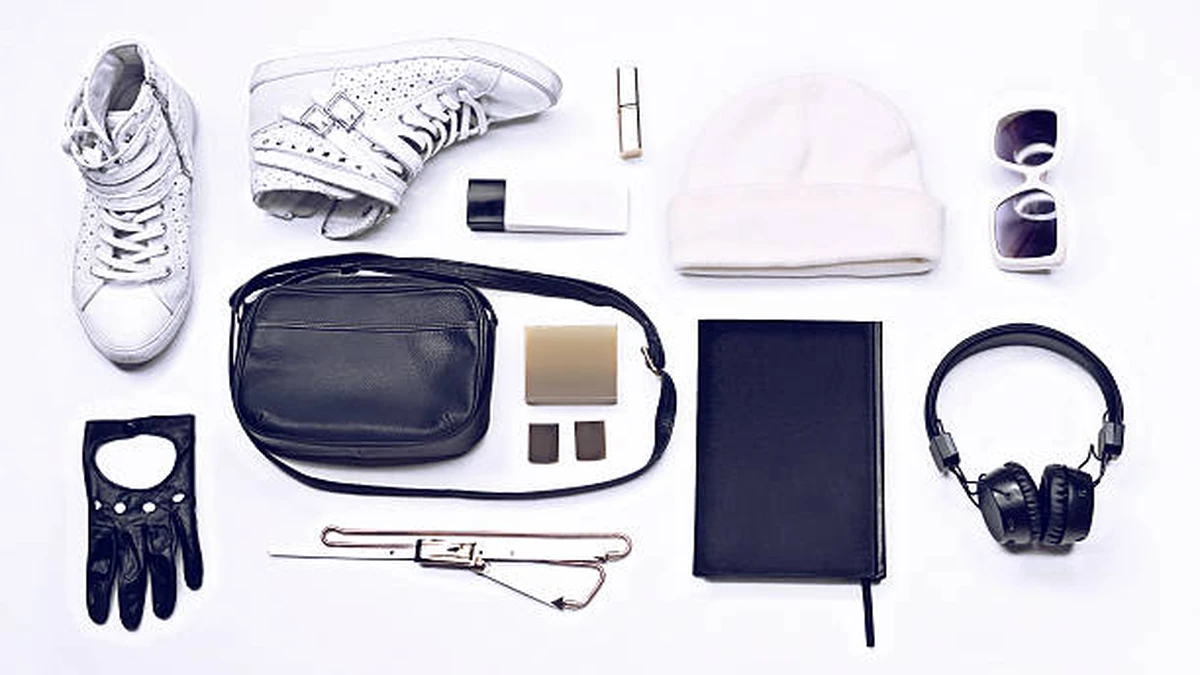
Beanies, caps, crossbody bags, and chunky jewelry add an extra layer of individuality to a streetwear look, and small details like sunglasses or belts can push an outfit further without much effort.
You don’t need all of these at once. Start with one cap or beanie and a simple crossbody or tote. Add jewelry and sunglasses later once your base pieces are solid.
Quick Takeaway: Seven categories, roughly ten pieces total, all in colors that mix and match. That’s a full streetwear wardrobe. Everything after this is personal style, not necessity.
How Many Pieces Do You Actually Need to Start?
Realistically, eight to ten pieces gets you a working wardrobe:
- Two hoodies or crewnecks (one plain, one graphic)
- Two graphic tees
- One pair of cargo pants or wide-leg trousers
- One pair of jeans
- One outer layer
- Two pairs of sneakers
- One cap or beanie
That’s it. From these, you can build well over a dozen different outfit combinations just by mixing tops, bottoms, and layers.
Streetwear Essentials by Budget
| Category | Budget ($20-50) | Mid-Range ($50-150) | Premium ($150+) |
|---|---|---|---|
| Hoodie | Uniqlo, H&M | Carhartt WIP, Champion | Fear of God Essentials |
| Graphic Tee | Thrifted, Uniqlo | Stüssy, Obey | Palace, Supreme |
| Cargo Pants | Cotton On, Zara | Dickies, Carhartt WIP | Represent, Rhude |
| Sneakers | New Balance outlet, thrifted | Nike SB, Adidas Samba | Jordan, collab releases |
| Outer Layer | Thrifted field jacket | Carhartt WIP chore coat | Stone Island, Arc’teryx |
You genuinely don’t need the premium column to dress well. A clean fit built entirely from the budget column will outperform a mismatched fit built from expensive pieces, every time.
Common Mistakes People Make Buying “Streetwear Essentials”
Buying trend pieces before basics. A hyped drop looks great in isolation and awkward in an actual outfit if you don’t own the neutral pieces to build around it.
Ignoring fit for logo recognition. A plain hoodie that fits your shoulders right beats a branded one that fits wrong. Every time.
Skipping the outer layer. People spend on hoodies and sneakers, then wonder why the outfit still looks unfinished. The jacket is what ties it together.
Overbuying color. Loud colors are fun, but if every piece competes for attention, nothing reads as intentional. Keep 80% of your wardrobe neutral, and let 20% be the statement pieces.
Chasing every trend cycle. Streetwear in 2026 is genuinely trending toward looser fits, cleaner colors, and less forced styling overall — more personal style, less costume. Chasing every micro-trend actually works against that direction.
How to Style Streetwear Essentials Into an Actual Outfit
The easiest formula for beginners: one loose piece, one fitted piece, one layer, one pair of clean sneakers.
Example: oversized hoodie (loose) + straight jeans (fitted-ish) + chore coat (layer) + white low-top sneakers. That’s a complete, considered outfit built entirely from essentials, no trend pieces required.
In warmer months, the same logic applies with lighter fabrics — cotton, cotton blends, and lightweight denim keep the premium feel of streetwear without the heat, and one graphic piece worn open over a plain tee adds dimension without adding bulk.
Streetwear Essentials for 2026: What’s Changed
A few shifts worth knowing before you shop:
- Technical fabric, used sparingly. Instead of full head-to-toe technical fits, the current approach uses just one functional piece — a nylon jacket or a multi-pocket trouser — inside an otherwise ordinary outfit.
- Sustainability is now baseline, not a bonus. Recycled fabrics and eco-conscious materials are becoming the expected standard for streetwear brands rather than a marketing angle.
- Quality over hype. Decentralized drops and independent credibility now carry more weight in streetwear culture than pure resale value.
- The market keeps growing. Streetwear is now a $218 billion global market as of 2026, projected to reach $265 billion by 2031 — meaning more brands, more price points, and more entry options at every budget.
None of this changes the core list above. It just means you have more good options within each category than you did a few years ago.
Quick Takeaway
Streetwear essentials are: an oversized hoodie, two graphic tees, cargo pants or wide-leg trousers, jeans, one solid outer layer, two pairs of versatile sneakers, and one accessory to start. Buy these in neutral colors first. Add trend pieces once the basics are solid, not before.
WANT MORE TIPS LIKE THIS? CHECK OUT OUR HOMEPAGE TO DISCOVER MORE.
FAQ Section
What are the basics of streetwear?
The basics are an oversized hoodie, graphic tees, cargo pants or wide-leg trousers, versatile sneakers, one solid outer layer like a bomber or chore coat, and a pair of relaxed jeans. These seven or eight pieces cover the vast majority of streetwear outfits.
How do I start dressing streetwear?
Start with neutral-colored basics rather than logo-heavy trend pieces. Buy one hoodie, one graphic tee, one pair of cargo pants, and one pair of sneakers in colors that all match each other. Build outward from there.
What makes an outfit streetwear?
A mix of relaxed or oversized silhouettes, casual fabrics, and pieces borrowed from skate, sport, or workwear culture. The proportion — loose on top or bottom, balanced elsewhere — matters more than any specific brand.
How many streetwear essentials do you need?
Around eight to ten pieces is enough to start: two tops, two bottoms, an outer layer, two pairs of sneakers, and one accessory. That’s enough to mix into more than a dozen outfit combinations.
Is streetwear expensive to get into?
Not necessarily. Budget brands like Uniqlo, Cotton On, and thrifted pieces can build a solid streetwear foundation for under $200 total. Hype and collab pieces are optional, not required.
What brands are good for streetwear essentials?
Nike, Adidas, Stüssy, Supreme, Carhartt WIP, and New Balance are commonly cited as foundational streetwear brands, but budget-friendly retailers like Uniqlo and H&M also work well for basics.
Can streetwear be minimalist?
Yes. A minimal, understated version of streetwear has become one of the dominant directions in the category, favoring clean lines, quality fabric, and subtle branding over loud logos.
Do I need sneakers specifically, or can I wear other shoes?
Sneakers are the standard because they match the casual, comfort-first nature of streetwear, but clean boots or minimal leather shoes can work in cooler-weather or workwear-influenced fits.