
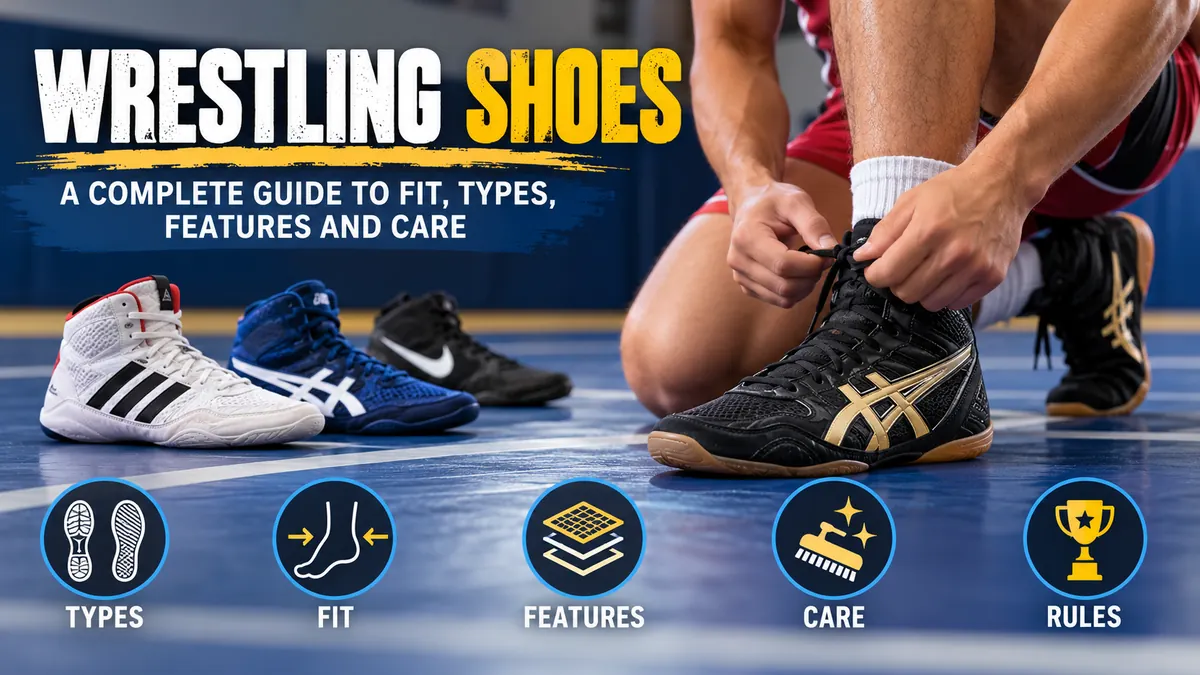
The right footwear can make a noticeable difference when you’re shooting for a takedown, defending a single-leg attack, or maintaining balance during a scramble. Wrestling demands quick directional changes, close contact with the mat, and precise footwork. Ordinary athletic shoes aren’t designed for those movements.
Wrestling shoes are lightweight, flexible athletic shoes designed for traction, balance, and controlled movement on wrestling mats. They typically feature thin rubber outsoles, snug-fitting uppers, and ankle-height designs that help wrestlers maintain close contact with the mat. Proper fit, sole construction, and flexibility are essential for comfort and performance.
Understanding how these shoes work makes it easier to distinguish useful features from marketing claims.
What Are Wrestling Shoes?
Wrestling shoes are specialized footwear used in competitive wrestling, including freestyle, Greco-Roman, and folkstyle wrestling.
Unlike running shoes, which prioritize cushioning and forward movement, wrestling footwear is designed for multidirectional motion and direct contact with a padded competition surface.
Wrestlers regularly move between standing positions, kneeling, sprawling, and ground control. Their shoes must accommodate these transitions without excessive bulk or restricted foot movement.
Main features of wrestling footwear
Most wrestling-specific shoes share several characteristics:
- Thin rubber soles: Provide traction while maintaining contact with the mat.
- Lightweight construction: Reduces unnecessary weight during quick movements.
- Flexible forefoot: Allows the foot to bend during shots, pivots, and stance changes.
- Snug upper: Helps prevent excessive foot movement inside the shoe.
- Ankle-height collar: Provides coverage and a secure feel around the ankle.
- Lace management: Keeps loose laces contained during competition.
These features work together to create footwear suited to wrestling’s particular movement patterns.
Why regular sneakers are different
Running shoes and everyday trainers often have thick midsoles, elevated heels, and outsole patterns designed for pavement or gym flooring.
Those features can interfere with wrestling movements.
A thick sole increases the distance between the foot and mat. A bulky upper may make rapid repositioning more difficult, while an unsuitable outsole can grip inconsistently.
Wrestling shoes generally sacrifice cushioning and outdoor durability to improve flexibility and mat contact.
Types of wrestling shoes and Their Differences
Although wrestling footwear may look similar across brands, important differences exist in sole construction, flexibility, upper materials, and intended use.
Split-sole wrestling shoes
Split-sole designs use separate rubber traction areas around the forefoot and heel, with a more flexible section between them.
This construction allows the middle of the shoe to bend naturally.
Potential advantages include:
- Greater flexibility through the midfoot.
- A lightweight, close-to-the-mat feel.
- Freedom of movement during footwork and transitions.
- Easier forefoot bending during certain techniques.
However, split-sole shoes can feel less structured than full-sole alternatives.
Their actual grip also depends on the rubber compound, tread pattern, and mat condition.
Full-sole wrestling shoes
Full-sole designs feature a more continuous rubber outsole running underneath the foot.
They often provide a more consistent contact surface and may feel more structured.
Common characteristics include:
- Continuous rubber coverage beneath the foot.
- A stable feel during stance changes.
- Potentially more uniform traction.
- Construction that may resist certain types of sole separation.
Full-sole shoes are not automatically more durable or grippier. Material quality and manufacturing methods remain important.
Split sole vs. full sole
| Feature | Split sole | Full sole |
|---|---|---|
| Construction | Separate traction zones | More continuous outsole |
| Midfoot flexibility | Often higher | Varies by design |
| Ground contact | Concentrated traction areas | Broad rubber coverage |
| Feel | Flexible and minimal | Often more structured |
| Suitable for | Wrestlers preferring freedom of movement | Wrestlers preferring a consistent sole feel |
| Main consideration | Midfoot support and outsole durability | Flexibility and weight |
Neither design guarantees better competitive results. Personal preference, foot shape, and movement style play a substantial role.
Lightweight competition designs
Some models emphasize minimal materials, flexible mesh, and thin outsoles.
These can appeal to wrestlers who prefer a barefoot-like feel while maintaining the traction and protection required by their sport.
The tradeoff is that lighter construction may offer less padding or abrasion resistance.
Training-oriented designs
Other models use reinforced overlays, sturdier heel structures, or more substantial upper materials.
These features may help footwear tolerate repeated practices, although overall durability depends on construction quality and maintenance.
The distinction between competition and training models is not always formal. Many wrestling shoes are used for both.
How Should wrestling shoes Fit?
Fit is one of the most important factors in wrestling footwear.
A shoe that moves excessively around the foot can reduce control during pivots and lateral movement. One that is too tight can cause pressure, numbness, or irritation.
Wrestling shoes should fit snugly around the heel and midfoot while allowing the toes to lie naturally without painful compression. The foot should remain secure during directional changes, but circulation and normal toe movement should not be restricted.
Toe room
The toes should have enough room to rest comfortably without curling or pressing painfully against the front of the shoe.
Unlike many running shoes, wrestling footwear is generally designed for a close fit.
However, this does not mean choosing a shoe that is smaller than the foot.
Toe shape and width vary between brands and models.
Heel security
The heel should remain reasonably stable when moving forward, backward, and sideways.
Excessive heel slipping may indicate that the shoe is too large or that its shape does not match the foot.
A secure heel helps maintain consistent positioning during rapid footwork.
Midfoot fit
The midfoot should feel supported without excessive squeezing.
Laces allow some adjustment, but they cannot fully correct a shoe that is fundamentally too narrow or too wide.
If the upper produces persistent pressure along the sides of the foot, another model or width may be more appropriate.
Should you size up or down?
There is no universal rule that wrestling shoes should be purchased half a size smaller or larger than regular shoes.
Sizing varies among manufacturers, including ASICS, adidas, and Nike.
Some models feel narrow, while others accommodate wider feet.
The most reliable approach is to measure foot length, consult the specific manufacturer’s size chart, and assess the fit while wearing wrestling socks.
A properly fitting shoe should feel secure immediately. Do not depend on painful tightness disappearing after a break-in period.
How to check the fit
- Wear the socks normally used during wrestling.
- Put on both shoes and secure the laces.
- Stand with your weight distributed evenly.
- Check that the toes are not painfully compressed.
- Move into a wrestling stance.
- Perform controlled pivots, short lateral steps, and shallow level changes.
- Check for heel slipping, pressure points, and excessive foot movement.
If possible, evaluate the fit later in the day, when feet may be slightly larger than in the morning.
Key Features That Affect Wrestling Performance
The most useful footwear features relate directly to traction, flexibility, stability, comfort, and durability.
Outsole traction and grip
Wrestling shoes typically use rubber outsoles designed for indoor mat surfaces.
Traction is influenced by several factors, including rubber composition, tread design, contact area, and surface cleanliness.
A good outsole should provide enough grip for controlled movement without creating an excessively sticky feel that interferes with pivots.
Grip is not a fixed property of the shoe alone.
Dust, moisture, mat material, and outsole wear can change how traction feels during practice.
Flexibility and foot movement
Flexibility allows the foot to bend naturally during wrestling movements.
Forefoot flexibility is especially useful when a wrestler drives forward from the toes or changes levels.
However, excessive flexibility is not always preferable.
Some wrestlers feel more comfortable with a structured platform, particularly during lateral movement.
The goal is controlled flexibility rather than maximum bending at every point.
Ankle coverage and support
Most traditional wrestling shoes extend above the ankle.
This higher collar provides coverage and can create a secure sensation when properly laced.
However, ankle height should not be confused with guaranteed injury prevention.
A high-top wrestling shoe does not replace ankle strength, balance training, proper technique, or medically recommended support.
Wrestlers with previous ankle injuries should follow guidance from an appropriate healthcare professional.
Breathability
Wrestling practices generate heat and perspiration.
Mesh panels, textile uppers, and ventilation zones can help improve airflow.
Breathability may reduce discomfort associated with trapped heat, but it does not eliminate moisture.
Shoes should still be dried properly after use.
Upper materials
Common materials include synthetic leather, mesh, woven textiles, and reinforced synthetic overlays.
Each has different characteristics.
Synthetic leather may provide a structured feel and resistance to surface abrasion. Mesh often improves ventilation and flexibility.
Reinforced areas around the toe or heel may improve durability in high-wear locations.
Material quality matters more than appearance alone.
Lace systems and safety
Wrestling shoes commonly use traditional laces, sometimes combined with a lace garage, cover, or strap.
These systems help keep laces contained during activity.
Loose laces can become distracting and may violate competition equipment requirements.
Before a match, wrestlers should secure their footwear according to the applicable competition rules.
Popular Wrestling Shoe Brands and Their Features
Several established athletic brands produce wrestling-specific footwear. Their models differ in shape, outsole design, material construction, and overall feel.
ASICS wrestling shoes
ASICS offers wrestling footwear for different experience levels.
Examples include the Matflex, Snapdown, and Aggressor product families.
Depending on the model, features may include breathable mesh, reinforced uppers, split soles, or continuous rubber outsoles.
The brand’s models do not all fit identically, so checking the individual shoe’s sizing information is essential.
adidas wrestling shoes
adidas produces wrestling shoes with different combinations of synthetic materials, lightweight construction, and rubber traction systems.
Models such as the HVC and Combat Speed illustrate the differences between more structured designs and flexible, minimal footwear.
Their fit and sole characteristics vary by generation.
Nike wrestling shoes
Nike has produced recognizable wrestling models, including the Inflict and Tawa.
Different designs emphasize combinations of flexibility, ankle coverage, ventilation, and traction.
A particular model’s fit is more informative than assumptions about the entire brand.
RUDIS wrestling shoes
RUDIS specializes in wrestling equipment and footwear.
Its designs include different outsole constructions, upper materials, and fit profiles.
When comparing RUDIS shoes with other brands, outsole flexibility, heel security, and toe-box shape are useful considerations.
The main takeaway: Brand recognition alone does not determine how well a wrestling shoe performs. Proper fit and suitable construction matter more than logos or visual design.
Wrestling Shoes for Beginners, Youth, and Experienced Athletes
Different wrestlers may prioritize different footwear characteristics, but experience level does not dictate one universally correct shoe design.
Wrestling shoes for beginners
Beginners benefit from footwear that allows natural movement without distracting discomfort.
Useful priorities include a secure fit, predictable grip, adequate flexibility, and durable stitching.
A beginner does not necessarily need an advanced competition model.
Learning stance, footwork, balance, and fundamental technique has a much greater influence on early wrestling development than minor differences in shoe construction.
Youth wrestling shoes
Children’s wrestling shoes should fit their current feet rather than being excessively oversized to accommodate future growth.
Large shoes can allow unwanted movement inside the upper, especially during quick changes of direction.
Parents and coaches should check:
- Toe comfort and heel security.
- Easy-to-manage laces or closures.
- Suitable ankle coverage.
- Signs of outgrown footwear.
- Wear around the outsole and toe area.
Children’s feet grow at different rates, so fit should be reassessed regularly throughout the season.
Wrestling shoes for women
Women’s wrestling footwear follows the same fundamental performance principles as men’s footwear.
The important factors are foot length, width, heel shape, and comfort.
Some brands offer women’s sizing or colorways, while others use unisex or men’s sizing systems.
Size conversions should be checked against the specific manufacturer’s chart rather than assuming that a particular numerical conversion applies to every model.
Wrestling shoes for wide feet
Athletes with wider feet may experience pressure around the forefoot or midfoot in narrow designs.
A suitable shoe should accommodate natural toe positioning while remaining secure around the heel.
Look for models with a wider last, accommodating upper construction, or explicitly offered wide sizing.
Simply choosing a much longer shoe to gain width can introduce heel slipping and reduce control.
Wrestling shoes for advanced athletes
Experienced wrestlers may develop preferences based on their movement patterns.
A wrestler who frequently pivots and changes levels may prefer a particularly flexible forefoot. Another may prefer a firmer outsole and a more structured heel.
These preferences should be evaluated through practical movement rather than assumptions about which design is universally faster or stronger.
Wrestling Shoes vs. Boxing Shoes and Other Footwear
Wrestling and boxing shoes can look similar because both often feature lightweight uppers and ankle-height construction.
Their intended movement patterns, however, differ.
| Footwear | Primary purpose | Typical sole characteristics | Main movement focus |
|---|---|---|---|
| Wrestling shoes | Grappling on mats | Thin, flexible rubber with mat traction | Shots, sprawls, pivots, scrambles |
| Boxing shoes | Boxing footwork | Lightweight sole suited to ring movement | Pivoting, stepping, lateral movement |
| Running shoes | Running | Cushioned midsole and road or trail tread | Repetitive forward movement |
| Cross-training shoes | General gym training | Broader platform and multipurpose traction | Lifting, jumping, gym drills |
| Barefoot-style shoes | Minimalist movement | Thin, flexible sole | Natural foot motion across suitable surfaces |
Can boxing shoes be used for wrestling?
Boxing shoes may provide ankle coverage and a lightweight feel, but their outsole construction is not necessarily optimized for wrestling mats.
The traction pattern, lateral stability, and durability under grappling conditions may differ.
For organized competition, wrestling-specific footwear is generally the appropriate choice, particularly where regulations require it.
Can wrestling shoes be used for weightlifting?
Some athletes use wrestling shoes for certain strength exercises because their soles are thin and relatively flat.
They may provide a close-to-the-floor feel during selected movements.
However, wrestling shoes are not identical to dedicated weightlifting shoes, which often feature rigid soles and raised heels designed for particular lifting mechanics.
Suitability depends on the exercise, training surface, and individual movement requirements.
Are wrestling shoes suitable for outdoor use?
They are not designed for regular outdoor walking or running.
Concrete, asphalt, and abrasive surfaces can wear down the relatively soft outsole material.
Outdoor dirt and debris can also contaminate the shoes before they return to a wrestling mat.
Keeping wrestling footwear for indoor mat use helps preserve traction and cleanliness.
How to Clean and Maintain wrestling shoes
Proper maintenance can extend usable life, reduce unpleasant odors, and keep the outsoles free from debris.
Because wrestling involves close contact with shared mats, footwear hygiene also matters.
Step-by-step cleaning
- Remove loose dirt from the outsole using a soft brush or clean cloth.
- Wipe the exterior with a slightly damp cloth.
- Use a small amount of mild soap when necessary, following the manufacturer’s instructions.
- Clean around seams and outsole edges without aggressive scrubbing.
- Remove excess moisture using a dry cloth.
- Open the shoes and allow them to air-dry completely.
- Store them in a clean, ventilated area.
Avoid soaking shoes unless the manufacturer specifically permits it.
Machine washing, harsh chemicals, and high heat can damage adhesives, synthetic materials, and shoe structure.
How to prevent wrestling shoe odor
Odor develops when moisture remains trapped in footwear and microorganisms accumulate.
Helpful habits include wearing clean socks, drying shoes between sessions, and avoiding prolonged storage in sealed gym bags.
If removable insoles are present, follow the manufacturer’s guidance for cleaning and drying them separately.
A dedicated ventilated shoe compartment can also help.
How to maintain outsole grip
Dust and debris can interfere with the contact between rubber and mat surfaces.
Wiping the outsole with an appropriate clean cloth can help remove surface contamination.
Avoid household oils, sticky substances, or unapproved grip-enhancing products. These may damage the sole, contaminate mats, or conflict with facility rules.
If grip remains poor after cleaning, inspect the outsole for worn rubber, hardened material, or separation.
When should wrestling shoes be replaced?
There is no universal replacement schedule.
A wrestler training several times each week may wear out footwear faster than someone attending occasional sessions.
Look for these warning signs:
- Smooth or severely worn traction areas.
- Rubber separating from the upper.
- Torn seams or damaged fabric.
- Persistent heel slipping caused by structural wear.
- Closure systems that no longer secure the shoe.
- Discomfort that develops as the shoe loses its original shape.
Visible damage is not the only concern. A noticeable loss of traction or secure fit may also indicate that replacement is necessary.
Wrestling Shoe Rules and Competition Requirements
Competition rules are an essential part of understanding wrestling footwear.
Requirements vary by governing body, wrestling style, age division, and event.
High school folkstyle wrestling
The National Federation of State High School Associations (NFHS) establishes rules used in United States scholastic wrestling, subject to applicable state association requirements.
Its footwear provisions specify lightweight, heelless wrestling shoes extending above the ankles, with visible laces secured appropriately.
Rules also address situations involving loose laces or shoes coming off during a match.
NFHS
+2
Freestyle and Greco-Roman wrestling
USA Wrestling rules require shoes designed specifically for wrestling, with firm ankle support and secured laces or an appropriate fastening system.
The official rulebook also notes that United World Wrestling rules take precedence where applicable.
usawmembership.com
+1
Athletes competing in tournaments should verify the current regulations for their event rather than assuming every competition follows identical equipment rules.
Why lace security matters
Unsecured laces can become loose during wrestling and interrupt a match.
Some wrestling shoes use integrated lace covers or straps, while others require approved methods of securing the laces.
Before stepping onto the mat, check that both shoes are firmly fastened and that the closure system complies with the competition’s requirements.
Common Wrestling Shoe Mistakes to Avoid
Many footwear problems come from fit and maintenance mistakes rather than inadequate technology.
Choosing shoes that are too tight
A close fit is desirable, but persistent pain, numbness, or toe compression indicates a problem.
Shoes should remain comfortable during realistic wrestling movements.
Assuming expensive shoes are always better
More expensive models may include specialized materials or construction methods.
However, these features do not guarantee a better fit or improved performance for every athlete.
A comfortable, well-fitting shoe with reliable traction may be more suitable than a premium model with the wrong shape.
Ignoring foot width
Foot length is only one part of sizing.
Athletes with broad forefeet, narrow heels, or high insteps may need to compare several models before finding a suitable fit.
Wearing wrestling shoes outside
Walking across pavement can accelerate outsole wear and introduce debris onto the mat.
Dedicated indoor use is a practical way to protect the traction surface.
Storing damp shoes in a closed bag
Leaving sweaty shoes in an enclosed gym bag encourages odor and moisture accumulation.
Drying footwear after practice is a simple but valuable habit.
Continuing to use damaged shoes
Loose outsole sections, torn uppers, and unreliable closures can affect movement and create unnecessary problems during competition.
Inspect shoes periodically instead of waiting for complete failure.
How to Evaluate Wrestling Shoes Before Using Them
A practical evaluation should focus on how the footwear behaves during wrestling-specific movements.
Start by checking basic comfort while standing and walking.
Then assess the shoes through a few controlled drills.
Stance and motion test
Move into your normal wrestling stance and shift your weight between your feet.
The upper should remain secure without painful pressure.
Level-change test
Perform several slow level changes.
Notice whether the forefoot bends naturally and whether the shoe creates uncomfortable resistance.
Lateral movement test
Take short side steps while maintaining your stance.
The heel should stay reasonably secure, and the foot should not slide excessively inside the shoe.
Pivot test
Perform controlled pivots on an appropriate wrestling mat.
The outsole should provide predictable traction without feeling excessively restrictive.
Short practice evaluation
A brief supervised training session can reveal issues that are not apparent during a static fitting.
Pay attention to hot spots, heel movement, toe discomfort, and changes in traction.
Persistent problems are signs that the shoe may not be appropriate for your foot shape or movement needs.
Final Thoughts on wrestling shoes
Wrestling shoes are designed around the demands of grappling: close mat contact, controlled traction, flexible movement, and secure foot positioning.
The most important considerations are fit, outsole construction, upper comfort, durability, and compliance with competition rules.
Split-sole and full-sole designs offer different movement characteristics, while brands such as ASICS, adidas, Nike, and RUDIS provide a variety of footwear configurations.
For beginners, youth wrestlers, and experienced competitors alike, the best approach is to prioritize a comfortable, secure fit and predictable movement over appearance or marketing claims.
With proper cleaning, regular inspections, and appropriate indoor use, wrestling shoes can remain a reliable part of training and competition equipment.