
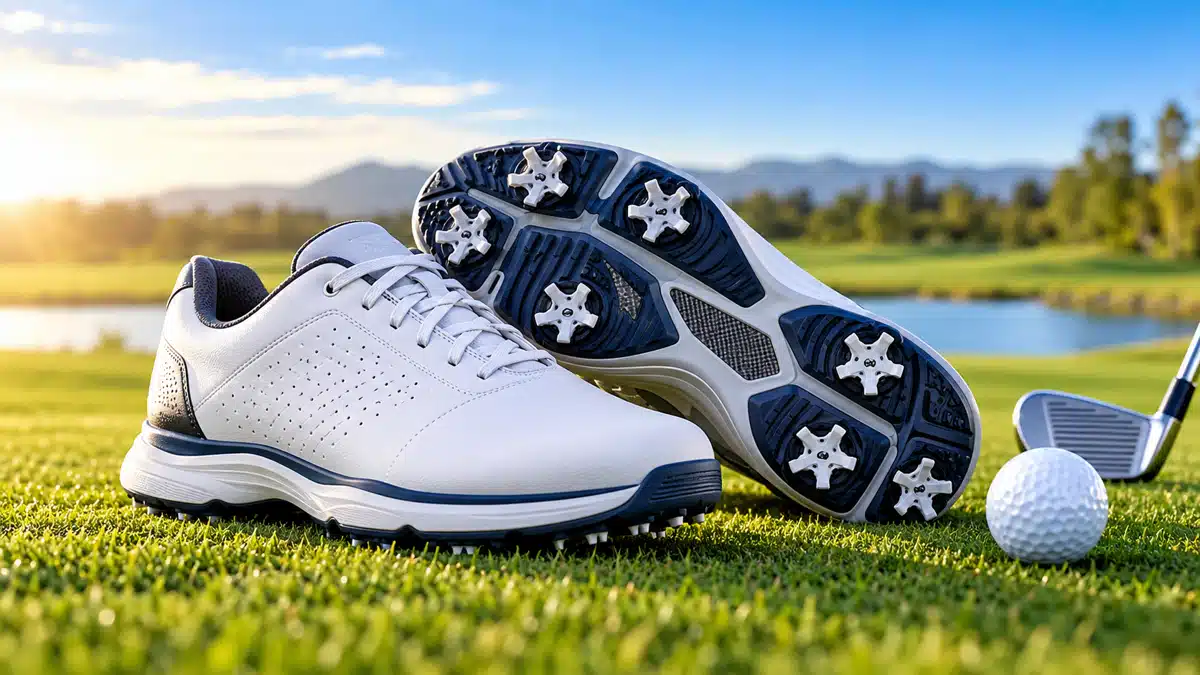
A golf swing depends on more than the club in your hands. Your feet create the foundation for balance, rotation and controlled movement, yet footwear is often overlooked until a golfer slips on wet grass or finishes a round with aching feet.
Golf shoes are specialized footwear designed to provide traction, stability, comfort and support while playing golf. Unlike ordinary sneakers, they use outsoles engineered for grass, uneven terrain and the rotational forces of a golf swing. They come in spiked and spikeless designs, with different levels of waterproofing, cushioning and flexibility.
The right pair should help you walk comfortably, maintain a stable stance and move naturally through the swing. Understanding how different designs work is more useful than choosing footwear based on appearance alone.
What Are golf shoes and Why Do Golfers Wear Them?
Golf footwear is designed around two activities that place different demands on the feet: walking across a course and swinging a club.
Walking requires cushioning, flexibility and a comfortable fit. Swinging requires traction and enough lateral support to keep the feet from sliding during weight transfer and rotation.
A typical golf course includes closely mown fairways, thicker rough, sloped ground, damp turf, sand and paved cart paths. Footwear must handle these surfaces without feeling excessively stiff or heavy.
How Golf Footwear Supports the Swing
During a golf swing, pressure shifts between the feet while the hips and torso rotate. The ground provides resistance against the golfer’s movement.
Traction helps prevent unwanted slipping, particularly when the turf is wet. A stable sole and supportive upper can also reduce excessive foot movement inside the shoe.
However, more grip does not automatically produce a better swing. Golfers need controlled rotation as well as stability. The goal is secure contact with the ground without unnecessarily restricting natural movement.
Can You Play Golf in Regular Sneakers?
Yes. Many recreational golfers can play in comfortable athletic shoes, especially on dry courses with relatively flat terrain.
Running shoes, however, are usually optimized for forward motion rather than rotational stability. Their soft midsoles and tread patterns may not provide the same lateral support or grass traction as purpose-built golf footwear.
For occasional practice sessions, sneakers may be adequate. Golf-specific footwear becomes more useful when playing frequently, walking hilly courses or encountering wet conditions.
Types of golf shoes: Spiked vs. Spikeless
The main distinction in modern golf footwear is between spiked and spikeless outsoles.

Spiked outsoleReplaceable or fixed cleats designed to grip turf.

Spikeless outsoleMolded rubber lugs integrated into the sole.
Spiked Golf Shoes
Spiked models use protruding cleats or traction elements to engage the turf. Most modern recreational designs use nonmetal soft spikes rather than traditional metal spikes.
Their main advantages include:
- Strong traction on wet grass and uneven ground.
- Greater confidence when swinging from slopes.
- Replaceable cleats on many models.
- Reliable grip when the outsole is properly maintained.
The disadvantages include additional maintenance, less comfortable movement on some hard surfaces and restrictions on certain spike types at golf facilities.
Spiked footwear is particularly useful for golfers who regularly play in rain, early-morning dew or soft ground conditions.
Spikeless Golf Shoes
Spikeless designs rely on molded rubber lugs, ridges and multidirectional traction patterns rather than detachable cleats.
They typically provide:
- Versatility on and off the course.
- Comfortable walking on paved surfaces.
- Lower maintenance requirements.
- A casual appearance similar to athletic sneakers.
The trade-off is that some spikeless outsoles provide less traction in particularly slippery conditions. Performance varies considerably with lug depth, rubber compound and tread geometry.
Modern spikeless designs can still offer excellent stability for many golfers.
Spiked vs. Spikeless Comparison
| Feature | Spiked | Spikeless |
|---|---|---|
| Wet grass traction | Often stronger | Model-dependent |
| Dry course performance | Excellent | Excellent |
| Off-course walking | Less versatile | More versatile |
| Maintenance | Cleats may need replacement | Mainly cleaning |
| Hard-surface comfort | Varies | Often better |
| Best suited for | Wet, soft or sloped turf | Dry to mixed conditions |
Neither category is universally superior. Course conditions, foot comfort and individual swing mechanics determine which design works better.
Understanding Traction, Stability and Sole Construction
The outsole is one of the most important parts of a golf shoe because it connects the golfer to the ground.
Outsole Traction Patterns
Manufacturers use several traction approaches, including multidirectional rubber lugs, soft cleats and hybrid designs combining molded grip elements with larger traction zones.
The placement of these elements matters. A golfer needs grip during the backswing, downswing and follow-through, not simply when walking forward.
Some outsoles are engineered with traction zones around the heel, forefoot and perimeter to help manage rotational movement.
Deep tread is not always better. Excessively aggressive traction can feel awkward on firm surfaces, while shallow tread may lose effectiveness on soft or wet grass.
Lateral Stability and Heel Support
Lateral stability refers to a shoe’s resistance to excessive side-to-side movement.
Features that can improve stability include a structured heel counter, supportive upper materials, secure lacing and a relatively broad sole platform.
A shoe that allows the heel to slide or the forefoot to move excessively can feel unstable even when the outsole has excellent traction.
Golfers with powerful swings may prefer a more structured design, while players prioritizing walking comfort may appreciate a slightly more flexible construction.
Midsole Cushioning and Ground Feel
The midsole sits between the upper and outsole. It absorbs some walking impact and influences how firmly the golfer feels connected to the ground.
Common cushioning materials include EVA foam, polyurethane and proprietary foam blends.
Softer cushioning can improve comfort, but extremely soft midsoles may feel less stable during rotation. Firmer designs provide more direct ground feedback but may be tiring during long walks.
The ideal balance depends on body mechanics, course terrain and personal preference.
Waterproof vs. Water-Resistant golf shoes
Wet feet can make a round uncomfortable long before the final hole. Water protection matters particularly for golfers playing early in the morning, during rainy seasons or on courses with frequent irrigation.
Waterproof Golf Shoes
Waterproof footwear uses materials and construction methods intended to prevent water from entering the shoe under specified conditions.
Common features include sealed seams, waterproof membranes, treated leather and water-resistant upper coatings.
GORE-TEX is one recognizable waterproof membrane technology used in selected golf footwear, including models from ECCO. Other manufacturers use their own proprietary waterproof constructions.
Waterproof does not mean that water can never enter. Moisture can still get inside through the ankle opening, and protection can deteriorate as materials and seams age.
Independent 2026 testing emphasizes that waterproof performance varies between models, even within the same brand.
Golf Monthly
+1
Water-Resistant Golf Shoes
Water-resistant designs can repel light moisture but may not withstand sustained rain or prolonged exposure to wet grass.
They are often suitable for dry climates, summer rounds and golfers who rarely play in heavy rain.
The difference is especially noticeable when walking through rough covered in morning dew. Even without rainfall, repeated contact with wet vegetation can saturate footwear that lacks adequate protection.
Breathability vs. Waterproof Protection
Waterproof membranes may reduce ventilation compared with highly breathable mesh constructions.
In hot weather, breathable footwear can help manage heat and moisture buildup. However, ventilation alone does not guarantee dry feet because perspiration, socks and shoe fit also affect comfort.
For year-round golf, the most practical choice depends on local weather rather than a universal rule.
How to Choose the Right Size and Fit
A comfortable golf shoe should hold the foot securely without squeezing the toes or creating pressure points.
Fit is particularly important because golfers may spend several hours standing, walking and rotating through repeated swings.
Step-by-Step Golf Shoe Fitting Guide
- Measure both feet. One foot may be slightly larger than the other. Fit the larger foot.
- Try shoes with golf socks. Sock thickness changes the available space inside the shoe.
- Check toe clearance. Your toes should move naturally without pressing against the front.
- Evaluate the heel. The heel should feel secure without excessive lifting.
- Check the midfoot. The shoe should feel supportive without painful compression.
- Walk and turn. Test normal walking, gentle side-to-side movement and a simulated golf stance.
- Check the fit later in the day. Feet can swell after prolonged activity, making an afternoon fitting useful.
Do not assume that your regular sneaker size will fit every golf shoe. Sizing can vary between brands and even between models from the same manufacturer.
MyGolfSpy
+1
Golf Shoes for Wide Feet
Golfers with wide feet should pay attention to both the forefoot shape and the available width options.
A longer shoe is not necessarily a solution for insufficient width. Excess length can create heel movement while leaving the forefoot uncomfortable.
Brands such as FootJoy, New Balance and Skechers offer width-specific options in selected models. Availability varies by region and collection.
A removable insole may help accommodate certain orthotic inserts, although the shoe must still provide adequate internal volume.
Arch Support and Insoles
Arch support can affect comfort, especially when walking an entire round.
Some footwear includes contoured footbeds, heel cups or removable insoles. Others use flatter designs that allow the golfer to customize support.
People with recurring foot pain should avoid assuming that the firmest or most cushioned shoe is automatically best. Persistent discomfort may warrant assessment by a qualified podiatrist.
Traditional Laces vs. BOA Fit Systems
Traditional laces provide familiar adjustment and allow tension to be modified across different sections of the shoe.
The BOA Fit System uses a dial-and-cable closure mechanism in certain golf footwear models. It can make tightening and loosening convenient, especially when wearing gloves or adjusting shoes during a round.
Neither closure method guarantees a superior fit. The shoe’s underlying shape and construction remain more important.
Golf Shoe Materials, Comfort and Durability
The upper material influences how footwear feels, breathes, protects against moisture and ages over time.
Leather Golf Shoes
Leather is common in traditional and premium golf footwear.
Advantages include a structured appearance, potentially durable construction and the ability of some leathers to conform gradually to the foot.
Disadvantages may include additional weight, cleaning requirements and reduced ventilation compared with lightweight mesh.
Full-grain leather can provide good longevity when properly maintained, but construction quality matters as much as material choice.
Synthetic and Mesh Golf Shoes
Synthetic leather, engineered mesh and textile blends are common in athletic-style golf footwear.
These materials can offer reduced weight, flexibility and targeted ventilation. Some synthetic uppers also resist stains and require relatively little maintenance.
Mesh is not automatically waterproof. Protection depends on whether the shoe incorporates a membrane or other water-blocking construction.
How Long Do Golf Shoes Last?
There is no reliable universal lifespan because wear depends on playing frequency, walking distance, surface conditions, materials and maintenance.
A golfer who walks several rounds each week will usually place more stress on footwear than someone who plays occasionally and uses a golf cart.
Signs of deterioration include flattened cushioning, worn traction lugs, cracked uppers, loose heel support and recurring moisture penetration.
Replaceable soft spikes may extend the useful life of a spiked shoe when the remaining structure is still sound.
Popular Golf Shoe Brands and Their Technologies
Different manufacturers emphasize different combinations of stability, cushioning, fit and style.
The following examples illustrate technologies and product categories found in contemporary golf footwear rather than establishing one brand as universally superior.

FootJoy
Known for traditional golf footwear, multiple fitting options and models such as the Pro/SL, Premiere Series and Quantum. The range includes structured leather designs and athletic spikeless shoes.

adidas
Offers Tour360, Codechaos and S2G golf footwear, with different combinations of traction, BOOST cushioning, athletic styling and BOA closure options.

ECCO
Recognized for BIOM anatomical design concepts, leather construction and selected GORE-TEX-equipped golf footwear.

Nike
Produces golf footwear such as the Victory Tour series, combining athletic footwear technology with structured golf-specific support.
Other established manufacturers include Under Armour, PUMA Golf, PAYNTR Golf, Skechers, New Balance and G/FORE.
Recent independent golf footwear evaluations compare these brands using comfort, traction, stability, waterproofing and fit rather than appearance alone.
Golf Monthly
+2
Matching Golf Shoes to Playing Conditions
Course conditions can have a greater effect on footwear suitability than brand reputation.
| Playing situation | Features to prioritize |
|---|---|
| Dry summer fairways | Breathability, comfort, spikeless traction |
| Wet or muddy courses | Waterproofing, strong outsole grip |
| Hilly terrain | Lateral support, reliable traction |
| Walking 18 holes | Cushioning, secure heel fit, manageable weight |
| Golf cart rounds | Stability, comfort, weather protection |
| Driving range practice | Flexible comfort, adequate grip |
| Cold-weather golf | Water protection, suitable socks, traction |
Best Features for Beginners
New golfers generally benefit from comfortable, supportive footwear that works across typical playing conditions.
A secure fit, dependable outsole and sufficient cushioning matter more than advanced technical claims.
For beginners playing mainly on dry, relatively flat courses, spikeless footwear can be a practical option.
Best Features for Frequent Golfers
Frequent players may benefit from having different footwear for different weather conditions.
A breathable spikeless pair can serve dry rounds, while a waterproof spiked pair may provide additional confidence on wet or soft turf.
This is a matter of convenience rather than a requirement. One well-fitting, versatile pair can still meet the needs of many golfers.
Women’s Golf Shoes
Women’s golf footwear is available in spiked, spikeless, waterproof and athletic-style constructions.
The key considerations remain forefoot width, heel security, arch comfort, traction and overall fit.
A women’s-specific model is not automatically appropriate for every woman. Individual foot shape matters more than the category label.
Junior Golf Shoes
Junior golfers need footwear that fits their current feet rather than oversized shoes intended to accommodate future growth.
Excessively loose shoes can reduce stability and cause rubbing.
Lightweight construction, manageable closures and reliable traction are useful features for younger players.
How to Clean and Maintain Golf Shoes
Routine maintenance helps preserve traction, appearance and comfort.

Clean after playing
Remove grass, soil and debris with a soft brush or damp cloth, especially around outsole lugs and cleats.
Proper Cleaning Steps
- Remove loose dirt from the outsole and upper.
- Take out the insoles when appropriate and allow them to air out.
- Use mild soap and water on compatible materials.
- Avoid aggressive scrubbing on delicate leather or mesh.
- Wipe away cleaning residue.
- Dry the shoes naturally in a ventilated area.
- Store them only after they are completely dry.
Follow the manufacturer’s instructions for specialized membranes, leather treatments and removable components.
Should Golf Shoes Go in the Washing Machine?
Machine washing is generally best avoided unless the manufacturer specifically permits it.
Repeated soaking, agitation and heat can affect adhesives, leather finishes, cushioning and waterproof construction.
A soft brush and appropriate cleaning solution are usually safer.
How to Dry Wet Golf Shoes
Remove the insoles if possible, loosen the laces and allow air to circulate.
Absorbent paper can help draw out moisture, but it should be replaced when saturated.
Avoid placing shoes directly against radiators, heaters or other intense heat sources. Excessive heat can deform materials and weaken adhesives.
When Should Golf Shoe Spikes Be Replaced?
Replace soft spikes when their traction elements are visibly worn, damaged or no longer provide dependable grip.
Replacement frequency varies with the number of rounds played and how much time is spent walking on hard surfaces.
Use the correct cleat attachment system. Replacement spikes are not universally interchangeable across all shoes.
Spikeless outsole lugs generally cannot be replaced individually, so severe tread wear may require replacing the footwear.
Common Mistakes When Choosing Golf Shoes
Several avoidable mistakes can undermine an otherwise good footwear design.
Choosing appearance over fit: Attractive footwear will not compensate for heel slipping, cramped toes or pressure across the midfoot.
Assuming all waterproof shoes perform equally: Waterproof claims, construction and warranty coverage differ between models.
Ignoring course conditions: A lightweight shoe suited to dry summer golf may be less effective on muddy winter slopes.
Buying shoes that are too narrow: Tight footwear can become increasingly uncomfortable as the feet swell during prolonged walking.
Overlooking outsole wear: Even a supportive shoe becomes less dependable when its traction elements deteriorate.
Expecting footwear to fix swing technique: Better grip can reduce slipping, but it does not replace sound balance, instruction or appropriate swing mechanics.
The most useful test is whether the shoe remains comfortable and secure throughout the movements and conditions encountered during a normal round.
Do Golf Shoes Improve Performance?
Golf shoes can support performance by improving traction, reducing unwanted movement and helping golfers maintain a stable stance.
However, claims about increased clubhead speed, longer driving distance or lower scores should be treated carefully. Any benefit depends on the golfer, the footwear being compared and the conditions of the test.
A golfer who frequently slips in ordinary sneakers may notice a meaningful improvement in confidence and stability after switching to golf-specific footwear.
Someone already wearing supportive athletic shoes on a dry course may experience a smaller difference.
Independent testing commonly evaluates comfort, traction, stability and water protection as separate performance categories. These are useful practical measures, but they should not be confused with guaranteed scoring improvements.
MyGolfSpy
+1
Are Expensive Golf Shoes Worth It?
Higher-priced footwear may offer premium leather, specialized cushioning, advanced closure systems or additional waterproof protection.
Those features can be valuable, but price alone does not guarantee superior comfort or performance.
A moderately priced pair that fits properly and suits the course may perform better for an individual golfer than a premium model with an unsuitable shape.
Long-term value depends on durability, frequency of use and whether the shoe maintains its original support and traction.
Final Thoughts on golf shoes
The purpose of golf shoes is straightforward: provide dependable grip, stable support and lasting comfort while walking and swinging on a golf course.
Spiked designs are especially useful for soft, wet or slippery conditions. Spikeless footwear offers versatility and often feels more natural on hard surfaces. Waterproofing, cushioning, upper materials and closure systems further influence suitability.
Above all, prioritize fit. A shoe should hold the heel securely, allow natural toe movement and remain comfortable over a full round.
Start by assessing the conditions you normally play in, then compare outsole traction, waterproof protection and foot support. The right footwear is not necessarily the most expensive or technically complex option—it is the pair that works reliably for your feet and your game.