
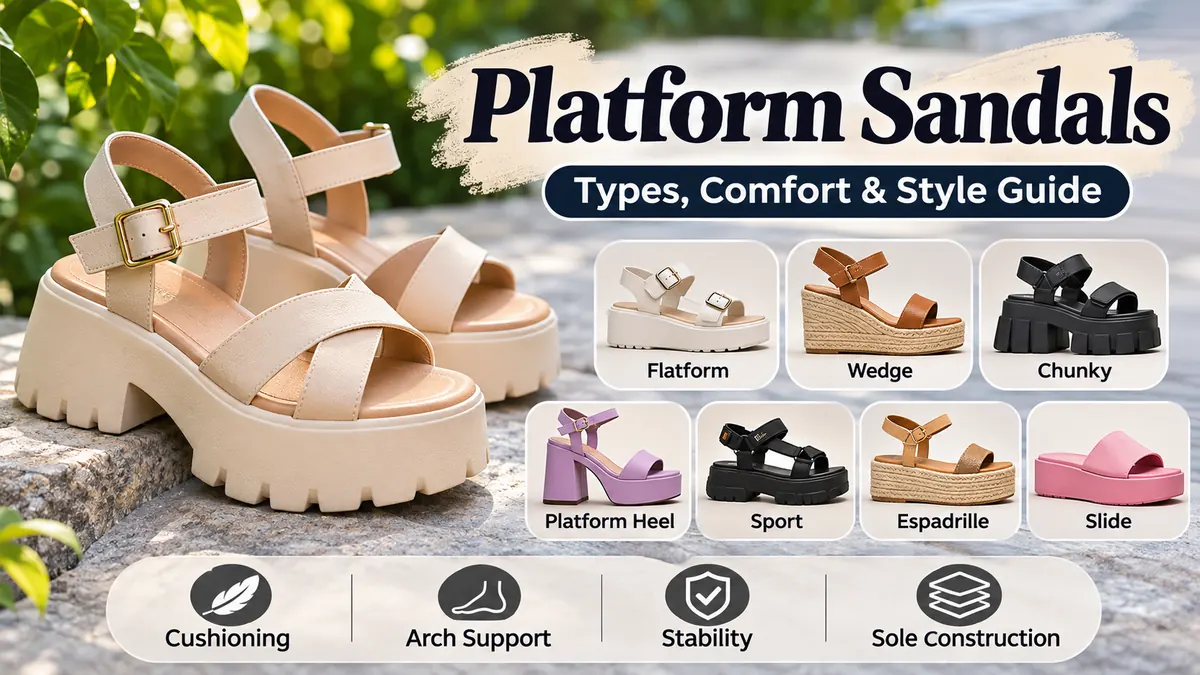
Platform sandals offer extra height without relying entirely on a steep heel. Their thick soles can create a bold silhouette, change the proportions of an outfit, and sometimes provide a more supportive walking experience than traditional high heels.
However, not every platform sandal is comfortable. Sole construction, arch support, cushioning, strap placement, and overall stability all influence how the footwear feels throughout the day.
Platform sandals are open-style shoes with thick, elevated soles that raise the entire foot above the ground. They come in flat, flatform, wedge, chunky, and heeled designs. The most comfortable options combine a stable base, secure straps, suitable arch support, and enough flexibility for natural walking.
Understanding these differences makes it easier to identify a style that suits your feet, daily activities, and personal preferences.
What Are Platform Sandals?
Platform sandals are a type of elevated footwear featuring a noticeably thick sole beneath the forefoot, often accompanied by additional height at the heel.
Unlike conventional high heels, which primarily raise the heel, platform designs lift the front of the foot as well. This can reduce the effective slope between the heel and toes.
For example, a sandal with a 3-inch heel and a 1.5-inch forefoot platform creates an approximate heel-to-toe height difference of 1.5 inches.
That does not automatically make it as stable as a low-heeled shoe. The total height above the ground, sole rigidity, and shape of the base still matter.
How Platform Sandals Differ From Regular Sandals
The main distinction is sole thickness and elevation.
| Feature | Regular sandals | Platform sandals |
|---|---|---|
| Sole height | Usually low | Noticeably elevated |
| Appearance | Often minimal | Chunky or raised |
| Ground feel | Typically more direct | Reduced ground feedback |
| Weight | Often lighter | Varies by material |
| Stability | Depends on construction | Depends on platform width and height |
| Styling | Casual to formal | Casual, retro, or statement styles |
A platform sandal may have a nearly level footbed or a substantial heel rise. The term describes the elevated sole construction rather than one specific heel shape.
Different Types of Platform Sandals
Platform footwear comes in several designs, each offering a different combination of height, appearance, and walking characteristics.
1. Flatform Sandals
Flatform sandals have thick soles with little or no difference in height between the heel and forefoot.
They provide elevation while keeping the foot closer to a level position.
Common characteristics include:
- Thick, relatively uniform soles
- Broad bases
- Minimal heel-to-toe slope
- Casual and contemporary designs
Flatforms can feel easier to stand in than steep heels, although excessively rigid or heavy versions may interfere with natural foot movement.
2. Platform Wedge Sandals
Platform wedge sandals feature a continuous sole that rises toward the heel.
25 Most Comfortable Wedges of 2024 – Best Women’s Wedge Shoes
Womens Black UGG Goldenglow Sandals | schuh
Spice Tan Leather Heels by EOS Footwear – Shouz
14
Unlike a narrow heel, a wedge typically provides support across much of the shoe’s length.
Wedge designs commonly use cork, synthetic foam, wood-inspired materials, or rope-wrapped midsoles.
Their continuous construction can provide a broad contact area, but high or narrow wedges may still increase the likelihood of ankle rolling on uneven surfaces.
3. Chunky Platform Sandals
Chunky platform sandals emphasize thick, oversized soles and visually prominent straps.
They are associated with retro fashion, streetwear, and 1990s-inspired styling.
Typical features include wide straps, molded footbeds, lugged outsoles, and exaggerated proportions.
Despite their bulky appearance, some chunky designs are relatively lightweight because they use EVA foam or other low-density materials.
4. Platform Heel Sandals
These sandals combine a raised forefoot platform with a distinct elevated heel.
The heel may be block-shaped, flared, or narrow.
A block heel generally provides a broader contact area than a stiletto, although the entire shoe’s stability depends on more than heel width.
Platform heel sandals are often worn with dresses, tailored trousers, and occasion outfits.
5. Sport Platform Sandals
Sport-inspired platform sandals combine elevated soles with functional features such as adjustable hook-and-loop straps, textured outsoles, and cushioned footbeds.
Some incorporate hiking-inspired details, including webbing straps and rugged tread patterns.
However, a sporty appearance does not necessarily mean a sandal is appropriate for hiking or demanding outdoor activities.
6. Espadrille Platform Sandals
Espadrille platform sandals typically feature braided jute or rope-like detailing around the midsole.
They are frequently associated with warm-weather clothing, linen garments, summer dresses, and resort-inspired outfits.
Traditional rope materials can be sensitive to prolonged moisture exposure. Synthetic versions may provide different levels of water resistance and durability.
7. Platform Slide Sandals
Platform slides have an open back and usually one or more straps across the top of the foot.
They are convenient for quick wear, but the lack of a heel strap can make the foot less secure during extended walking.
A well-fitted slide should remain on the foot without requiring excessive toe gripping.
Are Platform Sandals Comfortable?
Platform sandals can be comfortable, but comfort depends more on construction and fit than on sole thickness alone.
A thick sole may provide cushioning and reduce direct pressure from hard surfaces. However, excessive height, poor flexibility, or insufficient foot support can create discomfort.
Cushioning and Shock Absorption
Cushioning materials help absorb some of the forces experienced during walking.
Common midsole materials include:
- EVA (ethylene-vinyl acetate): Lightweight foam used for cushioning.
- Polyurethane (PU): Often used for supportive, durable midsoles.
- Cork: A material that may provide a relatively firm, contoured footbed.
- Rubber: Frequently used in outsoles for traction and wear resistance.
Softer cushioning is not always better. Extremely compressible soles may feel unstable, especially when combined with a tall platform.
Arch Support and Footbed Shape
A contoured footbed can help distribute pressure across the foot.
People with different arch shapes may prefer different levels of support. A pronounced arch contour that feels comfortable to one person may create pressure for another.
The most useful test is whether the foot feels supported without uncomfortable pressure points.
Sole Flexibility
Walking requires coordinated movement through the foot and ankle.
A very stiff platform can restrict forefoot bending and alter the natural walking pattern.
Some designs compensate with a rocker-shaped sole, which curves upward near the toe and encourages forward rolling during each step.
A rocker sole may make a rigid platform easier to walk in, but its effectiveness depends on the wearer’s gait and the shoe’s geometry.
Strap Security
Loose straps allow the foot to slide, increasing friction and reducing control.
Tight straps can create rubbing, pressure marks, and discomfort.
Adjustable ankle straps, buckles, and hook-and-loop closures make it easier to accommodate differences in foot shape.
For extended walking, a secure heel strap is generally preferable to a loose slip-on design.
How to Choose Platform Sandals for Your Feet
The best platform sandals are not necessarily the tallest, softest, or most fashionable. They should match your foot dimensions, walking habits, and intended use.
Measure Length and Width
Start with accurate foot measurements.
Measure both feet while standing, preferably later in the day when mild swelling may be present.
Use the larger foot when determining size.
Your toes should remain comfortably within the footbed rather than extending beyond its front edge.
The widest part of your foot should also fit without spilling over the sides.
Consider Your Foot Shape
Different foot shapes benefit from different constructions.
| Foot characteristic | Features worth considering |
|---|---|
| Wide feet | Broad footbeds and adjustable straps |
| Narrow feet | Multiple adjustment points and secure heel straps |
| High arches | Comfortable, appropriately contoured support |
| Flat feet | Stable base and supportive footbed |
| Sensitive skin | Smooth linings and minimal abrasive seams |
| Swelling-prone feet | Adjustable straps and adequate volume |
These are general fitting considerations rather than medical prescriptions.
People with persistent foot pain, neuropathy, significant deformities, or balance problems may need individualized footwear guidance from a qualified clinician.
Examine the Platform Height
Platform height influences balance and ground clearance.
A modest platform may be easier to manage than a very tall design, particularly for someone unfamiliar with elevated footwear.
Remember that the forefoot platform height and heel height are separate measurements.
The effective heel rise can be estimated as:
\[ \text{Heel rise}=\text{Heel height}-\text{Forefoot platform height} \]
For example, a 4-inch heel with a 2-inch platform has an approximate 2-inch heel rise.
This calculation describes the shoe’s geometry, not its overall safety or comfort.
Test the Walking Experience
When trying on platform sandals, walk on a firm, level surface.
Pay attention to whether your heel lifts excessively, your toes grip the footbed, or your ankle feels unstable.
Also check whether the shoe bends or rolls forward naturally during each step.
A sandal that feels comfortable while standing may behave differently during walking.
Platform Sandals vs. Wedges vs. Heels
These footwear categories overlap, but their construction differs.
| Footwear type | Main design characteristic | Typical consideration |
|---|---|---|
| Platform sandals | Raised sole beneath the forefoot | Total height and stability |
| Flatform sandals | Nearly level, thick sole | Sole flexibility and weight |
| Wedge sandals | Continuous sole rising toward the heel | Base width and heel slope |
| Block heels | Distinct broad heel | Heel height and forefoot pressure |
| Stilettos | Narrow elevated heel | Balance and concentrated loading |
| Flat sandals | Little or no elevation | Cushioning and footbed support |
A wedge can also be a platform sandal if its forefoot is elevated. Likewise, a block-heel sandal may include a substantial platform.
These terms are not mutually exclusive.
Are Platform Sandals Easier to Walk In Than High Heels?
Sometimes.
A forefoot platform can reduce the heel-to-toe slope compared with a conventional high heel of the same overall heel height.
A broad platform and block heel may also provide more surface contact than a narrow stiletto.
However, raising the foot farther above the ground can increase instability, especially on sloped or uneven surfaces.
The actual walking experience depends on the shoe’s geometry, fit, traction, and the wearer’s balance.
How to Style Platform Sandals With Different Outfits
Platform sandals can work with casual, smart-casual, and dressier outfits. Their elevated soles create visual weight, so the most balanced combinations consider trouser length, clothing volume, and the overall silhouette.
chunky three-strap sandal(MB230511)_black – MINA DE BONA
With jeans
Chunky black platforms complement straight-leg or wide-leg denim, especially with simple tops.
AI Flatlay Generator for Outfit Photos | BudgetPixel AI
With summer dresses
Neutral espadrille platforms pair naturally with floral, linen, and cotton dresses.
《一部WEB限定/追加》 UGG/アグ GoldenGlow Sandal W GOLDENGLOW(サンダル)|SLOBE IENA(スローブ イエナ)の通販|BAYCREW’S STORE
With trousers
Minimal white or tan platforms add height beneath relaxed, tailored trousers.
Wearing Gold: Tacky or Glamorous? Tips on wearing gold – Dress Your Color
With occasion wear
Metallic or refined block-heel platforms can complement evening dresses and coordinated outfits.
Platform Sandals With Jeans
Straight-leg, cropped, and wide-leg jeans can all work with platform footwear.
Cropped jeans reveal more of the sandal’s design, while longer jeans create a continuous line from the leg to the elevated sole.
Avoid trouser hems that drag beneath the platform, since excess fabric can create a tripping hazard.
Platform Sandals With Dresses and Skirts
Flatforms often create a relaxed look with cotton dresses and casual skirts.
Wedge platforms pair well with flowing midi dresses and linen fabrics.
For a more structured appearance, platform block heels can complement tailored dresses and longer skirts.
Platform Sandals With Shorts
Shorts reveal the full shape of a platform sandal, making the footwear a more prominent part of the outfit.
Chunky sport-inspired designs work particularly well with denim shorts and casual separates.
For a softer appearance, neutral-colored platforms can complement linen shorts and coordinated summer sets.
Color Combinations
Black platform sandals create strong contrast with light clothing and blend naturally with dark outfits.
White and cream designs provide a clean summer appearance, while tan, beige, and brown tones work well with earthy palettes.
Metallic finishes introduce a dressier element without necessarily requiring additional accessories.
Platform Sandal Materials and Construction
Material selection affects footwear weight, flexibility, breathability, durability, and maintenance.
Leather and Suede Uppers
Leather straps can gradually conform to the foot, depending on their thickness and finish.
Soft leather linings may reduce friction, although seams and edges can still cause irritation.
Suede offers a softer visual texture but usually requires more protection from moisture and staining.
Synthetic Uppers
Synthetic leather, polyester webbing, and other engineered materials are common in platform sandals.
Their performance varies considerably.
Some materials are soft and breathable, while others trap heat or become uncomfortable when exposed to perspiration.
The quality of the lining and strap edges matters as much as the outer material.
Cork and Jute Platforms
Cork is commonly associated with molded footbeds and wedge constructions.
Jute is frequently used as a decorative or structural wrapping in espadrille footwear.
Both materials can create a natural appearance, but their resistance to moisture depends on the sandal’s overall construction and protective finishes.
EVA, PU, and Rubber Soles
EVA is popular in lightweight flatforms and molded sandals.
Polyurethane is used in various supportive and cushioned sole constructions.
Rubber is frequently selected for outsoles because suitable compounds and tread designs can provide traction.
A sandal may combine several materials, such as an EVA midsole with a rubber outsole.
Why Sole Weight Matters
A heavy platform can increase the effort required to lift and move the foot repeatedly.
A lightweight design may feel less tiring, particularly during longer periods of wear.
However, low weight should not come at the expense of adequate support, secure attachment, or sole durability.
The ideal balance depends on the intended activity.
Are Platform Sandals Safe for Everyday Walking?
Safety depends on the platform’s height, stability, traction, and how securely the footwear fits.
The American Podiatric Medical Association identifies ankle injuries and pressure-related foot pain as potential concerns with platforms and high heels. It recommends lower, more stable heels and wider, flatter wedges with good traction. APMA MAIN+1
Common Walking Risks
Elevated footwear can introduce several challenges.
- Ankle instability: Tall or narrow platforms can make it harder to recover from a sideways tilt.
- Trips: Thick soles may catch on uneven paving, curbs, or stairs.
- Forefoot discomfort: A steep heel-to-toe slope can increase pressure toward the front of the foot.
- Slipping: Smooth or worn outsoles may provide inadequate traction.
- Skin irritation: Poorly positioned straps can cause friction and blisters.
Research discussed by Hong Kong Polytechnic University also indicates that excessively soft soles can compromise stability, while excessively hard or thick soles may interfere with normal walking mechanics. Research and Innovation Office
Can You Wear Platform Sandals All Day?
Some people can comfortably wear supportive, moderately elevated sandals for extended periods.
However, wearing them all day is not automatically appropriate for everyone.
The Australian Podiatry Association emphasizes matching sandal construction to individual foot shape, activity level, and comfort needs. Australian Podiatry Association Ltd
For prolonged standing or walking, a supportive walking shoe may be more suitable than a fashion-oriented platform.
Are Platform Sandals Good for Plantar Fasciitis?
A supportive, contoured sandal may feel more comfortable than a completely flat, unsupportive design for some people with plantar fasciitis.
However, platform height alone does not treat plantar fasciitis.
Look for comfortable arch support, stable cushioning, and secure straps. Cleveland Clinic notes that supportive footbeds and suitable arch support are useful considerations when choosing sandals for plantar fasciitis. Cleveland Clinic
Persistent heel pain should be evaluated by a healthcare professional.
Are Platform Sandals Suitable for Older Adults?
Extra caution is appropriate for anyone with impaired balance, reduced sensation, or a history of falls.
Tall platforms, loose slides, and unstable soles may increase walking difficulties.
Lower, stable footwear with non-slip soles and secure fastening is generally more appropriate when fall prevention is a priority. hacw.nhs.uk
How to Break In Platform Sandals
New sandals may initially feel unfamiliar because of their sole height, stiffness, or strap placement.
A gradual adjustment period can help identify fit problems before extended use.
- Start indoors. Wear the sandals briefly on a clean, level surface.
- Check the straps. Adjust them to hold the foot securely without pinching.
- Walk for short periods. Observe heel movement, toe gripping, and any rubbing.
- Inspect pressure areas. Redness that persists, pain, or blisters can indicate poor fit.
- Increase wear gradually. Extend use only when the sandals remain comfortable.
Breaking in footwear should not require enduring significant pain.
If a rigid strap presses directly against a sensitive area or the sole repeatedly causes instability, the design may simply be unsuitable.
How to Clean and Maintain Platform Sandals
Proper care can preserve the appearance and functional condition of platform sandals.
Cleaning methods should match the materials used.
Cleaning Leather Platform Sandals
Wipe loose dirt away using a soft, slightly damp cloth.
Use a leather-compatible cleaner when necessary, following the manufacturer’s instructions.
Avoid prolonged soaking and direct high heat, which may damage leather or adhesives.
Cleaning Foam and Rubber Platforms
Use mild soap, water, and a soft brush or cloth where permitted by the care instructions.
Remove soap residue and allow the sandals to air-dry completely.
Avoid excessive heat because some foam and adhesive constructions may deform or weaken.
Caring for Espadrille Platforms
Remove surface dust with a dry, soft brush.
Avoid saturating rope-wrapped or jute components unless the manufacturer specifically permits wet cleaning.
Spot-clean carefully and dry naturally in a ventilated area.
Storage and Wear Inspection
Store sandals in a cool, dry location away from prolonged direct sunlight.
Before wearing them, inspect the outsole, straps, buckles, and any glued connections.
Replace or repair footwear when the outsole becomes dangerously smooth, the platform separates, or a fastening can no longer hold the foot securely.
Common Mistakes When Wearing Platform Sandals
Several common mistakes can make otherwise attractive sandals uncomfortable or impractical.
Choosing Height Over Stability
An extremely tall platform may look appealing but become difficult to control on stairs or uneven surfaces.
A lower, broader sole is often a more practical starting point.
Ignoring Footbed Width
Feet extending beyond the edges of the footbed are not properly supported.
This can create pressure, rubbing, and reduced stability.
Wearing Loose Slides for Long Walks
Backless designs may require the toes to grip the sandal repeatedly.
The American Academy of Orthopaedic Surgeons recommends ankle-secured straps for improved sandal stability. AAOS
Assuming Thick Soles Always Mean Better Cushioning
Sole thickness does not guarantee comfort.
A thick sole can be excessively rigid, overly soft, poorly contoured, or simply too heavy.
Using Fashion Platforms for Demanding Activities
Ordinary platform sandals are not substitutes for footwear designed for running, hiking, climbing, or other demanding activities.
Such activities require appropriate traction, stability, foot protection, and secure construction.
Platform Sandal Trends and Timeless Designs
Platform sandals have appeared repeatedly in fashion history, particularly in styles associated with the 1970s, 1990s, and early 2000s.
Their continued appeal comes from the variety of silhouettes possible with an elevated sole.
Retro Chunky Platforms
Oversized soles, broad straps, and bold proportions create a recognizable retro appearance.
These styles often pair with denim, wide-leg trousers, and simple clothing that allows the footwear to stand out.
Minimalist Flatforms
Minimalist designs use clean lines, restrained colors, and relatively simple straps.
Their versatility comes from a less decorative appearance rather than any particular fashion season.
Sport-Inspired Platforms
Webbing straps, molded foam soles, adjustable closures, and textured outsoles give sport-inspired sandals a functional appearance.
Their suitability for actual outdoor activities still depends on construction.
Natural and Espadrille Styles
Rope textures, cork finishes, woven details, and earthy colors remain closely associated with summer clothing.
These materials work especially well with lightweight fabrics and relaxed silhouettes.
Final Thoughts on platform sandals
Platform sandals combine elevated soles with a wide range of footwear designs, from minimalist flatforms to chunky wedges and dressy block heels.
Their most important differences are not simply visual. Platform height, effective heel rise, sole flexibility, traction, footbed shape, and strap security all affect how they perform.
For everyday comfort, prioritize a stable base, appropriate cushioning, adequate foot support, and a secure fit rather than choosing solely by appearance or height.
The right platform sandals should allow you to walk naturally and comfortably while providing the elevated look you prefer.