
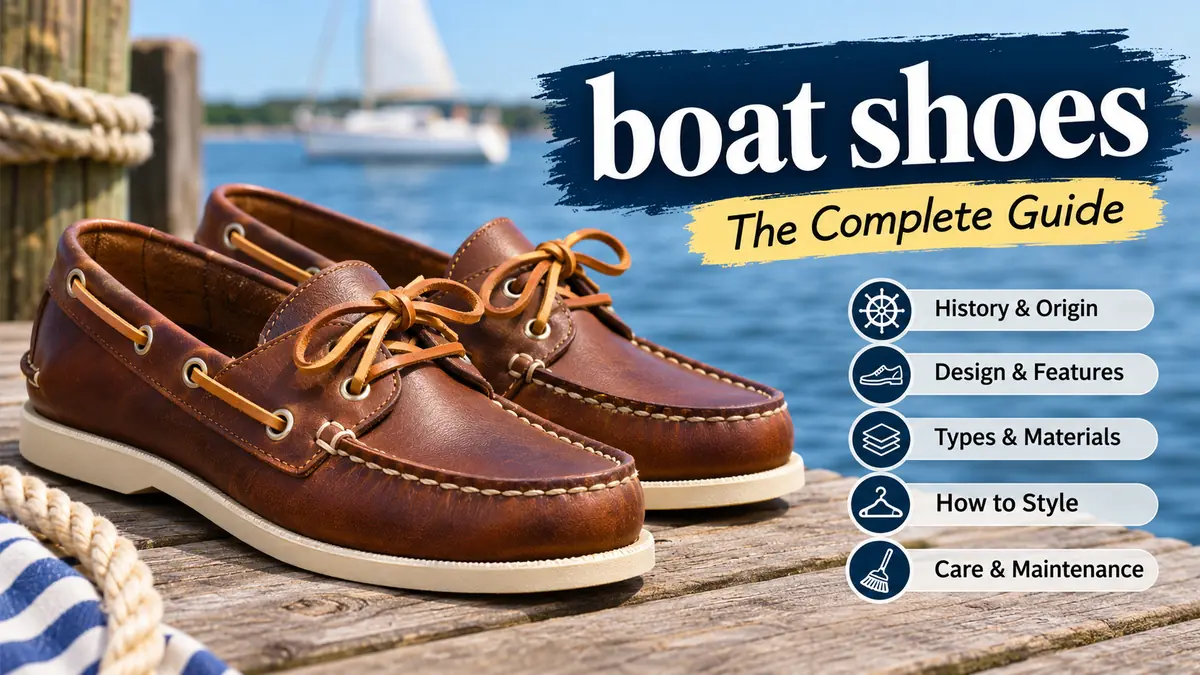
Boat shoes began as practical footwear designed to help sailors maintain their footing on wet decks. Today, they are equally recognizable as casual shoes associated with coastal living, preppy fashion, and relaxed summer outfits.
Their appeal comes from a distinctive combination of functional design and understated style. Yet not every pair offers the same grip, comfort, durability, or suitability for actual boating.
Boat shoes are low-cut casual shoes traditionally made with leather or canvas uppers, flexible rubber outsoles, and slip-resistant tread patterns. Originally developed for use on slippery boat decks, they typically feature moccasin-style construction, leather laces, and a 360-degree lacing system. They are now widely worn for everyday casual and smart-casual occasions.
Understanding their construction, history, and limitations makes it easier to appreciate why this footwear has remained popular for generations.
What Are boat shoes?
Boat shoes, also called deck shoes or topsiders, are a type of low-profile footwear originally created for maritime use.
Unlike ordinary casual shoes, traditional designs prioritize traction on wet surfaces, flexibility, and a secure fit without the bulk of heavy boots.
Their recognizable characteristics include:
- Non-marking rubber soles: Designed to reduce scuff marks on boat decks.
- Siped outsoles: Narrow grooves that help improve traction on wet surfaces.
- Moccasin-style uppers: Flexible construction with visible stitching around the toe.
- 360-degree lacing: A lace system that wraps around the heel to adjust the fit.
- Low-cut profile: Allows comfortable ankle movement.
- Leather or canvas materials: Common choices for durability, breathability, and casual appearance.
Although many modern versions retain these features, some fashion-oriented designs prioritize appearance over marine performance.
Why Are They Called Deck Shoes?
The name comes directly from their original purpose: providing practical footwear for sailors working or moving around boat decks.
The term topsider also became closely associated with this footwear through the Sperry Top-Sider brand.
Today, the terms boat shoes, deck shoes, and topsiders are often used interchangeably, although construction and performance can differ between individual models.
The History and Evolution of boat shoes
Read Boat Shoe – Heritage Brown | Rancourt & Co. | Men’s Boots and Shoes
Authentic Original™ Made in Maine 2-Eye Boat Shoe Brown | Sperry
8
The development of modern boat shoes is closely connected with American sailor and inventor Paul A. Sperry.
Paul Sperry and the First Modern Boat Shoe
In 1935, Paul Sperry developed a shoe design intended to improve traction on slippery boat decks.
According to the familiar account of the invention, Sperry observed how his dog maintained its grip while moving across ice. This inspired him to experiment with grooves cut into rubber soles.
The resulting design used a herringbone-like pattern of narrow cuts, known as siping, to improve traction.
Sperry’s design eventually became the foundation of the Sperry Top-Sider, one of the most recognizable names in nautical footwear.
The company later supplied footwear to the United States Navy during World War II, helping establish the practical reputation of the design.
From Sailing Equipment to Everyday Fashion
During the mid-20th century, boat shoes became associated with sailing clubs, coastal communities, and American leisurewear.
Their popularity expanded beyond maritime settings as they became part of the preppy aesthetic, alongside Oxford shirts, chinos, polo shirts, and lightweight knitwear.
By the 1980s, boat shoes were firmly established as a casual wardrobe staple.
Contemporary versions include traditional leather styles, lightweight canvas models, and modern interpretations with cushioned footbeds or thicker soles.
Despite these changes, the classic silhouette remains immediately recognizable.
How boat shoes Are Designed and Constructed
The functional details of traditional boat shoes distinguish them from loafers, sneakers, and other casual footwear.
Siped Rubber Outsoles
Siping refers to narrow slits or grooves formed in the outsole.
These grooves help the rubber make effective contact with certain wet surfaces and can improve grip by allowing water to move away from contact areas.
Traditional patterns often resemble a herringbone or wave-like design.
However, traction depends on more than siping alone. Rubber compound, tread depth, surface texture, wear, and contamination all influence performance.
A shoe designed for wet boat decks is not automatically suitable for ice, oily floors, or every slippery surface.
Non-Marking Soles
Many boat shoes use light-colored or specially formulated non-marking rubber outsoles.
This feature helps protect fiberglass, painted, and other sensitive deck surfaces from dark scuff marks.
A white sole does not automatically guarantee non-marking performance. The manufacturer’s specifications provide a more reliable indication.
The 360-Degree Lacing System
Traditional designs often feature leather laces threaded through eyelets along the sides and around the heel.
This system allows wearers to adjust the fit across more than just the front of the shoe.
It can help prevent excessive heel movement, although the effectiveness depends on the design and how securely the laces are tightened.
Moccasin Construction
Many classic models use moccasin-inspired construction, characterized by a stitched toe panel and flexible upper.
This gives the footwear its distinctive shape and allows a relatively natural range of movement.
Some models use hand-sewn construction, while others use machine stitching or hybrid manufacturing techniques.
The visible stitching is part of the signature appearance, but it should not be assumed to make the shoe waterproof.
Types of boat shoes and Their Materials
Modern boat shoes come in several styles, each with different strengths and limitations.
| Type | Main characteristics | Typical use |
|---|---|---|
| Full-grain leather | Durable, structured, develops patina | Classic casual wear |
| Nubuck leather | Soft, lightly buffed surface | Refined casual outfits |
| Suede | Velvety texture, relaxed appearance | Dry-weather casual wear |
| Canvas | Lightweight, breathable fabric | Warm-weather everyday use |
| Synthetic or mesh | Often quick-drying and lightweight | Active, water-oriented use |
| Hybrid deck shoes | Modern cushioning and technical outsoles | Recreational boating and walking |
Leather Boat Shoes
Full-grain leather is a traditional material for deck shoes because it offers durability and develops character with wear.
Well-maintained leather can soften over time and conform more closely to the foot.
However, leather is not automatically waterproof. Repeated exposure to saltwater, moisture, and improper drying can cause stiffness, discoloration, or deterioration.
Some manufacturers use treated leather to improve water resistance.
Canvas Boat Shoes
Canvas models are usually lighter and can feel more breathable in warm weather.
They often suit casual summer clothing and everyday walking.
Their disadvantages may include reduced structure, susceptibility to staining, and varying levels of water resistance.
Canvas also does not necessarily dry quickly when heavily saturated, particularly if the shoe contains absorbent linings or padding.
Suede and Nubuck Options
Suede and nubuck offer softer textures and a slightly more refined appearance.
They pair particularly well with chinos, linen trousers, and understated casual clothing.
However, these materials require additional care around water and stains. Protective treatments may help, but they do not make every suede or nubuck shoe suitable for boating.
Modern Performance Designs
Contemporary technical deck shoes may incorporate mesh panels, drainage systems, quick-drying materials, removable footbeds, and specialized rubber compounds.
Some are more suitable for active sailing than traditional lifestyle models.
When actual marine performance matters, construction and outsole specifications are more useful than appearance alone.
How Should boat shoes Fit?
Fit is one of the most important factors affecting comfort, particularly because traditional boat shoes are frequently worn without visible socks.
A properly fitted pair should feel secure around the heel and midfoot while leaving enough space for the toes to move naturally.
Finding the Right Size
Use these steps to assess the fit:
- Check the toe space. Your toes should not press against the front of the shoe.
- Examine the heel. Minor movement may occur, but excessive slipping suggests an insecure fit.
- Assess the width. The upper should feel comfortably snug without squeezing the sides of your feet.
- Walk on a firm surface. Notice rubbing, pressure points, or instability.
- Test the intended sock combination. Try the shoes with the socks you expect to wear regularly.
Leather boat shoes can stretch slightly across their width as they break in, but they will not meaningfully increase in length.
Sperry’s sizing guidance suggests that some wearers may consider a half-size smaller in certain leather models, while synthetic designs generally retain their original dimensions. This is model-specific advice rather than a universal sizing rule. Sperry+1
Do Boat Shoes Stretch Over Time?
Natural leather usually softens and gradually adapts to the shape of the foot.
The amount of stretching depends on leather thickness, construction, lining, and frequency of wear.
Canvas and synthetic materials generally behave differently. Some fabrics soften with use, but significant stretching should not be expected.
A shoe that causes pain or compresses the toes is unlikely to become comfortable simply through extended wear.
How to Break In Leather Boat Shoes
A gradual break-in process can help reduce friction and discomfort.
Begin by wearing the shoes indoors for short periods. Increase the duration as the leather becomes more flexible.
Thin socks can reduce friction during the initial adjustment period.
Avoid soaking leather shoes in water to accelerate stretching. Excessive moisture can affect the leather, adhesives, stitching, and overall shape.
If a particular area continues to rub, adjusting the lacing or consulting a footwear professional may be more effective than repeatedly wearing an uncomfortable pair.
How to Wear boat shoes With Different Outfits
4th of July Boat Shoe Collection – Quoddy.com
Leather shoes with chinos
Men’s | Clarks | 26148967 | Step Isle Base | Navy Canvas – H.R. Lash
Canvas shoes with linen trousers
Boat shoes work particularly well with clothing that balances comfort and a neat, relaxed appearance.
Their low profile and nautical heritage make them natural companions for lightweight fabrics, simple colors, and casual tailoring.
Boat Shoes With Chinos
Chinos are among the most versatile trousers to pair with classic leather boat shoes.
Navy, beige, olive, and stone-colored chinos work especially well with brown or tan footwear.
For a balanced outfit, combine a plain Oxford shirt or polo shirt with straight or slightly tapered chinos.
A small trouser break or subtle cuff can keep the shoes visible without creating excessive fabric around the ankle.
Boat Shoes With Shorts
Boat shoes are frequently worn with chino shorts during warmer months.
Neutral shorts paired with navy, tan, or brown shoes create a relaxed appearance without requiring complicated styling.
A lightweight polo, linen shirt, or simple T-shirt can complete the outfit.
For a traditional look, shorts ending slightly above the knee usually complement the low-cut silhouette.
Boat Shoes With Jeans
Straight-leg or slim-straight jeans can work well with boat shoes, particularly when the denim has a clean finish.
Dark indigo jeans paired with brown leather shoes create a slightly dressier casual outfit.
Lighter denim works naturally with canvas styles and softer leather colors.
Very wide trouser hems may obscure the shoes, while extremely tight jeans can create an unbalanced contrast with their rounded moccasin shape.
Boat Shoes With Linen Clothing
Linen trousers and shirts complement the lightweight, coastal character of deck shoes.
Cream, sand, white, pale blue, and muted green are useful colors for warm-weather outfits.
Canvas or soft leather styles usually fit this aesthetic particularly well.
Can Women Wear Boat Shoes?
Boat shoes are not limited to men’s fashion.
Women’s designs include traditional leather versions, canvas styles, slimmer silhouettes, and contemporary platform variations.
They can be paired with cropped trousers, relaxed jeans, tailored shorts, casual skirts, and lightweight dresses.
The same general principles apply: consider the proportions, color, material, and overall formality of the outfit.
Are Boat Shoes Business Casual?
They can be appropriate in relaxed business-casual environments, but workplace expectations vary.
A polished leather pair combined with tailored chinos and a button-down shirt may suit a casual office.
For formal business settings, client-facing professional occasions, or workplaces requiring dress shoes, loafers, derbies, or Oxfords are usually safer choices.
Should You Wear Socks With boat shoes?
Traditional boat shoes are often styled without visible socks, particularly in summer.
However, wearing them barefoot is a preference rather than a requirement.
No-show socks can preserve the bare-ankle appearance while helping absorb moisture and reduce friction.
Benefits of No-Show Socks
Low-cut socks may provide several practical advantages:
- Reduce direct friction between the foot and shoe lining.
- Help absorb perspiration.
- Make it easier to maintain shoe freshness.
- Improve comfort during longer periods of wear.
Choose socks with a low enough opening to remain hidden beneath the shoe’s collar.
Visible socks can also work with contemporary outfits, although they create a different look from the traditional nautical style.
Can You Wear Boat Shoes Barefoot?
Yes, provided the interior is comfortable and the shoes fit correctly.
However, bare feet can increase moisture accumulation inside the shoe, particularly during hot weather.
People who experience persistent rubbing, blisters, or excessive perspiration may find no-show socks more comfortable.
Allowing shoes to dry thoroughly between uses can also help maintain the lining.
boat shoes vs. Loafers vs. Sneakers
Although these footwear styles can overlap in everyday use, their construction and traditional purposes differ.
| Feature | Boat shoes | Loafers | Sneakers |
|---|---|---|---|
| Original purpose | Marine deck traction | Casual and dress footwear | Athletic and casual activity |
| Typical upper | Leather or canvas | Leather or suede | Textile, leather, or synthetic |
| Lacing | Usually 360-degree | Usually none | Usually conventional laces |
| Sole | Flexible, often siped rubber | Leather or rubber | Rubber or foam-based |
| Formality | Casual to smart casual | Casual to semi-formal | Primarily casual |
| Wet-deck suitability | Model-dependent | Generally limited | Model-dependent |
Boat Shoes vs. Loafers
Boat shoes and loafers can look similar because both often have low profiles and leather uppers.
The most obvious distinction is the lacing.
Traditional boat shoes feature functional laces and a wraparound heel-lacing system. Most loafers are slip-on shoes without functional laces.
Loafers generally offer more flexibility in dressier outfits, while boat shoes retain a more casual nautical character.
Boat Shoes vs. Driving Shoes
Driving shoes commonly feature flexible soles with rubber pebbles or pads extending toward the heel.
These details are intended to support pedal contact and flexibility.
Boat shoes instead traditionally emphasize grip on wet decks through siped rubber outsoles.
Both may use moccasin construction, but their original functional priorities differ.
Boat Shoes vs. Sneakers
Sneakers generally provide a wider variety of cushioning, support, and athletic features.
A running or walking sneaker may be more suitable for long distances, depending on its construction and the wearer’s needs.
Boat shoes usually offer a lower-profile appearance and greater versatility with certain smart-casual outfits.
Neither category is automatically more comfortable; fit and intended use matter more than the name.
Are boat shoes Comfortable for Walking?
Boat shoes can be comfortable for everyday walking, especially when they fit properly and include adequate cushioning.
However, comfort varies significantly between traditional leather designs and modern performance-oriented models.
Cushioning and Arch Support
Some classic boat shoes have relatively thin footbeds and flexible soles.
This construction provides a close-to-ground feel but may offer less shock absorption than specialized walking footwear.
Modern designs may include EVA foam midsoles, cushioned insoles, padded collars, or removable footbeds.
People who need substantial arch support should examine the internal structure rather than assuming that every boat shoe provides it.
Are They Suitable for All-Day Walking?
They may work well for moderate walking, commuting, and casual daily activities.
For extended sightseeing, long-distance walking, or prolonged standing, a supportive walking shoe may be more appropriate.
Consider the surface, distance, weather, and your individual comfort needs.
A flexible sole can feel pleasant during short walks without necessarily offering the cushioning required for hours of continuous activity.
Are Boat Shoes Good for Wide Feet?
Some models are available in wide or extra-wide fittings.
A rounded toe shape may provide additional room compared with narrow dress shoes, but the actual fit depends on the last and construction.
People with wider feet should look for an appropriate width rather than increasing the length excessively.
Can You Wear boat shoes on an Actual Boat?
Yes, but it is essential to distinguish traditional marine footwear from fashion-oriented interpretations.
A genuine deck shoe should provide suitable traction, stability, and construction for the intended boating conditions.
Wet-Deck Traction
Siped rubber outsoles can improve grip on certain wet surfaces.
However, wet fiberglass, algae, oil, soap residue, and other contaminants can create different traction challenges.
No shoe can guarantee slip prevention under all conditions.
For active sailing, prioritize footwear specifically designed and tested for marine environments.
Are Boat Shoes Waterproof?
Most traditional boat shoes are not completely waterproof.
Leather may resist light moisture when appropriately treated, but water can still enter through seams, stitching, and the low-cut opening.
Canvas versions may absorb water, while certain technical models use water-resistant materials or drainage features.
Water resistance and waterproofing are different properties.
A waterproof membrane may prevent water from passing through the upper, but water can still enter from above the collar.
Can You Wear Them in the Rain?
Light rain is generally manageable for many leather and synthetic designs, provided they are maintained correctly.
Prolonged soaking is less desirable, especially for untreated leather or suede.
After exposure to rain, allow the shoes to dry naturally.
For frequent heavy rain, waterproof footwear with appropriate traction is usually more practical.
Are They Suitable for Fishing?
Boat shoes can be suitable for casual fishing from relatively clean, stable decks.
However, activities involving fish slime, bait residue, prolonged water exposure, or demanding offshore conditions may require specialized fishing footwear.
Drainage, outsole grip, secure fit, and ease of cleaning become particularly important.
How to Clean and Maintain boat shoes
How to Clean and Care for Men’s Leather Boat Shoes – Wild Rhino
Proper maintenance helps preserve the appearance, flexibility, and usable life of boat shoes.
The correct cleaning method depends on the upper material, lining, outsole, and manufacturer’s instructions.
Cleaning Leather Boat Shoes
For smooth leather, follow this process:
- Remove loose dirt using a soft brush or dry cloth.
- Wipe the upper with a slightly damp microfiber cloth.
- Apply a leather cleaner suitable for the material if needed.
- Remove excess cleaning product according to its instructions.
- Allow the shoes to air-dry away from direct heat.
- Apply a compatible leather conditioner when recommended.
Avoid saturating the leather or using strong household detergents.
Leather conditioner can help reduce dryness, but excessive application may leave residue or alter the finish.
Cleaning Canvas Boat Shoes
Canvas footwear can often be spot-cleaned with mild soap and water.
Use a soft brush or cloth to work gently on stained areas.
Remove remaining soap with a clean damp cloth and allow the shoes to dry thoroughly.
Machine washing should only be considered when explicitly permitted by the manufacturer.
Some canvas boat shoes contain leather details, adhesives, or structured components that may be damaged by machine washing.
Cleaning Suede and Nubuck
Suede and nubuck require more delicate treatment.
Use a dedicated suede brush to remove dry dirt and restore the surface texture.
A suitable suede eraser may help with minor marks.
Avoid applying ordinary leather conditioner or soaking these materials with water.
For persistent stains, a specialized cleaner or professional service may be appropriate.
Removing Odor
Shoe odor often develops when moisture remains inside the footwear.
To reduce odor:
- Allow shoes to dry completely between wears.
- Remove and air out detachable insoles.
- Wear moisture-absorbing socks when practical.
- Clean the interior according to the manufacturer’s guidance.
- Store shoes in a ventilated, dry location.
Avoid relying on fragrances to cover persistent odor without addressing moisture buildup.
How to Dry Wet Boat Shoes
After exposure to water, remove excess surface moisture with a clean cloth.
If possible, loosen the laces and remove detachable insoles.
Stuffing the shoes loosely with plain absorbent paper can help draw out moisture and maintain their shape. Replace the paper as it becomes damp.
Let them dry at room temperature with good airflow.
Avoid radiators, hair dryers, and prolonged direct sunlight, particularly with leather footwear.
How Long Do boat shoes Last?
The lifespan of boat shoes depends on construction quality, frequency of use, walking surfaces, moisture exposure, and maintenance.
A well-constructed leather pair used occasionally may remain serviceable for several years.
A pair worn daily on abrasive pavement or regularly exposed to saltwater may deteriorate much faster.
Signs That Boat Shoes Need Replacing
Common signs of excessive wear include:
- Outsole grooves becoming smooth or heavily worn.
- Reduced traction on familiar surfaces.
- Cracking or separation between the upper and sole.
- Damaged stitching around the toe or heel.
- Persistent discomfort caused by collapsed internal cushioning.
- Heel counters that no longer hold their shape.
For marine use, deteriorating outsole traction is a particularly important reason to replace footwear.
Can Boat Shoes Be Resoled?
Some traditionally constructed leather boat shoes can be repaired or resoled, but many modern designs cannot be economically resoled.
Repairability depends on the sole attachment method, materials, and overall condition.
A footwear repair specialist can assess whether replacement soles, stitching repairs, or new laces are practical.
How to Store Them Properly
Store boat shoes in a cool, dry, ventilated location.
Keep them away from prolonged direct sunlight and excessive humidity.
Shoe trees or appropriate inserts may help maintain the shape of leather uppers.
Avoid sealing damp shoes in airtight bags, as trapped moisture can encourage odor and material deterioration.
Common Mistakes to Avoid With boat shoes
Even well-made footwear can become uncomfortable or wear prematurely when used incorrectly.
Choosing Appearance Over Function
A fashion-oriented boat shoe may resemble traditional sailing footwear without offering comparable wet-deck traction.
If the shoes will be used on a boat, examine the outsole and performance specifications carefully.
Assuming Leather Will Stretch Enough
Leather can soften and stretch slightly, but it cannot correct major sizing problems.
Shoes that are painfully tight or too short should not be treated as acceptable simply because they may break in.
Wearing Them for Every Activity
Boat shoes are versatile, but they are not substitutes for specialized running shoes, hiking boots, or protective work footwear.
Using them for demanding activities can compromise comfort and safety.
Ignoring Moisture
Repeatedly wearing damp footwear can accelerate deterioration and increase odor.
Drying shoes properly is especially important after boating or exposure to rain.
Neglecting the Outsole
The tread pattern is one of the defining functional features of deck shoes.
A worn, smooth outsole may no longer provide the intended grip, even if the leather upper still looks attractive.
Are boat shoes Still in Style?
Boat shoes remain part of classic casual footwear, although their visibility in fashion changes over time.
Their long-standing association with nautical clothing, American preppy style, and warm-weather dressing gives them a recognizable identity beyond seasonal trends.
Modern interpretations include chunkier soles, contrasting colors, softer suede uppers, and more relaxed proportions.
Traditional brown leather versions remain a versatile option for people who prefer understated casual clothing.
The most enduring approach is to treat them as practical, relaxed footwear rather than forcing them into every outfit.
What Colors Are Most Versatile?
Brown, tan, and navy are among the easiest colors to coordinate.
Brown leather pairs naturally with beige, olive, navy, and denim.
Tan offers a lighter appearance suitable for summer clothing.
Navy canvas works well with white, stone, khaki, and light-colored trousers.
Black versions exist, but they are less closely associated with the traditional nautical aesthetic.
Can You Wear Boat Shoes in Winter?
Boat shoes can be worn during mild winter weather, particularly in dry conditions.
However, traditional designs generally provide limited insulation and weather protection.
Their low-cut construction can expose the ankle to cold and moisture.
They are not appropriate substitutes for insulated boots on snow or ice.
Final Thoughts on boat shoes
Boat shoes have evolved from specialized sailing footwear into a lasting part of casual fashion.
Their distinctive combination of moccasin construction, wraparound lacing, flexible rubber soles, and nautical styling explains much of their enduring appeal.
For everyday wear, comfort, proper sizing, and material quality are the most important considerations. For actual boating, traction, secure fit, and suitability for wet conditions deserve additional attention.
Understanding these differences helps you use boat shoes appropriately, maintain them effectively, and enjoy their practical and stylistic advantages for longer.
