
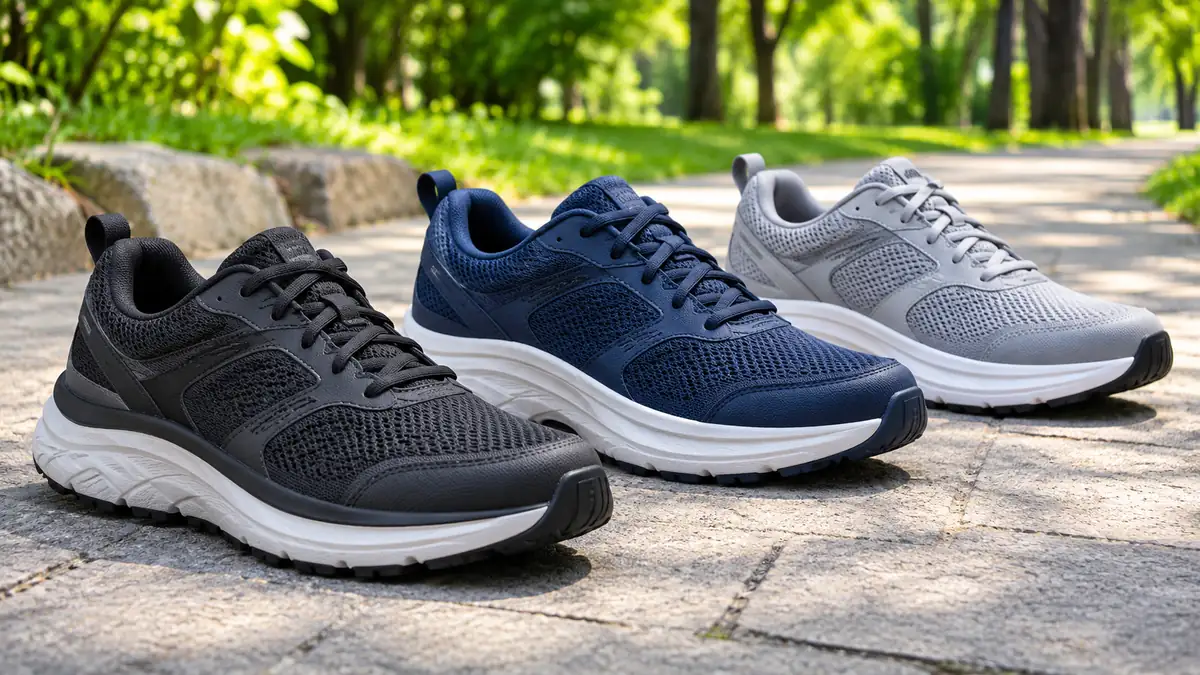
A comfortable walk can quickly become frustrating when your shoes cause heel pain, cramped toes, or tired feet. The right walking shoes should support your natural movement, fit securely, and remain comfortable throughout your daily routine.
The best walking shoes for men combine proper fit, appropriate cushioning, stable heel support, flexible forefoot movement, and reliable traction. The ideal choice depends on your foot shape, walking distance, surface, and individual support needs. A well-fitting shoe generally matters more than brand popularity, price, or the amount of cushioning advertised.
What Makes the best walking shoes for men?
Walking shoes are designed to accommodate the repetitive movement of the foot as it contacts the ground, transfers weight forward, and pushes off through the toes.
Although many athletic shoes look similar, their construction can affect how comfortable they feel during long walks.
Cushioning That Matches Your Walking Style
Cushioning helps reduce the sensation of impact underfoot. Most modern walking shoes use midsoles made from materials such as EVA foam, polyurethane, or proprietary foam blends.
Soft cushioning can feel comfortable immediately, but maximum softness is not always ideal. Some walkers prefer firmer midsoles because they provide a more predictable platform.
Consider these differences:
- Soft cushioning: Often comfortable for casual walking on hard surfaces, although some designs can feel unstable.
- Moderate cushioning: A balanced option for everyday walking and varied distances.
- Firm cushioning: May appeal to walkers who prefer a stable, responsive sensation.
- Maximum cushioning: Provides substantial material beneath the foot but does not automatically offer better support.
The right amount depends on body mechanics, comfort preferences, and walking conditions.
Proper Arch Support
The foot’s arches help distribute pressure and accommodate movement.
Walking shoes may have different levels of built-in arch contouring, but the most supportive-feeling shoe is not necessarily the one with the highest arch.
People with flat feet, neutral arches, or high arches can all have different comfort needs.
A shoe should feel supportive without creating uncomfortable pressure beneath the middle of the foot.
Heel Stability and Secure Fit
A structured heel counter helps the back of the shoe retain its shape and may limit excessive heel movement.
Your heel should remain comfortably seated while walking, without rubbing or slipping significantly.
A secure midfoot fit is also important because it prevents the foot from sliding forward inside the shoe.
Natural Forefoot Flexibility
During walking, the foot bends primarily around the toe joints.
A suitable walking shoe should allow a comfortable forward transition, either through forefoot flexibility or a rocker-shaped sole.
Excessive stiffness can feel awkward in some shoes, while excessive flexibility may provide insufficient structure for certain walkers.
The goal is controlled, comfortable movement rather than maximum flexibility.
Types of Walking Shoes for Different Needs
Walking shoes are available in several designs because not everyone walks the same distance, on the same surface, or with the same foot mechanics.
| Walking shoe type | Main characteristics | Suitable use |
|---|---|---|
| Cushioned walking shoes | Soft or moderately cushioned midsoles | Pavement and daily walks |
| Stability walking shoes | Structured heel and supportive platform | Walkers seeking additional guidance |
| Lightweight walking shoes | Lower weight and flexible construction | Casual walking and travel |
| Maximum-cushion shoes | Thick midsoles and substantial underfoot protection | Long periods on hard surfaces |
| Trail walking shoes | Grippy outsoles and protective uppers | Dirt paths and uneven ground |
| Wide-fit walking shoes | Additional forefoot or overall width | Wider feet and toe-spread needs |
| Waterproof walking shoes | Water-resistant membranes and protective materials | Wet outdoor conditions |
These categories can overlap. For example, a lightweight shoe may also have excellent cushioning, while a trail shoe may offer stability features.
Everyday Walking Shoes
Everyday walking shoes should balance comfort, durability, and versatility.
For routine errands, neighborhood walks, or commuting, a breathable upper, moderately cushioned sole, and reliable traction are generally useful.
The shoe should feel comfortable at your usual walking speed rather than only when standing still.
Long-Distance Walking Shoes
Long walks place repeated demands on the feet.
For extended distances, prioritize:
- Consistent comfort after prolonged use
- Adequate room for natural toe movement
- Cushioning that does not feel unstable
- Secure heel and midfoot fit
- Breathable materials
- Outsole durability
A shoe that feels excellent during a brief fitting may behave differently after several miles.
Walking Shoes for Standing All Day
Standing and walking create different demands.
People who spend long work shifts on their feet may prefer shoes with a stable base, durable cushioning, and sufficient room to accommodate normal changes in foot volume throughout the day.
Workers should also consider workplace requirements, including slip resistance or protective footwear standards.
A casual walking shoe should not replace certified safety footwear when the job requires it.
Best Walking Shoes for Men in 2026: Popular Models Compared
Several footwear brands offer models frequently highlighted in expert reviews and independent walking-shoe evaluations.
The following examples illustrate different approaches to cushioning, fit, and stability. They are not a personal wear-test ranking, and no single model is best for every foot.
| Walking shoe model | Notable characteristics | Potential limitation |
|---|---|---|
| HOKA Clifton 10 | Lightweight, substantial cushioning, rocker-shaped sole | Rocker geometry may feel unfamiliar |
| Brooks Glycerin 22 | Plush cushioning and comfortable daily-wear construction | May feel bulky to minimalist-shoe users |
| ASICS Gel-Kayano 33 | Structured stability and supportive platform | More guidance than some neutral walkers need |
| Altra Experience Flow 3 | Roomy toe shape and smooth walking transition | Fit and sole geometry may require adjustment |
| New Balance 1080v15 | Soft cushioning and multiple width options | Very soft cushioning does not suit everyone |
| Brooks Addiction Walker 2 | Traditional walking-shoe design with structured support | Heavier feel than many athletic sneakers |
| Under Armour Charged+ Assert 11 | Everyday cushioning and relatively accessible pricing | Less specialized than premium stability designs |
Recent independent evaluations highlight different models depending on the testing criteria. OutdoorGearLab identifies the Altra Experience Flow 3 for comfort and the ASICS Gel-Kayano 33 for support, while Men’s Health highlights the HOKA Clifton 10 for its overall walking experience. Tested & Ranked+3
HOKA: Cushioned Shoes With Rocker Geometry
HOKA is known for thick midsoles and curved sole designs that encourage a rolling transition through each step.
The Clifton line is often discussed for daily walking, while Bondi models emphasize substantial cushioning.
These designs can feel particularly comfortable on pavement, although their elevated platforms and distinctive geometry may not suit every walker.
Brooks: Balanced Cushioning and Stability
Brooks offers several shoe families that are commonly used for walking.
The Glycerin line focuses on plush cushioning, while the Adrenaline GTS series incorporates stability features. The Addiction Walker provides a more traditional walking-shoe design.
Brooks models can be useful reference points for understanding the difference between neutral cushioning and structured support.
ASICS: Stability and Impact Comfort
ASICS produces neutral and stability-focused shoes.
The Gel-Nimbus family emphasizes cushioning, while the Gel-Kayano series combines cushioning with guidance features intended to help manage foot movement.
The most appropriate choice depends on how the shoe feels during walking, not simply whether the wearer has flat or high arches.
New Balance: Multiple Width Options
New Balance is especially relevant to walkers who struggle to find an appropriate width.
Many models are offered in multiple width fittings, although availability varies by style.
A properly sized wide shoe can improve toe comfort without forcing the wearer into an unnecessarily long shoe.
Skechers: Casual Walking Comfort
Skechers offers walking-oriented collections such as GO WALK, including lightweight and easy-entry designs.
These may appeal to people prioritizing casual comfort and convenience.
However, slip-on convenience should not come at the expense of a secure heel fit or appropriate support.
How to Choose the best walking shoes for men Based on Foot Type
Foot shape influences comfort, but arch height alone cannot determine the ideal shoe.
Two people with similar-looking feet may prefer completely different levels of cushioning and support.
Walking Shoes for Flat Feet
Flat feet have relatively low arches when standing.
Some people with flat feet experience no discomfort and can comfortably wear neutral shoes. Others prefer additional structure, particularly if their feet roll inward excessively during walking.
Potentially helpful features include a stable midsole, secure heel, and comfortable arch contouring.
Stability models such as the ASICS Gel-Kayano or Brooks Adrenaline GTS may be worth evaluating, but flat feet do not automatically require motion-control footwear.
Walking Shoes for High Arches
People with high arches sometimes prefer shoes with generous cushioning and comfortable pressure distribution.
However, high arches vary considerably in flexibility and function.
A cushioned neutral shoe may feel appropriate, provided it fits securely and does not create excessive pressure under the arch.
If high arches are associated with repeated ankle sprains, persistent discomfort, or unusual wear patterns, professional assessment may be useful.
Walking Shoes for Wide Feet
A wide forefoot needs sufficient horizontal room, particularly around the metatarsal heads and toes.
Signs that a shoe is too narrow include:
- Pressure along the outside of the forefoot
- Numbness or tingling around the toes
- Toes overlapping or feeling compressed
- Persistent rubbing against the upper
- Bulging of the shoe’s sides during standing
Men’s shoes may be labeled standard width D, wide 2E, or extra-wide 4E in some sizing systems.
These labels are not perfectly standardized between brands.
A naturally wide toe box and a wide-width shoe are also not identical. A shoe can have a rounded toe shape but remain narrow through the midfoot.
Walking Shoes for Plantar Fasciitis
Plantar fasciitis, often discussed as plantar heel pain, can cause discomfort beneath the heel, particularly during the first steps after rest.
Comfortable, supportive footwear may help manage symptoms, but shoes alone are not a guaranteed treatment.
Some people benefit from cushioning, a supportive heel, or orthotic inserts. Others respond better to different combinations of footwear and rehabilitation.
A very soft shoe is not necessarily the most appropriate option.
Persistent heel pain should be assessed by a qualified healthcare professional, especially when accompanied by swelling, numbness, or difficulty bearing weight.
Walking Shoes vs. Running Shoes: What’s the Difference?
Running shoes can often be used for walking, but the two activities involve different movement patterns and impact demands.
Walking typically includes a heel-to-toe transition with at least one foot contacting the ground throughout the normal gait cycle. Running includes a flight phase and generally involves greater impact forces.
| Feature | Walking shoes | Running shoes |
|---|---|---|
| Primary activity | Repetitive walking strides | Running and jogging |
| Cushioning | Varies from moderate to substantial | Often designed for greater running impact |
| Forefoot movement | Flexibility or rocker-assisted transition | Depends on running-shoe geometry |
| Stability | Designed around walking comfort | Designed around running mechanics |
| Weight | Depends on materials and intended use | Ranges from minimalist to heavily cushioned |
| Versatility | Daily walking and casual activity | Often suitable for both running and walking |
Can You Wear Running Shoes for Walking?
Yes. Many running shoes work extremely well for walking.
Modern running shoes from HOKA, Brooks, ASICS, Saucony, and New Balance frequently appear in walking-shoe evaluations because their cushioning and fit can accommodate both activities.
The main question is whether the shoe remains stable and comfortable at walking speeds.
Some performance running shoes have aggressive rocker profiles, stiff plates, or unusual heel geometries that may not feel natural during casual walking.
Are Walking Shoes Better Than Sneakers?
The word sneakers describes a broad footwear category rather than a specific performance standard.
Some sneakers are designed for athletic movement, while others prioritize fashion.
A sneaker with a comfortable fit, durable outsole, and appropriate support can function well as a walking shoe.
However, a fashionable sneaker with a rigid sole or narrow toe box may become uncomfortable during prolonged walking.
How to Find the Correct Walking Shoe Size
Even an expensive shoe can cause discomfort when its size or shape is incorrect.
Shoe fit should be evaluated in three dimensions: length, width, and volume.
Step 1: Measure Both Feet
Foot size can change over time because of aging, weight changes, and other factors.
Measure both feet while standing, ideally later in the day when they may be slightly larger.
If one foot is longer, use that foot as the starting point for selecting a size.
Step 2: Check Toe Room
A common fitting guideline is to leave approximately a thumb’s width of space between the longest toe and the front of the shoe.
The longest toe is not always the big toe.
Your toes should move comfortably without touching the front during normal walking.
Step 3: Evaluate Width and Volume
Length is only one part of proper fit.
The forefoot should not feel squeezed, and the upper should not press uncomfortably against the top of the foot.
If the correct length feels too narrow, try a wider fitting rather than automatically increasing the shoe length.
Step 4: Test Heel Security
Walk several steps and pay attention to heel movement.
A small amount of movement can occur, but repeated slipping or rubbing suggests a poor fit.
Lacing adjustments may help, although they cannot correct every sizing problem.
Step 5: Walk on a Firm Surface
Try the shoes on a surface similar to your usual walking environment.
Pay attention to how your foot transitions from heel contact to toe-off.
Notice whether the shoe feels smooth, unstable, overly stiff, or uncomfortable around the arch.
Step 6: Wear Your Usual Socks
Sock thickness changes the available space inside a shoe.
Try footwear with the socks you expect to wear regularly.
A shoe should feel comfortable during the fitting process. Do not rely on a painful or overly tight shoe becoming suitable after a break-in period.
Essential Walking Shoe Features Explained
Understanding footwear terminology makes it easier to compare designs without relying entirely on marketing claims.
Heel-to-Toe Drop
Heel-to-toe drop is the height difference between the shoe’s heel and forefoot.
For example, a shoe with a 32 mm heel stack and 24 mm forefoot stack has an 8 mm drop.
A higher drop places the heel relatively higher than the forefoot. A lower drop creates a flatter platform.
Neither configuration is universally better.
Changing abruptly to a substantially lower-drop shoe may increase demands on the calf muscles and Achilles tendon, particularly in people accustomed to higher-drop footwear.
Gradual adaptation is sensible when changing footwear geometry.
Stack Height
Stack height describes how much material sits beneath the foot at a specified measurement point.
A higher stack often allows more cushioning material, but it can also change how connected the wearer feels to the ground.
Stability depends on more than stack height alone. Midsole firmness, platform width, and geometry all contribute.
Rocker Sole
A rocker sole has a curved shape designed to assist forward movement.
Instead of relying entirely on forefoot bending, the shoe can roll forward through part of the walking stride.
Some people appreciate this sensation, especially during long walks.
Others find it unnatural or prefer more conventional forefoot flexibility.
Breathable Uppers
Mesh and engineered-knit uppers often improve ventilation compared with heavier, less breathable materials.
Breathability can help manage heat and moisture during warm-weather walking.
Waterproof membranes provide additional protection in wet conditions but may reduce ventilation.
For most dry-weather walking, breathable construction is generally more useful than waterproofing.
Outsole Traction
Outsole materials and tread patterns influence grip.
Smooth pavement requires different traction characteristics from wet trails, loose gravel, or muddy paths.
Rubber outsoles can provide durability and grip, although their performance varies by compound and surface.
A shoe marketed as slip-resistant should be evaluated against the requirements of the environment where it will be used.
Best Walking Shoes for Men for Different Walking Activities
Different walking environments place different demands on footwear.
Tenis Skechers Slip Ins Go Walk Max Cushioning Hyper Burst Masculino
City Walking and Pavement
Choose comfortable cushioning, a stable platform, and durable rubber contact areas. Breathable uppers are useful for commuting and sightseeing.
Choosing the Right Hiking Shoes: A Complete Guide | KURU
Trail Walking and Uneven Terrain
Prioritize tread depth, outsole grip, toe protection, and secure foot containment. Waterproofing may be useful in consistently wet environments.
Best Treadmill Running Shoes Women Tips For 2026
Treadmill Walking
A lightweight, breathable shoe with comfortable cushioning is often sufficient. Aggressive trail lugs and waterproof construction are usually unnecessary.
Walking Shoes for Travel
Travel footwear should accommodate extended walking, occasional standing, and varied surfaces.
Consider a versatile design with reliable grip, comfortable cushioning, and a secure fit.
A shoe that can be worn comfortably for several hours is generally more practical than one selected only for its appearance.
Walking Shoes for Older Men
Age alone does not determine footwear needs.
However, some older adults may prioritize stable platforms, secure closures, and easy-to-manage fastening systems.
People with balance concerns should be cautious about unfamiliar, unusually high, or unstable-feeling soles.
A shoe that fits securely is generally preferable to a loose slip-on design, even when the latter is easier to put on.
Walking Shoes for Heavier Men
Body weight can influence perceived cushioning and midsole compression, but there is no universal shoe category that suits everyone above a particular weight.
A wider platform, durable midsole, and appropriate cushioning may improve comfort.
The most useful evaluation is how consistently the shoe supports the individual during their normal walking routine.
Common Mistakes When Choosing Walking Shoes
Several footwear mistakes can reduce comfort even when the shoe itself is well made.
Choosing based only on softness: Extremely soft cushioning may feel pleasant initially but does not necessarily provide the stability a walker prefers.
Ignoring width: Increasing shoe length to compensate for a narrow fit can cause heel slipping and poor foot positioning.
Assuming expensive means better: Premium materials and advanced cushioning systems do not guarantee a better fit.
Selecting shoes solely by arch type: Foot mechanics are more complex than low, medium, or high arches.
Using worn-out footwear: Compressed cushioning and uneven outsole wear can change how a shoe feels and performs.
Ignoring the walking surface: Road shoes may lack sufficient traction for loose or muddy trails.
Expecting shoes to cure pain: Appropriate footwear may improve comfort, but persistent foot problems sometimes require medical evaluation or rehabilitation.
How Long Do Walking Shoes Last?
Walking-shoe lifespan varies according to construction, body mechanics, walking surface, frequency of use, and maintenance.
Some footwear professionals use approximately 300–500 miles as a general replacement reference, while others suggest longer intervals for certain models. These are guidelines, not fixed expiration dates.
A shoe may remain usable beyond an estimated mileage figure, or it may wear out sooner.
Signs Your Walking Shoes Need Replacing
Look for changes in both the shoe’s physical condition and its performance.
Common warning signs include:
- Outsole tread worn smooth in important contact areas
- Midsole foam that feels noticeably compressed
- Uneven wear or visible leaning
- Damaged heel counters
- Persistent slipping caused by stretched materials
- New discomfort associated with worn footwear
Compare an older shoe with a newer pair of similar construction when possible.
A visible crease in the midsole alone does not necessarily mean the shoe is worn out.
How to Make Walking Shoes Last Longer
Regular maintenance can help preserve footwear condition.
Remove dirt using a soft brush or damp cloth. Follow the manufacturer’s cleaning instructions, particularly for foam and glued components.
Allow wet shoes to air-dry away from direct heat.
If you walk frequently, alternating between pairs may allow footwear to dry thoroughly between uses.
Avoid leaving shoes in extreme heat, which can damage some materials and adhesives.
Do Insoles and Orthotics Improve Walking Comfort?
Insoles can change pressure distribution, cushioning, and the way the foot interacts with the shoe.
Standard removable insoles usually provide a basic comfort layer. Aftermarket insoles may offer additional cushioning or contouring.
Custom orthotics are individually prescribed devices that may be recommended for particular foot conditions.
Not everyone needs special insoles.
A comfortable shoe with a suitable fit may work perfectly well without additional inserts.
When Additional Insoles May Help
Insoles may be useful when a person needs different cushioning or support characteristics from those supplied by the original footbed.
However, adding a thick insole can reduce the available volume inside the shoe.
This may create pressure across the toes or top of the foot.
When using orthotics, shoes with removable insoles and sufficient internal depth are often easier to accommodate.
For persistent symptoms, seek guidance from a qualified podiatrist or other appropriate healthcare professional rather than repeatedly experimenting with footwear.
How to Test Walking Shoes Before Relying on Them
A short, structured walking test can reveal problems that are easy to overlook during a quick fitting.
- Wear the shoes with your usual walking socks.
- Walk at a relaxed pace for several minutes.
- Increase to your normal brisk walking speed.
- Make gentle turns and walk on a slight incline if available.
- Check for pressure under the arch, heel movement, and toe crowding.
- Remove the shoes and inspect for areas of unusual rubbing or redness.
- Gradually increase walking duration over subsequent outings if the shoes remain comfortable.
Do not deliberately continue walking through sharp pain, numbness, or significant rubbing.
Shoes should accommodate your feet rather than require you to tolerate repeated discomfort.
Final Thoughts on the best walking shoes for men
The best walking shoes for men are those that match your foot shape, walking environment, and personal comfort needs.
Look beyond brand names and cushioning claims. A secure heel, comfortable toe box, appropriate midsole, stable platform, and dependable outsole are the foundations of good walking footwear.
Models from HOKA, Brooks, ASICS, New Balance, Altra, and other established manufacturers offer different approaches to these features, but their suitability depends on the individual.
Start by measuring your feet, identifying your most common walking surface, and trying shoes that accommodate your natural movement. A comfortable fit from the beginning is a more reliable starting point than any universal ranking.