
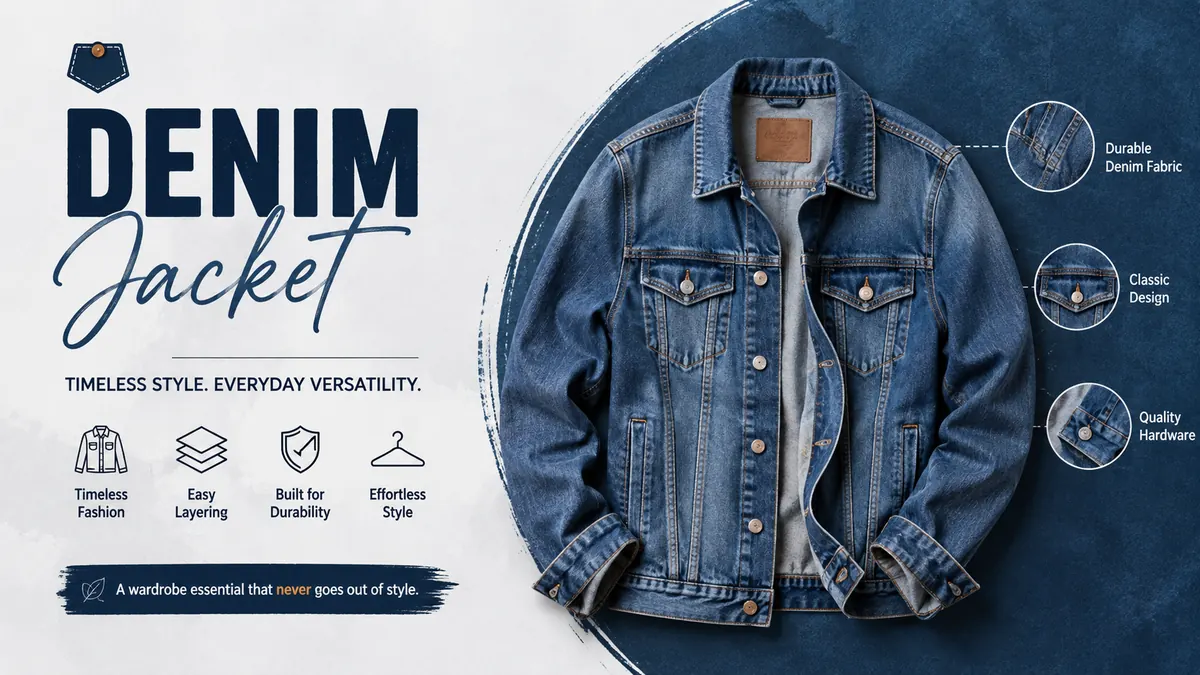
Few pieces of clothing can move from a workshop to a concert, a casual office, and a weekend dinner without looking out of place. The denim jacket is one of them.
Originally associated with hard-wearing workwear, denim outerwear gradually became part of mainstream fashion and youth culture. Today, the same basic garment appears in classic trucker cuts, oversized silhouettes, cropped designs, raw denim, stretch denim, sherpa-lined versions, and countless washes.
A denim jacket is a durable outer layer made primarily from denim, a cotton twill fabric known for strength and distinctive fading. Classic versions usually feature button closures, chest pockets, structured seams, and an adjustable or fitted waistband. The right jacket combines comfortable movement, useful layering room, and a wash that works with the rest of your wardrobe.
Understanding its history, construction, fit, and care makes choosing one much easier.
What Is a Denim Jacket?
A denim jacket—also commonly called a jean jacket—is outerwear constructed from denim fabric. The garment developed from practical work clothing but has become a widely recognized casual-fashion staple.
Traditional models are usually easy to identify. Common details include:
- Button-front construction
- Metal hardware
- Chest pockets
- Reinforced seams
- Pointed collars
- Waist tabs or adjusters
- Cotton denim fabric
- Structured cuffs
Not every modern version follows this formula. Designers have experimented with oversized proportions, cropped hems, dropped shoulders, hooded constructions, patch pockets, stretch fabrics, embroidery, distressing, and lining.
The classic trucker remains one of the most recognizable forms.
It is also useful to distinguish between denim and jeans. Denim is the fabric. Jeans are trousers traditionally made from that fabric. A jean jacket and a denim jacket generally refer to the same type of garment.
Where Did the Denim Jacket Come From?
The history of the denim jacket is closely connected to American workwear.
Levi Strauss & Co. states that it produced its first riveted denim jacket in the 1870s. Known as the Triple Pleat Blouse, it had a boxy construction, lower front pockets, riveted sleeve openings, and three pleats.
These early garments were practical rather than fashion-focused.
Denim’s durability made it particularly suitable for physically demanding work. As denim clothing became associated with miners, railroad workers, ranchers, and other laborers, the jacket developed a reputation for toughness.
The design did not remain static.
Levi Strauss & Co.’s archival history identifies several important stages, including the Triple Pleat Blouse, Lot 506 or Type I, Lot 507 or Type II, and Lot 557 or Type III. The familiar Type I, II, and III terminology itself was later popularized among vintage collectors.
From Workwear to Cultural Symbol
What happened next explains why the jacket has survived for so long.
Denim moved beyond its occupational origins and entered popular culture. Western imagery helped associate it with cowboys and rugged independence, while later generations connected denim jackets with rebellion, music, youth movements, punk, rock, hip-hop, and street fashion.
That cultural flexibility remains one of the garment’s greatest strengths.
A denim jacket does not belong exclusively to one fashion movement. Different generations simply reinterpret it.
Type I, Type II, and Type III Denim Jackets Explained
Anyone exploring vintage or heritage denim will eventually encounter the terms Type I, Type II, and Type III.
They do not represent quality grades.
Instead, collectors use them to distinguish major stages in the evolution of Levi’s denim jacket designs. Modern brands frequently borrow details from these historical silhouettes.
| Style | Key Characteristics | General Silhouette | Best For |
|---|---|---|---|
| Type I | Single chest pocket, pleated front, cinch-back heritage | Short and boxy | Vintage workwear looks |
| Type II | Two chest pockets, front pleats, waist adjusters | Boxy and balanced | Heritage styling and layering |
| Type III | V-shaped seams, pointed pocket flaps, tapered construction | Cleaner and more fitted | Everyday casual wear |
| Oversized | Extra room through body and shoulders | Loose | Layering and relaxed outfits |
| Sherpa-lined | Denim shell with warm lining | Regular to relaxed | Cooler weather |
| Cropped | Shortened body length | Compact | Contemporary styling |
Type I
The Type I represents an early and highly influential denim-jacket silhouette.
Its recognizable features include a single chest pocket and a relatively simple, boxy body. Historical versions used construction details intended to make practical workwear adaptable.
The design feels noticeably different from today’s standard trucker.
Modern Type I-inspired jackets are popular among heritage clothing enthusiasts because the simple construction preserves much of denim’s original workwear character.
Type II
The Type II developed the formula further.
Levi’s introduced its Lot 507 Type II in 1953. The updated design added a second chest pocket and replaced the older cinch-back approach with waist adjustment tabs.
Visually, the symmetrical pockets give the jacket a more balanced appearance.
Type II-inspired jackets remain especially popular in raw and selvedge denim because their relatively uncomplicated construction provides plenty of visible surface area for fading.
Type III and the Trucker Jacket
The Type III is the silhouette most people would recognize immediately as a classic denim jacket.
Levi Strauss & Co. records Lot 557 appearing in its October 1961 catalog. Designer Jack Lucier gave it a tapered shape with two chest pockets and distinctive vertical V-shaped seams. The model eventually evolved into Lot 70505 in 1967.
The pleated fronts associated with earlier jackets disappeared, creating a cleaner silhouette.
Interestingly, calling every historical denim jacket a “trucker” is not technically accurate. Levi Strauss & Co. notes that the term belongs to the later design tradition rather than its earliest riveted jackets.
For everyday wardrobes, however, the trucker shape remains the most familiar starting point.
Understanding Denim Fabric Before Choosing a Jacket
Two denim jackets can look nearly identical online and feel completely different when worn.
Fabric explains much of the difference.
Traditional denim is a woven cotton textile constructed with a twill structure. Its characteristic surface and ability to develop wear patterns make it especially distinctive.
When comparing jackets, pay attention to weight, composition, rigidity, wash, and finishing rather than color alone.
Rigid Denim
Rigid denim has little or no stretch and tends to hold its shape.
A new rigid jacket can initially feel firm, particularly across the shoulders and elbows. With repeated wear, however, the fabric generally softens and begins conforming more naturally to the wearer.
This is part of the appeal.
Instead of feeling identical throughout its life, denim can develop creases, abrasion patterns, and fading around areas that experience frequent movement.
Raw Denim
Raw denim generally refers to denim that has not undergone the extensive washing and fading treatments commonly used to give new garments a broken-in appearance.
It often starts darker and stiffer.
Enthusiasts appreciate raw denim because repeated wear can create personalized fading around the elbows, cuffs, seams, and other high-friction areas.
The trade-off is convenience. Raw denim may require more attention to shrinkage, dye transfer, and washing instructions.
Selvedge Denim
Selvedge describes how fabric edges are produced rather than automatically indicating superior quality.
Traditional shuttle looms can create a clean, self-finished edge along the fabric. This edge is often visible when certain seams or cuffs are turned outward.
Selvedge denim has become strongly associated with heritage and premium denim manufacturing, but the label alone does not guarantee that a jacket will fit better or last longer.
Construction and fabric quality still matter.
Stretch Denim
Stretch denim incorporates an elastic fiber or another material designed to increase flexibility.
For a jacket, a small amount of stretch can make reaching, driving, sitting, or bending more comfortable.
The experience is different from rigid cotton denim. People who value traditional structure and fading may prefer 100% cotton, while someone prioritizing immediate comfort may appreciate stretch.
Neither is automatically better.
They solve different problems.
Denim Weight Matters More Than Many Buyers Realize
Denim is available in different fabric weights.
Lightweight denim generally feels softer and works better in warmer conditions. Medium-weight fabric offers a useful balance between structure and comfort. Heavy denim feels substantial and may require a longer break-in period.
The ideal choice depends on how you intend to wear the jacket.
For example, someone looking for a light spring layer probably does not need extremely heavy raw denim. Someone interested in heritage construction and dramatic long-term fading may deliberately choose something more substantial.
Do not treat higher fabric weight as a universal measure of quality.
A heavier jacket is simply heavier.
Common Denim Jacket Washes
The wash dramatically changes the personality of a jacket.
Dark Indigo
Dark indigo creates a cleaner, more structured appearance.
It pairs easily with neutral trousers, chinos, boots, simple sneakers, and casual button-down shirts. Dark denim can also be easier to integrate into slightly smarter casual outfits.
Medium Blue
Medium-wash blue is probably the image many people picture when they hear “denim jacket.”
It feels casual without necessarily looking heavily worn.
For a first jacket, this is one of the most versatile choices because it works across a broad range of colors and seasons.
Light Wash
Light-wash denim has a softer, more relaxed visual character.
It works naturally with summer outfits, white T-shirts, lighter trousers, casual sneakers, and relaxed silhouettes.
Black Denim
A black denim jacket provides the familiarity of denim without the classic blue-workwear appearance.
It can work particularly well with monochrome clothing and minimalist wardrobes.
Repeated washing may gradually soften a deep black finish into charcoal or grey, depending on the dye and treatment.
Distressed Denim
Distressing intentionally introduces worn-looking areas such as abrasion, fading, frayed edges, or tears.
Some people like the instant broken-in character.
Others prefer buying clean denim and allowing wear patterns to develop naturally. The practical consideration is simple: heavy distressing can create weak points, so inspect highly abraded areas if longevity matters.
How Should a Denim Jacket Fit?
The right fit depends partly on the intended silhouette, but a few practical rules make the decision easier.
A classic jacket should feel close enough to maintain its shape but roomy enough for natural arm and shoulder movement.
Start with the shoulders.
The shoulder seams on a traditional fit should generally sit close to the natural edge of your shoulders. An intentionally oversized jacket is different—the dropped shoulder is part of the design.
Next, test movement.
Button the jacket and:
- Reach both arms forward.
- Raise your arms.
- Bend your elbows.
- Sit down.
- Cross your arms comfortably.
A little resistance is normal with new rigid denim. Severe pulling across the back or chest usually means the jacket is too small.
Check the Chest
You should normally be able to button a classic denim jacket without the placket being pulled dramatically apart.
However, avoid choosing an unnecessarily large size simply because you want layering room.
Too much fabric can change a structured trucker into an accidental oversized jacket.
Check the Length
Traditional trucker jackets are relatively short.
The hem often finishes around the waist or upper hip rather than extending like a coat.
Contemporary designs vary considerably, so judge length according to the intended style instead of assuming every jacket should have identical proportions.
Consider What Goes Under It
This is one of the easiest details to overlook.
If you mainly plan to wear your jacket over T-shirts, a closer fit may work perfectly.
If you expect to layer it over hoodies, flannel shirts, or knitwear, you need enough space through the chest, shoulders, and sleeves to accommodate them.
Vogue’s discussion of modern jean-jacket styling similarly highlights the practical versatility of a slightly roomier jacket for layering over sweaters or beneath outerwear.
Quick Takeaway: Buy for the way you will actually wear the jacket. A perfect T-shirt fit may become uncomfortable the moment you add a sweater.
How to Style a Denim Jacket
A major reason denim jackets remain useful is that they require very little complicated styling.
The texture already provides visual interest.
Denim Jacket With a T-Shirt
This is the simplest combination and often the hardest to get wrong.
Try a medium or dark blue jacket over a plain:
- White T-shirt
- Grey T-shirt
- Black T-shirt
- Neutral crewneck
- Simple striped shirt
Pair it with chinos, casual trousers, or contrasting jeans.
The outfit works because every element is familiar and uncomplicated.
Denim Jacket With Chinos
Chinos create a useful contrast with denim’s rugged texture.
Khaki, olive, beige, brown, navy, and similar muted colors can all work depending on the jacket wash.
A dark indigo jacket with beige chinos, for example, feels cleaner than a heavily distressed light-wash jacket with ripped jeans.
Denim Jacket With a Hoodie
This combination is practical in transitional weather.
The main challenge is proportion.
If the denim jacket is extremely slim, a thick hoodie underneath can bunch around the shoulders and sleeves. A regular or relaxed jacket usually layers more comfortably.
Keep the hoodie relatively simple if the jacket already contains patches, distressing, or other prominent details.
Denim-on-Denim
Yes, you can wear denim with denim.
The combination is sometimes called a Canadian tuxedo, and it works best when it looks deliberate.
An easy approach is to create some contrast between the two denim pieces. For example:
- Dark jacket + lighter jeans
- Light jacket + dark jeans
- Blue jacket + black jeans
- Black jacket + blue jeans
Matching shades can also work, particularly when aiming for a coordinated look, but the result becomes more visually assertive.
Smart-Casual Styling
A denim jacket is fundamentally casual outerwear, but cleaner versions can move toward smart casual.
Choose dark, minimally distressed denim and combine it with a button-down shirt, knitwear, chinos, or clean trousers.
Footwear can shift the tone further.
Minimal sneakers keep things relaxed, while leather boots or loafers can make the outfit feel more polished.
Do not try to force a rugged, heavily distressed jacket into a genuinely formal setting. Denim’s strength is versatility—not pretending to be a blazer.
Oversized vs. Classic Denim Jackets
The choice between oversized and classic fits is not simply about trends.
Each creates a different visual effect and serves a different practical purpose.
A classic fit follows the body more closely and usually finishes relatively high around the waist or hip. It works particularly well when you want the recognizable trucker silhouette.
An oversized jacket provides additional room through the shoulders and torso. It is easier to layer and creates a more relaxed appearance.
Neither fit is universally more flattering.
Body proportions, outfit silhouette, layering needs, and personal preference matter more than a generic rule.
If you are unsure, start with a regular fit. It is generally easier to integrate into an existing wardrobe.
Cropped and Sherpa-Lined Denim Jackets
Modern denim outerwear extends far beyond the traditional trucker.
Cropped Denim Jackets
Cropped jackets shorten the body to alter proportions.
They can work especially well with high-rise trousers, jeans, skirts, or dresses because the shorter jacket keeps the waistline visible.
The key is intentionality.
A properly designed cropped jacket looks proportionate. A regular jacket that is merely too small does not create the same effect.
Sherpa-Lined Jackets
Sherpa-style lining turns a lightweight denim shell into more practical cold-weather outerwear.
The additional insulation changes the fit, however.
A lined jacket may feel tighter than an unlined jacket with similar exterior measurements, particularly around the sleeves and chest.
Try it with the layers you expect to wear during colder weather rather than testing it over a thin shirt alone.
How to Choose a Good Denim Jacket
Brand recognition can be useful, but the logo should not be your entire quality test.
Inspect the garment itself.
1. Look at the Fabric
Does the denim feel appropriate for the jacket’s purpose?
A summer layer should not need to feel like armor. A structured heritage jacket should not necessarily feel like a soft shirt.
2. Inspect the Seams
Look for consistent stitching and secure construction around areas that receive repeated stress, including:
- Armholes
- Cuffs
- Pocket openings
- Buttonholes
- Side seams
- Waistband
- Collar attachment
Loose threads alone do not always indicate serious construction problems, but repeated irregularities deserve attention.
3. Test the Hardware
Buttons should feel secure and usable.
Open and close the jacket several times if possible.
Also check adjustment tabs, snaps, zippers, or other hardware included in the design.
4. Examine Pocket Placement
Pocket placement changes both appearance and usefulness.
Classic truckers usually have chest pockets, while many modern versions add side hand pockets and internal storage.
Levi Strauss & Co. notes that side pockets appeared on its Type III-derived jacket in later decades, adding functionality to the established design.
5. Think Beyond the Changing Room
Ask yourself what you already own that works with the jacket.
A visually impressive piece that only matches one outfit is less useful than a simpler jacket you can wear repeatedly.
How to Wash a Denim Jacket
The care label inside your specific jacket should always take priority because denim composition, dyes, coatings, linings, and finishes vary.
That said, denim usually does not need to be washed after every wear.
If the jacket is not visibly dirty or noticeably odorous, airing it out may be sufficient between washes.
When washing is necessary:
- Empty all pockets.
- Fasten buttons or closures as appropriate.
- Turn the jacket inside out if its care instructions permit.
- Use an appropriate gentle detergent.
- Choose the water temperature specified on the care label.
- Avoid unnecessary harsh treatment.
- Dry according to the manufacturer’s instructions.
Turning darker denim inside out can reduce direct surface abrasion during washing.
But there is no universal washing ritual that applies to every denim jacket.
A stretch jacket, raw-denim jacket, sherpa-lined trucker, coated denim piece, and vintage garment can require different treatment.
Quick Takeaway: The safest care advice is surprisingly simple—read the garment label first and wash only as aggressively as necessary.
Does a Denim Jacket Shrink?
It can.
The amount depends on the fabric, whether the denim was preshrunk, its fiber composition, previous treatment, and how it is washed and dried.
Unsanforized or shrink-to-fit denim deserves particular attention because meaningful dimensional change can be part of the fabric’s behavior.
Preshrunk modern jackets are generally more predictable, but excessive heat may still affect cotton garments.
This is why deliberately buying a jacket that is too large and hoping to shrink it into a perfect fit is risky.
Shrinkage is not always perfectly proportional.
Sleeves, body length, chest, and other measurements may not change exactly the way you expect.
How Often Should You Wash a Denim Jacket?
There is no magic number.
Someone wearing a jacket daily in hot weather will have different cleaning needs from someone wearing it occasionally over another layer.
Wash based on actual condition rather than an arbitrary schedule.
A jacket needs attention when it becomes dirty, develops persistent odor, encounters a spill, or otherwise requires cleaning.
Spot cleaning can sometimes address small marks without putting the entire garment through a wash cycle.
For raw or specialty denim, follow the manufacturer’s instructions because washing affects both shrinkage and fade development.
How Denim Jackets Fade Over Time
One of denim’s most appealing characteristics is the way its appearance can change with wear.
Friction and movement affect high-contact areas first.
Common fade locations include:
- Elbows
- Cuffs
- Pocket edges
- Seams
- Collar
- Button placket
- Shoulder areas
Raw and darker denim tends to make this evolution particularly visible.
Some enthusiasts actively pursue high-contrast fading. Others prefer a more uniform appearance and wash their jackets more regularly.
Neither approach is inherently correct.
The jacket should fit your preferences rather than a set of enthusiast rules.
Can You Wear a Denim Jacket All Year?
In many climates, yes—but not necessarily the same jacket in exactly the same way.
Spring
Medium-weight denim works especially well as temperatures fluctuate.
Layer it over a T-shirt, lightweight knit, or casual shirt.
Summer
A lighter-weight jacket can work during cooler evenings, especially in dry or mild climates.
Heavy raw denim may be uncomfortable in hot conditions.
Autumn
This is arguably ideal denim-jacket weather.
The jacket can sit over flannel, knitwear, sweatshirts, or long-sleeve shirts without requiring a heavy coat.
Winter
An unlined denim jacket provides limited insulation on its own.
In mild winter weather, layering may be enough. In colder conditions, sherpa-lined denim or wearing a jacket beneath heavier outerwear is more practical.
Is a Denim Jacket Worth Having?
For many wardrobes, yes.
Its biggest advantage is not that it is fashionable at any particular moment. It is that the fundamental design has already survived repeated fashion cycles.
Levi’s Type III-derived trucker, for example, has retained its core visual identity for decades even as pocket configurations, fabrics, fits, washes, and styling have changed.
A useful denim jacket can provide:
- Durable everyday outerwear
- Easy transitional-season layering
- Compatibility with many casual outfits
- A fabric that develops character through wear
- Multiple fits and washes for different styles
- Long-term usefulness beyond short trend cycles
There are limitations.
Denim is not waterproof, an unlined jacket is not ideal insulation for severe cold, rigid fabric can initially feel restrictive, and very heavy denim may be uncomfortable in warm weather.
Those are reasons to choose carefully rather than reasons to avoid the garment.
Common Mistakes When Choosing a Denim Jacket
Most disappointing purchases come from a few predictable mistakes.
Buying Too Tight
People sometimes expect rigid denim to stretch dramatically.
It may soften and relax with wear, but a jacket that severely restricts shoulder movement from day one is unlikely to become magically perfect.
Ignoring Layering
Try the jacket with the thickest garment you realistically plan to wear underneath it.
This one test prevents many sizing problems.
Assuming Heavy Means Better
Heavyweight denim can be impressive, but extra weight is not automatically useful.
Choose fabric for climate and intended wear.
Focusing Only on Trends
Extremely cropped, oversized, distressed, or decorated jackets can be great if they genuinely match your style.
For a first jacket, however, a relatively simple silhouette is usually more adaptable.
Washing Too Aggressively
Frequent high-heat washing and drying may accelerate fading, shrinkage, and general wear.
Follow the care instructions and clean according to actual need.
Expecting One Jacket to Do Everything
A lightweight summer jacket and a lined winter trucker solve different problems.
If denim becomes a regular part of your wardrobe, owning different weights or washes may eventually make more sense than searching for one supposedly universal version.
Why the Denim Jacket Keeps Surviving Fashion Cycles
The answer is partly design and partly cultural history.
The garment began as functional clothing, which gave it practical credibility. It was then adopted and reinterpreted by different cultural groups rather than remaining tied to one audience.
Cowboys could wear it.
Rock musicians could wear it.
Punk scenes could alter it.
Hip-hop and pop culture could reinterpret it.
Designers could put it on runways.
Someone today can wear essentially the same basic silhouette with a plain white T-shirt and never think about any of that history.
That flexibility is unusual.
More importantly, denim changes.
A new dark-indigo jacket can feel clean and structured. Years later, the same garment may have softened, faded at the elbows, and developed wear around its pockets and seams.
Instead of automatically becoming less attractive as it ages, good denim can become more personal.
Final Thoughts on Choosing the Right Denim Jacket
A denim jacket does not need to be complicated.
Start with how you intend to use it. Choose a fit that allows comfortable movement, leave enough room for your normal layers, select a denim weight appropriate for your climate, and pick a wash that complements clothing you already wear.
If you appreciate heritage clothing, explore Type I and Type II constructions, raw denim, and selvedge fabrics. If versatility matters most, a classic Type III-inspired trucker in medium or dark blue is difficult to beat. For relaxed layering, consider an oversized fit; for colder weather, a lined version makes more practical sense.
Most importantly, do not judge denim only by how perfect it looks when new.
The enduring appeal of the denim jacket comes from what happens afterward: the fabric softens, the color changes, creases become familiar, and an ordinary piece of outerwear gradually starts looking like your own.