
Dirty sneakers can make even your favorite outfit look neglected. Muddy soles, stubborn stains, unpleasant odors, and discolored fabric are common problems, but cleaning your shoes incorrectly can cause more damage than the dirt itself.
Learning how to wash sneakers properly helps maintain their appearance, protect delicate materials, and extend their usable life. The best cleaning method depends on whether your shoes are made from canvas, mesh, leather, suede, or synthetic materials.
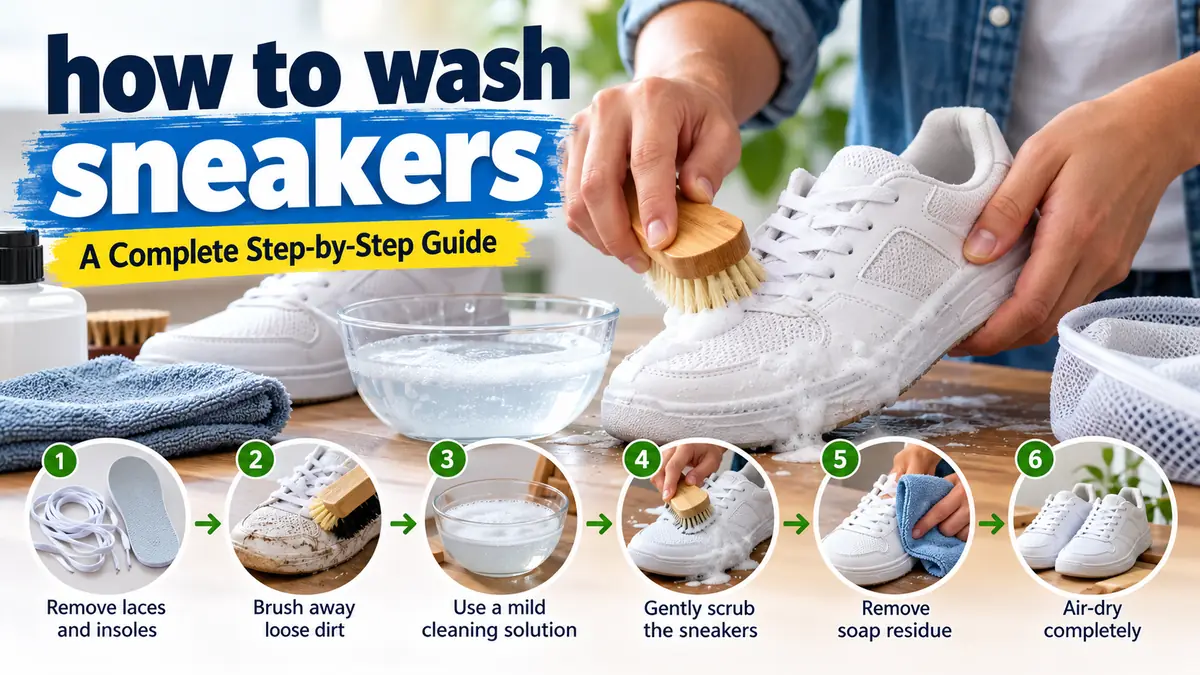
To wash sneakers safely, remove the laces and insoles, brush away loose dirt, and clean the uppers with mild detergent and lukewarm or cool water. Rinse away cleaning residue using a damp cloth, then allow the shoes to air-dry completely. Machine washing is suitable only when the manufacturer’s care instructions permit it.
This guide explains how to clean sneakers by hand, when machine washing is appropriate, how to treat different materials, and which mistakes to avoid.
What to Know Before Washing Sneakers
Before reaching for detergent, inspect your shoes. Not every pair can tolerate the same cleaning process.
Sneakers often combine several materials, including textile uppers, foam midsoles, rubber outsoles, adhesives, and decorative components. Excessive water, heat, or harsh cleaning chemicals can affect these parts differently.
Check the Sneaker Material
The upper material is one of the most important factors in choosing a cleaning method.
| Sneaker material | Recommended cleaning method | Machine washable? |
|---|---|---|
| Canvas | Gentle hand washing with mild detergent | Sometimes, if manufacturer-approved |
| Polyester mesh | Soft-brush cleaning with mild soap | Sometimes, if manufacturer-approved |
| Knit fabric | Gentle hand cleaning with minimal friction | Only if explicitly approved |
| Genuine leather | Damp cloth and leather-appropriate cleaner | No |
| Suede | Suede brush and specialized cleaner | No |
| Nubuck | Dry brushing and nubuck-specific products | No |
| Synthetic leather | Gentle wiping with a damp cloth | Usually not recommended |
| Mixed materials | Follow the care instructions for the most delicate component | Generally avoid |
Even two sneakers that look similar may have different construction methods.
For example, a canvas sneaker with glued decorative details may be more vulnerable to machine washing than a simple textile sneaker.
Read the Manufacturer’s Cleaning Instructions
Major footwear brands such as Nike, Adidas, New Balance, and Converse publish shoe-care recommendations.
These instructions may differ by model and material.
A general recommendation for fabric shoes should never override specific care guidance for your sneakers.
Gather Your Cleaning Supplies
Most everyday sneaker-cleaning jobs require only basic household supplies:
- Soft-bristled brush or clean toothbrush
- Microfiber cloth
- Mild liquid laundry detergent or gentle soap
- Small bowl of cool or lukewarm water
- Clean towel
- Paper towels or plain white paper for shaping
- Mesh laundry bag, if machine washing is approved
A separate, slightly firmer brush can be useful for rubber outsoles, but avoid using it on delicate uppers.
how to wash sneakers by Hand
Hand washing offers greater control over water exposure, brushing pressure, and cleaning products. It is generally the preferred method for sneakers with delicate fabrics, glued details, or mixed materials.
Approximate cleaning time: 15–30 minutes per pair, excluding drying.
Step 1: Remove Shoelaces and Insoles
Start by taking out the shoelaces.
Removing them exposes dirt that collects around the eyelets and tongue. It also prevents laces from trapping cleaning solution against the shoe.
If the insoles are removable, take them out as well.
Check whether they can be washed. Some foam or specialty insoles can deteriorate when soaked, so wiping them with a lightly damp cloth may be safer.
Step 2: Brush Away Loose Dirt
Use a dry, soft-bristled brush to remove dust, dried mud, and debris.
Pay attention to:
- Seams and stitching
- Toe boxes
- Areas around the tongue
- Midsole edges
- Outsole grooves
Allow wet mud to dry before brushing it away. Scrubbing wet mud often spreads the dirt deeper into the fabric.
This simple preparation reduces the amount of dirty water needed during washing.
Step 3: Prepare a Mild Cleaning Solution
Mix a small amount of mild liquid detergent into a bowl of cool or lukewarm water.
A few drops are usually enough for a small bowl.
Avoid creating an overly concentrated solution. Excess detergent can leave residue, attract dirt, and make rinsing more difficult.
Do not use chlorine bleach, strong solvents, or highly alkaline household cleaners on ordinary sneaker materials.
Step 4: Gently Scrub the Upper
Dip a soft brush or microfiber cloth into the cleaning solution.
Remove excess liquid before applying it to the sneaker.
Work in small sections using light, controlled motions. Focus on stained areas without repeatedly scrubbing the same spot.
For mesh and knit fabrics, a microfiber cloth may be gentler than a toothbrush.
For canvas, a soft brush can help loosen dirt trapped between woven fibers.
Avoid saturating the shoe, particularly around glued seams and padded areas.
Step 5: Clean the Midsoles and Outsoles
Rubber outsoles and synthetic midsoles often collect the most visible dirt.
Use a separate brush to clean these areas.
For textured outsole grooves, a toothbrush can help dislodge trapped grit and small stones.
Take care with painted or coated midsoles. Aggressive scrubbing may remove their finish.
If a stain does not respond to gentle cleaning, avoid increasing pressure indefinitely. Some discoloration is permanent.
Step 6: Remove Soap Residue
Wipe the sneakers with a clean microfiber cloth dampened with water.
Repeat until the visible cleaning solution is removed.
Avoid rinsing shoes under a strong stream of water unless the manufacturer’s instructions specifically allow thorough rinsing.
Soap residue can create stiff patches, leave marks, or attract fresh dirt.
Step 7: Air-Dry the Sneakers
Use a dry towel to absorb surface moisture.
Stuff the shoes loosely with clean, plain white paper to help maintain their shape and absorb moisture. Replace damp paper when necessary.
Place the sneakers in a well-ventilated location away from direct heat.
A fan circulating room-temperature air can improve drying.
Do not wear the shoes until the interior, padding, and insoles are completely dry.
how to wash sneakers in a Washing Machine
Machine washing may seem convenient, especially when sneakers are heavily soiled. However, it introduces risks that hand washing largely avoids.
Repeated tumbling can damage adhesives, distort cushioning, loosen decorative components, and stress stitching.
Many footwear manufacturers recommend hand cleaning rather than machine washing.
Can You Put Sneakers in the Washing Machine?
Some fabric sneakers may be machine washable, but only when their care instructions allow it.
Avoid machine washing shoes containing leather, suede, nubuck, delicate decorations, or components that may not tolerate prolonged water exposure.
Running shoes with specialized cushioning or bonded construction may also be unsuitable.
If the manufacturer’s guidance is unavailable, hand cleaning is the safer default.
Step-by-Step Machine Washing Instructions
For sneakers explicitly approved for machine washing, follow these steps:
- Remove shoelaces and removable insoles.
- Brush away loose dirt and debris.
- Place the sneakers inside a mesh laundry bag.
- Add a few old towels to cushion the shoes and help balance the load.
- Use a small amount of mild liquid detergent.
- Select a cold-water, gentle cycle with low agitation.
- Use a low spin setting if permitted by the care instructions.
- Remove the sneakers promptly and air-dry them completely.
Never use a heated tumble dryer unless the manufacturer specifically states that it is safe.
Heat can shrink certain textiles, deform synthetic components, and weaken adhesives.
Hand Washing vs. Machine Washing
| Factor | Hand washing | Machine washing |
|---|---|---|
| Cleaning control | High | Limited |
| Suitable materials | Most washable fabrics, with appropriate technique | Manufacturer-approved materials only |
| Risk of damage | Generally lower | Potentially higher |
| Effort | More hands-on work | Less hands-on work |
| Spot cleaning | Excellent | Less targeted |
| Drying | Air drying | Air drying |
| Best use | Routine cleaning and delicate construction | Approved, durable textile sneakers |
Quick takeaway: Hand washing is usually the better choice when preserving sneaker materials and construction matters more than convenience.
How to Clean Different Types of Sneakers
The correct cleaning technique changes depending on the upper material, surface finish, and construction.
Using the same brush and cleaning solution on every sneaker can lead to scratches, fading, watermarks, or fabric damage.
How to Wash White Sneakers Without Yellowing
White sneakers show dirt easily, and improper cleaning can leave yellowish patches or uneven discoloration.
For white canvas or mesh sneakers:
- Remove loose dirt with a soft brush.
- Mix mild, dye-free detergent with water.
- Apply the solution gently using a soft brush or cloth.
- Concentrate on visible stains rather than soaking the entire shoe.
- Remove detergent thoroughly with a clean, damp cloth.
- Air-dry away from direct sunlight and heat.
A small amount of baking soda mixed with water may help treat certain stains on compatible fabrics. Test it on an inconspicuous area first and remove all residue afterward.
Avoid chlorine bleach, which may damage fibers, affect adhesives, or cause discoloration.
Yellowing can also result from aging materials, oxidation, or adhesive changes. Cleaning will not necessarily reverse these processes.
How to Clean Canvas Sneakers
Canvas is a woven textile commonly used in casual footwear.
Its structure can trap dust and dirt, but many canvas uppers tolerate gentle hand cleaning.
Start with dry brushing, then apply a diluted mild detergent using a soft brush. Work across the fabric without applying excessive pressure.
Use a damp cloth to remove the solution and allow the shoes to dry naturally.
For colored canvas, test the cleaning solution first because dyes may bleed or fade.
How to Clean Mesh and Knit Sneakers
Breathable mesh and knitted uppers are common in athletic footwear.
Their flexible fibers provide ventilation, but aggressive brushing can cause fraying, snagging, or pilling.
Use a microfiber cloth or an exceptionally soft brush with a mild soap solution.
Clean gently along the fabric’s structure rather than repeatedly scrubbing across it.
Nike recommends mild cleaning solutions and air drying for knit and mesh shoes, including Flyknit materials. Nike.com+1
Avoid twisting or wringing the upper to remove moisture.
How to Clean Leather Sneakers
Leather sneakers require a different approach from washable textiles.
Begin by wiping away dust with a dry microfiber cloth. Use a slightly damp cloth to remove surface dirt, then apply a leather-appropriate cleaner if necessary.
Do not soak genuine leather or place leather sneakers in a washing machine.
After cleaning, allow the leather to dry at room temperature. A compatible leather conditioner may help maintain the material, provided the manufacturer recommends it.
Leather sneakers with coated, patent, or specially finished surfaces may need different products.
How to Clean Suede and Nubuck Sneakers
Suede and nubuck are particularly sensitive to moisture and abrasion.
For ordinary surface dirt, allow the material to dry and use a suede brush to lift away debris.
Brush gently in the direction of the nap.
A suede eraser can help remove certain dry marks. More stubborn stains may require a specialist suede cleaner.
Avoid soaking suede or applying ordinary laundry detergent.
Adidas advises against using water for routine suede cleaning because it can leave marks and alter the material’s appearance. adidas
If suede becomes heavily stained, professional cleaning may be safer than experimenting with household chemicals.
How to Remove Stubborn Stains From Sneakers
Different stains respond to different cleaning methods. Identifying the source of the stain can prevent unnecessary scrubbing.
Removing Mud and Grass Stains
For mud, wait until it dries before removing loose particles with a brush.
Then use a mild detergent solution to clean any remaining discoloration.
Grass stains can be more difficult because plant pigments may penetrate textile fibers.
On compatible fabric sneakers, a small amount of diluted liquid laundry detergent can be applied to the stained area. Gently work it in, allow a short contact period according to the detergent instructions, and wipe away thoroughly.
Avoid applying stain removers to suede, leather, or dyed fabrics without checking compatibility.
Removing Oil and Grease
Oil stains are particularly challenging because they do not dissolve readily in water.
For a fresh grease mark on suitable textile material, gently blot excess oil with a clean cloth. Do not rub it across the surface.
A small amount of mild liquid detergent may help lift the remaining stain.
Test the solution first, especially on colored fabrics.
If grease has penetrated suede, use a specialist cleaning method rather than saturating the material with detergent.
Removing Scuff Marks From Rubber Soles
Rubber outsoles and toe caps often develop dark scuff marks.
Start with a damp microfiber cloth and mild soap.
If the mark remains, a melamine cleaning sponge may help on some unpainted rubber surfaces. Use minimal pressure and test first because these sponges are mildly abrasive.
Do not use abrasive sponges on leather, painted midsoles, glossy coatings, or delicate textiles.
Can Baking Soda and Vinegar Clean Sneakers?
Baking soda and white vinegar appear frequently in homemade sneaker-cleaning methods.
Baking soda can act as a mild abrasive, while diluted vinegar may help with certain deposits and odors. However, neither is universally suitable for all footwear materials.
Combining baking soda and vinegar produces fizzing as they react, but this does not automatically create a stronger cleaning solution.
For routine sneaker care, mild detergent and water are usually more predictable.
Never mix vinegar with chlorine bleach, as the combination can release toxic chlorine gas.
How to Wash Shoelaces and Clean Insoles
Cleaning only the outside of sneakers leaves behind dirt and moisture trapped inside.
Shoelaces, insoles, and interior lining also need attention.
Washing Shoelaces by Hand
Remove the laces and shake away loose debris.
Soak washable fabric laces briefly in mild soapy water, then rub them gently between your fingers to release dirt.
Rinse thoroughly and hang them to air-dry.
For white laces, use a fabric-safe detergent rather than relying on chlorine bleach.
If machine washing is permitted, place the laces inside a closed mesh laundry bag so they cannot become tangled in the machine.
Cleaning Removable Insoles
Insoles absorb sweat and may contribute to unpleasant odors.
Remove them carefully and inspect their material.
For washable insoles, wipe or gently scrub the surface with a lightly damp cloth and mild cleaning solution.
Remove residue with another damp cloth.
Avoid soaking memory foam, orthopedic inserts, or insoles with delicate bonded layers unless their manufacturer permits it.
Allow them to dry completely before putting them back into the sneakers.
Nike’s shoe-care guidance recommends cleaning removable insoles separately and fully air-drying them before reinsertion. Nike.com
How to Remove Bad Smells From Sneakers
Unpleasant sneaker odors commonly develop when sweat, moisture, and microorganisms accumulate inside footwear.
Cleaning helps remove odor-producing residue, but drying and ventilation are equally important.
To reduce sneaker odor:
- Remove insoles after heavy use when practical.
- Allow shoes to dry between wears.
- Wear clean, moisture-managing socks.
- Clean removable insoles according to their care instructions.
- Use a shoe deodorizer compatible with the footwear material.
- Replace insoles that remain persistently unpleasant despite cleaning.
Baking soda is sometimes used to absorb odors, but loose powder can become trapped in fabric linings and may be difficult to remove completely.
If used, keep it contained in a breathable sachet rather than scattering it inside delicate shoes.
Persistent odors may indicate that the interior materials need more thorough cleaning or replacement.
How to Dry Sneakers After Washing
Drying is one of the most overlooked stages of sneaker care.
Shoes that appear dry on the outside may still contain moisture inside their padding, toe box, or footbed.
Wearing them too early can encourage further odor and discomfort.
How Long Do Sneakers Take to Dry?
Drying time depends on the amount of water absorbed, the shoe’s construction, humidity, temperature, and airflow.
Lightly cleaned sneakers may dry within several hours, while heavily damp shoes can require 24–48 hours or longer.
New Balance recommends allowing approximately 24 hours for air drying after routine cleaning, while recognizing the need for thorough drying. New Balance
These times are estimates, not guarantees.
Best Way to Air-Dry Sneakers
Place cleaned sneakers in a dry, well-ventilated room.
Remove the insoles and loosen the tongues to improve airflow.
Stuff the toe boxes loosely with plain white paper or clean absorbent material. Replace it if it becomes damp.
A room-temperature fan can help move air around the shoes.
Before wearing them, check the toe area, heel padding, and underside of the insoles for remaining moisture.
Can You Put Sneakers in the Dryer?
For most sneakers, a heated tumble dryer is not recommended.
Excessive heat can weaken adhesives, shrink or deform textile components, and damage cushioning.
Even an unheated tumbling cycle may subject shoes to repeated impacts.
Nike specifically recommends air drying rather than machine drying to reduce the risk of damage. Nike.com
Hair dryers, radiators, space heaters, and direct high heat should also be avoided.
Common Mistakes to Avoid When Washing Sneakers
A few cleaning habits can shorten the life of otherwise durable footwear.
| Common mistake | Possible consequence | Better approach |
|---|---|---|
| Using hot water | Adhesive or material damage | Use cool or lukewarm water |
| Scrubbing aggressively | Fraying, scratches, surface wear | Use gentle pressure |
| Applying chlorine bleach | Discoloration and fiber damage | Choose mild, compatible cleaners |
| Soaking leather or suede | Watermarks, stiffness, damage | Use material-specific cleaning |
| Using excessive detergent | Residue and stiffness | Use a diluted solution |
| Machine washing without approval | Distortion and construction damage | Follow manufacturer guidance |
| Drying near direct heat | Warping or adhesive weakening | Air-dry at room temperature |
| Wearing damp sneakers | Persistent moisture and odor | Allow complete drying |
Another common mistake is trying to restore every stain with repeated cleaning.
Some marks are caused by material wear, oxidation, or permanent dye transfer rather than removable dirt.
Continuing to scrub may damage the shoe without improving its appearance.
How Often Should You Wash Sneakers?
There is no universal washing schedule that suits every pair.
Cleaning frequency depends on how often the shoes are worn, where they are used, and how much dirt accumulates.
For everyday sneakers, a quick wipe or dry brush after visibly dirty outings can prevent buildup.
More thorough cleaning may be appropriate every few weeks or whenever the shoes become noticeably soiled.
Running and training shoes often benefit from regular airing and occasional spot cleaning rather than frequent complete washing.
Shoes worn in muddy conditions may need attention immediately after use, once the mud has dried enough to brush away.
The goal is to clean when necessary without exposing materials to excessive moisture or friction.
How to Keep Sneakers Clean for Longer
Preventive care reduces the need for intensive washing.
Store sneakers in a cool, dry place with adequate ventilation. Avoid leaving damp shoes inside closed gym bags.
Rotate between pairs when possible so each has time to dry.
For compatible materials, a suitable protective spray may help reduce staining. Always follow the product’s instructions and test it on a small area first.
Brush away dry dirt before it becomes embedded in fabric.
Avoid unnecessary exposure to heavy rain, mud, and harsh chemicals, particularly when wearing suede or delicate leather.
New Balance also recommends rotating footwear, removing debris regularly, and avoiding direct heat during drying as part of long-term shoe maintenance. New Balance NZ
Final Thoughts on how to wash sneakers
Understanding how to wash sneakers starts with identifying the material and selecting a cleaning method that protects it.
For most everyday fabric sneakers, gentle hand washing with mild detergent, a soft brush, and controlled moisture is the safest practical approach. Machine washing should be reserved for shoes whose manufacturers explicitly allow it.
Leather, suede, and nubuck require specialized care, while mesh and knit materials benefit from minimal friction.
Above all, remove detergent residue and let your sneakers air-dry completely before wearing them again. Consistent light cleaning, proper storage, and careful drying can help keep your footwear looking better without unnecessary wear.