
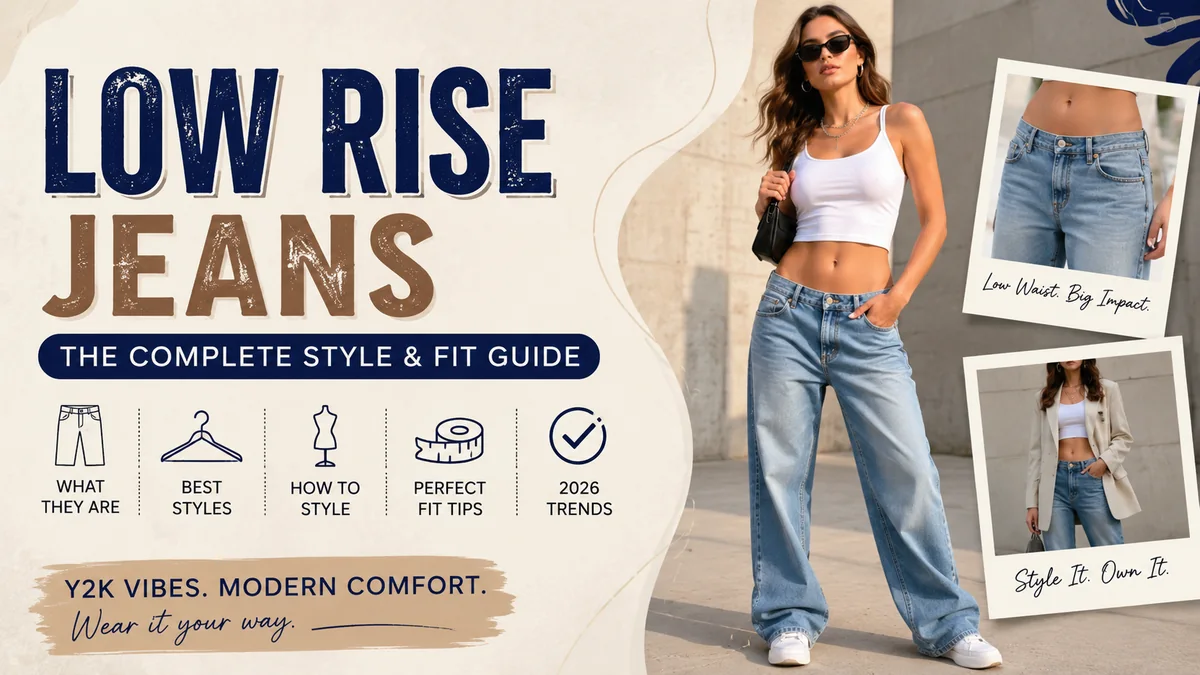
Few denim trends divide opinion quite like low rise jeans. For some, they bring back memories of early-2000s celebrity style, cropped tops, and ultra-low waistbands. For others, the modern versions feel surprisingly fresh: looser, more relaxed, and far easier to wear than their Y2K predecessors.
And they are no longer just a nostalgic revival. Low-slung denim remains part of the 2026 fashion conversation, appearing in wide-leg, baggy, slim, bootcut, and tailored silhouettes. Vogue’s recent denim coverage shows that designers and denim brands are treating lower rises as one option within a much broader range of contemporary jean fits.
Low rise jeans are denim trousers designed to sit below the natural waist, typically around the hips rather than the belly button. Modern versions range from subtle low-rise straight jeans to dramatic ultra-low cuts, with relaxed, baggy, bootcut, wide-leg, and slim silhouettes making the style considerably more versatile than its early-2000s reputation suggests.
What Are Low Rise Jeans?
The “rise” of a pair of jeans describes the distance between the crotch seam and the top of the waistband. It determines where the jeans sit on your torso.
High-rise jeans usually reach the natural waist or close to it. Mid-rise jeans generally sit somewhere between the natural waist and hips. Low-rise designs move the waistband farther down toward the hip bones.
That seemingly small difference changes the entire proportion of an outfit.
Low-waisted jeans expose more of the midsection, visually lengthen the torso, and shift attention toward the hips. Depending on the cut, they can look sleek and fitted or deliberately oversized and slouchy.
You’ll also see several related terms while looking at denim:
- Low rise: Sits noticeably below the natural waist.
- Low waist: Usually another name for low-rise.
- Low-slung: Often describes relaxed jeans worn loosely around the hips.
- Hip-hugger: An older term for trousers designed to sit around the hips.
- Ultra-low rise: A more extreme version with an especially low waistband.
The important detail is that “low rise” doesn’t describe the leg.
You can have low-rise skinny jeans, straight-leg jeans, flares, bootcuts, barrel-leg jeans, or oversized wide-leg denim.
Low Rise vs Mid Rise vs High Rise Jeans
The easiest way to understand the difference is by looking at where the waistband sits.
| Jean Rise | Typical Position | Overall Effect | Often Works Well With |
|---|---|---|---|
| Low rise | Around or above the hips | Longer-looking torso, hip-focused silhouette | Fitted tees, tanks, shirts, oversized jackets |
| Mid rise | Between hips and natural waist | Balanced proportions | Almost any casual top |
| High rise | Near or above natural waist | More defined waist, longer-looking legs | Cropped tops, tucked shirts, sweaters |
Actual measurements aren’t universal. Two brands can label jeans “low rise” while cutting them differently.
That’s why the stated rise measurement and garment measurements are more useful than relying entirely on the label.
Quick Takeaway: If you like the appearance of low-waisted denim but dislike extreme Y2K cuts, start with a moderately low or low-slung pair rather than an ultra-low-rise design.
Where Did Low Rise Jeans Come From?
Low-rise fashion didn’t suddenly appear when Britney Spears became famous.
Hip-hugging trousers had already become associated with youthful counterculture decades earlier. Vogue traces hip-hugger fashion back to the 1960s, when low-waisted trousers and modified bell-bottoms became part of a rebellious approach to clothing.
The silhouette later received a much more provocative reinterpretation through designer Alexander McQueen.
His famously low “bumster” trousers appeared during the 1990s and deliberately changed conventional ideas about where a trouser waist should sit. Vogue identifies McQueen’s 1993 Taxi Driver collection and subsequent 1990s designs as important precursors to the low-rise explosion that followed.
By the beginning of the 2000s, the look had moved firmly into mainstream fashion.
Levi’s introduced its Superlow silhouette in 2001, while celebrities including Britney Spears helped turn low-waisted denim into one of the defining looks of the decade. Denim itself also became more experimental, appearing distressed, decorated, embellished, faded, and produced in an enormous variety of cuts.
The Y2K Low-Rise Era
The classic Y2K formula was unmistakable:
Low waistband. Short top. Visible midriff. Often a fitted or flared leg.
Pop stars and celebrities amplified the look through music videos, paparazzi photographs, magazines, television, and red-carpet appearances.
Britney Spears became one of the style’s most recognizable advocates. Mariah Carey wore famously low, modified denim, while other artists experimented with fitted, embellished, and hip-hugging jeans. Vogue has documented how Carey’s “waistless” denim became memorable enough to inspire later recreations.
But the original trend also developed a difficult reputation.
Ultra-low jeans could be restrictive, impractical when sitting or bending, and closely associated with the narrow beauty standards promoted during the era.
That history helps explain why their return has generated both enthusiasm and resistance.
Why Are Low Rise Jeans Back?
Fashion works in cycles, but the current revival isn’t simply a copy-and-paste version of 2002.
The wider resurgence of Y2K fashion, combined with renewed interest in 1990s silhouettes, relaxed tailoring, oversized denim, and individual styling, created the right environment for low waists to return.
Recent fashion coverage suggests low-rise denim has moved beyond being a short-lived comeback.
Vogue’s spring 2026 denim reporting describes low-rise as an established part of the current denim landscape, with brands producing both slim and wide-leg versions. Designers interviewed by the publication also pointed toward lower rises being paired with more tailored leg shapes rather than exclusively oversized silhouettes.
Meanwhile, 2026 runway denim isn’t moving in only one direction.
Skinny jeans are resurfacing. Oversized jeans remain prominent. Mid-rise denim is receiving renewed attention. Low-rise fits continue alongside all three.
That matters because modern denim is becoming less about finding the single “correct” rise and more about choosing proportions that suit the outfit.
Modern Low Rise vs Y2K Low Rise
The biggest difference is flexibility.
Early-2000s low-rise denim often meant an extremely low waistband combined with a tight fit. Today’s versions can sit a little higher and frequently use more relaxed silhouettes.
| Y2K Low Rise | Modern Low Rise |
|---|---|
| Often ultra-low | Low to moderately low |
| Frequently tight | Relaxed, straight, slim or oversized |
| Strongly associated with crop tops | Styled with everything from shirts to blazers |
| Flares and fitted cuts dominated | Wide-leg, baggy, bootcut, barrel and slim cuts coexist |
| Often deliberately revealing | Can look casual, minimalist or polished |
Sienna Miller’s more recent approach illustrates the difference particularly well. Vogue noted that her modern low-rise cargo jeans used a baggier silhouette and a less extreme waistline than the skinny low-rise styles she wore during the 2000s.
That’s essentially the modern formula: keep the lower waist if you like it, but change the proportions around it.
Types of Low Rise Jeans
Choosing low-rise denim becomes much easier once you stop treating it as a single style.
Low Rise Baggy Jeans
This is one of the easiest contemporary interpretations.
The waistband sits around the hips while the legs remain loose. Instead of emphasizing every contour, the fabric hangs away from the body.
Recent celebrity and fashion coverage continues to feature low-slung baggy denim, including styles associated with Jennifer Lawrence and brands such as Levi’s, Madewell, Gap, Agolde, and others.
Baggy low-rise jeans work especially well with:
- Fitted T-shirts
- Ribbed tanks
- Bodysuits
- Cropped jackets
- Oversized blazers
- Sneakers
- Loafers
The contrast between a fitted top and loose denim usually creates the cleanest proportions.
Low Rise Wide Leg Jeans
Wide-leg denim provides even more volume.
These jeans can create a long, fluid silhouette, particularly when the hem nearly reaches the floor. The combination feels less like stereotypical 2000s denim and more like modern relaxed tailoring.
For a balanced outfit, try a simple tank, fitted knit, tucked shirt, or structured jacket.
Low Rise Straight Leg Jeans
Straight-leg jeans offer a middle ground.
They aren’t dramatically oversized, but they don’t cling like skinny jeans either. That makes them useful for someone experimenting with a lower waistband for the first time.
Add loafers and a blazer for a polished look or sneakers and a T-shirt for something more casual.
Low Rise Bootcut Jeans
Bootcut denim narrows around the upper leg before widening slightly toward the hem.
It provides a subtle nod to late-’90s and early-2000s fashion without requiring the exaggerated flare of traditional bell-bottoms.
A fitted top and boots make the silhouette especially cohesive.
Low Rise Flare Jeans
Flared jeans create more drama.
Because the hem widens substantially below the knee, footwear becomes important. Platforms, boots, and heels can complement the long line created by the flare.
If you’re intentionally building a Y2K-inspired outfit, this is one of the most recognizable combinations.
Low Rise Skinny Jeans
Yes, they’re returning too.
Vogue’s 2026 denim coverage has documented renewed runway interest in slim and skinny silhouettes, including lower-rise options. Designers have shown slimmer denim alongside oversized jackets and blazers, providing a distinctly different proportion from the loose denim that dominated recent years.
Low-rise skinny jeans create a stronger body-hugging effect, so precise sizing matters considerably more.
Ultra Low Rise Jeans
This is the most dramatic version.
Ultra-low jeans sit substantially below the natural waist and intentionally expose more of the torso.
They create a strong fashion statement but tend to offer less coverage and can require more adjustment when sitting, bending, or moving.
If practicality matters more than recreating an authentic early-2000s silhouette, a standard low rise is usually easier to live with.
How Should Low Rise Jeans Fit?
This is where many unsuccessful low-rise outfits go wrong.
A lower waistband shouldn’t automatically mean painfully tight denim.
The waistband should sit securely enough that you aren’t constantly pulling it upward, but it shouldn’t dig aggressively into your hips.
Pay attention to four areas.
1. The Waistband
The waistband should rest where the jeans were designed to sit.
Don’t force mid-rise jeans downward to imitate a low-rise silhouette. Doing so changes the intended fit through the crotch and seat.
If you want low-rise jeans, choose a pattern actually constructed with a lower rise.
2. The Hips
Because the waistband sits closer to the hips, hip measurements become particularly important.
If the jeans pull strongly across the pockets, create uncomfortable tension around the zipper, or dig into the sides, try another size or cut.
3. The Crotch
Too much pulling here usually means the fit isn’t right.
Conversely, excessive dropped fabric may mean the jeans are too large unless they’re intentionally designed as a slouchy or dropped-crotch silhouette.
4. The Length
Consider the shoes you’ll wear most often.
Wide-leg and baggy jeans can look great with longer hems, and recent runway styling has deliberately embraced floor-skimming denim.
For everyday wear, however, hems dragging heavily across pavement quickly become dirty and damaged.
Quick Takeaway: Judge low-rise jeans by comfort at the hips, crotch, and seat—not simply by whether you can button them.
Do Low Rise Jeans Work for Different Body Types?
Yes.
The idea that someone needs a particular body shape to wear low-rise denim comes largely from how the trend was marketed during the early 2000s.
Clothing doesn’t require a specific body type.
What changes is how different cuts affect visual proportions.
Someone with a longer torso might enjoy the way low-rise jeans emphasize that length. Someone with a shorter torso may prefer a moderate low rise rather than an ultra-low cut. Curvier hips may feel better in denim with some stretch or a waistband shaped specifically for the hip-to-waist difference.
The leg silhouette matters just as much.
If one low-rise skinny pair feels uncomfortable, that doesn’t necessarily mean low-rise denim is wrong for you. A loose straight-leg or baggy cut may feel completely different.
Try combinations rather than judging the entire category from one pair.
How to Style Low Rise Jeans Without Looking Dated
The easiest way to make low-rise jeans look current is to avoid recreating an entire 2003 outfit unless that’s deliberately your goal.
Use one nostalgic element and surround it with modern basics.
Pair Them With a Simple Fitted Top
A fitted tank or T-shirt balances loose denim particularly well.
With baggy low-rise jeans, the contrast creates shape without requiring complicated layering.
A cropped top exposes more midriff, while a full-length fitted tee provides extra coverage without hiding the lower waistband entirely.
Add an Oversized Blazer
This is one of the strongest ways to move the look away from literal Y2K styling.
Try:
Low-rise straight jeans + fitted tank + oversized blazer + loafers
The relaxed waistband keeps the outfit casual while tailoring gives it structure.
Wear a Button-Down Shirt
A crisp shirt makes low-waisted denim surprisingly versatile.
Wear it tucked, partially tucked, open over a tank, or loose depending on how much of the waistband you want visible.
Use Belts Strategically
Belts do more than hold jeans in place.
They draw attention to the lower horizontal line created by the waistband and can make simple denim feel intentionally styled.
Runway interpretations have repeatedly used belts, boots, and other accessories to transform low-rise denim rather than relying on the waistband alone.
Try an Oversized Sweater
You don’t need to expose your stomach simply because you’re wearing low-rise jeans.
A relaxed sweater combined with low-slung straight or baggy denim creates an easy silhouette where the rise becomes almost secondary.
Choose Footwear Based on the Leg Shape
Think about the entire silhouette.
| Jeans | Shoes to Try |
|---|---|
| Baggy | Sneakers, loafers, boots |
| Straight | Ballet flats, loafers, sneakers |
| Bootcut | Ankle boots, heeled boots |
| Flare | Platforms, heels, boots |
| Skinny | Tall boots, pointed shoes, loafers |
| Wide-leg | Sneakers, boots, heels |
There are no strict rules, but coordinating the shoe with the hem makes the outfit look more deliberate.
How to Wear Low Rise Jeans With More Coverage
You don’t have to wear a crop top.
This is one of the biggest misconceptions surrounding the trend.
For more coverage, combine low-rise denim with:
- Full-length fitted tees
- Bodysuits
- Button-down shirts
- Longer tanks
- Lightweight sweaters
- Blazers
- Cardigans
- Layered shirts and jackets
You can also choose jeans that sit only slightly below the belly button rather than extremely low on the hips.
This preserves the lower-waist proportion without creating the exposed look associated with Y2K fashion.
How to Choose the Right Pair
Online photos can be misleading because the same pair may sit differently depending on the model’s torso length, hip shape, and size.
Use the garment specifications whenever possible.
Check the Rise Measurement
Don’t rely entirely on words like “low,” “super low,” or “low-slung.”
Look at the actual measurements supplied by the manufacturer and compare them with jeans you already own.
Measure Your Hips
Since low-rise jeans sit closer to the hips than the natural waist, your hip measurement becomes especially important.
Follow the individual brand’s size chart rather than automatically buying your usual jean size.
Consider Rigid vs Stretch Denim
Rigid denim provides more structure and tends to hold its shape.
Stretch denim generally allows more flexibility and may feel easier during prolonged sitting and movement.
Neither is universally better.
The right choice depends on whether you want structure or flexibility.
Decide How Loose You Want Them
A true low-rise cut and oversized jeans worn low aren’t always the same thing.
Some people intentionally size up in denim to create a hip-slung effect. Vogue’s 2026 denim reporting notes that this behavior has influenced brands to design genuine lower-rise silhouettes across both slim and wide-leg styles.
A purpose-built low-rise jean will usually give you more predictable proportions.
Sit Down Before Deciding
Standing in front of a mirror tells only half the story.
Sit.
Bend.
Walk.
Climb a few stairs if possible.
If you’re constantly adjusting the waistband after two minutes, you’ll probably dislike wearing the jeans for several hours.
Common Low Rise Jeans Styling Mistakes
Buying Them Too Tight
A lower waistband puts pressure in a different place than high-rise denim.
If the jeans dig deeply into your hips, sizing up or trying another cut often works better than waiting for uncomfortable denim to magically become comfortable.
Ignoring Torso Proportions
Low-rise jeans visually lengthen the torso.
That may be exactly what you want. If it isn’t, a slightly higher low-rise or mid-rise cut may produce more balanced proportions.
Copying Y2K Styling Too Literally
Low-rise jeans don’t require butterfly tops, rhinestones, tiny handbags, and platform sandals all at once.
Unless you’re intentionally creating a full Y2K outfit, combining contemporary pieces with one nostalgic element generally feels fresher.
Forgetting About Underwear
The lower waistband changes which underwear cuts remain concealed.
Try your outfit from the front and back while sitting and bending before leaving home.
Choosing Trends Over Comfort
Fashion should work for your actual day.
If you’re sitting at a desk for eight hours, commuting, walking long distances, or frequently bending down, an ultra-low rigid pair might become frustrating.
A relaxed low-slung cut can deliver a similar visual effect with much more freedom.
Are Low Rise Jeans Still in Style in 2026?
Yes—but they aren’t the only jeans that matter.
Current denim is unusually varied.
Vogue’s 2026 trend reporting shows low-rise fits continuing alongside skinny, oversized, mid-rise, cuffed, straight, and other denim silhouettes. Low waists are appearing across slim and wide-leg cuts rather than being restricted to one nostalgic shape.
Celebrity styling also continues to reinforce the low-slung look. Hailey Bieber’s 2026 Gap denim collaboration followed her well-documented preference for the brand’s Low-Rise ’90s Loose Jeans, demonstrating how relaxed lower-waist denim has moved comfortably into mainstream casual style.
That’s arguably the biggest difference between the current revival and the early 2000s.
You don’t have to participate.
When low-rise jeans first dominated mainstream denim, avoiding them could be surprisingly difficult. Today, high-rise, mid-rise, low-rise, skinny, straight, flare, barrel, and baggy styles can exist at the same time.
Personal preference matters more than chasing one prescribed silhouette.
How to Make Low Rise Jeans Feel Like Your Own
Start with the version closest to clothing you already enjoy.
If you normally wear relaxed jeans, try low-rise baggy denim.
If straight-leg jeans dominate your wardrobe, choose the same leg shape with a slightly lower waistband.
If you love tailored outfits, experiment with low-rise straight jeans, a fitted knit, structured blazer, and loafers.
And if you’re interested specifically in Y2K fashion, lean into flares, tiny tops, vintage-inspired washes, and nostalgic accessories.
The point isn’t to transform your entire wardrobe around a trend.
It’s to find the interpretation that fits your existing style.
Low rise jeans have survived enough fashion cycles to prove that they’re more than a single early-2000s costume. Their current form is broader, looser, and considerably more adaptable, ranging from subtle hip-slung straight jeans to dramatic ultra-low denim.
Choose the rise that feels comfortable, match the leg shape to the proportions you like, and style the rest of the outfit around how you actually dress. That’s what makes the modern low-rise revival work.