
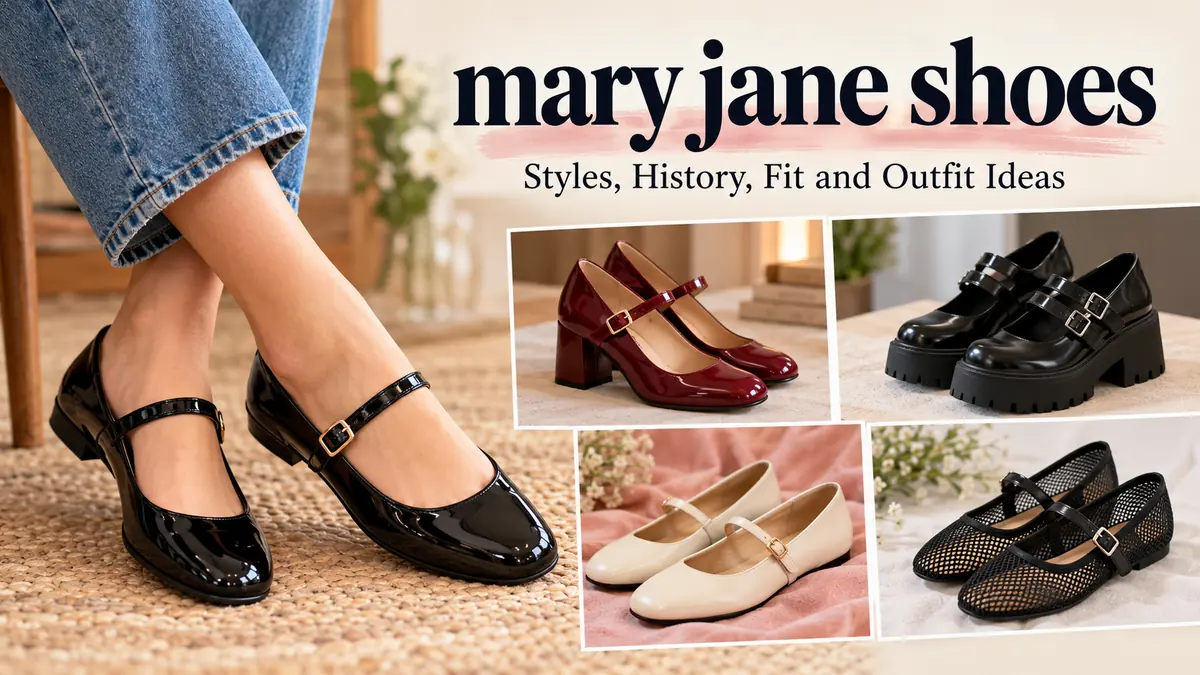
Mary jane shoes have a distinctive charm that few footwear styles can match. Their signature strap, rounded or almond-shaped toe, and timeless silhouette make them recognizable across generations. Once associated primarily with children’s school uniforms, these shoes have become a versatile fashion staple for adults.
Mary jane shoes are closed-toe shoes featuring one or more straps across the instep, usually secured with a buckle, button, or hook-and-loop fastening. They come in flat, platform, and heeled designs, combining the structure of traditional dress shoes with the convenience of an adjustable strap. Modern versions suit casual, professional, and formal outfits.
From classic black leather designs to chunky platforms and delicate ballet-inspired flats, understanding the different styles can help you identify which features work best for your wardrobe and everyday comfort.
What Are mary jane shoes?
Mary Jane shoes are a footwear style defined primarily by a strap crossing the top of the foot. Unlike ordinary ballet flats, which typically have an open instep, Mary Janes use this strap to create their recognizable appearance and help keep the shoe in place.
Traditional designs usually feature a rounded toe, low heel, closed upper, and single adjustable strap. However, contemporary interpretations may include square toes, pointed toes, multiple straps, platform soles, and substantial block heels.
Key Features of Mary Jane Footwear
Several characteristics distinguish this style from other women’s shoes:
- Instep strap: A single or multiple straps crossing the upper foot.
- Closed toe: A protective front that may be round, square, almond-shaped, or pointed.
- Adjustable fastening: Buckles, buttons, elastic inserts, or hook-and-loop closures.
- Varied heel heights: Flat soles, low heels, block heels, platforms, and occasionally stilettos.
- Different materials: Smooth leather, patent leather, suede, velvet, canvas, and synthetic alternatives.
- Versatile appearance: Designs range from traditional school shoes to contemporary fashion footwear.
Not every pair includes all these features. The instep strap remains the most recognizable characteristic.
How Are Mary Janes Different From Ballet Flats?
Although both styles can have slim silhouettes and low-profile soles, their construction differs.
| Feature | Mary Jane Shoes | Ballet Flats |
|---|---|---|
| Signature design | Strap across instep | Usually no instep strap |
| Toe shape | Round, square, almond, or pointed | Often round or almond |
| Fastening | Buckle, elastic, or similar closure | Usually slip-on |
| Heel options | Flats, blocks, platforms, high heels | Typically flat or very low |
| Foot retention | Strap helps secure shoe | Depends mainly on upper fit |
| Typical styling | Classic, preppy, retro, contemporary | Minimalist, feminine, casual |
The strap may help prevent heel slippage, but it cannot compensate for a shoe that is the wrong length or width.
The History and Evolution of mary jane shoes
Mary Jane shoes have a longer history than many modern fashion trends. Their origins can be traced to earlier strap-fastened footwear, while the familiar name became popular during the early twentieth century.
Where Did the Name Mary Jane Come From?
The name is commonly linked to Mary Jane, a character in the Buster Brown comic strip created by American cartoonist Richard F. Outcault in 1902.
The Brown Shoe Company used Buster Brown characters in its footwear advertising, helping popularize the association between children’s strap shoes and the Mary Jane name.
Although similar footwear existed before the comic strip, this marketing connection played an important role in establishing the term.
How the Style Changed Over Time
Early twentieth century
Mary Janes became associated with children’s dress shoes and school footwear. Black patent leather designs were especially recognizable, although other materials were also used.
1920s and 1930s
Adult versions became fashionable, including heeled designs worn with dresses and eveningwear. Strap-fastened shoes complemented the shorter hemlines and dance-oriented fashion of the period.
1960s
The style found renewed popularity through youthful, mod-inspired fashion. Rounded toes and low heels worked well with shift dresses and miniskirts.
1990s
Chunky Mary Janes became associated with alternative fashion, including grunge-inspired outfits, platform shoes, and contrasting socks.
2020s
The silhouette has remained prominent through ballet-inspired fashion, preppy styling, retro revivals, and contemporary interpretations featuring mesh uppers, metallic finishes, and bold platforms.
Designers and footwear labels such as Miu Miu, Prada, Dr. Martens, and Charles & Keith have offered different interpretations of the style, illustrating how easily it moves between traditional and experimental fashion.
Popular Types of mary jane shoes
Mary Janes are not limited to a single shape. The right variation depends on the appearance, comfort, and practical features you want.
Babies Femme en cuir noir vernis
Classic Flat Mary Janes
Traditional flat Mary Janes feature a rounded toe, slim sole, and single strap. They work particularly well with tailored trousers, midi skirts, and simple dresses.
Fester (35, 38) – SUVENIR CALZADOS
Chunky Platform Mary Janes
These shoes have thick soles, sometimes with lugged outsoles or pronounced heels. Their heavier proportions suit alternative, grunge, and streetwear-inspired outfits.
Heeled Mary Janes
Low or medium block heels offer a dressier interpretation. Heel height and shape influence stability, making wider, lower heels generally easier to manage than narrow high heels.
Tamaris Lorita, Ballerina’s, Dames, Maat: 41, Red
Double-Strap Mary Janes
Two straps add visual detail and may provide extra adjustability. Their appearance can range from understated vintage designs to bold contemporary footwear.
Marilù Black Mesh ballet flat with strap – Fabio Rusconi
Ballet-Inspired and Mesh Mary Janes
These styles feature soft uppers, delicate straps, and streamlined silhouettes. Mesh and textile versions can feel lightweight, although their support and durability vary by construction.
Other Common Variations
Square-toe Mary Janes provide a more geometric appearance, while pointed-toe versions create a sharper dress-shoe silhouette.
T-strap shoes are closely related but differ in construction: a vertical strap runs from the toe area toward an ankle or instep strap, forming a T-shaped design.
Velvet and satin Mary Janes are often associated with occasionwear, while leather and rubber-soled versions are more commonly suited to frequent everyday use.
How to Style mary jane shoes for Different Outfits
One reason Mary Janes remain popular is their ability to complement different clothing styles without losing their distinctive identity.
Their appearance changes significantly depending on the toe shape, sole thickness, material, and clothing paired with them.
Mary Jane Shoes With Jeans
Denim provides an easy way to incorporate Mary Janes into everyday outfits.
Straight-leg jeans work particularly well because they allow the shoe’s upper and strap to remain visible. Cropped jeans create a similar effect, especially when paired with slim, flat designs.
For a balanced casual outfit, combine dark blue jeans, black leather Mary Janes, and a plain white shirt. A cardigan or structured jacket adds another layer without making the outfit overly formal.
Wide-leg jeans can also work, particularly with chunky platform styles. The heavier sole helps balance the volume of the trousers.
Mary Janes With Dresses and Skirts
Mary Janes naturally complement dresses and skirts because of their classic proportions.
A floral midi dress paired with neutral flats creates a relaxed daytime appearance. For a more structured look, a pleated skirt and fitted knitwear work well with traditional buckle-strap shoes.
Mini skirts and platform Mary Janes create a stronger retro or alternative look, while heeled versions can complement tailored dresses for more formal occasions.
The hemline matters. When a skirt ends near the ankle, a lower-cut shoe may create a more open appearance than a bulky platform.
Mary Janes With Socks and Tights
Wearing Mary Janes with socks is a recognizable styling choice associated with preppy fashion, vintage clothing, and contemporary streetwear.
Common combinations include:
- White ankle socks with black patent leather Mary Janes.
- Ribbed cream socks with burgundy or brown flats.
- Sheer black tights with heeled Mary Janes.
- Patterned socks with chunky platform designs.
- Neutral knee-high socks with a pleated skirt.
Socks can also reduce direct friction between the shoe and skin. However, thick socks may make an otherwise well-fitting pair too tight.
Can You Wear Mary Janes to Work?
Yes. Many Mary Jane designs suit professional environments, particularly when their appearance is understated.
Black leather flats, brown suede styles, and low block heels can complement tailored trousers, knee-length skirts, and structured dresses.
For workplaces requiring substantial walking or standing, practical features such as cushioning, secure fastenings, and slip-resistant soles matter more than decorative details.
Workplace dress codes vary, so very chunky platforms or highly embellished designs may be less appropriate in conservative settings.
Styling Mary Janes for Formal Occasions
Heeled Mary Janes can provide an alternative to traditional pumps.
Patent leather, velvet, satin, and metallic finishes are commonly associated with dressier footwear. A low block heel can complement an evening dress, while a pointed-toe version may create a more refined appearance.
For weddings and celebrations, consider the venue. Thin heels may be less practical on grass, gravel, or uneven outdoor surfaces.
Are mary jane shoes Comfortable for Walking?
Mary Jane shoes can be comfortable for everyday walking, but comfort depends on their construction rather than the style name.
A flat shoe with a thin, rigid sole may offer less cushioning than a well-designed low-heeled shoe. Similarly, a platform with substantial cushioning may feel comfortable initially but become tiring if it is unusually heavy.
The most important factors include toe space, sole flexibility, heel stability, arch support, and how securely the upper holds the foot.
Features That Influence Comfort
| Feature | Why It Matters | What to Check |
|---|---|---|
| Toe box | Allows toes to move naturally | No squeezing or rubbing |
| Arch support | May improve comfort for some feet | Support appropriate to individual needs |
| Cushioning | Helps absorb some walking impact | Comfortable insole under heel and forefoot |
| Strap | Helps secure the shoe | Snug without digging into skin |
| Heel counter | Supports the rear of the shoe | Stable without rubbing |
| Outsole | Influences traction and flexibility | Suitable grip for intended surfaces |
| Heel height | Changes weight distribution | Comfortable, stable walking position |
| Shoe weight | Can affect fatigue | No unnecessary heaviness |
A flexible forefoot can help with natural walking movement, but excessive flexibility is not automatically better for everyone.
Are Mary Jane Flats Good for All-Day Wear?
Some are, particularly those designed with supportive footbeds, adequate cushioning, and comfortable uppers.
However, extremely thin ballet-style Mary Janes may provide limited shock absorption on hard surfaces. People who spend long periods standing may prefer a more structured design.
Try walking on a firm surface for several minutes rather than judging comfort while sitting.
Pay attention to pressure around the toes, heel movement, and the instep strap. Discomfort that appears immediately is unlikely to disappear simply because the shoes look attractive.
Are Mary Janes Suitable for Wide Feet?
Mary Janes can accommodate wide feet when they have an appropriately shaped toe box and are available in suitable widths.
A rounded or anatomical toe shape may provide more room than a narrow pointed design, although the actual internal measurements matter more than appearance.
An adjustable strap can accommodate some differences in instep volume, but it does not increase the width of the shoe’s front section.
People with wide feet should avoid relying on leather stretching to correct significant tightness.
Can Mary Janes Help Prevent Heel Slipping?
The instep strap can help keep the foot positioned inside the shoe.
However, persistent heel slipping may indicate that the shoe is too long, too wide at the heel, or poorly matched to the wearer’s foot shape.
Tightening the strap excessively is not a good solution because it can create pressure across the instep.
How to Find the Right Mary Jane Shoe Size and Fit
Choosing the correct fit is particularly important with Mary Janes because their straps can make a poorly fitting shoe appear more secure than it really is.
A proper fit should allow comfortable toe movement while keeping the heel reasonably stable.
Step-by-Step Fitting Guide
- Measure both feet. Feet may differ slightly in length and width. Use the larger foot as the starting point.
- Check the manufacturer’s size chart. UK, US, and EU sizes are not perfectly consistent across brands.
- Try shoes later in the day. Feet may swell somewhat after prolonged activity.
- Wear your intended socks or tights. This helps assess the actual fit.
- Stand and check toe space. Your toes should not press against the front or sides.
- Adjust the strap. It should hold the shoe securely without leaving painful pressure marks.
- Walk and turn. Check for heel slipping, rubbing, instability, or excessive movement.
The correct size should feel comfortable from the beginning.
Should Mary Jane Shoes Fit Tight or Loose?
Neither.
They should fit securely around the heel and instep while providing enough space for the toes.
A shoe that is too tight may cause rubbing, blisters, or pressure around the forefoot. A loose shoe may allow excessive movement and make walking less stable.
Leather may soften with use, but this does not justify choosing shoes that cause pain.
Common Fitting Mistakes
One frequent mistake is choosing a smaller size to prevent heel slipping. This can crowd the toes without solving the underlying problem.
Another is tightening the strap too much, particularly when the upper is made from stiff patent leather.
Ignoring width is also common. A shoe can be correct in length yet still feel uncomfortable because its shape does not match the foot.
For children, fit should be checked regularly because growing feet can outgrow footwear before obvious wear appears.
Materials, Colors, and Seasonal Wear
Material influences the appearance, breathability, durability, and maintenance requirements of Mary Jane footwear.
Leather vs. Patent Leather vs. Suede
| Material | Main Advantages | Potential Drawbacks |
|---|---|---|
| Smooth leather | Durable, often softens with wear | Requires conditioning and cleaning |
| Patent leather | Glossy, classic appearance | May feel stiff; finish can scuff |
| Suede | Soft texture, refined appearance | Sensitive to moisture and stains |
| Velvet | Rich texture for dressy outfits | Can attract dust and show wear |
| Canvas | Lightweight and casual | Support and water resistance vary |
| Mesh | Breathable, lightweight appearance | May offer limited structure |
| Synthetic leather | Wide variety of finishes | Breathability and durability vary |
Material alone does not determine quality. Stitching, lining, outsole construction, and overall fit also matter.
Which Mary Jane Colors Are Most Versatile?
Black is the most traditional color and works with a broad range of clothing.
Brown and burgundy create a softer vintage-inspired appearance, especially with denim, cream knitwear, and autumn clothing.
Cream, beige, and ivory work well with lighter outfits, while red Mary Janes can become the focal point of a simple ensemble.
Silver and gold metallic finishes are useful for statement styling and formal occasions.
The most versatile color depends on the colors already present in a wardrobe.
Can You Wear Mary Janes in Summer?
Yes. Lightweight leather, canvas, and mesh versions may suit warm-weather outfits.
However, closed-toe shoes can retain heat, especially when constructed with nonbreathable materials.
Breathable linings, suitable socks, and allowing footwear to dry between uses can improve comfort.
Are Mary Janes Good for Winter?
They can work in mild, dry winter conditions, especially with tights or socks.
Traditional thin-soled Mary Janes are generally less suitable for snow, ice, and heavy rain because they may lack insulation, traction, and water resistance.
A chunky outsole does not automatically make a shoe appropriate for icy conditions. Traction depends on the tread material and design.
How to Clean and Maintain mary jane shoes
Proper care helps preserve the upper material, fastening system, and overall appearance.
Different materials require different cleaning methods, so always check the manufacturer’s instructions first.
Cleaning Leather Mary Janes
Remove loose dust using a soft cloth or brush.
Wipe the surface with a slightly damp cloth and, where appropriate, use a cleaner specifically formulated for the leather finish.
Allow the shoes to dry naturally away from radiators and direct heat. Apply a suitable leather conditioner when recommended by the manufacturer.
Avoid soaking leather footwear because excessive moisture can affect the upper, lining, and adhesives.
Cleaning Patent Leather Mary Janes
Patent leather generally benefits from gentle surface cleaning.
Use a soft, slightly damp cloth to remove marks, then dry with a clean microfiber cloth.
Avoid abrasive brushes and harsh solvents, which may damage the glossy coating.
Patent leather can develop creases or scuffs that are difficult to remove completely, so prevention is useful.
Cleaning Suede and Velvet Styles
Suede should generally be cleaned with a dedicated suede brush and appropriate stain-removal products.
Brush gently in the direction of the nap, avoiding excessive water.
Velvet requires especially careful handling. A soft brush may remove surface dust, but persistent stains may require specialist cleaning.
How to Store Mary Jane Shoes
Store shoes in a cool, dry place away from prolonged direct sunlight.
Shoe trees or clean paper inserts can help maintain their shape. Fasten straps loosely to prevent them from becoming twisted.
If the shoes are damp, let them dry completely before placing them in enclosed storage.
Rotating footwear can also give materials time to dry and recover between uses.
Why Mary Jane Shoes Remain Popular in Modern Fashion
The continuing appeal of Mary Janes comes from their recognizable shape and adaptability.
Unlike highly specialized footwear trends, the Mary Jane silhouette can be reinterpreted through different materials, heels, colors, and proportions while remaining identifiable.
Fashion movements such as balletcore, preppy dressing, grunge revival, and vintage-inspired styling have all incorporated versions of the shoe.
Designers including Manolo Blahnik have explored both minimalist and high-heeled interpretations. More recently, labels such as Alaïa and Miu Miu have helped bring ballet-inspired versions into contemporary fashion discussions.
The Manolo Blahnik Archives
+1
Are Mary Jane Shoes Still in Style in 2026?
Yes. Mary Janes remain a relevant footwear silhouette, although particular versions rise and fall in popularity.
The style appeared in major fashion discussions and runway collections throughout 2025, including interpretations associated with Louis Vuitton and other designers.
British Vogue
+1
Classic black flats are less dependent on short-lived trends, while mesh uppers, metallic finishes, and exaggerated platforms create more trend-sensitive variations.
Their long history suggests that Mary Janes are better understood as an established shoe category than a single-season fashion phenomenon.
Are Mary Janes Only for Women?
No. Historically, strap-fastened shoes were worn by children of different genders, and similar footwear styles existed in men’s fashion long before the modern Mary Jane name became popular.
The style became more strongly associated with girls and women’s fashion during the twentieth century.
Satra
+1
Today, Mary Jane-inspired footwear also appears in gender-neutral and experimental fashion.
Mary Janes vs. Loafers: Which Style Is More Practical?
Both can be practical, depending on their construction.
Loafers are generally slip-on shoes with a more enclosed upper. Mary Janes expose more of the instep and use a strap for retention.
For some wearers, the adjustable strap offers a useful fit advantage. Others may prefer the convenience and coverage of loafers.
Neither category is inherently more supportive or comfortable. The individual shoe’s shape, sole, and materials determine its performance.
Common Problems With Mary Jane Shoes and How to Fix Them
Even a well-made pair can cause problems if the fit or construction does not suit the wearer.
The Strap Rubs Against the Foot
A stiff or overly tight strap may cause irritation.
First, check whether the fastening can be adjusted without making the shoe unstable.
If the strap continues to rub, a small protective pad may help in some cases. Persistent pain or skin damage indicates that the fit or design needs reconsideration.
The Shoes Cause Blisters
Blisters commonly result from repeated friction and movement.
Check whether the heel slips or the upper rubs against a particular area.
Appropriate socks, friction-reducing products, or protective dressings may help, but they should not be used to compensate for seriously ill-fitting shoes.
The Sole Feels Too Thin
Some delicate Mary Jane flats have minimal cushioning.
A thin insole may improve comfort if the shoe has sufficient internal space. However, adding an insole can make a snug shoe too tight.
For frequent walking on hard surfaces, a design with better integrated cushioning may be more appropriate.
The Buckle Keeps Coming Loose
Check whether the buckle is damaged, the strap holes are stretched, or the fastening mechanism is worn.
A shoe repair professional may be able to replace certain buckles or reinforce strap holes.
Continuing to wear a shoe with an unreliable fastening may increase the risk of tripping.
The Shoes Squeak When Walking
Squeaking can result from moisture, friction between components, or outsole contact with certain floors.
Allowing the shoes to dry thoroughly may resolve moisture-related noise.
Persistent squeaking in a new pair may indicate a construction issue rather than something that will disappear with use.
Final Thoughts on mary jane shoes
Mary jane shoes combine a recognizable vintage silhouette with remarkable styling flexibility. Their defining instep strap has remained relevant through decades of changing fashion, from traditional children’s footwear to modern flats, platforms, and elegant heels.
The most useful way to understand this style is to look beyond its appearance. Toe shape, strap placement, cushioning, material, outsole construction, and overall fit determine how suitable a particular pair will be for daily activities.
For casual outfits, classic flats and lightweight designs provide a simple starting point. For dressier clothing, heeled or refined leather versions offer a different interpretation. Chunky platforms and multi-strap designs create a more expressive appearance.
Ultimately, the right Mary Jane is one that fits comfortably, suits the intended setting, and complements the clothing you enjoy wearing.
