
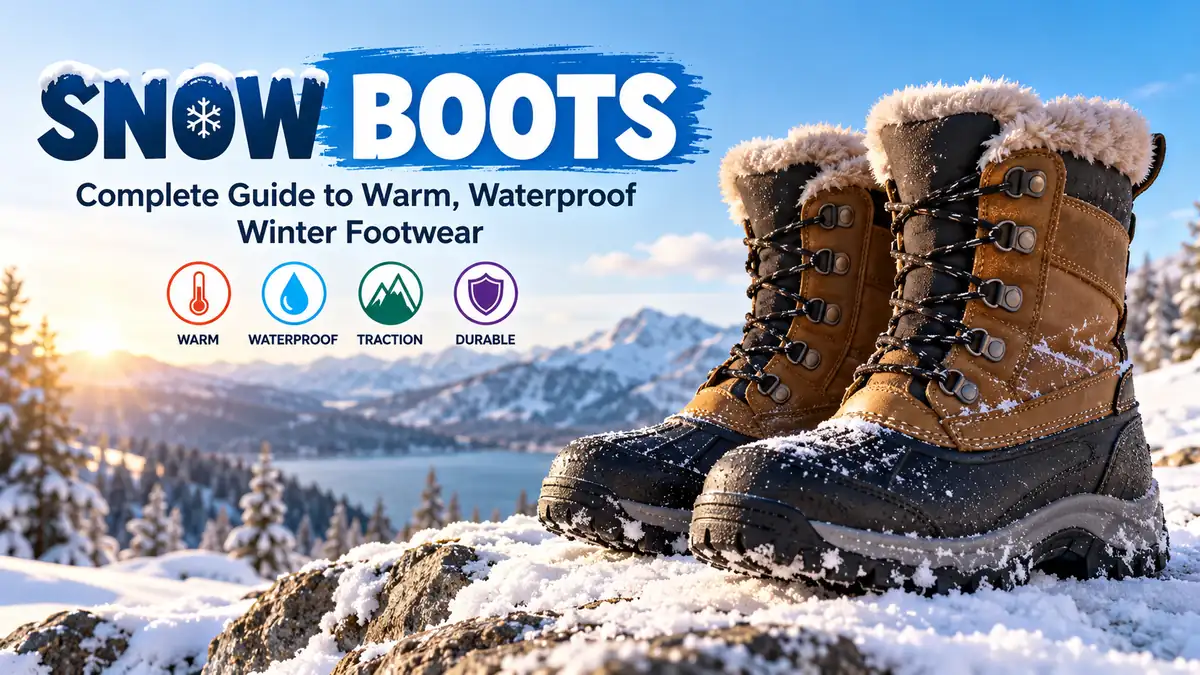
Cold feet can turn an enjoyable snowy day into an uncomfortable experience. Ordinary shoes often struggle with freezing temperatures, wet snow, slippery sidewalks, and icy trails. The right footwear makes a significant difference in keeping your feet protected.
snow boots are specialized winter footwear designed to provide warmth, moisture protection, and traction in snowy conditions. They typically combine insulation, water-resistant or waterproof construction, and rubber outsoles engineered for cold surfaces. Different designs suit everyday walking, winter hiking, deep snow, and prolonged exposure to freezing temperatures.
Understanding how these features work helps you choose footwear that matches your climate, activities, and comfort requirements.
What Are snow boots and How Do They Work?
Snow boots are protective footwear designed specifically for cold, snowy, and often wet environments. Unlike ordinary casual boots, they combine multiple protective layers to reduce heat loss, limit moisture penetration, and improve stability.
Their construction usually includes four main components:
- Outer upper: Leather, nylon, synthetic fabric, or rubber that protects against snow and wind.
- Insulation: Materials such as synthetic fibers, wool, fleece, or felt that slow heat loss.
- Waterproof barrier: A membrane, rubber shell, or sealed construction that limits water entering the boot.
- Outsole: A textured rubber sole designed to grip snow-covered surfaces.
Some designs also include removable liners, padded ankle collars, reflective insulation, and adjustable closures.
The effectiveness of winter footwear depends on how these components work together. Thick insulation alone cannot compensate for water entering through poorly sealed seams, and waterproof construction does not automatically provide sufficient warmth.
Why Regular Shoes Are Not Suitable for Deep Snow
Most everyday sneakers and casual shoes are designed for dry or moderately wet conditions.
Their limitations become more noticeable during winter:
- Thin uppers provide limited thermal protection.
- Shallow tread patterns may struggle on packed snow.
- Low-cut openings allow snow to enter.
- Breathable mesh can become saturated.
- Thin soles may offer inadequate insulation from frozen ground.
A waterproof sneaker can handle occasional slush, but it generally lacks the insulation, shaft height, and winter-specific traction needed for prolonged snow exposure.
Different Types of Snow Boots
Not every winter boot is designed for the same activity. Some prioritize maximum warmth, while others emphasize flexibility, lighter weight, or walking comfort.
Hunter Womens Original Insulated Tall Snow Boots (Black) | Sportpursui
1. Insulated Winter Boots
Designed for general cold-weather use, these boots have thermal linings, protective uppers, and rubber soles. They are suitable for commuting, outdoor chores, and recreational snow activities.
Men’s High Winter Hiking Boots – Revel IV | KEEN Footwear
2. Winter Hiking Boots
These combine insulation with supportive midsoles, ankle stability, and aggressive outsole patterns. They are designed for walking longer distances over uneven, snowy terrain.
3. Pac Boots
Pac boots typically feature a waterproof rubber lower section, a protective upper, and a thick removable insulating liner. They are especially useful for cold, wet conditions and prolonged outdoor activities.
CAPRICE AMANDA URBAN SNOW BOOT IN BEIGE TEXTILE | House of Heels
4. Casual Winter Boots
Casual designs balance everyday comfort and appearance with moderate winter protection. Some include faux-fur linings and lightweight insulation, although waterproofing and traction vary considerably.
Kid’s JK Silverton Waterproof Boots | Helly Hansen Canada
5. Children’s Snow Boots
Children’s models often feature easy closures, insulated interiors, waterproof lower sections, and taller shafts. A secure fit is essential for active outdoor play.
Snow Boots vs. Winter Boots
The terms are often used interchangeably, but they can describe different levels of weather protection.
| Feature | Snow Boots | General Winter Boots |
|---|---|---|
| Main purpose | Snowy and slushy conditions | Everyday cold-weather use |
| Insulation | Usually insulated | Varies by design |
| Waterproofing | Commonly waterproof | May be water-resistant only |
| Outsole | Snow-oriented traction | Varies |
| Shaft height | Often mid or tall | Ankle to tall |
| Typical use | Deep snow, outdoor work, winter recreation | Urban walking, commuting, mild winter |
The distinction is not universal. Some winter boots offer the same protection as dedicated snow boots.
According to Sorel, snow-oriented designs generally emphasize protection from snowy conditions, while general winter footwear may prioritize broader everyday use. Sorel®+1
Essential Features of Good snow boots
The most useful features depend on how cold, wet, and slippery your environment becomes.
1. Waterproof Construction
Waterproofing is one of the most important characteristics of reliable winter footwear.
When snow melts against the boot, moisture can enter through fabric, stitching, or poorly sealed openings.
Common waterproofing methods include:
- Waterproof membranes: Materials such as GORE-TEX block liquid water while allowing some moisture vapor to escape.
- Seam-sealed construction: Sealed stitching reduces water penetration.
- Molded rubber shells: Provide strong protection against wet snow and slush.
- Water-repellent treatments: Help water bead off outer materials but may require renewal.
Water-resistant footwear can tolerate light moisture, but it may not withstand prolonged exposure to wet snow.
For frequent slush, prioritize a genuinely waterproof design with protected seams and a sufficiently high waterproof section.
2. Thermal Insulation
Insulation traps air and slows heat transfer, helping maintain warmth around the feet.
Common insulation materials include:
Synthetic insulation: Lightweight fibers designed to retain warmth without excessive bulk. Examples include 3M Thinsulate and proprietary synthetic insulation systems.
Wool: Naturally insulating and capable of managing some moisture.
Fleece: Soft and comfortable, frequently used as an interior lining.
Felt: Dense insulation commonly found in removable pac-boot liners.
Reflective linings: Technologies such as Omni-Heat Infinity use reflective materials as part of a broader insulation system.
The quantity of insulation matters, but so do construction, fit, moisture management, and activity level.
How Much Insulation Do Snow Boots Need?
Insulation is frequently described using values such as 100g, 200g, or 400g.
These specifications generally describe the insulation material’s weight per unit area, rather than the total weight of insulation inside the boot.
| Insulation rating | Typical application |
|---|---|
| 100g | Mild winter weather and active everyday use |
| 200g | General winter walking and active outdoor recreation |
| 400g | Colder conditions and lower activity levels |
| 600g and above | Specialized footwear for prolonged extreme-cold exposure |
These categories are guidelines, not universal temperature guarantees.
For example, someone hiking uphill generates substantially more body heat than someone standing still while watching an outdoor sporting event.
A heavily insulated boot can become uncomfortable during strenuous activity. Excess perspiration may eventually cool the feet when movement stops.
REI’s winter footwear guidance similarly emphasizes matching insulation to activity rather than simply choosing the highest available rating. REI Expert Advice+1
3. Outsole Traction and Slip Resistance
Traction determines how effectively footwear grips the surface beneath it.
Snow and ice present different challenges.
Loose snow benefits from deep, widely spaced tread patterns, while hard-packed snow and ice require appropriate rubber compounds and surface contact.
Look for:
- Deep, multidirectional rubber lugs.
- Flexible cold-weather rubber compounds.
- Defined heel braking zones.
- Outsole patterns that release packed snow.
- Specialized winter traction materials where appropriate.
Some manufacturers use proprietary traction systems, including Columbia Adapt Trax, Vibram winter compounds, and rubber mixtures incorporating specialized grip materials.
However, no ordinary rubber outsole can guarantee secure footing on smooth, wet ice.
For hazardous icy surfaces, properly fitted removable traction devices or ice cleats may provide additional grip. Choose devices suitable for the terrain and remove them where their use is inappropriate, such as certain indoor floors.
4. Boot Height and Snow Protection
Shaft height influences how effectively footwear prevents snow from entering around the ankles.
Low-cut boots offer greater flexibility but limited protection in deep snow.
Mid-height designs balance mobility and coverage.
Tall boots provide additional protection when walking through deeper snowdrifts.
Some models include:
- Adjustable snow collars.
- Gusseted tongues.
- Drawstring closures.
- Padded ankle cuffs.
- Compatible attachment points for gaiters.
A gusseted tongue connects to the upper along its sides, helping reduce openings where water and snow might enter.
For winter hiking, gaiters can extend protection above the boot opening. LOWA UK+1
How to Choose the Right Snow Boots
Choosing appropriate footwear starts with understanding the conditions in which it will be used.
Step 1: Identify Your Winter Conditions
Consider whether your typical environment involves dry powder snow, wet slush, freezing rain, or hard-packed icy surfaces.
These conditions require different performance priorities.
Dry, extremely cold environments place greater demands on insulation.
Wet snow and slush require strong waterproofing.
Frequently icy conditions demand particular attention to traction.
Step 2: Match the Boots to Your Activity
| Activity | Most useful features |
|---|---|
| City walking | Moderate insulation, comfort, dependable grip |
| Snow shoveling | Waterproof construction, warmth, supportive fit |
| Winter hiking | Ankle support, traction, breathability |
| Snowshoeing | Waterproofing, flexible movement, gaiter compatibility |
| Ice fishing | Heavy insulation, waterproof protection, traction |
| Children’s snow play | Warmth, easy closures, snow-resistant openings |
| Long outdoor work shifts | Durable construction, suitable insulation, all-day comfort |
The warmest boot is not automatically the most comfortable choice.
For active winter hiking, excessive insulation can cause overheating, while insufficient insulation may leave someone uncomfortable during extended stationary periods.
Step 3: Understand Temperature Ratings
Some manufacturers advertise ratings such as -20°C or -40°C.
These numbers describe intended performance under particular conditions, but they should not be interpreted as guaranteed comfort limits.
Actual warmth depends on:
- Individual cold tolerance.
- Wind and moisture exposure.
- Activity intensity.
- Duration outdoors.
- Sock thickness.
- Boot fit and circulation.
- Overall construction.
Temperature ratings are not necessarily standardized across different manufacturers.
The North Face and Mountain Warehouse both caution that activity, socks, weather, and individual factors influence real-world warmth. Mountain Warehouse Community+1
Step 4: Check Weight and Flexibility
Heavy boots can provide substantial protection but may increase fatigue during long walks.
Lightweight models can improve mobility, particularly during hiking or commuting.
Try flexing the forefoot naturally. A suitable boot should bend where your foot bends without feeling excessively soft or unstable.
Winter hiking footwear should also offer appropriate support for the terrain and any equipment being carried.
Step 5: Evaluate Closure Systems
Different closure systems affect convenience, fit, and snow protection.
Laces allow precise adjustment across the foot and ankle.
Zippers make boots easier to put on, although waterproof protection depends on their construction.
Hook-and-loop straps are convenient for children.
Pull-on boots are practical for short outdoor tasks but may provide less adjustable support.
For extended walking, a secure closure system helps reduce unwanted heel movement.
How Should Snow Boots Fit?
Proper fit is essential for warmth, stability, and comfort.
A boot that is too tight can compress insulation and restrict circulation. A boot that is too loose may allow excessive foot movement, leading to rubbing and blisters.
Toe Room and Heel Fit
Your toes should have enough space to move naturally without pressing against the front of the boot.
When standing, the heel should remain reasonably secure.
A small amount of movement may occur in some insulated styles, but excessive heel lifting can cause discomfort.
The toe box should accommodate your foot shape and intended winter socks.
Should You Size Up in Snow Boots?
Not automatically.
Many manufacturers already account for insulated linings in their sizing.
Start with the manufacturer’s fit guidance and try the boots while wearing the socks you expect to use.
If your usual size feels tight, consider the next size or a wider fitting option.
Avoid choosing an oversized boot solely to accommodate multiple thick socks.
How to Test the Fit
- Wear your normal winter socks.
- Try both boots while standing.
- Walk on a level surface.
- Check for heel slipping.
- Bend your knees and move naturally.
- Walk down an incline, if a safe testing surface is available.
- Confirm that your toes do not strike the front.
Feet can swell slightly during the day, so trying footwear later in the afternoon may provide a useful fit check.
A comfortable boot should feel supportive immediately. Do not rely on substantial stretching to correct a poor fit.
Best Materials Used in Snow Boots
Different materials offer different combinations of durability, flexibility, insulation, and moisture protection.
Leather
Leather is commonly used in premium winter footwear because of its durability and supportive structure.
Full-grain leather can resist abrasion and, when properly treated, shed moisture.
However, leather alone should not be assumed waterproof.
It may require regular conditioning and appropriate protective treatments.
Nylon and Synthetic Textiles
Synthetic uppers are often lighter and more flexible than thick leather.
They can be combined with waterproof membranes and synthetic insulation.
Their performance depends heavily on fabric quality, coating, seam construction, and reinforcement.
Rubber
Rubber is widely used for lower boot shells and outsoles.
It provides excellent resistance to liquid water and helps protect against wet slush.
However, rubber does not provide much insulation by itself.
This is why many rubber-based winter boots include felt liners, fleece, or other insulating materials.
EVA and Polyurethane
Ethylene-vinyl acetate (EVA) is commonly used in lightweight midsoles and some molded footwear.
Polyurethane is another cushioning and structural material used in footwear construction.
These materials can influence shock absorption, weight, and underfoot comfort.
Neither should be treated as a substitute for a properly designed thermal insulation system.
Snow Boots for Different Winter Activities
Everyday Walking and Commuting
For urban environments, prioritize manageable weight, flexibility, waterproofing, and reliable traction.
A heavily insulated expedition-style boot may feel unnecessarily bulky for short trips between heated buildings.
Moderately insulated ankle or mid-height footwear often provides a more practical balance.
Pay particular attention to traction on cleared sidewalks, where remaining patches of ice can be difficult to notice.
Hiking in Snow
Winter hiking creates additional demands because terrain may be uneven, steep, and unpredictable.
Useful features include:
- Supportive midsoles.
- Waterproof breathable membranes.
- Reinforced toe caps.
- Secure lacing.
- Aggressive winter-compatible tread.
- Gaiter compatibility.
Winter hiking boots from manufacturers such as Merrell, Salomon, and The North Face illustrate how footwear can balance support, insulation, and traction.
For steep frozen terrain, ordinary snow boots may be inadequate. Appropriate mountaineering footwear and compatible traction equipment may be required.
Deep Snow and Outdoor Work
Deep snow creates challenges beyond low temperatures.
Snow can enter through the boot opening, while prolonged standing increases the need for insulation.
Tall waterproof boots with adjustable collars and insulating liners are often suitable.
For work environments, additional requirements may include protective toe caps, puncture resistance, or workplace-specific slip resistance.
General recreational snow boots should not be assumed to meet occupational safety requirements.
Snowshoeing
Snowshoeing usually involves sustained movement, so overheating can become a concern.
Waterproof winter hiking boots often work well when they provide adequate insulation and compatibility with snowshoe bindings.
Gaiters help keep loose snow away from the upper opening.
Snowshoeing boots are different from specialized alpine skiing and snowboarding boots, which must be compatible with their respective equipment.
Are Snow Boots Waterproof or Just Water-Resistant?
Many snow boots are waterproof, but not every product marketed as winter footwear provides complete water protection.
The difference matters most in melting snow and slush.
Water-resistant footwear can withstand limited moisture exposure but may eventually allow water through.
Waterproof footwear uses barriers and construction techniques intended to prevent liquid water from entering under specified conditions.
Even waterproof boots have limitations.
Water can enter over the collar, through damaged materials, or through unprotected openings.
Waterproof breathable membranes also cannot prevent perspiration from forming inside footwear.
For wet winter environments, look for clearly described waterproof construction rather than relying only on the appearance of the outer material.
How to Wear Snow Boots Comfortably
The right socks and clothing layers can improve the performance of winter footwear.
Choose Moisture-Managing Socks
Wool and synthetic-blend socks are generally better suited to cold outdoor activities than cotton socks.
Cotton absorbs moisture and can remain damp, increasing discomfort.
Merino wool is particularly popular because it combines insulation with moisture management.
Choose sock thickness based on the available space inside the boot.
Thicker socks are not always warmer if they make footwear too tight.
Avoid Excessive Layering
Wearing multiple pairs of thick socks may restrict circulation and compress the boot’s insulation.
A properly fitted boot with one suitable winter sock is often more effective than an overly tight combination.
Keep Snow Out of the Opening
Wear snow pants or gaiters in a way that directs snow away from the boot collar.
For deep powder, use taller boots or an adjustable snow gaiter.
Avoid allowing wet pant cuffs to remain trapped inside footwear for extended periods.
Prevent Blisters
Blisters commonly develop from friction, excessive movement, or moisture.
Secure lacing, dry socks, and proper heel fit help reduce these problems.
If you notice persistent rubbing, adjust the fit before continuing a long walk.
How to Clean and Maintain Snow Boots
Regular maintenance helps preserve waterproofing, insulation, and material durability.
Cleaning After Snow Exposure
Snow-covered roads are frequently treated with salt and de-icing chemicals.
Residue can damage some footwear materials or leave visible stains.
Follow these steps:
- Remove loose snow and dirt with a soft brush.
- Wipe the exterior using a damp cloth.
- Use a manufacturer-approved cleaner for stubborn residue.
- Remove detachable liners and insoles where recommended.
- Allow all components to dry thoroughly.
- Reapply suitable water-repellent treatments when necessary.
Avoid aggressive detergents and cleaning products that may damage coatings or membranes.
How to Dry Snow Boots Properly
Do not place boots directly against radiators, open flames, or other intense heat sources.
Excessive heat can damage adhesives, rubber, synthetic materials, and leather.
Instead, remove the insoles when possible and let the footwear air-dry in a ventilated location.
Stuffing boots loosely with absorbent paper can help remove moisture, provided the paper is replaced when damp.
A low-temperature boot dryer may be suitable when permitted by the manufacturer.
Storing Boots Between Winters
Before seasonal storage, ensure the boots are clean and completely dry.
Keep them in a cool, ventilated environment away from prolonged direct sunlight.
Avoid compressing insulated liners for long periods.
Leather boots may benefit from conditioning before storage, while removable liners should be stored dry.
Common Snow Boot Problems and How to Fix Them
Feet Still Feel Cold
Cold feet do not always mean the boots lack insulation.
Possible causes include tight sizing, damp socks, compressed liners, prolonged inactivity, and inadequate protection from frozen ground.
Check whether your toes have enough room to move and whether moisture is accumulating inside.
If your feet remain cold during stationary activities, footwear with greater insulation may be appropriate.
Boots Become Wet Inside
Interior moisture may result from perspiration, water entering through the collar, damaged waterproofing, or worn seams.
Inspect the boot carefully to identify the source.
If moisture appears after strenuous activity despite dry exterior conditions, overheating and perspiration may be contributing factors.
Snow Boots Feel Too Heavy
Some tall rubber-shell boots are designed primarily for protection rather than long-distance walking.
For active use, consider a lighter insulated hiking design with supportive cushioning.
Reducing unnecessary boot weight may improve walking comfort without sacrificing essential weather protection.
Soles Slip on Ice
Snow-oriented tread patterns are not necessarily effective on polished ice.
Deep lugs may grip loose snow well but offer limited friction on smooth frozen surfaces.
Use appropriate ice traction devices when conditions demand them, and remember that no footwear eliminates the risk of falling.
Boots Develop Odors
Odor usually results from moisture and microbial activity inside footwear.
Dry the boots thoroughly after use, rotate footwear when possible, and clean removable liners according to manufacturer instructions.
Avoid storing damp boots in sealed containers.
Popular Snow Boot Technologies and Designs
Several established footwear manufacturers use different approaches to winter protection.
Columbia uses technologies such as Omni-Heat reflective linings, Techlite cushioning, and Adapt Trax outsoles across selected winter footwear.
Sorel is known for insulated winter designs, including models featuring rubber lower shells and removable felt liners.
Baffin produces footwear for severe winter environments, including multi-layer insulation systems in selected models.
Kamik offers winter footwear with different combinations of waterproof shells, insulated liners, and snow-oriented traction.
UGG offers some weather-rated winter designs, although not every fleece-lined or sheepskin boot is appropriate for deep snow.
The important distinction is that performance varies by individual model. A manufacturer’s reputation does not guarantee that every boot in its collection has the same waterproofing, insulation, or grip.
How Long Do Snow Boots Last?
The lifespan of winter footwear depends on material quality, frequency of use, maintenance, and exposure to harsh conditions.
Boots worn occasionally during winter vacations may last for several seasons.
Footwear used daily for outdoor work may experience much faster wear.
Inspect these components regularly:
- Outsole tread depth.
- Separation between upper and sole.
- Cracking in rubber sections.
- Damaged stitching or waterproof membranes.
- Compressed or deteriorating insulation.
- Worn heel linings.
- Broken closures or laces.
Replace boots when structural damage, persistent water leakage, or significant tread wear compromises protection.
A boot can still look acceptable from the outside while losing some of its original weather resistance.
Can You Wear Snow Boots Without Snow?
Yes. Snow boots can be useful during freezing weather even when there is no snow on the ground.
They may provide warmth during cold morning walks, outdoor work, or extended exposure to low temperatures.
However, heavily insulated footwear can feel too warm indoors or during mild weather.
Some snow-oriented outsoles may also wear more quickly on abrasive pavement.
For everyday use in mostly dry winter conditions, lighter winter boots may offer greater flexibility and comfort.
Are Snow Boots Suitable for Rain?
Waterproof snow boots can protect against rain, but their insulation may make them uncomfortable in warmer wet weather.
Traditional rain boots prioritize waterproofing rather than thermal insulation.
For cold rain and slush, insulated waterproof boots can be appropriate.
For mild rainy weather, uninsulated waterproof footwear is often more comfortable.
Always consider the actual waterproof construction rather than assuming every snow boot can withstand prolonged rain.
Are Snow Boots Necessary for a Ski Trip?
Snow boots are useful for walking around ski resorts, exploring snowy villages, and moving between accommodations.
They help protect against cold, snow, and slushy pathways.
However, ordinary snow boots are not replacements for specialized ski boots.
Ski boots must work with ski bindings and provide the specific support needed for skiing.
Similarly, snowboarding requires suitable snowboard boots and compatible bindings.
For resort travel, snow boots serve as comfortable off-slope footwear rather than equipment for skiing itself.
Mistakes to Avoid When Choosing Snow Boots
Several common assumptions can lead to poor winter footwear performance.
Choosing boots only by temperature rating: A low advertised temperature rating does not guarantee comfort in every environment.
Ignoring waterproofing: Thick insulation loses much of its practical value when footwear becomes wet.
Buying excessively tight boots: Restricted toe movement and compressed insulation can make feet colder.
Assuming deep tread guarantees ice grip: Snow traction and ice traction are not identical.
Using heavy boots for strenuous activity: Excessive insulation and weight can contribute to sweating and fatigue.
Overlooking boot height: Short boots may allow snow to enter during deep-snow activities.
Drying boots with intense heat: High temperatures can damage materials and shorten footwear life.
Ignoring maintenance: Salt, dirt, moisture, and worn waterproof treatments can reduce performance over time.
Avoiding these mistakes helps preserve both comfort and protection throughout winter.
Final Thoughts on snow boots
The most effective snow boots combine appropriate insulation, dependable moisture protection, secure fit, and traction suited to the terrain.
For everyday winter walking, comfort and moderate insulation may be the priorities. Deep snow requires greater coverage and waterproofing, while winter hiking calls for supportive construction, breathability, and suitable grip.
Rather than focusing on a single specification, consider how the entire boot performs in the conditions you expect to encounter.
Well-fitted, properly maintained winter footwear can make snowy environments more comfortable and help reduce exposure to cold, moisture, and slippery surfaces.
