
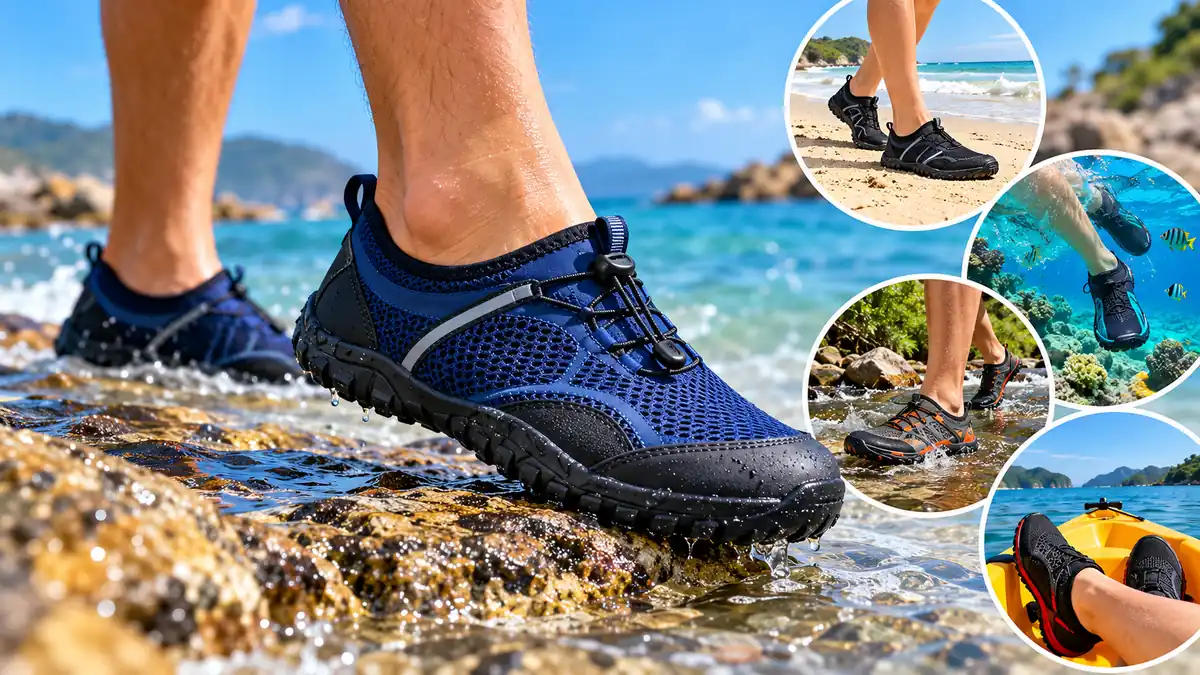
A beautiful beach can hide sharp shells, slippery rocks, and scorching sand. Even a short walk into the water can become uncomfortable when your feet aren’t protected.
Water shoes are lightweight, water-friendly footwear designed to protect your feet, provide traction on wet surfaces, and remain comfortable during activities in and around water. They typically feature quick-draining materials, flexible soles, and breathable uppers, making them useful for swimming, kayaking, beach walking, snorkeling, and other aquatic activities.
Unlike ordinary sneakers, which can become heavy and uncomfortable when soaked, water footwear is designed to handle repeated exposure to moisture. However, not every design works equally well for every activity.
Understanding the different styles, materials, and safety features helps you determine when specialized footwear is useful and when barefoot movement or another type of shoe may be more appropriate.
What Are Water Shoes and How Do They Work?
Water shoes are specialized footwear made for environments where your feet regularly encounter water, wet ground, or slippery surfaces.
Their main purpose is to combine foot protection with the flexibility and drainage needed for aquatic activities.
Most designs have three essential components:
- Water-friendly uppers: Mesh, synthetic fabric, or neoprene that tolerates moisture.
- Protective outsoles: Rubber or similar materials that create a barrier between your feet and rough surfaces.
- Drainage and ventilation: Openings or breathable construction that allow water to escape and help the footwear dry.
The exact combination depends on the activity. A lightweight aqua sock may use a thin, flexible sole, while a rafting shoe may feature thicker rubber, reinforced toe protection, and secure fastening.
How Water Shoes Differ From Regular Shoes
Regular athletic shoes are primarily designed for dry land. Their cushioning, fabric layers, and foam components may retain water, increasing weight and drying time.
Water footwear generally uses less absorbent construction and materials suited to frequent wetting.
| Feature | Water shoes | Regular sneakers |
|---|---|---|
| Water drainage | Often designed to drain | Usually limited |
| Wet-surface traction | Activity-specific tread | Primarily dry-land traction |
| Drying time | Generally faster | Often slower |
| Foot protection | Varies from minimal to substantial | Usually substantial |
| Swimming flexibility | Often good in lightweight styles | Usually poor |
| Long-distance walking | Depends on design | Often better suited |
Water shoes are not necessarily waterproof. In fact, most intentionally allow water to enter and leave.
Waterproof footwear tries to keep water outside. Water shoes generally prioritize drainage, flexibility, and comfort after becoming wet.
Different Types of Water Shoes

1. Aqua Shoes
Lightweight, flexible slip-on shoes commonly used for beaches, swimming pools, and casual water activities. They offer basic protection against sand, shells, and minor surface hazards.

2. Water Socks
Soft, sock-like footwear made from stretch fabrics such as neoprene or polyester blends. They provide a close fit and minimal protection, making them useful for swimming or sandy beaches rather than rugged terrain.

3. Water Sandals
Open or partially enclosed footwear with adjustable straps and durable outsoles. They offer ventilation and drainage and are popular for kayaking, boating, and shoreline walking.

4. Amphibious Shoes
Designed for both land and water, these combine features of trail shoes and aquatic footwear. They typically have more structured soles, making them suitable for hiking routes that involve streams, mud, or repeated water crossings.

5. Neoprene Water Boots
Often called surf booties, these provide greater coverage and some thermal insulation. They are useful for surfing, paddleboarding, and other activities where cooler water and equipment contact are concerns.
The best type depends less on appearance than on the surface, water temperature, activity, and level of protection required.
Benefits of Wearing Water Shoes
Protection From Sharp and Rough Surfaces
Rocks, broken shells, coral fragments, and underwater debris can cause cuts or punctures.
A protective sole reduces direct contact with these hazards. Thicker soles generally provide a more substantial barrier than thin aqua socks.
However, no ordinary water shoe guarantees puncture resistance. Sharp metal, glass, or other objects may penetrate some soles.
Avoid stepping on coral or fragile marine habitats, even when wearing protective footwear.
Better Traction on Wet Ground
Slippery boat decks, wet stones, and algae-covered surfaces can increase the likelihood of falling.
Many water shoes use textured rubber outsoles and multidirectional tread patterns to improve grip.
Traction still varies considerably by outsole compound, tread geometry, and surface conditions. Smooth, algae-covered rocks can remain extremely slippery regardless of footwear.
Comfort on Hot Sand
Beach sand exposed to direct sunlight can become hot enough to cause discomfort or burns.
Water shoes provide a barrier between your feet and the surface, helping make short shoreline walks more comfortable.
The level of protection depends on sole thickness and material. Very thin footwear may provide limited insulation.
Reduced Exposure to Abrasion
Snug footwear can reduce rubbing against rocks, rough pool surfaces, and certain water-sports equipment.
However, sand trapped inside a shoe can create friction and cause blisters. A secure fit and regular rinsing are essential.
Convenience Across Wet and Dry Areas
One practical advantage is being able to move from water to shore without changing footwear.
This is especially useful during kayaking trips, beach exploration, paddleboarding, and camping near lakes or rivers.
How to Choose Water Shoes for Different Activities
The footwear that works well in a swimming pool may not be appropriate for rocky river crossings.
The following comparison shows which features matter most.
| Activity | Suitable style | Important features |
|---|---|---|
| Swimming pool | Aqua socks or lightweight aqua shoes | Flexible sole, secure fit |
| Sandy beach | Lightweight water shoes | Sand protection, drainage |
| Rocky beach | Closed-toe water shoes | Thick sole, toe protection |
| Kayaking | Water sandals or secure aqua shoes | Grip, reliable fastening |
| Paddleboarding | Flexible aqua shoes or surf booties | Board feel, traction |
| Snorkeling | Lightweight water shoes | Flexibility, comfortable fit |
| River walking | Rugged amphibious shoes | Durable outsole, stable support |
| Surfing | Neoprene surf booties | Board grip, suitable insulation |
| Water parks | Facility-permitted aqua shoes | Non-marking grip, secure fit |
Water Shoes for Swimming
Swimming footwear should be lightweight and flexible enough to avoid unnecessarily restricting foot movement.
A snug-fitting aqua sock may be suitable for casual swimming, especially when walking between a pool and changing area.
Check facility rules before entering a pool. Some swimming facilities restrict footwear, and certain water attractions require shoes to be removed.
For competitive swimming or extended lap sessions, specialized footwear is usually unnecessary unless there is a specific need.
Water Shoes for Rocky Beaches
Rocky shorelines require more protection than smooth sandy beaches.
Look for:
- A closed-toe design
- A durable rubber outsole
- Adequate underfoot protection
- Secure heel retention
- A tread pattern suited to uneven wet surfaces
Thin aqua socks may not provide sufficient protection against pointed stones or sharp shells.
Water Shoes for Kayaking and Rafting
Kayaking footwear needs to remain secure when wet and should allow comfortable movement inside the boat.
Low-profile water shoes or suitable sandals may work well for recreational kayaking.
For whitewater activities, a secure closed-toe design is often preferable. Loose sandals and exposed straps can create snagging concerns in some environments.
Footwear should not interfere with exiting a kayak or releasing from equipment.
Water Shoes for Hiking and River Crossings
Amphibious hiking shoes are designed to provide a compromise between trail performance and water drainage.
They may feature reinforced uppers, more substantial midsoles, and lugged outsoles.
However, wet footwear can still contribute to blisters during long hikes. Fit, sock choice, and drying opportunities matter.
For occasional shallow stream crossings, some hikers prefer conventional hiking footwear, depending on terrain and conditions.
Materials Used in Water Shoes
Understanding construction materials helps explain why some shoes feel lighter, dry faster, or provide more protection.
Mesh and Synthetic Fabrics
Polyester and nylon mesh are widely used in lightweight aquatic footwear.
These materials can provide ventilation and allow water to escape through the upper.
The drawback is that open mesh may also admit fine sand, gravel, and debris.
Neoprene
Neoprene is a synthetic rubber commonly used in wetsuits and surf booties.
It provides stretch, a close fit, and some insulation by reducing water movement around the foot.
Thickness matters. A thicker neoprene boot may feel warmer but less flexible.
Neoprene footwear is not automatically waterproof, and warmth depends on water temperature, fit, construction, and activity.
Rubber Outsoles
Rubber is widely used because it can provide abrasion resistance and useful traction.
Manufacturers adjust rubber compounds and tread patterns for different environments.
Soft rubber may grip certain surfaces effectively but wear faster. Harder compounds can improve durability while behaving differently on smooth wet surfaces.
No single outsole performs best everywhere.
EVA Foam
Ethylene-vinyl acetate, commonly called EVA, is a lightweight foam used in midsoles and footbeds.
It provides cushioning without adding substantial weight.
Its performance depends on density, thickness, and overall construction. EVA itself does not guarantee effective wet-surface grip.
Drainage Ports and Perforated Soles
Some footwear includes drainage holes in the midsole or outsole.
These openings can help water leave the shoe, but they may also admit sand or small stones.
In dirty or rocky environments, the placement and size of drainage ports deserve attention.
How Should Water Shoes Fit?
A proper fit is one of the most important factors in aquatic footwear.
Shoes that are too loose may slip off in moving water, while excessively tight footwear can cause pressure, rubbing, and discomfort.
The ideal fit should feel snug around the heel and midfoot without squeezing the toes.
Step-by-Step Fit Check
- Check the toe space. Your toes should rest naturally without curling or pressing firmly against the front.
- Test heel security. Walk several steps and confirm that your heel does not repeatedly lift out.
- Move your feet. Bend, squat, and rise onto your toes to check flexibility.
- Inspect pressure points. Pay attention to seams around the ankle, heel, and forefoot.
- Check the fastening system. Adjustable straps, elastic laces, and drawcords should hold securely without restricting circulation.
- Consider wet conditions. The footwear should remain secure when saturated, not just when dry.
Manufacturers use different sizing systems, so the same labeled size may fit differently across brands.
Should Water Shoes Be Tight or Loose?
Water shoes should be comfortably snug, not excessively tight.
A close fit helps prevent movement inside the shoe and reduces the likelihood of losing it in moving water.
However, toes still need room to spread naturally. Numbness, tingling, or persistent pressure indicates an unsuitable fit.
Can You Wear Water Shoes Without Socks?
Most lightweight designs are intended for barefoot use.
Wearing them without socks can improve water drainage and reduce the amount of material that remains wet.
For longer walks, some people prefer thin synthetic socks to reduce friction. Neoprene socks may also provide additional warmth in cooler water.
Cotton socks generally retain moisture and may increase discomfort during prolonged wet activities.
Important Features to Look for in Water Shoes
Beyond basic materials and sizing, several construction details influence performance.
Outsole Grip and Tread Design
Different tread patterns serve different environments.
For example, shallow tread and high-contact rubber may perform well on smooth boat decks, while deeper lugs are often more useful on loose dirt and muddy trails.
REI’s footwear guidance similarly distinguishes between shallow-lug boating shoes and deeper-lug amphibious models intended for mixed terrain.
REI Expert Advice
Fine grooves called sipes may also help improve contact on certain wet surfaces.
However, a shoe marketed as slip-resistant should not be assumed safe on every surface.
Toe Protection
A reinforced toe bumper helps shield the front of the foot from accidental contact with rocks, roots, or other obstacles.
Closed-toe designs are generally more protective than open sandals.
This becomes particularly valuable when walking through shallow water where underwater obstacles are difficult to see.
Arch Support and Cushioning
Minimalist aqua shoes often have thin soles and limited cushioning.
This may feel comfortable during swimming or short beach walks, but it can become tiring on harder surfaces.
For extended walking, a more substantial midsole and supportive construction may improve comfort.
People with specific foot problems may need footwear selected according to their individual support requirements.
Fastening Systems
Common closure options include elastic openings, adjustable straps, traditional laces, and quick-pull cords.
Slip-on designs offer convenience, while adjustable systems can provide a more secure fit during active water sports.
Check that loose cords or straps cannot become caught in equipment.
Drainage and Drying Performance
A shoe that drains rapidly does not necessarily dry rapidly.
Drainage describes how quickly liquid water escapes. Drying time also depends on the moisture retained in fabrics, padding, seams, and insoles.
Recent comparative testing by OutdoorGearLab and GearJunkie evaluates drainage, drying, traction, fit, and protection as distinct performance characteristics.
Tested & Ranked+1
This distinction matters when footwear will be used repeatedly throughout a day.
Water Shoes vs. Barefoot Walking, Sandals, and Other Footwear
Not every water activity requires specialized footwear.
The right choice depends on hazards, terrain, and personal comfort.
| Footwear | Main advantage | Main limitation |
|---|---|---|
| Water shoes | Protection with drainage | May trap sand and debris |
| Bare feet | Natural ground sensation | No protective barrier |
| Flip-flops | Convenient for dry beach areas | Limited security and support |
| Water sandals | Ventilation and adjustable fit | Open areas expose the foot |
| Hiking shoes | Support and protection on trails | May retain water |
| Neoprene booties | Insulation and close fit | Can feel warm in hot weather |
Are Water Shoes Better Than Flip-Flops?
For walking in shallow water or across rocky shorelines, secure water shoes generally provide better foot coverage and retention than ordinary flip-flops.
Flip-flops are convenient around dry beach facilities but can slip off easily in moving water.
They also offer limited protection around the sides and tops of the feet.
Can Water Shoes Replace Hiking Shoes?
Some amphibious models are suitable for light or moderate hiking, especially where trails involve repeated water crossings.
However, minimalist water socks generally lack the support and underfoot protection expected from hiking footwear.
The choice depends on distance, terrain, pack weight, and individual comfort.
Can You Wear Water Shoes Every Day?
Certain amphibious designs can function as casual footwear.
Still, shoes intended primarily for swimming may lack the cushioning, support, and durability needed for everyday walking on pavement.
If worn regularly, ensure the footwear dries fully between uses and provides adequate comfort for the intended distance.
Common Problems With Water Shoes and How to Prevent Them
Even well-designed aquatic footwear can become uncomfortable when used incorrectly.
Sand and Small Stones Getting Inside
Open mesh and drainage ports may allow sand or gravel to enter.
Once trapped, these particles can rub against the skin and cause irritation.
Remove and rinse the footwear whenever debris accumulates. On particularly sandy beaches, a close-fitting design with fewer openings may be more comfortable.
Blisters and Skin Irritation
Blisters often result from friction, moisture, and repeated movement.
To reduce irritation:
- Select footwear that stays secure when wet.
- Avoid raised seams that rub against the skin.
- Remove trapped sand promptly.
- Allow footwear and feet to dry between activities.
- Stop and adjust the fit when rubbing begins.
Persistent rubbing should not be ignored, especially during long walks.
Unpleasant Odors
Wet footwear can develop odors when moisture and organic material remain trapped inside.
Rinsing, cleaning, and thorough drying help limit odor buildup.
Removable insoles can make cleaning easier, but they should be reinstalled securely before use.
Shoes Slipping Off in Water
Loose footwear may be pulled away by waves or moving water.
A secure heel, correctly adjusted fastening system, and suitable fit help reduce this risk.
For strong currents and demanding water sports, prioritize equipment specifically designed for those conditions.
Limited Protection in Cold Water
Ordinary mesh aqua shoes provide little thermal insulation.
Neoprene booties may offer additional warmth, but their effectiveness varies with thickness, construction, and water temperature.
Footwear alone does not eliminate cold-water exposure risks.
How to Clean and Maintain Water Shoes
Proper care helps maintain comfort, reduce odors, and preserve footwear condition.
Cleaning Steps
- Rinse immediately after use. Use clean freshwater to remove salt, sand, chlorine residue, and dirt.
- Remove loose debris. Check the interior, tread grooves, and drainage openings.
- Wash gently when necessary. Use mild soap and water, following the manufacturer’s instructions.
- Clean removable insoles separately. If the design permits, remove and rinse them.
- Allow complete air drying. Place footwear in a ventilated location away from excessive heat.
- Store in a dry area. Avoid sealing damp shoes inside bags or storage containers.
Can Water Shoes Go in the Washing Machine?
Some manufacturers permit gentle machine washing, while others recommend hand cleaning.
Machine agitation and heat can damage adhesives, foam, elastic components, and specialized materials.
Always follow the care label rather than assuming all synthetic footwear is machine washable.
How Long Do Water Shoes Take to Dry?
Drying time varies according to material, humidity, airflow, and construction.
Thin mesh designs may dry relatively quickly, while padded shoes and thick neoprene booties can remain damp considerably longer.
Removing insoles, opening closures, and improving ventilation can help.
Avoid placing footwear directly against heaters or exposing it to high-temperature drying unless the manufacturer explicitly permits it.
How Long Do Water Shoes Last?
There is no universal lifespan.
Durability depends on frequency of use, terrain, materials, cleaning habits, and exposure to sunlight and saltwater.
Inspect footwear regularly for worn tread, separating soles, damaged seams, and weakened closures.
Replace shoes when deterioration compromises traction, security, or foot protection.
Water Shoes for Children and Families
Children’s aquatic footwear should balance protection, comfort, and ease of use.
A secure fit is particularly important because loose shoes can come off during swimming or active play.
Features worth considering include closed-toe coverage, flexible soles, suitable wet-surface traction, and adjustable closures.
Hook-and-loop straps may be easier for younger children to manage than traditional laces.
Because children’s feet grow, fit should be checked regularly rather than assuming the previous season’s size remains suitable.
For swimming pools and water parks, always follow the facility’s footwear rules.
Water shoes do not replace adult supervision, swimming skills, or appropriate flotation equipment.
Environmental and Safety Considerations
Water footwear offers useful protection, but it does not remove the hazards associated with natural water environments.
Protecting Marine Habitats
Shoes can protect feet from sharp surfaces, but they should never be treated as permission to walk on living coral or sensitive underwater habitats.
Avoid disturbing marine organisms and follow local conservation guidance.
Avoiding Contamination Between Waterways
Footwear can carry mud, plant fragments, and aquatic organisms between lakes, rivers, and coastal locations.
Clean footwear thoroughly after use, particularly when moving between separate freshwater environments.
Follow local invasive-species prevention requirements, which may involve cleaning, draining, and drying equipment.
Understanding the Limits of Protection
Water shoes cannot guarantee safety from:
- Sharp objects capable of penetrating soles
- Dangerous aquatic animals
- Strong currents or unexpected waves
- Extremely slippery algae-covered surfaces
- Contaminated water
- Cold-water exposure
Always assess environmental conditions independently of footwear.
Are Water Shoes Necessary?
Water shoes are not essential for every trip to a swimming pool or sandy beach.
They become more useful when the environment contains rough surfaces, sharp debris, slippery ground, or frequent transitions between water and land.
For casual swimming in a clean pool, barefoot movement may be entirely appropriate. For exploring a rocky shoreline or launching a kayak, protective aquatic footwear may provide meaningful advantages.
The most useful way to evaluate a pair is to consider four questions: Does it protect against the expected terrain? Does it grip the relevant surface? Will it stay securely on the foot? Can it drain and dry appropriately for the activity?
Ultimately, water shoes work best when their design matches the environment. Lightweight aqua socks suit gentle activities, rugged amphibious shoes provide greater support for mixed terrain, and neoprene booties offer additional coverage and insulation for cooler conditions.
Choosing the appropriate type, checking the fit, and maintaining the footwear after each outing can make time in and around water more comfortable while reducing avoidable foot hazards.