
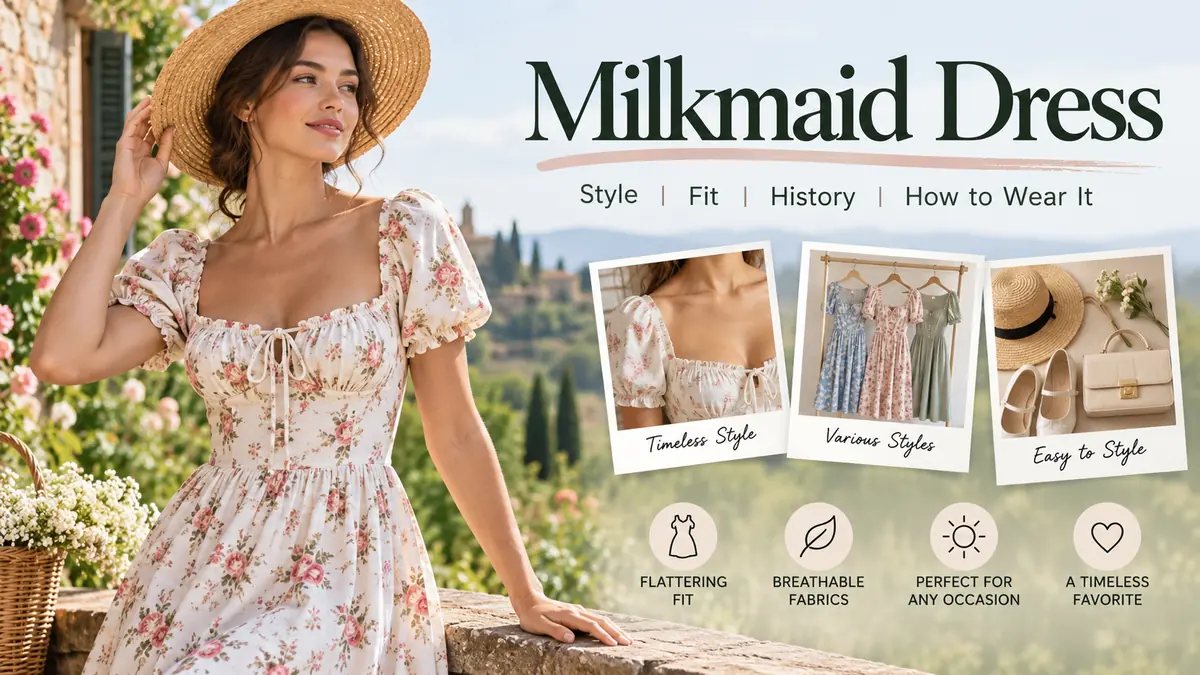
Few dress styles combine romance, structure, and everyday wearability as naturally as the milkmaid dress. Its fitted bodice and softly gathered skirt create a distinctive silhouette, while puff sleeves, square necklines, ruching, florals, and delicate details give it the vintage character that has kept returning to fashion.
A milkmaid dress is a vintage-inspired dress with a fitted or corset-style bodice, defined bust, square or sweetheart neckline, and a flowing skirt. Puff sleeves, ruching, smocking, lace, bows, and floral prints are common. Modern versions range from casual cotton minis to elegant midi and maxi dresses.
Understanding the style is useful because “milkmaid” describes a silhouette rather than one exact dress. Two garments can look quite different and still belong to the same family.
What Is a Milkmaid Dress?
The modern milkmaid dress takes inspiration from romanticized European rural clothing and historical peasant-style dress. Instead of copying historical garments exactly, contemporary fashion borrows recognizable elements: a close-fitting bodice, emphasized neckline, gathered fabric around the bust, fuller skirt, and often voluminous sleeves.
Today, the defining features usually include some combination of:
- A square, sweetheart, scoop, or gathered neckline
- A fitted or corset-inspired bodice
- Ruched, gathered, or structured bust detailing
- Puff, balloon, cap, or short elasticated sleeves
- A defined waist
- An A-line or flowing skirt
- Smocking or elastic panels for flexibility
- Lace, bows, embroidery, gingham, or floral prints
For example, contemporary versions can combine a square neckline, elasticized puff sleeves, ruched bust and full gathered midi skirt, demonstrating how recognizable milkmaid details translate into a modern garment.
Not every dress needs every feature. A sleeveless dress with a shaped bust and corset-like waist can still have a strong milkmaid influence, while another version may rely primarily on puff sleeves, ruching, and a square neckline.
What Is a Milkmaid Neckline?
The term milkmaid neckline does not refer to one rigid technical neckline.
Most commonly, it means a low square, sweetheart, scoop, or softly gathered neckline that frames the upper chest and visually separates the bust from the waist. Modern retailers frequently combine square necklines with ruched bust panels and puff sleeves.
This neckline is one reason the silhouette is so recognizable. It creates an open upper-body shape while the fitted bodice provides contrast below it.
Where Did the Milkmaid Dress Come From?
The history is more complicated than the name suggests.
Modern milkmaid dresses should not be treated as literal reproductions of one historical uniform worn universally by dairy workers. They are better understood as romantic reinterpretations of European pastoral, peasant, and period clothing.
Historical fashion repeatedly turned rural dress into fashionable imagery. Academic research, for example, traces the related Dolly Varden dress through 18th-century French influences and later Victorian revivals, including its appearance as the costume of a dairy-maid character in the 1881 comic opera Patience.
Elements associated with today’s look also overlap with 18th-century French pastoral fashion and later Regency-inspired silhouettes. Contemporary fashion commentary has connected the revival with the visual influence of period dramas such as Bridgerton.
The modern interpretation became especially visible alongside cottagecore, an internet-driven aesthetic centered on an idealized countryside lifestyle. Vogue India noted the prominence of smocked dresses and billowy sleeves within the cottagecore revival, particularly as the aesthetic gained traction online during the early 2020s.
That history explains why today’s milkmaid style can feel simultaneously old-fashioned and contemporary.
What Makes a Milkmaid Dress Different?
The easiest way to identify the style is to examine the relationship between the bodice, neckline, sleeves, and skirt rather than focusing on a single decorative feature.
| Feature | Typical Milkmaid Style | Purpose in the Silhouette |
|---|---|---|
| Neckline | Square, sweetheart, scoop or gathered | Frames the chest and shoulders |
| Bodice | Fitted, ruched or corset-inspired | Creates definition through the torso |
| Bust | Gathered, seamed or structured | Adds the characteristic romantic shape |
| Sleeves | Puff, balloon or elasticated | Adds volume to the upper silhouette |
| Waist | Fitted or defined | Balances the fuller skirt and sleeves |
| Skirt | A-line, gathered or flowing | Creates movement and softness |
| Details | Lace, bows, smocking, embroidery | Reinforces the vintage influence |
| Length | Mini, midi or maxi | Changes the mood rather than the core style |
A modern milkmaid design may also incorporate contemporary construction details such as concealed zippers, stretch panels, side slits, drop waists, adjustable ties, or pockets.
Milkmaid Dress vs. Prairie Dress
These styles overlap, but they are not identical.
A prairie dress generally emphasizes a long, loose silhouette, high or modest neckline, tiered skirt, ruffles, and historical frontier influences. A milkmaid style tends to place more emphasis on the fitted bodice and bust.
The milkmaid silhouette is usually more defined through the waist.
Milkmaid Dress vs. Cottagecore Dress
Cottagecore is an aesthetic rather than a specific garment construction.
Cottagecore fashion can include prairie dresses, linen dresses, smocked dresses, peasant blouses, floral skirts, cardigans, aprons, and milkmaid silhouettes. The milkmaid dress became one of the aesthetic’s most recognizable garments because its puff sleeves and romantic bodice fit naturally with the pastoral imagery.
Milkmaid Dress vs. Corset Dress
Corset dresses emphasize a visibly structured torso, often using boning, panel seams, lacing, or corsetry-inspired construction.
A milkmaid dress can have a corset-style bodice, but it does not need an actual corset. Ruching, seams, elastic, or smocking can create similar visual definition with less structure.
Milkmaid Dress Styles and Lengths
The silhouette has expanded far beyond one traditional-looking floral dress.
Mini Milkmaid Dress
A mini milkmaid dress keeps the characteristic fitted upper section but finishes above the knee.
Because the skirt is shorter, the romantic sleeves and bust details become particularly noticeable. Minis can work well with simple shoes because the dress itself already has considerable visual interest.
Midi Milkmaid Dress
The midi milkmaid dress is one of the most balanced versions.
The mid-calf length works naturally with a fitted bodice and fuller skirt, giving the garment vintage influence without requiring historical styling. Cotton midi versions can feel casual, while satin or highly structured designs look more formal.
Maxi Milkmaid Dress
A maxi milkmaid dress extends the flowing portion of the silhouette toward the ankle or floor.
Floral maxi versions often emphasize romantic styling, while solid colors make the silhouette appear cleaner and more contemporary. Side slits can also be added to create movement and prevent a long skirt from feeling overly heavy.
Off-the-Shoulder Styles
Elasticated sleeves allow some designs to sit on or below the shoulders.
An off-the-shoulder variation increases the romantic effect but changes practical considerations: the neckline needs enough structure to remain secure, and ordinary bra straps may become visible.
Smocked Milkmaid Dresses
Smocking adds stretch through the bodice or back.
This can make the style more forgiving than a rigid corset-inspired design. It is particularly useful when the garment needs to fit closely at the waist while allowing normal movement and breathing.
Floral and Gingham Versions
Floral prints are strongly associated with the style because they reinforce its pastoral character.
Gingham provides a similar countryside reference but tends to look more graphic. Contemporary gingham designs still commonly retain the square neckline, ruched bodice, puff sleeves, gathered waist and midi skirt associated with the silhouette.
How Should a Milkmaid Dress Fit?
A good fit is more important than simply choosing your normal dress size.
The bodice should sit close enough to define the waist without pulling sharply across the bust. The neckline should remain stable when you move, and the bust seams or cups should correspond reasonably well with your proportions.
Pay particular attention to four areas.
1. Check the Bust Construction
Some milkmaid dresses have designated bust cups or strong seams.
If the cup is too small, the seam can cut across the bust rather than sitting beneath or around it. If it is too large, loose fabric may appear around the neckline.
A ruched bust is usually more flexible than a rigid molded shape.
2. Test the Sleeve Elastic
Puff sleeves frequently use elastic around the upper arm or cuff.
It should be firm enough to hold the sleeve but should not dig painfully into the skin. Raise your arms when trying on the dress; sleeves that feel fine while standing still may become restrictive once you move.
3. Look at the Back
Smocked or elasticated backs provide useful flexibility, particularly when the front bodice is fitted.
A fully non-stretch woven dress requires more precise sizing. One current cotton example, for instance, uses a fitted bodice and concealed zipper while specifying no stretch in the fabric.
4. Check the Waist Placement
The waist seam should sit where the garment was designed to narrow.
If it rides significantly upward, the bust may be too tight or the torso length too short. If it drops awkwardly, the bodice may be too long.
Quick takeaway: prioritize bust fit, neckline security, sleeve comfort and waist placement before judging the overall size. These areas determine whether the silhouette looks intentional.
Which Fabrics Work Best?
Fabric changes both comfort and appearance.
Cotton
Cotton is particularly suitable for warm-weather milkmaid dresses because it can provide enough body for a structured bodice while remaining breathable.
A lightweight cotton version generally feels more relaxed than satin or heavy synthetic fabric.
Linen
Linen complements the rustic character of the silhouette.
It is breathable and develops natural wrinkles, which can suit an informal cottagecore look. Linen blends may wrinkle less and feel softer.
Viscose and Rayon
These fibers create more drape.
They work well when the desired effect is a fluid skirt rather than a highly structured shape.
Chiffon
Chiffon gives the dress an airy, lightweight appearance and is frequently used for romantic mini and maxi versions. Because chiffon can be sheer, lining quality matters. Contemporary chiffon milkmaid designs often use polyester lining underneath.
Satin
Satin changes the personality of the dress considerably.
Instead of emphasizing countryside simplicity, its smooth surface and sheen can make the silhouette suitable for evening styling or dressier occasions.
Polyester
Polyester is widely used because it can hold ruching and puff sleeves effectively and is available across many price points.
The trade-off is breathability. For hot weather, check the fabric weight and lining rather than assuming every lightweight-looking dress will feel cool.
How to Style a Milkmaid Dress Without Looking Like a Costume
The safest approach is contrast.
A milkmaid dress already contains several vintage signals. Adding historical-looking accessories to every part of the outfit can make the styling feel theatrical.
Instead, allow the dress to provide the romantic element and keep the remaining pieces relatively modern.
For a Casual Day
Pair a cotton or floral version with:
- Flat sandals
- Minimal sneakers
- A simple shoulder or crossbody bag
- Small earrings
- A denim jacket when needed
The clean accessories prevent puff sleeves and florals from becoming overwhelming.
For Brunch or a Garden Party
A midi silhouette works especially well.
Try ballet flats, slingbacks, espadrilles, or low heels with understated jewelry. A small structured bag creates a useful contrast with the softness of the dress.
For an Evening Outfit
Choose a solid-color, satin, or darker floral version.
Simple heels and restrained jewelry usually work better than adding several ornate accessories. The bodice and neckline already create a natural focal point.
For Cooler Weather
The style does not have to disappear after summer.
A cardigan works with softer versions, while a cropped jacket can preserve waist definition. Boots can make floral dresses feel more seasonal.
The main consideration is sleeve volume. A very fitted blazer or coat may crush exaggerated puff sleeves, so check how comfortably the outer layer fits around the shoulders.
What Shoes Go With a Milkmaid Dress?
There is no single correct shoe because the length and fabric matter more than the dress label.
| Occasion | Shoes That Work Well |
|---|---|
| Everyday | Sneakers, flat sandals |
| Romantic casual | Ballet flats, Mary Janes |
| Summer | Espadrilles, strappy sandals |
| Dressy | Slingbacks, low or high heels |
| Transitional weather | Ankle boots |
| Modern contrast | Loafers, chunkier boots |
For a highly detailed floral dress, simpler footwear usually creates better balance. With a plain black, cream, navy, or pastel dress, more distinctive shoes can work without competing with the garment.
What Bra Works With a Milkmaid Dress?
The neckline determines the answer.
A normal bra may work beneath a higher square neckline if its straps remain covered. Lower square, sweetheart, and off-the-shoulder styles can expose conventional straps or the top of the cups.
Depending on the garment and the wearer’s preferences, options include:
- Strapless bras
- Balconette bras with suitably positioned straps
- Convertible bras
- Adhesive cups
- Breast tape
- Sewn-in cups
Some fitted milkmaid dresses are constructed to provide enough shape that the wearer may prefer no separate bra. Others offer little support despite looking corset-like.
Never assume that a corset-inspired appearance means functional corsetry. Check the actual construction.
Is a Milkmaid Dress Flattering?
It can be, but there is no universally flattering dress.
The silhouette creates strong visual proportions: volume around the sleeves, definition at the waist, emphasis at the neckline, and expansion through the skirt. That combination can create a pronounced hourglass effect, but individual results depend on the garment’s pattern and the wearer’s proportions.
Rather than choosing according to rigid “body type” rules, adjust the individual features.
If dramatic puff sleeves feel overwhelming, choose smaller sleeves. If a low neckline feels uncomfortable, look for a higher square neckline. If defined bust cups do not fit properly, try ruching or smocking instead.
For greater waist flexibility, an elasticated or smocked back can be useful. For more bust structure, look for proper seams, adjustable ties, or a bodice designed for the required cup proportions.
Fit matters more than the label.
Is the Milkmaid Dress the Same as Cottagecore?
No, although the two are closely connected.
Cottagecore encompasses a much wider visual world built around idealized rural living, nature, handmade crafts, vintage-inspired interiors and pastoral clothing. Milkmaid silhouettes became strongly associated with that aesthetic through floral patterns, puff sleeves and nostalgic construction.
The style’s recent popularity has also overlapped with coquette, prairie, Regency-inspired and romantic fashion. Fashion coverage has described the milkmaid silhouette as sitting between cottagecore and coquette, while other coverage connects its revival with Bridgerton and social-media aesthetics.
That does not mean wearing one communicates membership in any particular lifestyle or subculture. It is simply a dress silhouette that can be styled in many different ways.
Common Milkmaid Dress Mistakes
The most frequent problems are practical rather than fashionable.
Choosing by waist size alone: A fitted waist means little if the shaped bust sits incorrectly.
Ignoring sleeve elastic: Tight elastic can make an otherwise well-fitting dress uncomfortable after several hours.
Assuming the bodice provides support: Decorative corset seams and ruching do not necessarily function like real corsetry.
Over-accessorizing: Puff sleeves, florals, lace, bows, a straw hat, ornate jewelry and vintage shoes together can turn an everyday outfit into costume-like styling.
Ignoring fabric composition: Two dresses with nearly identical photographs can feel completely different if one is breathable cotton and the other is heavily lined polyester.
Forgetting movement: Sit down, walk, bend slightly and raise your arms. A dress needs to work while moving, not merely while standing in front of a mirror.
Is the Milkmaid Dress Still Relevant?
Milkmaid styling has already survived several overlapping fashion cycles because the underlying silhouette is broader than a single microtrend.
Its recent visibility has been linked with cottagecore, TikTok fashion, period-drama influences and romantic dressing. Fashion publications have repeatedly highlighted contemporary versions, while brands continue adapting the basic formula through mini, midi and maxi lengths, gingham, florals, cotton, satin, chiffon and modern construction.
That adaptability is the important part.
A heavily ruffled floral version may look strongly tied to a particular aesthetic, while a solid cotton midi with subtle puff sleeves and a square neckline can read simply as a classic summer dress.
Final Thoughts on the Milkmaid Dress
The milkmaid dress is best understood as a modern romantic silhouette inspired by historical pastoral and peasant-style clothing rather than a precise reproduction of an old dairy-worker uniform. Its defining combination is a fitted or shaped bodice, prominent neckline, defined waist and softer skirt, often accompanied by puff sleeves, ruching, smocking, lace or floral prints.
Mini, midi and maxi versions can all work, and fabrics ranging from cotton and linen to chiffon and satin can dramatically change the mood.
When choosing one, focus first on how the bust, neckline, sleeves and waist actually fit. When styling it, balance its vintage character with simpler contemporary accessories. That approach preserves what makes the silhouette distinctive without making the outfit feel like a costume.