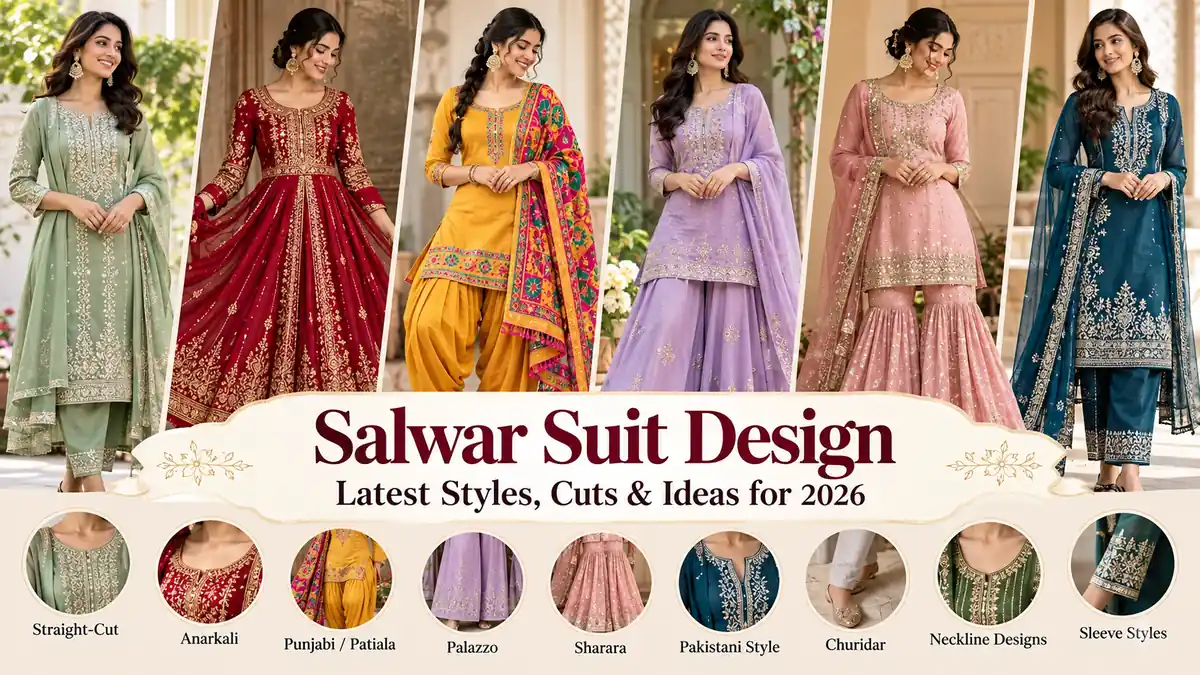
A beautiful salwar suit can look traditional, modern, minimal, or richly festive depending on just a few choices: the silhouette, bottom style, fabric, neckline, sleeves, embroidery, and dupatta. The challenge is not finding options—it is understanding which details actually work together.
Salwar suit design in 2026 combines classic South Asian silhouettes such as straight-cut suits, Anarkalis, Punjabi Patiala suits, churidars, palazzos, and shararas with cleaner tailoring, expressive necklines, breathable fabrics, and carefully placed embroidery. The most wearable designs balance appearance with movement, climate, occasion, and personal comfort. Varnavi
Latest Salwar Suit Design Trends for 2026
The strongest salwar suit trends are less about completely reinventing traditional clothing and more about changing proportions and details. Current style guides consistently feature straight cuts, Anarkalis, Punjabi suits, palazzo combinations, shararas, contemporary Pakistani-inspired silhouettes, and modern festive sets. WeaverStory
Cleaner tailoring is particularly noticeable. Instead of covering every surface with embroidery, many contemporary designs concentrate decorative work around the neckline, cuffs, hem, borders, or dupatta.
Fabric also changes the character of a design. Cotton and linen can make a simple silhouette feel relaxed, while silk, Chanderi, organza, georgette, velvet, and embellished fabrics can turn a similar cut into occasion wear. WeaverStory
The result is useful versatility: you can keep the traditional three-piece structure while adjusting the silhouette and surface work to suit everyday wear, office dressing, festivals, weddings, or formal gatherings.
1. Straight-Cut Salwar Suit Design
A straight-cut suit is one of the easiest styles to wear repeatedly.
The kameez falls in a relatively straight vertical line instead of widening dramatically toward the hem. Depending on the design, it can be paired with a traditional salwar, churidar, cigarette pants, or straight trousers.
Current salwar suit guides continue to feature the straight silhouette prominently because it adapts easily to both everyday and occasion dressing. Varnavi
For a modern look, try:
- A calf-length straight kurta
- Side slits for comfortable movement
- Straight or cigarette trousers
- Three-quarter sleeves
- A V, round, or modest square neckline
- Embroidery concentrated around the neck and cuffs
Cotton or cotton blends work particularly well for daily wear. Chanderi, silk blends, organza details, zari, or fine thread embroidery can make the same silhouette suitable for celebrations.
What makes a straight suit flattering?
Its uninterrupted vertical lines can create a visually longer silhouette. The effect is strongest when the kurta, trousers, and footwear are proportioned carefully rather than interrupted by oversized borders or excessive horizontal detailing.
Fit still matters more than the name of the style. A straight kurta that pulls across the bust or hips will not achieve the clean fall that defines the design.
2. Anarkali Salwar Suit Design
Anarkali suits remain one of the most recognizable formal salwar kameez styles.
An Anarkali generally has a fitted or semi-fitted upper section that opens into a wider, panelled or gathered lower portion. Lengths range from practical calf-length designs to dramatic floor-length versions. Varnavi
The amount of flare makes a major difference.
A moderately flared Anarkali is easier to manage at dinners and family events, while a fuller floor-length design creates more movement and visual drama for weddings and festive occasions.
Georgette and other fluid fabrics allow the panels to fall softly. Silk and more structured textiles create a richer, architectural appearance.
Popular variations include:
- Floor-length Anarkali
- Panelled Anarkali
- Embroidered Anarkali
- Jacket-style Anarkali
- Printed daytime Anarkali
- Anarkali with churidar
- Anarkali with straight trousers
If the kameez already has substantial embroidery and flare, keeping the bottom and accessories comparatively simple usually gives the outfit better visual balance.
3. Punjabi and Patiala Salwar Suit Design
Few silhouettes are as instantly recognizable as the Punjabi suit.
A classic Punjabi look commonly combines a shorter kameez or kurti with a generously pleated Patiala salwar. Phulkari, colourful thread embroidery, contrasting dupattas, gota details, and vibrant colour combinations are frequently associated with festive Punjabi styling. The Fashion Station
The Patiala bottom is particularly distinctive because its numerous pleats create volume and freedom of movement.
For a more practical everyday interpretation, a semi-Patiala uses less volume while retaining the characteristic gathered appearance.
Modern Punjabi salwar suit design ideas
A Punjabi suit does not have to look heavily traditional.
A plain short kurti with a printed Patiala creates an easy casual outfit. Alternatively, a solid suit paired with a colourful phulkari dupatta lets the textile become the main feature.
For weddings, sangeet functions, and festivals, mirror work, gota, resham embroidery, and decorative borders can introduce more detail. The Fashion Station
4. Palazzo Salwar Suit Design
Palazzo suits replace the conventional gathered salwar with wide-legged trousers.
This changes the entire proportion of the outfit. The bottom looks cleaner through the hip and opens into a wider leg, making it particularly effective with straight and A-line kurtas.
A palazzo salwar suit can range from simple cotton daywear to elaborate festive clothing.
For everyday dressing, a straight kurta with minimally printed palazzos keeps the outfit relaxed. For occasions, embroidered or embellished kurtas can be combined with flowing palazzos and a lighter dupatta.
The width of the palazzo should complement the kurta. Pairing an extremely wide bottom with an equally oversized top can overwhelm the silhouette unless the volume is intentional.
5. Sharara Salwar Suit Design
A sharara creates much more drama below the waist.
Unlike a conventional salwar, a sharara typically uses a wide, flared trouser silhouette. Some versions become particularly wide from around the knee downward, producing a distinctive festive shape.
It is frequently paired with shorter or medium-length kurtas so that the shape of the trousers remains visible. Contemporary salwar suit guides include sharara combinations among prominent festive styles. WeaverStory
For weddings and celebrations, common details include:
- Gota work
- Zari
- Sequins
- Mirror detailing
- Thread embroidery
- Decorative borders
- Embellished dupattas
Because the bottom already has significant visual volume, a well-fitted upper section usually provides better proportion.
6. Pakistani-Inspired Salwar Suit Design
Pakistani-inspired suits are especially useful when you prefer relaxed elegance rather than a tightly fitted silhouette.
Modern versions frequently feature long straight kurtas, looser cuts, wider sleeves, straight trousers, lace or embroidered borders, and carefully positioned neckline details. Current 2026 style coverage also highlights straight, A-line, Anarkali, and farshi-influenced silhouettes within Pakistani suit fashion. Pyoor
One reason the style works so well is that decoration can be subtle while the proportions do most of the visual work.
A long monochrome kurta, for example, can feel sophisticated with nothing more than an embroidered neckline, detailed cuffs, and an elegant dupatta.
7. Churidar Salwar Suit Design
The churidar provides almost the opposite silhouette of a Patiala.
Instead of substantial volume, it fits closely through the legs and forms characteristic folds near the ankle. It has traditionally been paired with straight kurtas and Anarkalis. Stitch Magic
A churidar is especially useful when the upper garment already carries substantial volume.
That is why a flowing Anarkali and slim churidar remain such a natural pairing: the narrow bottom visually balances the flare above it.
Proper length is important. Too little extra length prevents the ankle gathers from forming properly, while excessive fabric can create bulky folds.
Salwar Suit Design Necklines That Change the Whole Outfit
A neckline occupies relatively little fabric but has an outsized influence on how a suit looks.
Current neckline trends include classic round and V-necks alongside square necks, elongated U shapes, plackets, high necks, and more decorative front and back treatments. The Fashion Station
Round neck
Simple and adaptable, the round neck works with printed cotton suits, embroidered kurtas, and traditional designs.
Adding a short placket and fabric-covered or potli-style buttons can give an otherwise plain neckline more definition.
V-neck
A V-neck introduces a strong vertical line and works particularly well on straight and A-line kurtas.
Its depth should suit the intended setting. A modest V can be just as effective as a deeper cut.
Square neck
Square necklines provide more structure and can give a traditional outfit a distinctly contemporary edge.
They look particularly clean when the embroidery follows the geometric shape of the neckline.
Boat neck
A boat neck extends horizontally toward the shoulders. It works especially well on relatively minimal kurtas where the neckline itself is intended to provide visual interest.
High neck
High necks can create a polished formal appearance, especially with structured fabrics or jacket-inspired designs.
Comfort needs extra attention here. A neckline that sits too close to the neck can become uncomfortable when the fabric is stiff or heavily embroidered.
Front and Back Salwar Suit Design Details
Do not choose the front design without considering the back.
A plain front can be balanced with a more detailed back neckline, while a heavily embroidered front often looks better with restrained back detailing.
Useful design elements include fabric-covered buttons, piping, contrast panels, embroidered borders, tie details, keyhole openings, lace, cutwork, and decorative closures.
For everyday clothes, practical closure and washability should come before intricate detailing.
For occasion wear, you have more freedom to treat the back as a focal point.
Sleeve Designs for Salwar Suits
Sleeves provide another easy way to change an outfit without altering its main silhouette.
Three-quarter sleeves remain particularly versatile because they work across casual, office, and semi-formal dressing.
Other possibilities include:
- Full straight sleeves
- Short sleeves
- Bell sleeves
- Flared sleeves
- Sheer organza sleeves
- Embroidered cuffs
- Slit sleeves
- Contrast-border sleeves
If the neckline is heavily decorated, simpler sleeves usually create better balance.
On a minimal kameez, however, embroidered cuffs or statement sleeves can become the main design feature.
How Fabric Changes a Salwar Suit Design
The same pattern stitched in cotton and silk can look like two completely different outfits.
Fabric determines drape, volume, breathability, structure, and how well embroidery sits on the garment. Current guides repeatedly emphasize choosing fabric together with silhouette rather than treating it as an afterthought. Varnavi
| Fabric | Best suited to | Design character |
|---|---|---|
| Cotton | Daily and warm-weather wear | Breathable, crisp, practical |
| Linen | Daywear and understated suits | Textured, relaxed |
| Chanderi | Festive and semi-formal wear | Light, refined |
| Georgette | Anarkali and flowing suits | Fluid, soft movement |
| Silk | Weddings and celebrations | Rich, structured |
| Organza | Dupattas and statement details | Sheer, crisp |
| Velvet | Cooler-weather formal wear | Heavy, luxurious |
| Crepe | Straight and flowing cuts | Smooth, fluid |
The practical rule is simple: choose the fabric and silhouette together.
A design that needs fluid movement should use a fabric capable of producing it. A structured kurta benefits from a textile that can maintain its shape.
Embroidery and Surface Work
Decoration can turn a simple salwar suit design into an occasion outfit, but more work does not automatically mean better design.
Phulkari is strongly associated with Punjabi textile traditions, while zari, gota, mirror work, thread embroidery, resham, sequins, lace, and other decorative techniques appear across regional and contemporary suits. The Fashion Station
One of the most wearable approaches is strategic placement.
Instead of covering the entire kameez, embroidery can be concentrated around:
- Neckline
- Sleeve cuffs
- Yoke
- Side panels
- Hem
- Trouser borders
- Dupatta edges
This allows the silhouette and fabric to remain visible.
It can also make a festive outfit easier to wear for longer periods because heavily embellished garments add weight.
Salwar Suit Design for Different Occasions
A good design should match where you plan to wear it.
Daily wear
Prioritize comfort, easy washing, and movement.
Cotton straight suits, simple Punjabi suits, A-line kurtas, and lightly printed three-piece sets are practical choices.
Keep embroidery light and avoid details that require constant adjustment.
Office wear
Straight and A-line suits work particularly well because they look neat without appearing overly ceremonial.
Three-quarter sleeves, restrained prints, comfortable trousers, and manageable dupattas are useful choices. Contemporary style guidance similarly recommends cleaner silhouettes and lighter decoration for work and daytime settings. Varnavi
Festivals
Festivals allow more colour, texture, and embroidery.
Anarkalis, Punjabi suits, palazzo sets, and embroidered straight suits can all work. Gota, zari, mirror work, silk, Chanderi, organza dupattas, and richer colour combinations can provide a festive finish.
Weddings
Wedding dressing can support greater volume and decoration.
Consider a floor-length Anarkali, sharara set, richly embroidered straight suit, jacket-style ensemble, or heavily worked Punjabi suit.
The key is balance. If the kameez and bottom are both heavily decorated, a slightly quieter dupatta can prevent the outfit from becoming visually crowded.
How to Choose a Salwar Suit Design for Your Proportions
There is no single silhouette that every person must wear.
Body-shape “rules” are better treated as styling tools rather than restrictions. Start with the visual effect you want and adjust the cut accordingly.
For a longer vertical impression, try straight-cut or A-line kurtas with uninterrupted lines.
For more movement, use Anarkali panels or palazzo trousers.
For a fuller traditional lower silhouette, choose Patiala.
For dramatic festive volume, consider a sharara.
The shoulder seam, bust fit, armhole, waist placement, trouser rise, and garment length matter just as much as the overall category.
A beautifully photographed suit with poor proportions will rarely look as good when worn.
How to Select the Right Dupatta
The dupatta should complete the design rather than compete with it.
With a heavily embroidered kameez, a lighter chiffon or organza-style dupatta can maintain balance. A plain suit, on the other hand, gives you room for phulkari, printed, bordered, or richly embroidered dupattas.
Think about practicality too.
For work or long events, choose a fabric and drape that stay comfortably in place. For photographs or formal celebrations, a wider or more decorative dupatta can become an intentional part of the silhouette.
Colour Ideas for Modern Salwar Suits
Colour trends change quickly, but good colour coordination lasts much longer than any seasonal trend.
Monochrome combinations create a clean, elongated look. Tonal dressing—using slightly different shades from the same colour family—adds depth without strong contrast.
Contrasting dupattas work especially well with simple suits.
Jewel tones can give silk and festive fabrics richness, while pastels work naturally with softer embroidery, organza, Chanderi, and daytime styling. Contemporary 2026 coverage includes both softer palettes and richer jewel tones rather than pointing to one universal colour direction. WeaverStory
Common Salwar Suit Design Mistakes
One of the most common mistakes is choosing every detail independently.
A neckline may look beautiful in one reference photo, a sleeve in another, and a trouser style in a third—but combining all three does not guarantee a coherent outfit.
Instead, decide the main silhouette first.
Then choose the fabric, followed by the neckline, sleeves, bottom, embroidery, and dupatta.
Another mistake is prioritizing decoration over fit. Poorly positioned shoulder seams, tight armholes, awkward trouser lengths, or an incorrectly placed waist seam can undermine even expensive embroidery.
Also consider alteration possibilities before buying a heavily worked ready-made suit. Embroidery crossing shoulder or side seams can make substantial alterations more difficult. Varnavi
How to Build a Balanced Salwar Suit Design
When designing or getting a suit stitched, use this order:
- Choose the occasion. Decide whether the outfit is for everyday wear, work, a festival, party, or wedding.
- Select the silhouette. Pick straight-cut, A-line, Anarkali, Punjabi, Patiala, palazzo, sharara, or another preferred shape.
- Choose the fabric. Match its weight and drape to the silhouette.
- Set the proportions. Decide kurta length, side slits, flare, sleeve length, and trouser width.
- Design the neckline. Choose a shape that complements both the garment and intended jewellery.
- Plan embroidery placement. Decide where the eye should naturally focus.
- Coordinate the bottom. Make sure its volume balances the kameez.
- Finish with the dupatta. Use it to add contrast, texture, or continuity.
This sequence prevents the finished outfit from feeling like unrelated design elements stitched together.
Traditional vs Modern Salwar Suit Design
Traditional and modern designs do not have to compete.
Many of the strongest contemporary looks simply reinterpret familiar elements.
| Traditional element | Modern interpretation |
|---|---|
| Patiala salwar | Semi-Patiala with cleaner pleating |
| Long straight kameez | Straight kurta with cigarette pants |
| Heavy embroidery | Focused neckline or cuff embroidery |
| Churidar | Straight or tapered trousers |
| Full festive dupatta | Lightweight organza or bordered dupatta |
| Classic Anarkali | Cleaner panelled Anarkali |
| Phulkari | Statement dupatta with minimal suit |
| Traditional three-piece set | Coordinated fusion silhouette |
This is why salwar kameez continues to evolve without losing its recognizable identity. The basic vocabulary—kameez, bottom, and dupatta—can support countless variations in proportion, textile, craft, and styling. Varnavi
What Is the Best Salwar Suit Design?
The most suitable salwar suit design is the one that gets four things right: silhouette, fabric, fit, and purpose.
For everyday wear, that may be a breathable cotton straight suit. For a Punjabi celebration, it could be a short embroidered kurti with a Patiala and phulkari dupatta. For a wedding, an Anarkali or sharara may provide the desired formality and movement.
Rather than choosing a design because it is labelled “latest,” look at how its individual parts work together. A clean neckline, correctly proportioned kurta, comfortable bottom, suitable fabric, thoughtful embroidery, and well-chosen dupatta will outlast a short-lived trend.
That balance between traditional craft and practical contemporary styling is what makes a salwar suit feel current while remaining unmistakably timeless.