
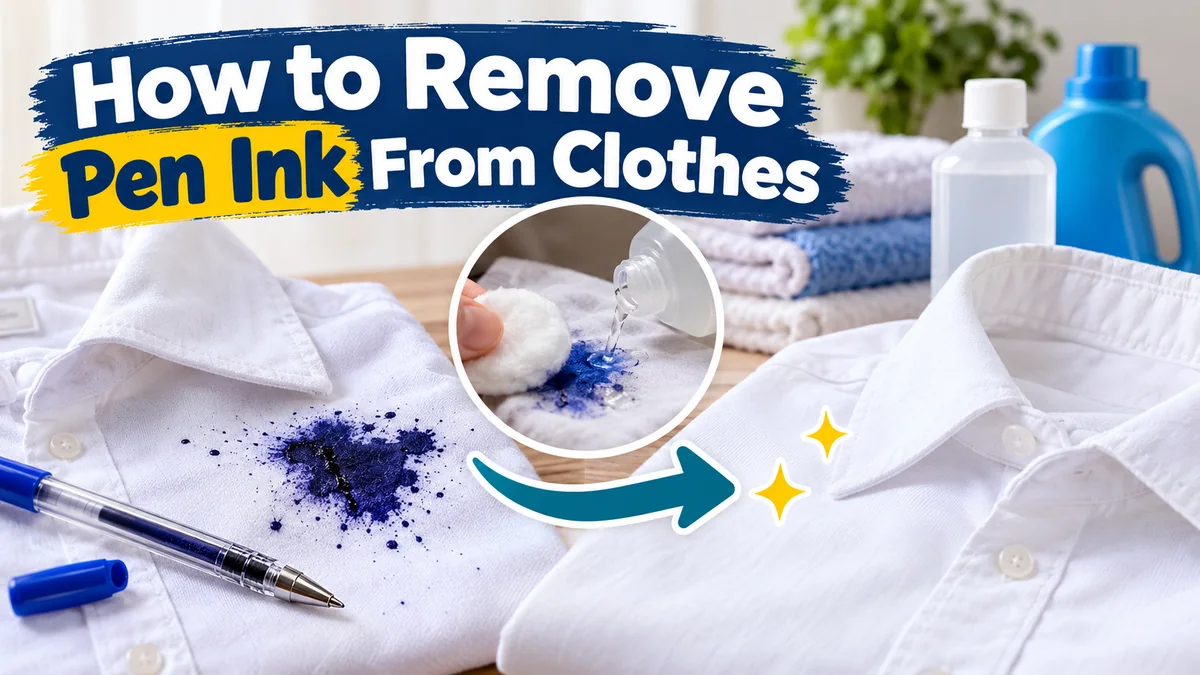
A leaking pen can turn a clean shirt, pair of jeans, or school uniform into a stained mess in seconds. The good news is that many pen stains are removable if you use the right treatment and keep the garment away from heat until the ink is gone.
If you want to know how to remove pen ink from clothes, start by checking the fabric care label, place a clean white towel behind the stain, and blot rather than rub. Water-based ink often responds to cool water and liquid detergent, while ballpoint and other oil-based inks usually need a patch-tested solvent such as rubbing alcohol.
How to Remove Pen Ink From Clothes Step by Step
For most washable cotton, polyester, denim, nylon, and blended garments, the basic process is straightforward. The biggest mistake is putting the garment directly into the washing machine and hoping normal detergent will remove the ink.
Ink needs to be loosened and transferred out of the fibers first.
1. Check the Care Label
Before applying anything, read the garment’s care label.
This matters because a treatment that works well on a cotton T-shirt may damage silk, wool, acetate, or another delicate material. Dry-clean-only garments are generally better handled by a professional cleaner, especially if the stain is large.
If you plan to use rubbing alcohol or another solvent, test a few drops on a hidden seam or inside hem first. Wait briefly and blot with a white cloth.
If fabric dye transfers to the cloth or the material changes appearance, stop using that treatment. Testing for colorfastness before pretreating is also recommended by major laundry-care guidance.
2. Put a White Towel Under the Ink Stain
Lay the garment on a flat work surface.
Place several clean white paper towels or an old white cloth directly underneath the stained portion of the fabric. Keep the stained layer separated from the rest of the garment.
The backing material serves an important purpose: as the ink dissolves, it has somewhere to transfer instead of soaking into another part of the clothing.
Avoid colored towels because their dye can complicate the cleaning process.
3. Blot Fresh Ink Instead of Rubbing It
If the pen stain is still wet, gently press a clean paper towel against it.
Do not scrub.
Rubbing can spread the pigment outward and work it farther into the textile fibers. Blotting lifts excess ink while keeping the contaminated area relatively contained.
Work carefully from the outer edge toward the center.
Replace the towel underneath whenever it becomes heavily stained with ink.
4. Identify the Type of Pen Ink
Not every pen contains the same formulation, and this explains why one stain-removal method may work immediately while another barely changes the stain.
| Ink type | Typical characteristics | Good first treatment |
|---|---|---|
| Ballpoint ink | Oily, thick and stubborn | Rubbing alcohol |
| Fountain pen ink | Usually water-based | Cool water and detergent |
| Gel pen ink | Often water-based but highly pigmented | Cool water and detergent, then stain treatment |
| Washable marker | Designed to release more easily | Water and detergent |
| Permanent marker | Highly resistant | Alcohol or appropriate stain remover |
| Unknown pen ink | Composition uncertain | Patch-test and start conservatively |
Ballpoint ink is commonly harder to remove because its dyes are combined with oily or solvent-based components. Water-based inks tend to respond more readily to rinsing and detergent. Permanent ink can require repeated treatment or a specialized stain remover.
How to Remove Ballpoint Pen Ink From Clothes
For a typical ballpoint stain on a washable, colorfast garment, rubbing alcohol—also called isopropyl alcohol—is one of the most useful household treatments.
Alcohol helps dissolve components of many ballpoint inks so that the color can transfer from the fabric to an absorbent towel rather than remaining trapped in the fibers.
What You Need
Gather:
- White paper towels or a clean white cloth
- Rubbing alcohol
- Cotton balls, cotton pads, or a white cloth
- Liquid laundry detergent
- Cool water
- A soft-bristled toothbrush, if needed
You do not need to aggressively scrub the fabric.
Patience and repeated ink transfer usually work better than force.
Apply Rubbing Alcohol
After completing a hidden-area test, position the ink stain over fresh paper towels.
Apply a small amount of rubbing alcohol to the stained area with a cotton pad or clean white cloth. Depending on the garment and stain position, treating from the back can help push dissolved ink into the absorbent material below.
Blot gently.
You should begin seeing ink transfer onto the paper towel.
Move the garment to a clean section of towel frequently. Otherwise, dissolved ink can transfer back onto the fabric.
Continue until little or no additional color is coming away.
Rinse the Treated Area
Rinse the fabric thoroughly after treating it.
Cool water is a sensible default while you are still working on the stain. Avoid exposing an unresolved ink stain to unnecessary heat.
Check how much ink remains before moving to the next step.
Pretreat With Liquid Laundry Detergent
Apply a small amount of liquid laundry detergent directly to the remaining stain.
Work it gently into the fibers using your fingers or a soft-bristled toothbrush. Do not scrub so aggressively that you damage the weave.
Allow the detergent to remain on the stain for several minutes according to its label directions.
Tide, for example, recommends pretreating after the solvent treatment and allowing its liquid detergent to sit for about five minutes before washing.
Wash According to the Care Label
Wash the garment using a cycle and water temperature permitted by its care label.
Do not assume that hotter is always better. Fabric-specific washing instructions take priority.
Once the cycle finishes, inspect the stained area while the clothing is still wet.
If you can still see ink, repeat the treatment.
Do Not Put an Ink-Stained Garment in the Dryer
This rule can make the difference between an easily recoverable stain and a much more difficult one.
Do not machine-dry the garment until you are satisfied that the ink has disappeared.
Dryer heat can make remaining stains significantly harder to remove. Laundry guidance therefore recommends checking the garment after washing and repeating the treatment before drying if ink remains.
Air-dry the item instead.
Natural air drying lets you inspect the results without deliberately applying high heat to the residual stain.
Quick Takeaway: Treat, wash, inspect, and air-dry. Only use the dryer after the ink is gone.
How to Remove Water-Based Pen Ink From Clothes
Water-based ink can be easier to handle than oily ballpoint ink.
This category may include some fountain pens, rollerballs, gel pens, and washable markers, although formulations vary between manufacturers.
Start with water rather than automatically reaching for a powerful solvent.
Flush With Cool Water
Position the stain so that water can pass through the affected fabric rather than carrying ink across a larger surface.
Rinse with cool water.
Blot with a clean white cloth as the color begins to release.
Never grind the stain into the fabric.
Apply Liquid Detergent
Put liquid laundry detergent directly onto the affected area and gently work it through the material.
Let it remain for the amount of time recommended by the detergent manufacturer.
Persil recommends blotting water-based or ballpoint stains, followed by a small amount of liquid detergent and a short pretreatment period.
Wash according to the garment’s care instructions and inspect before drying.
If the stain persists and the fabric is compatible, you can escalate to an appropriate stain treatment.
How to Remove Dried Pen Ink From Clothes
Discovering a pen stain after it has dried does not necessarily mean the garment is ruined.
It does mean you may need more patience.
Dried ink has had more time to settle into the fibers, and a stain that has already passed through a heated dryer can be particularly stubborn.
Start With Rubbing Alcohol on Compatible Fabric
Put clean paper towels underneath the stain.
Patch-test rubbing alcohol in an inconspicuous area.
If the test is successful, apply the alcohol to the dried ink and blot gently. Give the solvent enough contact time to loosen the stain, but do not allow dissolved ink to spread across the garment.
Replace the absorbent backing repeatedly.
Continue as long as ink is transferring.
Pretreat and Wash
Once you have removed as much ink as possible, rinse the treated area and apply liquid laundry detergent or a fabric-compatible stain remover.
Wash according to the care label.
Then air-dry and inspect.
Dried or heat-set stains may require multiple treatment cycles, and commercial laundry stain removers can be useful when repeated alcohol treatment no longer produces much improvement.
How to Get Pen Ink Out of Clothes With Hand Sanitizer
Alcohol-based hand sanitizer can sometimes help when rubbing alcohol is unavailable.
The important word is alcohol-based.
The alcohol is the component that can help dissolve certain inks. However, sanitizers also contain gels, moisturizers, fragrances, and other ingredients, so plain rubbing alcohol is often a cleaner and more predictable option when available.
Clorox recommends clear alcohol-based hand sanitizer as a pretreatment in its method for several pen and marker stains.
To try it:
- Check the clothing care label.
- Patch-test the sanitizer on a hidden area.
- Put white paper towels underneath the stain.
- Apply enough sanitizer to cover the ink.
- Let it work briefly.
- Blot the loosened ink.
- Rinse thoroughly.
- Pretreat with laundry detergent.
- Wash according to the garment’s care instructions.
- Air-dry and inspect.
Avoid colored or heavily fragranced sanitizer when possible because it introduces additional ingredients to the fabric.
Does Hairspray Remove Pen Ink From Clothes?
Hairspray has been a popular ink-removal trick for decades, but it is no longer the most dependable first choice.
The reason older hairspray methods sometimes worked was largely their alcohol content.
Modern formulas vary considerably. Some contain less useful alcohol and more conditioners, fragrances, and styling ingredients that can leave their own residue.
Recent testing and cleaning guidance from Good Housekeeping favors more direct treatments such as rubbing alcohol over popular DIY alternatives such as hairspray when dealing with typical ink stains.
If rubbing alcohol is available and safe for the garment, use it instead of relying on hairspray.
Can Vinegar Remove Pen Ink?
White vinegar appears in many home stain-removal recipes, but it should not automatically be considered the best treatment for every ink stain.
Ink chemistry matters.
Oil-based ballpoint ink generally responds better to a compatible solvent such as rubbing alcohol because the treatment needs to dissolve the ink’s oily or solvent-based components.
Vinegar may play a role in certain fabric-specific cleaning approaches, but it is not a universal substitute for alcohol.
If you decide to try vinegar, always test it on a hidden portion of the garment first.
More importantly, do not start combining multiple household chemicals in an attempt to create a stronger stain remover.
How to Remove Pen Ink From Cotton Clothes
Cotton is common in shirts, T-shirts, school uniforms, and casual clothing, and many washable cotton garments tolerate standard stain-removal procedures reasonably well.
For washable, colorfast cotton:
- Blot fresh ink.
- Put white absorbent material beneath the stain.
- Patch-test rubbing alcohol.
- Dab the alcohol onto ballpoint ink.
- Replace the backing as ink transfers.
- Rinse.
- Pretreat with liquid laundry detergent.
- Wash according to the care label.
- Air-dry and inspect.
Colored cotton still needs a colorfastness test.
Do not assume a treatment is safe simply because the fabric is cotton; garment dyes and finishes vary.
How to Remove Pen Ink From Polyester and Nylon
Polyester and nylon are synthetic fibers, but many washable garments made from them can also be treated carefully with rubbing alcohol after patch testing.
Tide recommends testing first, then applying rubbing alcohol to appropriate polyester or nylon garments so the ink can be pulled from the threads before rinsing and air drying.
Use only as much solvent as necessary.
Sportswear deserves additional caution because an item described as “polyester” may contain elastane or spandex and have specialized moisture-wicking finishes.
Always let the care label guide you.
How to Remove Pen Ink From Jeans and Denim
Denim can hide small marks better than a white shirt, but a leaking ballpoint can still leave an obvious dark patch.
Place a thick white towel behind the stained section so ink does not reach the opposite side of the jeans.
Patch-test your chosen treatment inside the waistband or another concealed location.
For compatible denim, dab ballpoint ink with rubbing alcohol, moving to a clean section of the towel as the ink transfers. Follow with liquid laundry detergent and wash according to the care label.
Do not vigorously scrub blue denim.
Heavy rubbing can fade the dye around the stain, leaving a light patch even after the ink disappears.
What About Silk, Wool, and Delicate Clothes?
Delicate garments need a different mindset.
A home treatment that saves an inexpensive cotton T-shirt may permanently alter a silk blouse or wool garment.
Be particularly cautious with:
- Silk
- Wool
- Acetate
- Triacetate
- Rayon or viscose
- Garments with delicate trims
- Structured clothing
- Dry-clean-only garments
Strong solvents can affect dyes, finishes, and certain fibers. Guidance for delicate materials therefore emphasizes checking the care label and seeking professional cleaning when appropriate.
If the item is valuable, do not experiment with several household remedies.
Blot excess fresh ink carefully, avoid heat, and take the garment to a professional cleaner. Tell the cleaner what type of pen caused the stain if you know.
How to Remove Permanent Marker From Clothes
Permanent marker is harder to remove than an ordinary washable pen because it is specifically formulated to resist easy removal.
Start by placing clean white towels underneath the mark.
On a compatible washable garment, patch-test rubbing alcohol and blot carefully. Replace the towels as pigment transfers.
Do not expect one treatment to erase a large permanent-marker stain immediately.
Repeat the transfer process patiently, rinse, and use a suitable laundry stain remover before washing.
Some permanent ink may leave a residual shadow even after repeated cleaning. In that situation, aggressive scrubbing can cause more damage than the remaining stain itself.
What If a Pen Exploded in the Washing Machine?
A pen left in a pocket can create multiple ink marks rather than one neat stain.
Remove the affected garments from the washer and examine them individually.
Do not put them into the dryer.
Treat visible ink stains before rewashing. Separate badly stained pieces so loosened ink does not contaminate other clothing during pretreatment.
Also inspect the washing machine drum for ink residue before running another load.
If the pen reached the dryer, inspect the dryer’s interior according to the appliance manufacturer’s cleaning instructions before using it again.
Common Mistakes That Make Ink Stains Worse
Successful ink removal is often about avoiding the wrong actions.
Rubbing the Stain
Scrubbing fresh ink can spread a small spot into a larger patch.
Blot and lift instead.
Using Heat Too Soon
Do not iron the stained area or put the garment in a heated dryer while visible ink remains.
Heat can make subsequent removal more difficult.
Ignoring the Fabric Type
Cotton, polyester, silk, wool, nylon, acetate, and blended fabrics do not react identically to solvents.
Read the label first.
Skipping the Patch Test
A stain remover is not successful if it removes the ink but also removes the garment’s color.
Test first.
Treating Every Ink the Same Way
Water-based fountain pen ink and oily ballpoint ink have different compositions.
Start with the treatment that matches the ink type.
Using Too Many Home Remedies
Applying vinegar, baking soda, toothpaste, hairspray, sanitizer, alcohol, and detergent one after another is not a better strategy.
Some products add residue without meaningfully improving ink removal, while repeated chemical exposure can affect the fabric.
Choose a controlled method and evaluate the result before changing treatments.
Can You Remove Pen Ink After Clothes Have Been Washed?
Yes, washing does not automatically make an ink stain permanent.
The more important question is whether the garment was also exposed to high dryer heat.
If a washed garment has not been dried, begin pretreatment as soon as you discover the remaining mark.
For compatible washable fabrics with ballpoint ink, rubbing alcohol followed by detergent is still worth trying.
If the clothing has already been tumble-dried, repeat treatment may still improve or remove the stain, but expect the process to take longer. Commercial stain removers may be useful for persistent set-in ink.
Does Pen Ink Permanently Stain Clothes?
Not necessarily.
Many pen stains can be removed, particularly when they are treated quickly and the correct method is matched to the ink and fabric. Even dried stains may respond to repeated pretreatment.
However, no home method can guarantee complete removal.
The final result depends on several factors:
- Ink formulation
- Fabric fiber
- Fabric color
- Garment finish
- Age of the stain
- Previous washing
- Exposure to dryer or iron heat
- Cleaning products already applied
A tiny fresh water-based mark on washable cotton is very different from permanent marker that has been heat-set on delicate fabric.
Set realistic expectations and stop if continued treatment begins damaging the material.
A Quick Ink-Stain Treatment Guide
| Situation | First approach | Avoid |
|---|---|---|
| Fresh ballpoint ink | Patch-tested rubbing alcohol | Rubbing |
| Water-based pen ink | Cool water and liquid detergent | Unnecessary heat |
| Dried ballpoint ink | Alcohol, blotting, detergent, repeat | Dryer before inspection |
| Permanent marker | Alcohol or suitable stain remover | Aggressive scrubbing |
| Cotton | Fabric-safe alcohol treatment | Skipping color test |
| Polyester/nylon | Patch-test before alcohol | Assuming all synthetics are identical |
| Silk/wool | Care-label guidance or professional cleaner | Strong DIY treatments |
| Dry-clean-only clothing | Professional cleaning | Machine washing |
| Unknown ink | Conservative patch-tested treatment | Mixing random cleaners |
What Actually Works Best?
For most everyday washable garments stained by a ballpoint pen, the most practical method is controlled treatment with rubbing alcohol followed by liquid laundry detergent.
The technique matters as much as the product.
Put absorbent white material behind the stain, dissolve and blot the ink out of the fibers, keep changing the backing as ink transfers, rinse, pretreat, and then wash according to the care label. This alcohol-and-blot approach appears consistently across current stain-removal guidance for ordinary ballpoint ink.
For water-based ink, begin more gently with cool water and detergent.
For delicate or dry-clean-only materials, professional treatment may be safer than experimenting at home.
The most important lesson in how to remove pen ink from clothes is simple: act quickly, identify what you are treating, blot instead of rubbing, test solvents before using them, and keep the garment out of the dryer until the stain has completely disappeared.