
Oil has a frustrating way of landing on the clothes you actually care about. A splash of olive oil, a drop of salad dressing, greasy butter, makeup, or motor oil can soak into fabric fibers quickly and leave a dark patch that ordinary washing may not remove.
Learning how to get oil out of clothes comes down to three things: absorb as much oil as possible, break down the remaining grease with an appropriate cleaner, and keep the garment away from dryer heat until the stain has disappeared.
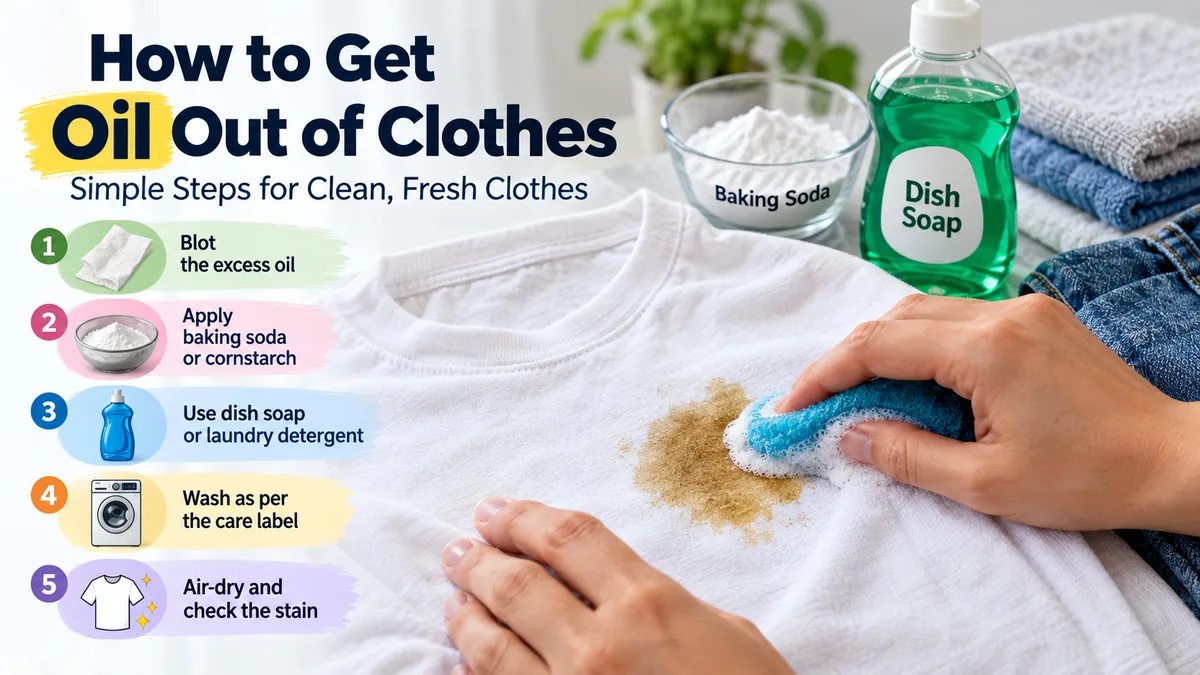
To get oil out of clothes, blot excess oil with a dry paper towel, cover the stain with baking soda or cornstarch if needed, then pretreat it with grease-cutting dish soap or liquid laundry detergent. Wash using the warmest water permitted by the care label and air-dry before checking the stain.
How to Get Oil Out of Clothes Quickly
Fresh oil stains are usually easier to tackle than stains that have already dried. The first few minutes matter because you want to remove surface oil before it travels farther through the fibers.
You will usually need:
- Clean paper towels or a white cloth
- Baking soda or cornstarch
- Grease-cutting liquid dish soap
- Liquid laundry detergent or an enzyme-based detergent
- A soft toothbrush or laundry brush
- A piece of cardboard or an old towel
Before applying anything, check the garment’s care label. Cotton, polyester, denim, wool, silk, and other fabrics can have very different washing and temperature requirements.
1. Blot the Excess Oil
Place the garment on a flat surface and gently press a clean paper towel or cloth against the stain.
Blot rather than rub.
Rubbing can spread grease across a larger area and work it deeper into the material. For thick grease or oily food residue, gently lift away the excess with the edge of a spoon or dull knife. Whirlpool also recommends putting cardboard behind the stained area to help prevent oil from transferring through the garment.
2. Absorb Remaining Surface Oil
If the area still feels greasy, sprinkle a generous layer of baking soda or cornstarch over it.
These absorbent powders can draw some of the oil away from the fibers. Depending on the stain, they may be left for roughly 15–30 minutes or longer before being gently brushed away. Particularly oily stains may benefit from another application.
You may notice the powder becoming darker or forming clumps. That is normal as it picks up moisture and oil.
3. Apply Dish Soap or Liquid Laundry Detergent
Place a small amount of grease-cutting liquid dish soap directly over the stained area.
Gently work it into sturdy fabric with your fingers or a soft toothbrush. Avoid aggressive scrubbing, especially on knits, thin fabrics, or delicate fibers.
Allow the soap to work for around 5–10 minutes.
Dishwashing liquid is useful because it is formulated to deal with fats and grease. Liquid laundry detergent, particularly an enzyme-based formulation intended for stain treatment, can also be used.
If you use dish soap, rinse it out thoroughly before putting the garment into a washing machine. Dishwashing products can produce much more foam than laundry detergent and are not intended to be poured directly into a washer.
4. Wash According to the Care Label
Wash the garment using regular laundry detergent and the warmest water temperature that the care label safely allows.
Don’t assume hotter is always better.
Cotton may tolerate temperatures that would damage, shrink, fade, or distort another material. Delicate and synthetic garments can require cooler conditions. Manufacturer guidance consistently recommends following the garment care instructions rather than choosing a temperature solely because the stain is oily.
5. Check the Stain Before Drying
This step is easy to overlook.
Inspect the stained area after washing. If you can still see a dark or greasy mark, repeat the pretreatment and washing process.
Do not automatically transfer the garment to the dryer.
Heat can make a remaining stain significantly harder to remove. Air-drying also lets you inspect the fabric again before exposing it to dryer heat.
Quick Takeaway: Blot → absorb → pretreat → wash → air-dry → inspect. If the stain remains, repeat the process before using the dryer.
How to Get Oil Out of Clothes With Dish Soap
Dish soap is one of the most practical treatments for common cooking-oil and grease stains.
It can be especially useful for stains caused by:
- Olive oil
- Vegetable oil
- Canola oil
- Butter
- Mayonnaise
- Salad dressing
- Bacon grease
- Other oily foods
The basic technique is straightforward.
Put a few drops of grease-cutting dishwashing liquid directly on the dry stain. Gently massage it through the affected fibers and allow it to remain there for approximately 5–10 minutes.
Rinse thoroughly and then launder according to the garment’s care instructions.
For a sturdy cotton T-shirt or pair of jeans, gentle brushing may help distribute the soap. On delicate material, use your fingertips and minimal friction instead.
Does Dish Soap Remove Old Oil Stains?
It can.
A dried stain is more difficult because the oil has had additional time to penetrate and adhere to the fibers. Pretreat the mark with liquid dish soap or laundry detergent, allow the cleaner time to work, rinse, and wash the garment.
You may need to repeat the treatment several times.
Avoid assuming the stain is permanent after one unsuccessful wash. Oil marks can become progressively lighter over repeated treatments.
How to Get Oil Out of Clothes With Baking Soda
Baking soda is most useful as an absorbent pretreatment, particularly when there is still excess oil in the fabric.
First blot away as much liquid oil as possible. Cover the remaining mark with baking soda and give the powder time to absorb the grease.
Brush it away gently.
If the baking soda quickly becomes oily or heavily clumped, apply another layer. Once you have absorbed as much surface oil as possible, follow with dish soap or laundry detergent before washing.
Cornstarch can perform a similar role and may be useful when you want an alternative absorbent powder.
Baking soda alone should not necessarily be treated as the complete cleaning process. Absorbing free oil and breaking down the residue are different jobs, which is why detergent usually follows the powder treatment.
How to Remove Dried or Set-In Oil Stains
Discovering an oil mark after laundry day doesn’t automatically mean the garment is ruined.
Old stains simply require more patience.
Start by placing the garment on a clean work surface. If the spot is obviously greasy, apply liquid dish soap or liquid laundry detergent directly to it.
Gently work the cleaner into the material and leave it for about 10 minutes. For washable fabrics, soaking may provide additional time for the detergent to loosen residue. Maytag recommends checking the care label and using an appropriate warm or hot-water soak for old oil stains before rewashing.
Then wash the item at the warmest temperature permitted by its label.
Air-dry and inspect.
If a shadow remains, repeat the process rather than immediately switching to aggressive chemicals.
What If the Clothes Have Already Been Through the Dryer?
A dryer makes the job harder, but another treatment can still be worthwhile.
Cover the affected area with liquid detergent or grease-cutting dish soap and gently work it into the fibers. Let it sit, rinse as appropriate, and wash again.
Repeat if necessary.
Set-in stains sometimes require several cycles of pretreatment and washing. Avoid further machine drying while you are trying to remove the remaining mark.
Fresh Oil Stains vs. Old Oil Stains
The best approach changes slightly depending on when you discover the stain.
| Situation | Best First Step | Pretreatment | Washing |
|---|---|---|---|
| Fresh cooking oil | Blot immediately | Baking soda/cornstarch, then dish soap | Care-label-safe temperature |
| Fresh grease | Scrape/blot excess | Grease-cutting dish soap | Care-label-safe temperature |
| Dried oil stain | Apply detergent | Dish soap or liquid laundry detergent | Wash and repeat if needed |
| Set-in stain | Longer pretreatment | Liquid detergent and optional soak | Rewash before drying |
| Delicate fabric | Blot gently | Fabric-safe mild treatment | Follow care label closely |
| Motor oil | Remove excess carefully | Heavy-duty detergent/stain treatment | May require repeated cleaning |
Fresh stains generally give you the best chance of complete removal because less oil has penetrated and oxidized within the material. HGTV notes that oil can become darker and more stubborn as it sits.
How to Remove Cooking Oil From Clothes
Cooking oils are among the most common sources of greasy clothing stains.
Olive oil, vegetable oil, coconut oil, butter, sauces, mayonnaise, and salad dressings can all leave translucent marks that become much more obvious after the fabric dries.
For a fresh cooking-oil stain:
- Blot away excess oil without rubbing.
- Apply baking soda or cornstarch if substantial oil remains.
- Brush away the absorbent powder.
- Apply grease-cutting dish soap.
- Leave it for several minutes.
- Rinse thoroughly.
- Wash according to the care label.
- Air-dry and inspect.
Don’t pour water over a large fresh oil spill as your first move. Start by removing as much excess grease as possible.
How to Remove Motor Oil and Heavy Grease From Clothes
Motor oil and workshop grease can be more difficult than cooking oil because they may contain additives, dirt, and other contaminants.
Remove thick residue with a dull spoon or similar tool without pushing it farther into the fibers. Blot what remains and pretreat the affected area with an appropriate grease-fighting cleaner or laundry stain treatment.
More than one treatment may be necessary for a heavy stain.
There is also an important safety distinction between an ordinary cooking-oil stain and clothing contaminated with potentially flammable substances. GE Appliances specifically warns against placing garments that have had flammable materials on them in a dryer, even after washing.
If clothing has been heavily contaminated with gasoline, solvents, or another combustible substance, follow the product’s safety guidance rather than treating it like an ordinary food stain.
How to Treat Oil Stains on Different Fabrics
The cleaner isn’t the only thing that matters. Fabric construction determines how aggressively you can work on a stain.
Cotton
Cotton is relatively durable, so common washable cotton garments usually tolerate dish-soap pretreatment and gentle brushing well.
Use the warmest wash temperature permitted by the label and check the garment before drying.
Polyester and Synthetic Fabrics
Polyester and other synthetic fibers can hold oily residue surprisingly well.
Pretreat with liquid detergent or a small amount of grease-cutting dish soap, but pay close attention to temperature restrictions. Synthetic fibers may not tolerate the same heat as sturdy cotton.
Denim
For washable jeans, blot the oil, apply dish soap, gently massage it into the affected area, rinse, and wash.
Because denim is sturdy, gentle brushing can help with stubborn marks, but excessive scrubbing can still affect the surface or color.
Wool and Knits
Treat wool much more gently.
Maytag recommends using mild detergent in the warmest water permitted by the care tag, gently massaging the solution through the garment and soaking for a short period rather than aggressively scrubbing the fibers.
Avoid vigorous brushing, twisting, and unnecessary heat.
Silk and Other Delicates
Delicate garments need caution because a stain-removal attempt can cause more visible damage than the original oil.
Blot rather than scrub. An absorbent powder can help draw away surface oil, but always follow the care label.
If the label says dry clean only, taking the garment to a professional cleaner is generally safer than experimenting with multiple household treatments.
When possible, tell the cleaner what caused the stain.
Should You Use Hot or Cold Water for Oil Stains?
There isn’t one correct temperature for every garment.
Warm water can help with oily residue, but the care label takes priority. Whirlpool recommends washing at the warmest temperature permitted for the garment.
This distinction matters.
A temperature that is appropriate for a white cotton shirt could damage wool, certain synthetic materials, dyed fabrics, or delicate clothing.
Instead of following a universal “always use hot water” rule, check the label first and select the warmest safe setting.
Are Oil Stains Permanent?
Not necessarily.
Many fresh oil stains can be removed when they are blotted, pretreated, washed correctly, and kept out of the dryer until clean. Even older stains can sometimes respond to repeated treatment.
Several factors affect the result:
- How long the oil has been present
- The type and amount of oil
- Fabric type and construction
- Whether the garment has already been dried with heat
- Previous cleaning treatments
- Whether the stain has oxidized or collected dirt
A faint stain after the first wash isn’t necessarily a reason to give up. Repeating a gentle treatment is often preferable to immediately using a much harsher chemical.
Common Mistakes When Removing Oil From Clothes
A good stain-removal method can fail because of what happens before or after treatment.
Rubbing a Fresh Spill
Rubbing spreads oil and can force it deeper into the fibers. Blot instead.
Putting the Garment Straight Into the Washer
A normal wash may not adequately remove concentrated grease. Pretreat the affected area first.
Ignoring the Care Label
High temperatures, strong chemicals, and vigorous brushing can damage certain fabrics.
Using Too Much Dish Soap
More soap does not automatically mean better stain removal. A small amount worked into the stain is usually enough, and dish soap should be thoroughly rinsed before machine washing.
Machine-Drying Too Soon
This is one of the biggest mistakes.
If the oily shadow remains after washing, dryer heat can make further removal much harder. Air-dry first and inspect the garment in good lighting.
Mixing Cleaning Chemicals
Avoid casually combining stain removers, bleach, ammonia, solvents, vinegar, or other cleaners.
Follow each product’s label. More chemicals do not necessarily produce better results, and some combinations can be hazardous.
Why Do Oil Spots Sometimes Appear After Washing?
Sometimes you don’t notice an oily mark until a garment comes out of the washing machine.
The original stain may have been nearly transparent before washing. Residue from fabric-care products or buildup inside the washer can also contribute to marks on freshly washed clothing. Clorox notes that untreated stains, fabric-softener buildup, and a dirty washer are possible causes of oily-looking spots after laundering.
If unexplained spots repeatedly appear across different garments, inspect and clean the washing machine according to its manufacturer’s instructions rather than treating every mark as a food spill.
What Actually Works Best for Oil Stains?
For an ordinary washable garment, you usually don’t need an elaborate collection of stain-removal products.
The most reliable process is simple: remove excess oil, absorb what you can, pretreat the grease, wash correctly, and avoid dryer heat until you know the stain is gone.
Baking soda and cornstarch are useful for absorbing oil. Grease-cutting dish soap helps tackle oily residue. Liquid or enzyme-based laundry detergent handles the washing stage. The garment’s care label determines how much heat and agitation the fabric can safely tolerate.
If you’re trying to figure out how to get oil out of clothes right now, start with the least complicated step: blot the stain while it’s still dry. Pretreat it rather than throwing it straight into the washer, wash according to the care label, and air-dry before inspecting your work.
That small change in laundry routine can make the difference between a stain that disappears and one that becomes much harder to remove.