
A comfortable walking shoe can make the difference between enjoying a long walk and finishing with sore feet. Yet finding the right pair isn’t always straightforward. A shoe that feels wonderful to one person might cause discomfort for someone else.
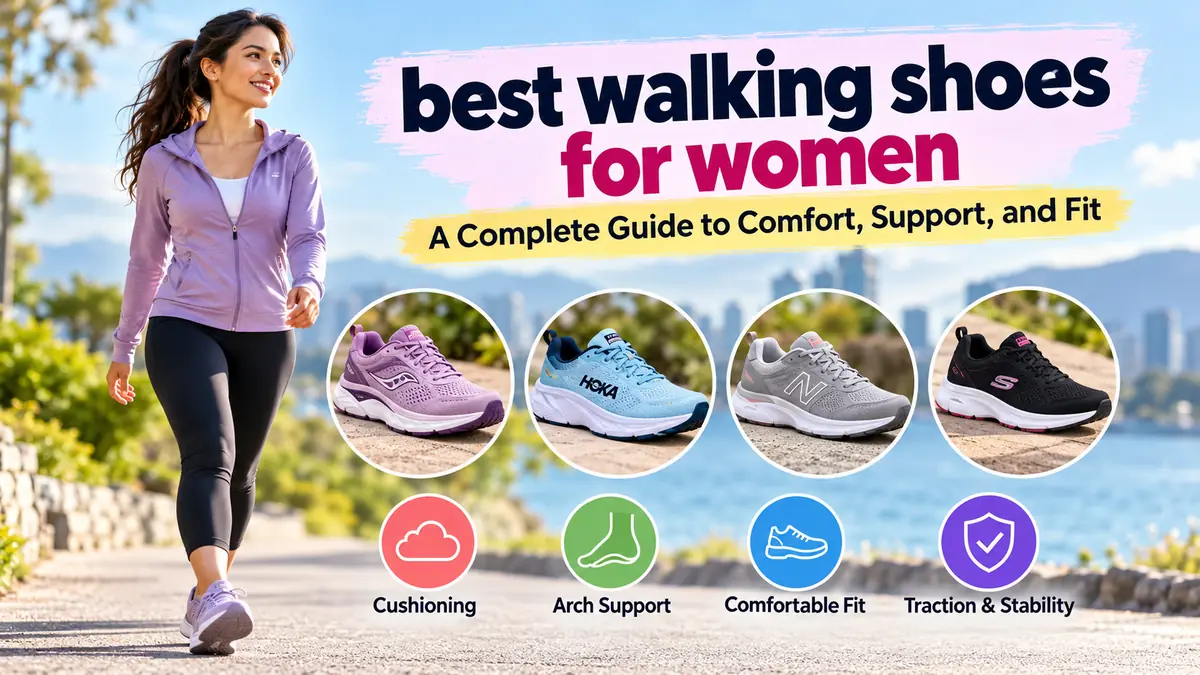
The best walking shoes for women combine a comfortable fit, appropriate cushioning, reliable traction, and support suited to the wearer’s feet. Popular options include the Brooks Ghost, HOKA Clifton, New Balance 880, ASICS Gel-Nimbus, and Skechers GO WALK. The ideal choice depends on foot shape, walking distance, terrain, and personal comfort.
Walking shoes are useful for much more than dedicated exercise. They can make daily commuting, sightseeing, shopping, work shifts, and regular fitness walks more comfortable.
This guide explains what separates good walking shoes from uncomfortable ones, how different footwear designs compare, and how to identify the features that matter most.
What Makes the best walking shoes for women?
The most comfortable walking shoes share several characteristics, but there is no universal combination that works for every foot.
Cushioning That Absorbs Impact
Walking creates repeated forces as the foot contacts the ground, rolls forward, and pushes off.
A cushioned midsole helps manage these forces and can make hard surfaces feel more comfortable.
Common cushioning materials include EVA foam, TPU-based compounds, and proprietary blends used by athletic footwear brands.
Soft cushioning isn’t automatically better. Excessively soft midsoles may feel unstable for some walkers, particularly on uneven ground.
A useful walking shoe should feel comfortable without allowing the foot to wobble excessively.
Support That Matches Your Foot Structure
Arch support is frequently discussed in footwear recommendations, but the right amount varies.
People with low arches, neutral arches, and high arches may prefer different shoe constructions.
Some walkers feel comfortable in neutral shoes, while others benefit from stability features that guide excessive inward foot movement.
The goal is comfortable, controlled movement rather than forcing every foot into the same alignment.
Enough Room for Natural Toe Movement
A narrow toe box can create pressure around the toes, especially during longer walks.
The forefoot should have enough space for the toes to spread comfortably.
Look for a secure heel, a snug but nonrestrictive midfoot, and adequate space at the front.
A shoe that pinches when first tried on is unlikely to become an ideal walking shoe simply through repeated use.
Flexibility, Stability, and Traction
Walking shoes should accommodate the natural rolling motion of the foot.
Many comfortable models bend primarily near the forefoot while retaining enough structure through the midfoot.
The outsole also matters. Rubber traction patterns help provide grip on sidewalks, indoor floors, and other walking surfaces.
For trails or slippery conditions, deeper tread patterns may be more appropriate.
Popular Walking Shoe Models and Their Key Features
Several well-known footwear families regularly appear in walking and comfort-shoe discussions. These are examples worth understanding, not universal winners or a substitute for trying shoes on.
Specific cushioning materials, fit characteristics, and construction can change between model generations.
| Shoe model | General characteristics | May suit |
|---|---|---|
| Brooks Ghost | Cushioned neutral design with a traditional running-shoe feel | Everyday walking and longer distances |
| HOKA Clifton | Lightweight, cushioned construction with rocker geometry | Pavement walking and extended outings |
| New Balance 880 | Balanced cushioning and familiar athletic-shoe construction | Daily exercise and casual wear |
| ASICS Gel-Nimbus | Plush, highly cushioned neutral design | Walkers who enjoy softer underfoot comfort |
| Skechers GO WALK | Casual walking-focused construction, often with flexible uppers | Errands and everyday walking |
| Brooks Adrenaline GTS | Stability-oriented design | Walkers who prefer additional guidance |
| New Balance 1080 | Soft, premium cushioning | Long walks on hard surfaces |
| Altra Torin | Foot-shaped toe box and zero-drop geometry | Walkers seeking toe space who tolerate zero drop |
These models have different strengths and limitations. For example, a thick, soft shoe may feel excellent on smooth pavement but less secure on irregular ground.
A zero-drop shoe also changes the loading demands on the calf and Achilles tendon. Anyone transitioning from a higher-heeled athletic shoe should adapt gradually.
Brooks Ghost for Balanced Everyday Comfort
The Brooks Ghost series is known for neutral cushioning and a relatively conventional running-shoe construction.
Its design can work for people who want a versatile shoe for walking, light jogging, or extended everyday use.
The familiar heel-to-toe transition may appeal to walkers who dislike aggressive rocker shapes.
However, fit varies between versions, and people who prefer a very wide forefoot should check the available widths.
HOKA Clifton for Cushioned Pavement Walking
The HOKA Clifton family uses a cushioned platform and rocker-inspired geometry.
Rocker soles have a curved shape designed to help the foot roll forward during movement.
Some walkers find this transition comfortable, particularly during longer pavement walks.
Others prefer shoes that allow more forefoot flexibility or provide a stronger sense of ground contact.
The relatively substantial sole profile also makes it worth checking stability and heel security carefully.
New Balance 880 for Versatility
The New Balance 880 series generally emphasizes balanced cushioning rather than an extremely soft or minimalist feel.
Its familiar athletic construction makes it relevant to walkers who use one pair for errands, fitness walks, and general daily activities.
New Balance also offers multiple widths in selected models, which can be valuable for people who struggle with standard shoe sizing.
ASICS Gel-Nimbus for Plush Cushioning
The ASICS Gel-Nimbus family is designed around a highly cushioned experience.
It may appeal to walkers who spend considerable time on concrete or other hard surfaces.
However, more cushioning does not guarantee less pain or fewer injuries. Footwear comfort depends on the entire shoe, including its shape, weight, stability, and fit.
Skechers GO WALK for Casual Use
Skechers GO WALK footwear focuses on everyday walking comfort.
Depending on the version, features may include lightweight uppers, flexible constructions, and slip-on designs.
These characteristics can be convenient for shopping, casual travel, and shorter walks.
For long-distance walking, pay particular attention to heel retention and whether the shoe remains supportive after extended wear.
Best Walking Shoes for Women With Different Foot Types
Foot shape can be more important than a shoe’s popularity.
Understanding your own feet helps narrow the available options.
Walking Shoes for Flat Feet
Flat feet have relatively low arches when standing.
Some people with flat feet experience no discomfort and do not require specialized footwear.
Others may prefer stability shoes with firmer support or guidance features.
Examples of stability-oriented footwear include the Brooks Adrenaline GTS and ASICS Gel-Kayano families.
Neither is automatically necessary simply because someone has flat feet.
Comfort, fit, and any existing symptoms should guide the choice.
Walking Shoes for High Arches
People with high arches may find certain shoes uncomfortable because pressure is distributed differently across the foot.
A cushioned neutral shoe can feel more comfortable for some high-arched walkers.
Models such as the Brooks Ghost and ASICS Gel-Nimbus are examples of cushioned designs.
However, high arches alone do not determine which shoe is best. Individual gait, foot flexibility, and comfort also matter.
H3: Walking Shoes for Wide Feet
Wide feet need enough room across the forefoot without excessive pressure.
Some brands offer wide and extra-wide sizing, which may provide a better fit than simply increasing shoe length.
New Balance and Brooks offer multiple widths in certain shoe families.
Altra’s foot-shaped toe boxes may also appeal to walkers seeking additional toe space, although not every Altra model has the same overall width.
Avoid choosing an excessively long shoe to compensate for a narrow toe box. That can create heel slipping and poor alignment with the shoe’s flex point.
Walking Shoes for Narrow Feet
Narrow feet can slide inside shoes that have too much internal volume.
This movement may lead to friction, instability, or blisters.
Look for secure heel construction, adjustable laces, and a midfoot that holds the foot comfortably.
A runner’s loop lacing technique can sometimes improve heel retention, provided it does not create pressure across the top of the foot.
best walking shoes for women for Specific Activities
Different walking environments place different demands on footwear.
A comfortable shoe for indoor errands may not be the right choice for hiking or standing through a long work shift.
Shoes for Walking Long Distances
Long-distance walking makes small fit problems more noticeable.
Shoes that feel comfortable for ten minutes may cause friction or pressure after several miles.
For longer walks, prioritize a secure heel, sufficient toe space, comfortable cushioning, and an outsole suited to the surface.
Breathable uppers and moisture-managing socks can also improve comfort.
Consider testing new shoes on shorter routes before using them for a long walking event.
Shoes for Standing All Day
Standing and walking create different patterns of pressure and movement.
People working in healthcare, hospitality, education, and retail may spend hours on hard floors.
For these activities, look for cushioning that remains comfortable over time, stable construction, and a fit that accommodates normal changes in foot volume.
Slip resistance may be particularly important in workplaces with wet or oily surfaces.
A shoe marketed as comfortable is not necessarily certified for occupational slip resistance. Check the relevant workplace requirements.
Shoes for Travel and Sightseeing
Travel often involves several hours of walking mixed with standing, public transportation, and irregular surfaces.
A versatile travel shoe should be comfortable, secure, and appropriate for the expected weather.
Lightweight construction can reduce the burden of carrying spare footwear, while breathable materials may be helpful in warm climates.
For cobblestone streets or uneven paths, prioritize secure footing over extremely soft cushioning.
Shoes for Treadmill Walking
Treadmills provide a relatively predictable, even surface.
Most comfortable athletic walking or running shoes can work well on a treadmill.
Specialized treadmill-only shoes are generally unnecessary.
The shoe should remain secure at different walking speeds and should not rub against the heel or toes.
Shoes for Trail Walking
Trail walking introduces rocks, loose gravel, mud, and uneven terrain.
Trail-running shoes or lightweight hiking shoes may be more suitable than road walking shoes.
Look for durable outsoles, dependable grip, and enough protection for the terrain.
Waterproof membranes can be useful in wet conditions, although they may reduce breathability and can dry slowly if water enters the shoe.
How to Choose the Right Walking Shoe Size and Fit
Even a well-designed shoe can cause discomfort when it doesn’t fit properly.
Shoe sizing varies between brands and sometimes between different models from the same manufacturer.
A Practical Step-by-Step Fitting Method
- Measure both feet while standing, preferably later in the day when they may be slightly larger.
- Wear the socks you normally use for walking.
- Try shoes on both feet and lace them securely.
- Check for approximately a thumb’s width of space in front of the longest toe, using it as a starting guideline rather than an absolute rule.
- Walk around and pay attention to heel movement, arch pressure, and toe contact.
- Try turning and walking at different speeds to evaluate stability.
- Compare widths or sizes if any area feels tight or insecure.
The longest toe is not always the big toe, so assess the space in front of whichever toe extends farthest.
Should Walking Shoes Be Tight or Loose?
Walking shoes should feel secure without squeezing the feet.
The heel should not lift excessively, but the toes should be able to move comfortably.
Too-tight footwear may cause numbness, blisters, or pressure on toenails.
Excessively loose footwear may allow the foot to slide, creating friction and reducing stability.
Are Women’s Walking Shoes Different From Men’s?
Women’s footwear is often built around different size ranges and fit assumptions.
Some women’s shoe designs use a narrower heel or different proportions, although these characteristics vary considerably by brand.
There is no requirement to wear a shoe labeled specifically for women.
The best-fitting shoe is the one that accommodates your individual foot shape, regardless of its marketing category.
Walking Shoe Cushioning, Arch Support, and Common Foot Problems
Footwear can influence comfort, but shoes are not a universal treatment for medical conditions.
Persistent pain should be evaluated rather than managed through repeated shoe purchases alone.
Walking Shoes for Plantar Fasciitis
Plantar fasciitis, often discussed alongside the broader term plantar heel pain, can cause discomfort around the underside of the heel.
Some people find cushioned, supportive footwear more comfortable than thin or unsupportive shoes.
A stable heel, appropriate arch support, and comfortable midsole may help manage symptoms.
However, no particular shoe brand has been established as the best treatment for everyone with plantar fasciitis.
Persistent heel pain may require a broader treatment plan, including appropriate exercises, activity adjustments, or clinical assessment.
Walking Shoes for Bunions
A bunion, also called hallux valgus, involves a change in alignment around the big-toe joint.
Shoes with a wide, accommodating toe box may reduce pressure against the affected area.
Soft uppers and adjustable closures can also help.
Avoid narrow, pointed footwear that compresses the toes.
Walking shoes may improve comfort, but they do not reverse the underlying deformity.
Walking Shoes for Knee or Back Discomfort
Shoe construction can affect walking mechanics, but the relationship between footwear and knee or back pain is complex.
Highly cushioned or stability-focused shoes do not automatically prevent discomfort.
A comfortable, well-fitting shoe may help, but ongoing symptoms deserve assessment to identify the actual cause.
Do You Need Orthotic Insoles?
Orthotic insoles are inserts intended to change pressure distribution, support, or foot mechanics.
Some people benefit from over-the-counter insoles, while others may need professionally prescribed orthoses.
Many walking shoes have removable insoles that accommodate inserts.
If you use orthotics, try shoes with the actual inserts in place. The additional volume can change the fit substantially.
Walking Shoes vs. Running Shoes: What’s the Difference?
Walking and running have different movement patterns, but their footwear categories overlap.
During ordinary walking, the foot typically contacts the ground at the heel or rearfoot and moves forward through a rolling motion.
Running includes a flight phase, and landing patterns can vary.
Running shoes often incorporate cushioning, rocker shapes, and other features that can also feel comfortable during walking.
| Feature | Walking shoes | Running shoes |
|---|---|---|
| Main purpose | Repeated walking movements | Running-related impact and movement |
| Cushioning | Varies from moderate to substantial | Often substantial, depending on category |
| Flexibility | May emphasize forefoot movement | Varies by design and sole geometry |
| Weight | Varies widely | Lightweight and heavily cushioned options |
| Everyday walking | Generally suitable | Often suitable when fit and comfort are good |
| Trail use | Depends on outsole | Trail-running models can be suitable |
Can You Wear Running Shoes for Walking?
Yes. Many running shoes work very well for walking.
Cushioned road-running models are particularly common choices for pavement walking.
What matters is whether the shoe feels secure, allows a comfortable stride, and suits the intended terrain.
There is no need to reject a comfortable running shoe simply because its product label does not say “walking.”
Are Minimalist Shoes Better for Walking?
Minimalist shoes typically have less cushioning, lower heel-to-toe drop, and greater flexibility.
Some people enjoy their lightweight feel and increased ground feedback.
However, switching suddenly from supportive shoes to minimalist footwear can increase stress on muscles and tissues that are not accustomed to those demands.
A gradual transition is especially important for people with a history of foot, calf, or Achilles discomfort.
Minimalist footwear is not inherently superior to conventional walking shoes.
How Long Do Walking Shoes Last?
Walking shoes gradually lose cushioning performance, traction, and structural integrity through regular use.
A commonly cited replacement guideline is approximately 300–500 miles (480–800 kilometers) for athletic shoes, but actual lifespan varies substantially.
Factors affecting durability include body weight, walking surfaces, shoe construction, gait, frequency of use, and environmental conditions.
Signs Your Walking Shoes Need Replacing
Look for changes in comfort and performance rather than relying entirely on mileage.
Common warning signs include:
- Uneven or significantly worn outsole tread.
- Midsole foam that feels compressed or noticeably different.
- Increased heel movement because the upper has stretched.
- Holes or tears in the upper material.
- New friction points or recurring blisters.
- Reduced traction on familiar surfaces.
Visible wear isn’t always necessary for a shoe to feel worn out. However, discomfort can have many causes, so it shouldn’t automatically be blamed on old footwear.
How to Make Walking Shoes Last Longer
Simple care habits can help preserve footwear.
Remove dirt with a soft brush, clean according to the manufacturer’s instructions, and allow wet shoes to air-dry naturally.
Avoid placing shoes directly against heaters or other intense heat sources, which can damage adhesives and materials.
If you walk frequently, rotating between two suitable pairs can allow each pair to dry between uses.
Common Mistakes When Choosing Walking Shoes
Many disappointing footwear experiences come from focusing on one feature while overlooking overall fit.
Choosing Shoes Based Only on Brand Reputation
Brooks, HOKA, New Balance, ASICS, Skechers, Nike, Saucony, and On all produce footwear with different constructions and fit characteristics.
A popular brand doesn’t guarantee that every model will suit your feet.
Even models within the same brand can differ substantially in toe-box shape, cushioning, and heel fit.
Assuming More Cushioning Means Better Support
Cushioning and stability are related but distinct characteristics.
A thick, soft sole may provide comfortable impact absorption while allowing more movement than a firmer design.
The right balance depends on personal preference and walking conditions.
Ignoring Heel-to-Toe Drop
Heel-to-toe drop is the difference in sole height beneath the heel and forefoot.
A higher drop positions the heel above the forefoot, while zero-drop shoes place them at approximately the same level.
Neither design is universally better.
Changing drop substantially may alter loading through the ankle, calf, and Achilles tendon. Transition gradually when moving to a different footwear geometry.
Expecting Shoes to Fix Every Foot Problem
Shoes can improve comfort, but they cannot resolve every source of pain.
Persistent numbness, swelling, significant heel pain, or changes in walking ability deserve medical evaluation.
People with diabetes-related loss of foot sensation, poor circulation, or a history of foot ulcers should seek individualized footwear advice because pressure injuries may develop without obvious pain.
What Recent Walking Shoe Reviews Reveal
Walking-shoe evaluations published in 2026 reinforce the importance of fit, comfort, stability, and intended use.
For example, Good Housekeeping’s June 2026 evaluation drew on more than 50 pairs and extensive consumer testing, highlighting the Brooks Ghost 18 for overall performance and the Brooks Adrenaline GTS 25 for support.
Prevention’s October 2026 guide highlighted the HOKA Bondi 9 for its generous cushioning while acknowledging that its substantial construction may feel bulky.
Women’s Health also identified the HOKA Clifton 11 as a leading walking option in its October 2026 HOKA-focused review.
These differences illustrate why there is no single universally accepted best walking shoe.
Editorial testing methods, individual preferences, foot anatomy, and intended activities all influence the results.
A recommendation is most useful when its reasoning matches your needs rather than simply placing a shoe first in a ranking.
Final Thoughts on the best walking shoes for women
The best walking shoes for women are those that fit securely, accommodate natural toe movement, provide comfortable cushioning, and offer sufficient traction and stability for the intended activity.
Cushioned neutral models such as the Brooks Ghost, HOKA Clifton, and New Balance 880 may appeal to everyday walkers. Stability-oriented designs such as the Brooks Adrenaline GTS may suit people who prefer additional guidance, while walking-focused Skechers models may be convenient for casual use.
Rather than relying entirely on popularity, focus on how a shoe feels during actual walking. Check the fit carefully, consider your usual terrain, and allow time to adapt when changing footwear styles.
A well-fitting walking shoe should help make regular movement more comfortable without requiring you to tolerate pain or pressure.
