
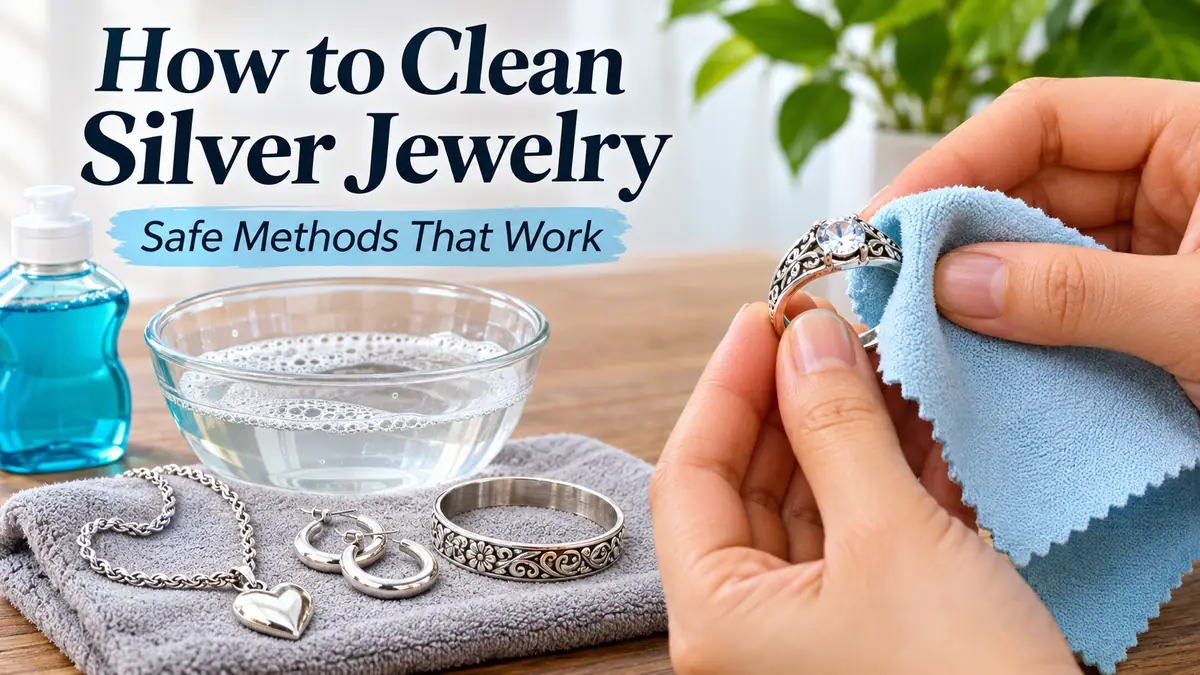
Your favorite silver necklace has turned dark, or a once-shiny ring looks dull and lifeless. Before reaching for toothpaste, vinegar, or a strong cleaning solution, consider this: the wrong cleaning method can permanently scratch silver, damage gemstones, or remove delicate finishes.
Learning how to clean silver jewelry starts with identifying the type of silver and choosing a cleaning method that removes dirt and tarnish without damaging the piece.
The safest way to clean most plain silver jewelry is to use lukewarm water, a few drops of mild dish soap, and a soft microfiber cloth. Gently clean the surface, rinse thoroughly, and dry immediately. For tarnished sterling silver, a specialized silver polishing cloth can help restore its shine.
The best method depends on whether your jewelry is solid sterling silver, silver-plated, gemstone-set, or intentionally oxidized.
Why Silver Jewelry Tarnishes and Turns Black
Silver tarnishing is a natural chemical process. It does not automatically mean your jewelry is fake, poorly made, or permanently damaged.
Silver reacts with sulfur-containing substances in the environment, producing a dark compound called silver sulfide (Ag₂S) on its surface.
Unlike ordinary dirt, tarnish cannot always be removed with soap and water alone.
What causes silver jewelry to tarnish?
Several everyday factors can accelerate discoloration:
- Humidity: Moist environments encourage chemical reactions on silver surfaces.
- Air pollution: Sulfur-containing gases contribute to tarnish formation.
- Sweat: Moisture and substances in perspiration can affect silver’s appearance.
- Perfume and cosmetics: Some ingredients leave residues or accelerate discoloration.
- Household chemicals: Bleach and chlorine can damage or discolor silver.
- Improper storage: Exposure to moisture, air, and certain materials can encourage tarnishing.
According to Tiffany & Co., sterling silver is particularly vulnerable to salt air and sulfur-containing materials, including some rubber products. Tiffany & Co. US+1
Does real sterling silver turn black?
Yes. Genuine sterling silver can turn yellowish, brown, gray, or black as tarnish develops.
Sterling silver typically contains:
- 92.5% silver
- 7.5% other metals, commonly copper
This composition is identified by the 925 hallmark, although a stamp alone does not guarantee authenticity.
Fine silver, often marked 999, contains approximately 99.9% silver and generally tarnishes more slowly than sterling silver.
Silver-plated jewelry has a thin silver layer over another metal. Because that layer can wear away, it requires particularly gentle cleaning.
How to Clean Silver Jewelry With Soap and Water
How to Clean Sterling Silver Jewelry at Home | Care Guide | MY KOSMIMA
Chain Necklace: Essential Accessory for Versatile Style – TheCustomGoodsCo
How to Care for Sterling Silver Jewelry | Complete Guide – ELEFTHERIOU EL
10
For routine maintenance, mild dish soap and lukewarm water are usually the best starting point.
This method removes skin oils, fingerprints, lotion residue, and ordinary dirt without relying on abrasive cleaning agents.
What you need
- A small bowl
- Lukewarm water
- A few drops of mild, fragrance-free dish soap
- A soft microfiber cloth
- A very soft brush, if appropriate
- A clean, dry towel
Step-by-step cleaning instructions
- Prepare the solution. Fill a small bowl with lukewarm water and add two or three drops of mild dish soap.
- Inspect the jewelry. Check for loose stones, damaged clasps, peeling plating, or delicate attachments before introducing moisture.
- Clean gently. For plain, sturdy sterling silver, soak for approximately three to five minutes. For delicate jewelry, use a dampened cloth instead of soaking.
- Remove dirt. Gently wipe the jewelry. Use a very soft brush only on sturdy areas where dirt has accumulated.
- Rinse carefully. Rinse plain silver with clean lukewarm water, preferably over a bowl rather than an open drain.
- Dry immediately. Pat dry with a lint-free cloth, paying attention to chain links, clasps, and crevices.
- Buff lightly. Use a clean microfiber cloth to restore surface shine.
For ordinary silver jewelry without sensitive components, this approach is consistent with guidance from jewelry insurers and professional care providers. Jewelers Mutual+1
Quick takeaway: Soap and water remove everyday grime, but stubborn black tarnish may require a silver polishing cloth or another carefully selected treatment.
How to Clean Silver Jewelry That Has Turned Black
Blackened silver often has a thicker layer of silver sulfide. The safest way to remove it depends on the jewelry’s construction and finish.
Method 1: Use a silver polishing cloth
Chain Necklace: Essential Accessory for Versatile Style – TheCustomGoodsCo
A silver polishing cloth is one of the most practical ways to remove light or moderate tarnish from plain sterling silver.
Unlike an ordinary microfiber cloth, a dedicated silver polishing cloth typically contains polishing compounds or tarnish-removing agents.
Follow these steps:
- Make sure the jewelry is dry and free of loose grit.
- Place it on a clean, soft surface.
- Gently rub the tarnished metal using the cloth.
- Work carefully around decorative details.
- Stop when the desired shine returns.
- Store the jewelry in a dry, protected location.
Avoid rubbing gemstones, plating, or deliberately blackened decorative areas with a treated polishing cloth unless the manufacturer confirms it is safe.
A polishing cloth is particularly useful for silver rings, smooth bracelets, pendants, and accessible sections of chains.
Method 2: Baking soda and aluminum foil
The aluminum foil method is widely discussed for removing stubborn silver tarnish.
It works through an electrochemical reaction involving aluminum and silver sulfide, helping reverse tarnishing without the same mechanical rubbing required by abrasive polishing.
However, this method is not suitable for every piece of jewelry.
It should be considered only for plain, solid silver pieces without gemstones, plating, glued components, intentional oxidation, or delicate finishes.
For eligible pieces:
- Line a heat-resistant bowl with aluminum foil.
- Place the plain silver jewelry in contact with the foil.
- Add approximately one tablespoon of baking soda per cup of hot water.
- Carefully pour the hot water into the bowl.
- Allow the jewelry to remain in the solution for approximately two to five minutes.
- Remove it carefully, rinse thoroughly, and dry immediately.
Hot water can cause burns, and the treatment may alter decorative finishes or affect vulnerable construction details.
Jewelers Mutual describes this method for heavily tarnished silver while specifically warning against using it on gemstone-set or coated jewelry. Jewelers Mutual
For valuable or unfamiliar jewelry, professional cleaning is a safer choice.
Method 3: Use a silver-specific cleaner
Some silver cleaning products are formulated to remove tarnish more efficiently than soap and water.
However, products differ significantly.
A silver polishing cream, treated cloth, and chemical silver dip are not interchangeable.
Chemical dips can remove tarnish rapidly but may also affect intentional patina, delicate surfaces, and certain decorative details.
The Canadian Conservation Institute warns that tarnish-removal procedures can affect the underlying silver surface and should be selected carefully. Canada
Always follow the manufacturer’s instructions and avoid applying silver cleaners to gemstones unless explicitly approved.
How to Clean Silver Jewelry With Baking Soda, Vinegar, or Toothpaste
Household cleaning remedies are popular because the ingredients are inexpensive and readily available. Unfortunately, some can do more harm than good.
| Cleaning method | Effectiveness | Main concern |
|---|---|---|
| Mild dish soap and water | Excellent for routine dirt | Not enough for heavy tarnish |
| Silver polishing cloth | Good for light to moderate tarnish | Repeated rubbing can wear finishes |
| Baking soda and aluminum foil | Can remove heavier tarnish | Unsafe for many mixed-material pieces |
| Baking soda paste | Can remove tarnish | Abrasive particles may scratch |
| White vinegar | May affect surface deposits | Acid can damage sensitive materials |
| Toothpaste | May remove some discoloration | Abrasives can scratch silver |
| Chemical silver dip | Rapid tarnish removal | May strip patina or damage components |
Can you clean silver jewelry with baking soda paste?
Baking soda, or sodium bicarbonate, is sometimes mixed with water to form a cleaning paste.
Although it can remove discoloration, the particles create an abrasion risk.
Repeated rubbing may produce fine scratches, particularly on highly polished silver or thin silver plating.
For valuable jewelry, a dedicated silver polishing cloth is generally preferable.
Is vinegar safe for sterling silver?
White vinegar contains acetic acid and is frequently recommended in homemade jewelry cleaning recipes.
However, vinegar is not the best routine cleaner for silver jewelry.
It can interact with certain metals, coatings, gemstones, and adhesives.
Avoid soaking jewelry in vinegar, particularly when its composition is uncertain.
Why toothpaste is a poor choice
Toothpaste often contains abrasive ingredients designed to remove deposits from teeth.
These ingredients can scratch polished silver and gradually wear away silver plating.
Whitening toothpastes may contain additional cleaning agents that are inappropriate for jewelry.
Even if toothpaste produces an immediate shine, the resulting microscopic scratches may make the surface appear dull over time.
The safer alternative is a purpose-made silver polishing cloth for suitable solid silver, rather than abrasive household pastes.
How to Clean Sterling Silver Rings, Necklaces, and Earrings
Different jewelry designs collect dirt in different places. Cleaning techniques should account for the shape and construction of each piece.
Cleaning sterling silver rings
Rings frequently accumulate soap residue, skin oils, and lotion around the band and beneath decorative settings.
For plain sterling silver rings:
- Wash gently with mild soapy water.
- Use a soft cloth to clean the inner and outer surfaces.
- Carefully remove debris from accessible grooves.
- Rinse and dry thoroughly.
- Buff with a suitable polishing cloth if tarnish remains.
For rings containing diamonds or other gemstones, check the stone’s specific care requirements first.
Avoid vigorous brushing around loose prongs.
Cleaning silver necklaces and chains
How to Prevent Tarnish on Jewelry: Expert Tips – Museori Jewelry
Silver chains can be challenging because tarnish develops between individual links.
Fine cable chains, box chains, rope chains, and snake chains have different structures, but all can trap moisture or residue.
For sturdy, plain silver chains, mild soapy water can loosen ordinary dirt.
Move a soft cloth gently along the chain rather than pulling or twisting it.
A silver polishing cloth can help remove accessible tarnish, although it may not reach deeply between tightly connected links.
Avoid aggressive brushing, which can distort delicate links or weaken already damaged sections.
Cleaning silver earrings
Earrings can accumulate skin oils, cosmetics, and residue around posts, backs, and decorative components.
Use a soft cloth dampened with mild soapy water to clean suitable silver surfaces.
For plain metal earring posts, follow appropriate hygiene practices in addition to routine jewelry cleaning.
Do not assume that a silver polishing product disinfects earrings.
Allow all components to dry completely before wearing or storing them.
Cleaning silver bracelets and bangles
Smooth sterling silver bangles are relatively straightforward to clean with a microfiber cloth.
Bracelets containing multiple links, charms, hinges, or clasps need more careful attention.
Clean each accessible section without forcing moving parts.
For charm bracelets, check whether the individual charms contain enamel, gemstones, plating, or intentionally darkened details before using a tarnish remover.
How to Clean Silver Jewelry With Gemstones or Pearls
The Patsy | 925 Sterling Silver Oval Turquoise Gemstone Ring – AntlerRings.com
Affordable Sterling Silver Jewellery – Martha Jackson – 10% Off First Order
Crystal ring with rock crystal and sterling silver – Kristallrummet
10
Gemstone-set jewelry requires more caution than plain silver.
Even when the silver itself can tolerate a particular cleaning method, the stone, setting, adhesive, or surface treatment may not.
The Gemological Institute of America explains that gemstone cleaning requirements vary considerably. Some porous or treated materials should not be exposed to conventional cleaning chemicals. GIA 4Cs
Silver jewelry with diamonds
Many diamonds can tolerate gentle cleaning with mild soap and lukewarm water.
However, the setting may still be vulnerable.
Before cleaning, check for loose stones or damaged prongs. Avoid soaking jewelry with uncertain repairs or adhesives.
Silver jewelry with pearls
Pearls have delicate surfaces that can be damaged by harsh chemicals, abrasives, and inappropriate soaking.
For pearl-set silver jewelry:
- Wipe the pearls gently with a soft, slightly damp cloth.
- Avoid silver polishing compounds touching the pearl surfaces.
- Do not immerse strung pearls or glued settings.
- Dry carefully before storage.
A polishing cloth may be used on accessible plain silver areas only when it can be kept away from the pearls.
Silver jewelry with turquoise, opal, or other sensitive stones
Turquoise, opal, coral, amber, and some treated gemstones can be sensitive to moisture, heat, chemicals, or abrasion.
Their care requirements are not identical.
For these pieces, gently wipe accessible surfaces and follow stone-specific instructions from a qualified jeweler.
Avoid baking soda baths, vinegar soaking, chemical silver dips, and ultrasonic cleaning unless a professional confirms suitability.
What about cubic zirconia and synthetic gemstones?
Cubic zirconia is generally more resistant to ordinary cleaning than many porous gemstones.
However, the safety of cleaning still depends on the setting, coatings, adhesives, and surrounding materials.
When uncertain, a soft damp cloth is a sensible starting point.
How to Clean Silver-Plated and Oxidized Jewelry
Silver-plated jewelry and intentionally oxidized silver require different treatment from ordinary sterling silver.
Cleaning silver-plated jewelry
Silver-plated jewelry consists of a base metal covered by a relatively thin silver layer.
Repeated abrasive cleaning can gradually remove that layer and expose the metal beneath.
The safest approach is usually to:
- Wipe the jewelry with a soft, dry cloth.
- Use a slightly damp cloth with mild soap when necessary.
- Avoid prolonged soaking.
- Remove soap residue carefully.
- Dry immediately.
Avoid abrasive powders, strong polishing compounds, and repeated chemical tarnish treatments.
If the plating has already worn away, cleaning cannot restore the missing silver layer.
Professional replating may be required.
Cleaning oxidized silver jewelry
Oxidized silver has a deliberately darkened finish, often used to highlight engraved patterns, recessed areas, or antique-style designs.
That darkness is part of the jewelry’s appearance.
Aggressive polishing can remove it and permanently alter the intended contrast.
Tiffany & Co. specifically advises avoiding silver polish on oxidized finishes and recommends cleaning only when necessary with a clean, dry cloth. Tiffany & Co. US
Cleaning antique or vintage silver
Older jewelry may feature fragile solder joints, historic patina, delicate stones, enamel, or previous repairs.
Removing all visible tarnish is not always desirable.
In some antique designs, darkened recessed areas enhance detail and character.
For valuable vintage pieces, consult a qualified jeweler or conservator before attempting chemical or abrasive cleaning.
How Often Should You Clean Silver Jewelry?
There is no universal cleaning schedule. The appropriate frequency depends on how often the jewelry is worn, its construction, and its exposure to moisture or chemicals.
Routine wiping is different from tarnish removal.
A gentle wipe removes surface residue, while polishing actively removes or alters tarnish and may affect the metal’s finish.
| Jewelry use | Suggested maintenance |
|---|---|
| Daily-worn plain silver | Wipe after wearing; wash when visibly dirty |
| Occasionally worn silver | Inspect and gently wipe before storage |
| Lightly tarnished sterling silver | Polish only when necessary |
| Silver-plated jewelry | Gentle wiping; minimize abrasive cleaning |
| Gemstone-set jewelry | Follow stone-specific care instructions |
| Antique or oxidized silver | Minimal cleaning; preserve original finish |
Excessive polishing is not beneficial.
The Canadian Conservation Institute notes that repeated tarnish removal can remove some underlying silver. This is especially relevant for historically important or delicate pieces. Canada
Can you clean silver jewelry every day?
You can gently wipe suitable silver jewelry with a clean, soft cloth after daily wear.
However, daily use of chemical cleaners, abrasive compounds, or aggressive polishing methods is unnecessary and may cause wear.
The goal is to prevent residue buildup, not repeatedly strip the surface.
How to Keep Silver Jewelry From Tarnishing
Preventive care reduces the need for frequent cleaning and helps maintain the jewelry’s original finish.
Store silver in a cool, dry place
Moisture and exposure to sulfur-containing substances contribute to tarnishing.
Store jewelry in clean, dry pouches or suitable jewelry boxes.
Anti-tarnish storage materials can help reduce exposure to substances that cause discoloration.
A silica gel packet may also help manage moisture in a storage container, particularly in humid environments.
Keep individual pieces separate
Silver is relatively soft and can scratch when stored against harder jewelry.
Separate rings, bracelets, necklaces, and earrings to reduce surface damage.
Fasten necklace clasps before storage to help prevent tangling.
Avoid exposure to chemicals
Remove silver jewelry before:
- Swimming in chlorinated pools
- Using household cleaning products
- Applying perfume or hairspray directly nearby
- Gardening or handling abrasive materials
- Activities involving significant chemical exposure
Chlorine and bleach are particularly undesirable for sterling silver. Tiffany & Co. US
Dry jewelry before storing it
Never put damp jewelry into a sealed pouch or jewelry box.
Moisture can remain trapped around clasps, chain links, settings, and decorative components.
After cleaning, dry the jewelry thoroughly before placing it in storage.
Does wearing silver prevent tarnish?
Regular wear may help some silver pieces retain a brighter appearance because ordinary contact and movement can reduce visible buildup on exposed surfaces.
However, this does not mean silver becomes tarnish-proof.
Sweat, cosmetics, moisture, and environmental conditions can still accelerate discoloration.
Proper cleaning and storage remain necessary.
Common Silver Jewelry Cleaning Mistakes
Many cleaning problems result from using a method that is too aggressive for the jewelry’s material or construction.
Using harsh chemicals
Bleach, strong household cleaners, and unsuitable chemical solutions can damage silver or adjacent materials.
Never mix household cleaning chemicals to create a jewelry-cleaning solution.
Scrubbing with stiff brushes
Hard bristles can scratch silver, particularly highly polished or plated surfaces.
Even a soft toothbrush should be used cautiously around fragile settings and delicate finishes.
Cleaning over an open sink drain
Small rings, earring backs, and pendants can easily slip from wet hands.
Use a bowl or securely covered drain to prevent accidental loss.
Using ultrasonic cleaners without checking suitability
Ultrasonic cleaners use high-frequency vibrations to loosen dirt.
Although useful for certain types of jewelry, they can be inappropriate for pieces with loose stones, delicate treatments, fractures, or vulnerable settings.
They should not be treated as a universal silver-cleaning solution.
Leaving moisture inside jewelry
Water trapped in hollow sections, clasps, or decorative joints can contribute to problems over time.
Avoid immersing pieces that cannot be dried completely.
Polishing away intentional patina
Dark areas in antique or oxidized jewelry may be deliberate design features.
Removing them can change the jewelry’s appearance and potentially reduce its historical character.
When Should You Have Silver Jewelry Professionally Cleaned?
Home cleaning works well for many ordinary sterling silver pieces, but some situations require professional attention.
Consider consulting a qualified jeweler when:
- Heavy tarnish remains after gentle cleaning.
- A gemstone appears loose or unstable.
- Silver plating is visibly peeling or worn.
- The jewelry contains pearls, delicate inlays, or unusual materials.
- A clasp, hinge, or solder joint is damaged.
- The piece is antique, collectible, or particularly valuable.
- You cannot identify the metal or surface finish.
A jeweler can assess whether the piece needs cleaning, polishing, repair, or replating.
Can badly tarnished silver become shiny again?
Often, yes.
If the dark appearance is caused mainly by surface tarnish, suitable treatment can restore much of the original brightness.
However, cleaning cannot reverse every type of damage.
Deep scratches, worn plating, corrosion affecting underlying metals, and physical deterioration may require repair or refinishing.
A piece that remains dull after cleaning is not necessarily dirty; its surface may be worn or damaged.
Final Thoughts on how to clean silver jewelry
Understanding how to clean silver jewelry helps you maintain its appearance without unnecessarily damaging the metal, gemstones, or decorative finishes.
For most plain sterling silver pieces, start with lukewarm water, mild dish soap, and a soft microfiber cloth. When tarnish remains, use a suitable silver polishing cloth rather than immediately reaching for abrasive household remedies.
Reserve stronger treatments for pieces whose materials and construction are known to tolerate them.
The most effective long-term approach is simple: remove everyday residue gently, keep silver away from harsh chemicals, dry it thoroughly, and store each piece in a clean, protected environment.
With careful maintenance, sterling silver jewelry can retain its attractive shine for many years.