
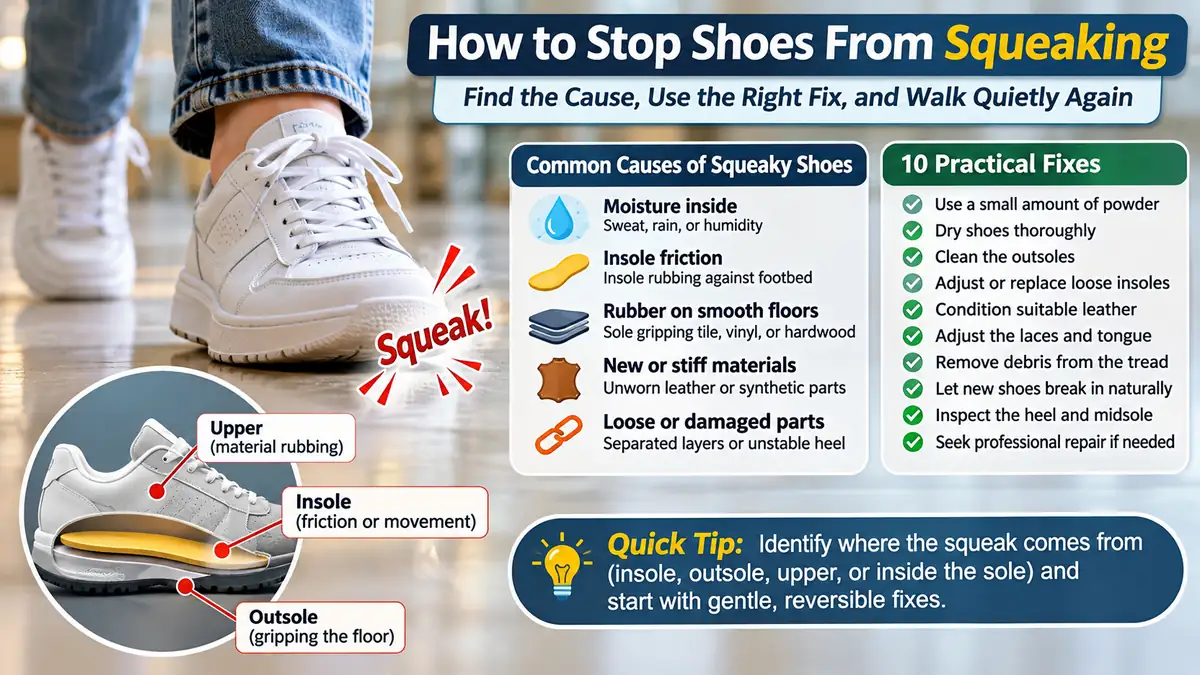
That embarrassing squeak every time you walk can make even your favorite pair of shoes frustrating to wear. The noise might come from your sneakers, leather shoes, boots, or even a brand-new pair that looks perfectly fine.
Fortunately, squeaky shoes are often easy to fix once you identify where the sound originates.
how to stop shoes from squeaking, first determine whether the noise comes from the insole, outsole, upper material, or internal construction. Dry damp insoles, reduce friction with a small amount of powder, clean the outsoles, or condition suitable leather surfaces. Persistent squeaking may indicate a loose component or manufacturing defect.
Why Do Shoes Squeak When You Walk?
Shoes squeak when two surfaces rub against each other, moisture creates friction, or certain materials grip smooth flooring.
The sound may originate inside the shoe, underneath the sole, or between different parts of its construction.
Understanding the cause is the first step toward choosing an effective solution.
Moisture Trapped Inside Shoes
Sweat, rain, and humidity can introduce moisture beneath removable insoles or inside the shoe lining.
As your foot moves, damp surfaces may rub together and produce a squeaking sound.
This commonly affects athletic shoes, work shoes, and sneakers worn for extended periods.
Friction Between the Insole and Footbed
A removable insole can shift slightly against the footbed with every step.
When these materials rub together, they may produce a high-pitched squeak.
The problem can develop as insoles age, become compressed, or lose their original fit.
Rubber Soles on Smooth Floors
Rubber outsoles can make noise when they grip polished tile, vinyl, hardwood, or other smooth surfaces.
This type of squeaking does not necessarily mean the shoes are damaged.
If your shoes squeak indoors but remain quiet on concrete or carpet, the outsole-floor interaction is a likely cause.
New or Stiff Shoe Materials
Brand-new shoes sometimes squeak because their components have not yet softened through normal wear.
Leather uppers, tongues, synthetic overlays, and certain outsole materials may produce friction sounds.
However, not every squeak disappears with use. A persistent noise from inside the sole can indicate a construction problem.
Loose or Damaged Shoe Components
Separated adhesive layers, loose heel components, and damaged midsoles can also create noise.
These problems are less likely to respond to household remedies.
If the shoe squeaks even after drying and cleaning, inspect its construction for visible damage.
How to Stop Shoes From Squeaking: 10 Practical Methods
The best solution depends on where the sound originates. Start with gentle, reversible fixes before attempting anything that could alter the shoe.
1. Use Powder Beneath Removable Insoles
A small amount of moisture-absorbing powder can sometimes reduce friction between an insole and the footbed.
Steps:
- Remove the insoles if they are designed to come out.
- Check for trapped moisture or debris.
- Allow the shoe interior to dry completely.
- Apply a very light dusting of plain, unscented cornstarch beneath the insole.
- Reinsert the insole and test the shoe.
Avoid excessive powder, which can accumulate inside the shoe and become messy. Do not use this method on glued-in insoles or where the manufacturer advises against powders.
2. Dry Shoes Thoroughly
Moisture is one of the most common causes of squeaking inside footwear.
Remove the insoles and loosen the laces to improve airflow. Place the shoes in a well-ventilated area at room temperature.
You can insert clean, dry paper towels to absorb moisture, replacing them when damp.
Avoid radiators, hair dryers, tumble dryers, and prolonged direct sunlight. Excessive heat can weaken adhesives, deform foam, and damage leather.
3. Clean the Outsoles
Dirt, residue, and sticky substances on the outsole can affect how the shoe contacts the floor.
To clean the soles:
- Remove loose dirt with a soft brush.
- Wipe the outsole with a slightly damp cloth.
- Use a small amount of mild soap for stubborn grime, if the material permits.
- Remove soap residue.
- Let the outsole dry before walking.
This is especially useful for sneakers and rubber-soled shoes that squeak on polished surfaces.
4. Adjust or Replace Loose Insoles
If an insole moves noticeably when walking, it may create friction or rubbing sounds.
Remove it and inspect the underside for wrinkles, curled edges, or wear.
Reposition the insole so it lies flat against the footbed. If it is damaged or no longer fits correctly, a compatible replacement may solve the problem.
Avoid permanently gluing removable insoles without manufacturer guidance, particularly in orthopedic or specialized footwear.
5. Condition Squeaky Leather Surfaces
Leather shoes may squeak when the tongue rubs against the upper or when two leather surfaces contact each other.
Apply a small amount of leather conditioner to the affected exterior leather surfaces, following the product instructions.
Test it first on an inconspicuous area because some conditioners darken leather.
Do not apply leather conditioner to suede, nubuck, rubber outsoles, or synthetic materials unless the product specifically supports them.
6. Adjust the Laces and Tongue
Sometimes the noise comes from the shoe’s tongue rubbing against the eyelet area or upper.
Loosen the laces, center the tongue, and retie the shoe with even tension.
Check whether the tongue shifts while walking.
A properly positioned tongue can reduce unwanted friction without requiring any additional products.
7. Remove Debris From the Tread
Small stones, hardened mud, or other debris lodged in outsole grooves may create clicking, scraping, or squeaking noises.
Use a soft brush or blunt wooden tool to remove debris carefully.
Avoid sharp metal objects that could puncture or damage the outsole.
After cleaning, walk on different surfaces to determine whether the sound has disappeared.
8. Let New Shoes Break In Naturally
Some new shoes become quieter as their materials flex and soften.
Wear them for short periods indoors on clean, dry surfaces, provided they fit comfortably.
Gradually increase wearing time if no pain or rubbing occurs.
Do not force a break-in period for shoes that cause blisters, pressure, or discomfort. Poorly fitting footwear may not improve with continued use.
9. Inspect the Heel and Midsole
If squeaking comes from inside the heel or sole, inspect the shoe for loose components.
Look for gaps between the upper and sole, separated layers, unstable heels, or visible cracks.
Gently flex the shoe by hand and listen for noise.
Avoid cutting into the sole, injecting oil, or applying household adhesives without knowing the shoe’s construction. Such repairs may cause permanent damage or compromise stability.
10. Seek Professional Repair for Persistent Squeaks
A cobbler may be able to repair separated layers, loose heel components, or other mechanical problems.
For relatively new shoes, contact the manufacturer or retailer if the squeak appears to result from a defect.
A repair professional can also determine whether the footwear remains safe to wear.
How to Stop Shoes From Squeaking Based on Where the Noise Comes From
Locating the source of the noise helps you avoid unnecessary treatments.
| Squeaking location | Possible cause | Recommended first step |
|---|---|---|
| Inside the shoe | Moisture or insole friction | Dry the shoe and inspect the insole |
| Bottom of the shoe | Rubber gripping smooth flooring | Clean and dry the outsole |
| Tongue or upper | Material rubbing | Adjust laces or condition suitable leather |
| Heel area | Loose component or internal friction | Inspect for damage |
| Midsole | Internal construction issue | Seek manufacturer or repair advice |
| Only on wet floors | Moisture and outsole-floor interaction | Dry the outsole and use caution |
A useful test is to walk on carpet, tile, and a clean, dry outdoor surface.
If the sound occurs only on one type of flooring, the interaction between the outsole and that surface is probably responsible.
If it occurs everywhere, the source may be inside the shoe.
How to Stop Shoes From Squeaking on Different Floors
Tile and Polished Floors
Smooth tiles can produce noticeable squeaking when rubber outsoles grip and release the surface.
First, clean and dry the outsoles.
Check whether the floor has recently been cleaned, as cleaning-product residue can change friction.
Do not apply oil, powder, wax, or slippery substances to the outsole. These treatments can reduce traction and increase the risk of falling.
Hardwood Floors
Shoes may squeak on finished hardwood because of the interaction between the sole material and the floor coating.
Make sure both surfaces are clean and dry.
If the sound occurs only on a particular floor, changing to footwear with a different outsole compound may be more effective than modifying the existing shoes.
Wet Floors
Water can change the friction between the outsole and the walking surface, sometimes producing squeaking or chirping sounds.
Dry the shoes when possible and avoid walking quickly on wet, smooth floors.
A squeak is not a reliable indicator of good traction. Wet flooring can still be slippery even when the shoes make noise.
Carpet and Rough Concrete
Shoes that squeak on carpet or rough concrete may have an internal source of friction rather than an outsole-floor problem.
Inspect the insoles, heel construction, and upper materials.
If the noise continues across multiple surfaces, focus on the shoe itself.
How to Stop Different Types of Shoes From Squeaking
Different footwear materials and designs require different approaches.
Sneakers and Running Shoes
Sneakers often contain removable foam insoles, rubber outsoles, cushioning systems, and multiple bonded layers.
For brands such as Nike, Adidas, New Balance, Brooks, and Hoka, the first troubleshooting step should be to locate the sound.
Brooks recommends temporarily removing removable insoles and taking a few steps to determine whether contact between the insole and shoe causes the noise. Brooks Running
If the squeak disappears, dry the insole and footbed separately before reassembling them.
Some performance sneakers also contain air cushioning units or specialized foam structures. Persistent noises inside these components may require manufacturer inspection.
Leather Dress Shoes
Leather dress shoes can produce creaking or squeaking sounds when the tongue, lining, or upper rubs against another surface.
Start by identifying the friction point.
Apply a suitable leather conditioner to compatible exterior leather areas and allow it to absorb according to the product directions.
Leather-soled dress shoes require different care from rubber-soled footwear. Avoid household oils or treatments that could make the walking surface slippery.
Boots and Work Shoes
Boots may squeak around the tongue, ankle, heel, or outsole.
Check the lacing system, removable footbed, and heel stability.
Waterproof boots can retain moisture inside even when the exterior feels dry. Remove compatible footbeds and allow adequate ventilation.
For safety boots, avoid modifications that could compromise slip resistance, protective components, or manufacturer certifications.
Sandals and Slip-On Shoes
Sandals may squeak when bare feet rub against synthetic footbeds, particularly when moisture is present.
Clean and dry the footbed using the manufacturer’s recommended method.
For slip-on shoes, check whether excessive foot movement is creating friction.
Avoid putting loose powder directly onto walking surfaces or footbeds where it could make footwear unstable.
How to Stop Shoes From Squeaking Without Damaging Them
Not every popular shoe-repair trick is appropriate for every material.
Several household treatments can temporarily reduce noise while introducing other problems.
| Method | Potential benefit | Important precaution |
|---|---|---|
| Cornstarch beneath removable insoles | Reduces minor friction and absorbs moisture | Use sparingly and keep dry |
| Air-drying | Removes trapped moisture | Avoid excessive heat |
| Leather conditioner | Softens suitable leather surfaces | Patch-test and follow material instructions |
| Repositioning insoles | Reduces movement | Do not force or alter orthotics |
| Cleaning rubber outsoles | Removes sticky residue and dirt | Dry completely before wearing |
| Sandpaper | May change outsole surface texture | Can damage tread and affect traction |
| WD-40 or silicone spray | May temporarily reduce certain friction noises | Avoid on walking surfaces because of slip risk |
| Shoe adhesive | May repair some separated layers | Incorrect application can weaken or damage footwear |
Does Baby Powder Stop Shoes From Squeaking?
A small amount of powder beneath removable insoles may help reduce noise caused by friction and moisture.
However, it will not repair a damaged midsole, loose heel, or separated outsole.
Plain cornstarch is an alternative to some scented powders, although it should also be used sparingly and kept dry.
Can You Use WD-40 on Squeaky Shoes?
WD-40 is sometimes suggested for squeaking footwear, but it is not a good general-purpose shoe treatment.
It may stain materials, affect adhesives, and leave slippery residue.
For most everyday footwear, cleaning, drying, adjusting insoles, or using a material-appropriate conditioner are safer first steps.
Should You Sand Squeaky Rubber Soles?
Some guides recommend lightly roughening smooth rubber outsoles to reduce squeaking on polished floors.
However, sanding permanently changes the outsole and may affect traction, durability, or warranty coverage.
It is generally better to clean the outsole and test the shoes on different surfaces before considering any permanent modification.
How to Find the Exact Source of a Shoe Squeak
If several remedies have failed, perform a simple diagnostic test.
軽量カジュアルスニーカー KAPPA(カッパ) 通販【ニッセン】
Step 1: Test the insole
Remove the removable insole and briefly test the shoe on a clean, safe surface. If the noise disappears, the insole or footbed is the likely source.
Step 2: Inspect the outsole
Check the tread for dirt, damage, sticky residue, or separation. Compare how the shoes sound on carpet and smooth flooring.
Close up of pair of men’s brown leather shoes. Lacing on shoes
Step 3: Check the upper and tongue
Gently move the tongue and flex the upper to see whether rubbing materials reproduce the squeak.
Nike Revolution 5 Review | Tested & Rated
Step 4: Examine the shoe structure
Gently flex the shoe by hand. Listen for internal noises and inspect the heel and sole bond for gaps or instability.
Change only one thing at a time. That way, you can identify which adjustment actually solves the problem.
How to Prevent Shoes From Squeaking Again
A few maintenance habits can help reduce recurring shoe noise.
- Rotate your footwear. Giving shoes time to dry between wears reduces moisture buildup.
- Wear suitable socks. Moisture-wicking socks can reduce perspiration-related friction and help keep the interior drier.
- Dry damp shoes promptly. Remove compatible insoles and allow airflow at room temperature.
- Clean outsoles regularly. Dirt and sticky residue can contribute to unusual noises.
- Maintain leather properly. Use conditioners designed for the specific leather type.
- Check insole fit. Replace worn or curled insoles with compatible alternatives.
- Store shoes in a dry location. Avoid prolonged exposure to excessive humidity or heat.
For shoes with removable orthotics, check that the inserts fit securely and follow the orthotic provider’s care instructions.
Regular inspection also helps you identify early signs of sole separation or heel damage.
When Should You Replace Squeaky Shoes?
Not every squeaky shoe needs replacing.
A minor insole squeak is usually different from a sound caused by structural damage.
Consider professional assessment or replacement when the shoe has:
- A visibly separating outsole or unstable heel.
- Cracked, collapsing, or severely worn cushioning.
- Persistent internal squeaking that does not respond to basic troubleshooting.
- A change in fit, stability, or support.
- Damage that makes walking uncomfortable or unsafe.
If a new pair squeaks consistently despite proper drying and normal use, check the manufacturer’s return or warranty policy.
Shoes that have become structurally unstable should not be worn simply because the noise can be temporarily reduced.
Final Thoughts on how to stop shoes from squeaking
Learning how to stop shoes from squeaking begins with identifying the source rather than applying random household remedies.
For most everyday cases, start by drying the shoes, cleaning the outsoles, checking removable insoles, and adjusting the laces or tongue. Leather friction may respond to suitable conditioning, while internal construction problems may require professional attention.
The simplest next step is to test your shoes on two different surfaces, then inspect the removable insoles. This quick check can help distinguish ordinary friction from a problem that needs repair.