
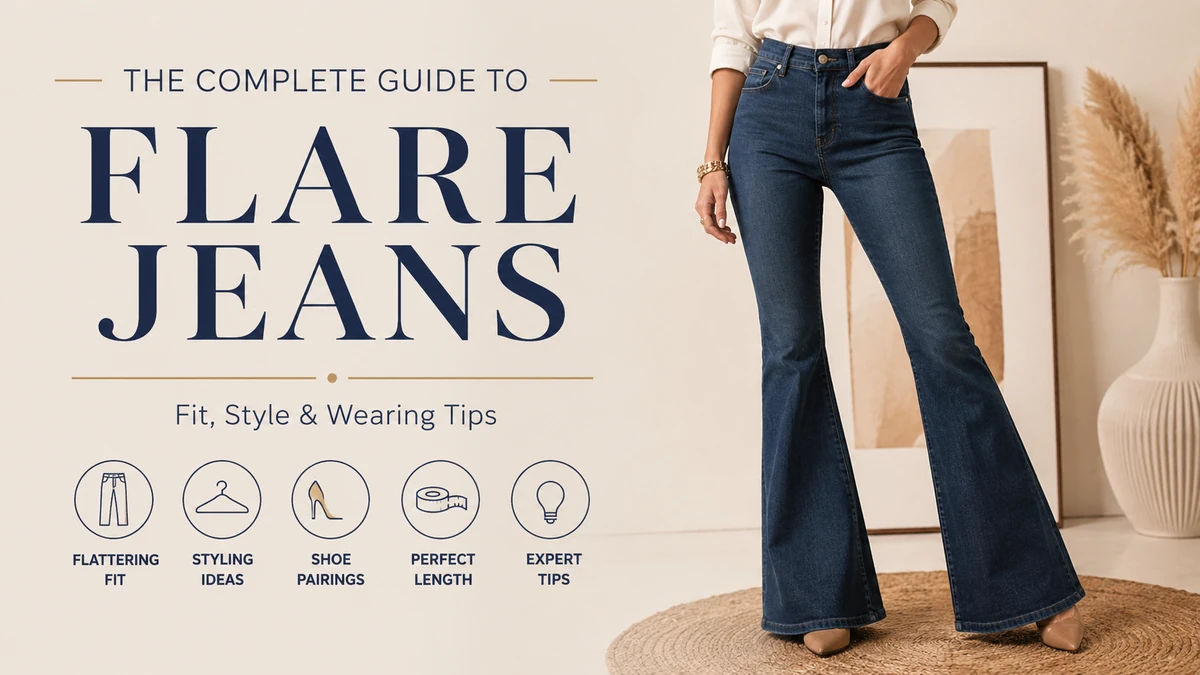
Denim silhouettes come and go, but few make a comeback with as much personality as flare jeans. Fitted through the upper leg and wider toward the hem, they create a shape that feels both nostalgic and surprisingly modern.
That renewed interest isn’t limited to retro fashion. Flared denim has returned to current wardrobes alongside bootcut, wide-leg, and relaxed jeans, with designers, fashion editors, and celebrities continuing to reinterpret the silhouette in 2026.
The basic idea is simple: flare jeans fit relatively close through the hips and thighs, then widen noticeably from around the knee toward the hem. The contrast between the fitted upper leg and wider lower leg gives them their recognizable shape and can create the visual impression of longer, more balanced legs.
This guide explains what flare jeans are, how they differ from similar denim cuts, how they should fit, what to wear with them, and the small styling details that make the biggest difference.
What Are Flare Jeans?
Flare jeans are denim trousers that generally sit close to the body through the hips and thighs before widening around the knee or just below it. The leg opening becomes progressively wider toward the bottom, creating the characteristic flared silhouette.
That change in width matters.
A pair of jeans that remains loose from the hip all the way to the ankle is normally closer to a wide-leg cut. A pair that widens only slightly toward the hem may be bootcut. True flares create a more visible contrast between the thigh, knee, and hem.
Modern versions can vary considerably. You may see:
- High-rise flare jeans
- Mid-rise flares
- Low-rise flare jeans
- Full-length flares
- Cropped or kick flares
- Stretch-denim flares
- Vintage-inspired rigid denim
- Subtle mini flares
- Dramatic bell-shaped flares
This variety is one reason the style doesn’t have to look like a 1970s costume. The rise, wash, flare width, fabric, length, and styling can completely change the finished outfit.
Flare Jeans vs. Bootcut vs. Wide-Leg Jeans
One of the most common sources of confusion is the difference between flare and bootcut jeans.
Both get wider below the knee, but the degree of widening is different. Vogue describes flares as more dramatically widening from the knee, while bootcut jeans use a subtler opening originally suited to fitting over boots.
Here’s the easiest way to distinguish the main silhouettes:
| Denim style | Upper-leg shape | Where it widens | Overall appearance |
|---|---|---|---|
| Flare jeans | Usually fitted | Around or below the knee | Noticeably flared |
| Bootcut jeans | Fitted to moderately relaxed | Gradually below the knee | Subtle widening |
| Wide-leg jeans | Roomier from higher on the leg | Hip or upper thigh | Wide, straighter column |
| Kick flare jeans | Usually fitted | Lower leg | Short, modest flare |
| Bell-bottoms | Usually fitted | Around the knee | Very dramatic bell shape |
The terminology isn’t perfectly standardized across every denim brand, so looking at the actual garment measurements and product photos can be more useful than relying on the label alone.
Are flare jeans the same as bell-bottoms?
Not necessarily.
The terms are sometimes used interchangeably, particularly when describing vintage fashion. In everyday modern styling, however, bell-bottoms usually describe the more exaggerated end of the flare spectrum.
Think of flare as the broader category and bell-bottom as the dramatic version.
A moderate flare can work as ordinary everyday denim without immediately creating a strong retro look.
Where Did Flare Jeans Come From?
Flared trousers existed before their famous 1970s moment.
Their broader fashion story includes functional flared garments and later adoption by youth counterculture. By the late 1960s, flared trousers had become associated with countercultural style, particularly in fashion centers such as London and San Francisco.
Then came the 1970s.
The silhouette moved firmly into mainstream fashion, fitting naturally with the decade’s disco, bohemian, and expressive aesthetics. Style figures such as Jane Birkin and Farrah Fawcett helped establish the long-legged, high-waisted flare as an enduring visual reference.
Flared denim later resurfaced in different forms.
The late 1990s and early 2000s brought lower rises, fitted thighs, platform shoes, and Y2K interpretations. More recent versions borrow from several eras rather than reproducing one of them exactly.
That is why today’s flares might be styled with a minimalist blazer one day and a bohemian blouse the next.
Why Flare Jeans Create Such a Distinctive Silhouette
The appeal of flares comes largely from proportion.
Because the jeans become narrower around the knee before expanding toward the floor, they create a strong vertical line. A longer inseam can extend that line even further, particularly when most of the shoe sits underneath the hem.
This doesn’t mean flares literally change anyone’s body shape. They simply alter visual proportions.
The wider hem can counterbalance the hips, shoulders, or upper body, while a defined waist can emphasize the contrast between the top and bottom of the outfit.
That is also why the wrong length can make such a noticeable difference.
Perfectly proportioned flares can look fluid and elongated. Several inches of denim pooling around the feet can make exactly the same silhouette feel heavy.
How Should Flare Jeans Fit?
The best flare jeans should feel intentional at every point of the leg.
Start at the waist.
The waistband should sit securely without forcing you to constantly pull the jeans upward. If the waistband gaps badly at the back while the hips fit correctly, the problem may be the cut rather than the nominal size.
Through the hips and thighs, traditional flares usually fit relatively close without creating uncomfortable pulling.
Around the knee, you should be able to see where the silhouette changes direction.
From there, the denim should widen progressively toward the hem.
Pay attention to these four measurements
When shopping online, don’t rely entirely on the size number. Check:
- Rise — the distance from the crotch seam to the waistband.
- Inseam — the inside-leg length from crotch to hem.
- Thigh measurement — especially important with rigid denim.
- Leg opening — useful for judging how dramatic the flare will actually look.
Two pairs labeled “flare” can produce completely different silhouettes because their inseams and leg openings differ.
Choosing the Right Rise
Rise changes the character of flare jeans almost as much as the leg opening.
High-rise flare jeans
High-rise flares place the waistband higher on the torso and can create a strong waist-to-hem line.
They work especially well with:
- Tucked-in shirts
- Bodysuits
- Cropped jackets
- Fitted knitwear
- Shorter sweaters
- Structured blazers
If you want the classic long-leg flare effect, high-rise denim is usually the easiest place to start.
Mid-rise flare jeans
Mid-rise styles offer a more neutral proportion.
They don’t emphasize the waist as strongly as high-rise jeans, but they are easy to integrate into everyday outfits and work with tucked, semi-tucked, and untucked tops.
Low-rise flare jeans
Low-rise flares lean more heavily toward a late-’90s or Y2K aesthetic.
They can work particularly well with fitted tees, tanks, cropped knitwear, and relaxed jackets. The important thing is to recognize that lowering the waistband changes the apparent proportions of the torso and legs.
There is no universally “best” rise. Comfort and the silhouette you want matter more than rigid body-type rules.
The Most Important Detail: Flare Jeans Length
You can get the waist, wash, and styling right and still have the outfit feel wrong if the hem length is off.
For traditional full-length flares, the hem generally looks best when it falls close to the shoe without dragging heavily on the ground. Contemporary styling guides repeatedly emphasize hem length because it determines whether the flare looks elongated or sloppy.
Before hemming a new pair, decide which shoes you’ll wear most often.
This matters because flares altered for sneakers may become too short with platform heels. A pair hemmed around tall heels may drag badly when worn with flats.
If you regularly alternate between flats and heels, owning different inseam lengths can be more practical than trying to make one pair do everything.
What about cropped flare jeans?
Cropped flares follow different rules.
Rather than concealing much of the shoe, they intentionally expose the ankle and footwear. That makes loafers, ankle boots, ballet flats, sandals, and sleek sneakers more visually important.
How to Style Flare Jeans Without Looking Dated
The easiest mistake is treating flares as a complete retro costume.
You don’t need a patterned 1970s blouse, giant sunglasses, platforms, and a suede vest simply because your jeans widen at the hem.
Choose one strong reference and keep everything else relatively current.
1. Start with a simple fitted top
A fitted T-shirt, tank, fine-knit sweater, or bodysuit gives the flare room to become the main silhouette.
Tucking the top in can define the waistband and preserve the long vertical line.
A straightforward combination is:
Dark flare jeans + fitted white tee + leather belt + pointed shoes
Nothing complicated is happening, which is exactly why it works.
2. Add a structured blazer
Flares don’t have to look bohemian.
A blazer immediately shifts them toward a more polished direction. Current fashion coverage also shows flared denim styled with tailored pieces and pointed heels rather than exclusively retro clothing.
Try a dark wash with a simple shirt or fine knit underneath.
The contrast between the structured shoulder and wider hem can create a balanced silhouette.
3. Use cropped outerwear to define proportions
A jacket that finishes near the waist allows more of the jeans to remain visible.
Good choices include:
- Cropped denim jackets
- Short leather jackets
- Waist-length cardigans
- Bomber jackets
- Structured cropped blazers
Longer coats can work too, but the visual result becomes more layered and less focused on the flare itself.
4. Try a relaxed shirt
Not every top needs to be skin-tight.
An oversized button-down can look excellent with flares when part of the waist remains defined. Try a partial tuck, full tuck, or a shirt that naturally finishes around the hip rather than swallowing the entire upper half.
This is a useful way to make flared denim feel casual instead of overtly retro.
What Shoes Look Best With Flare Jeans?
Shoes matter more with flares than with many other jean styles because full-length hems partially conceal them.
The height and shape of the shoe influence how the denim falls.
Platform shoes
Platforms naturally complement the wider hem and can add height without requiring a very thin heel.
They also reference the historical character of flared denim without necessarily making the whole outfit vintage.
Heeled boots
Ankle boots with a block or stacked heel are among the easiest options for cooler weather.
The flare covers much of the boot shaft, creating a relatively uninterrupted line from thigh to floor.
Pointed-toe heels
A pointed toe appearing beneath the hem creates a sharper, dressier effect.
Pair this combination with dark denim and a blazer when you want flares to feel more polished.
Sneakers
Yes, flare jeans can work with sneakers.
The key is the inseam.
Chunkier sneakers often sit naturally beneath longer denim, while slim sneakers can create a more relaxed look. Just avoid allowing several inches of excess fabric to bunch around the shoe.
Flats
Flats can also work, especially with cropped or shorter flares.
With full-length styles, check that the hem remains safely above the ground. A pair designed around heels may suddenly become impractical when the extra shoe height disappears.
How to Style Flare Jeans for Different Occasions
One advantage of modern flared denim is that it can move beyond a single aesthetic.
Casual everyday outfit
Keep things uncomplicated:
- Medium-wash flares
- Plain T-shirt
- Sneakers
- Crossbody bag
- Lightweight jacket
This makes the silhouette feel like normal denim rather than a statement piece.
Smart-casual outfit
Choose:
- Dark-wash flare jeans
- Tucked blouse or fine-knit top
- Structured blazer
- Belt
- Heeled boots or pointed shoes
Dark denim generally reads more polished because fading and distressing are less visually prominent.
Bohemian-inspired outfit
This is where the heritage of flare jeans feels natural.
Try them with:
- Flowing blouse
- Soft knit
- Suede or leather accessories
- Platform shoes
- Simple jewelry
Keep the references controlled if you want a modern rather than costume-like result.
Evening outfit
Black or deep indigo flares can replace conventional straight jeans for a night out.
Pair them with a fitted top, sleek jacket, heel, and minimal accessories.
The dramatic lower leg provides enough visual interest without requiring complicated styling.
How to Wear Flare Jeans If You’re Petite
Petite shoppers often worry that flares will overwhelm them.
They don’t have to.
Length and proportion matter more than height alone. A high or mid rise combined with the correct inseam can preserve a clean vertical line, while excessively long hems create unnecessary bulk.
Useful adjustments include:
- Choose an inseam made for your height when available.
- Have full-length jeans professionally hemmed if necessary.
- Keep the flare proportional rather than automatically choosing the widest bell.
- Try a tucked or shorter top to expose the waistband.
- Match the hem length to your usual shoes.
- Consider a pointed toe or platform when you want additional visual height.
The goal isn’t to “hide” being petite. It is simply to prevent excess fabric from controlling the outfit.
Can Tall People Wear Flare Jeans?
Absolutely.
In fact, the bigger challenge can be finding enough inseam length to preserve the intended shape.
A flare that is supposed to nearly reach the shoe but stops well above it may look unintentionally cropped.
Tall shoppers should therefore pay close attention to inseam measurements rather than assuming a standard “long” size will be sufficient.
The location of the knee is also worth checking. If the garment’s shaped knee sits too high on your leg, the flare may begin in the wrong place.
Do Flare Jeans Work for Different Body Shapes?
There is no body shape that is automatically prohibited from wearing flares.
What changes is the effect you may prefer.
Someone who wants stronger waist definition might choose a high-rise fitted style. Someone who wants less emphasis around the hips might prefer a slightly more relaxed upper leg. Someone who dislikes dramatic volume can choose a mini flare rather than a wide bell.
The wider hem can visually counterbalance the upper body, which is one reason flared silhouettes are often described as flattering. But “flattering” should never mean that everybody needs to look narrower or taller.
A better question is:
Does this particular cut create the proportion you want?
Try different rises, flare widths, washes, and lengths before deciding that the entire category does or doesn’t suit you.
Stretch Denim vs. Rigid Denim
Fabric composition changes both comfort and appearance.
Stretch flare jeans
Denim blended with stretch fibers can follow the hips and thighs closely while allowing easier movement.
Stretch can be particularly useful when you want a very fitted upper leg.
The trade-off is that highly elastic denim may feel less structured and can behave differently after repeated wear and washing.
Rigid or low-stretch denim
More traditional denim usually creates stronger structure and may develop character with wear.
Because it doesn’t adapt to the body as easily, sizing becomes especially important. Check the hip and thigh fit carefully rather than buying a smaller size simply because you expect the fabric to stretch significantly.
Neither option is inherently superior.
Choose based on whether you value structure, softness, mobility, or a particularly close fit.
Choosing the Right Denim Wash
Color changes the mood of flare jeans.
Dark wash
Deep indigo can make the dramatic silhouette feel cleaner and more refined.
It’s particularly useful for smart-casual outfits.
Medium wash
Classic blue is probably the most versatile choice.
It works easily with white, black, cream, brown, navy, and many brighter colors.
Light wash
Light blue emphasizes the casual and vintage side of flared denim.
Pair it with simple contemporary pieces if you want to prevent the outfit from feeling overly nostalgic.
Black
Black flares can appear sleeker and less obviously retro than classic blue denim.
They work well with boots, blazers, knitwear, and monochromatic outfits.
Faded and distressed finishes
Whiskering, fading, raw hems, and distressed details make flares more casual.
Because the silhouette already has visual impact, heavily distressed denim usually works best with relatively simple tops and accessories.
Common Flare Jeans Styling Mistakes
Flares aren’t particularly difficult to wear, but a few mistakes have an outsized effect.
Letting the hem drag
A floor-grazing silhouette can look intentional. Fabric repeatedly folding underneath the shoe does not.
Dragging also damages the hem.
Have the jeans altered around the shoes you’ll actually wear.
Ignoring the knee position
The flare needs to begin in a sensible place relative to your leg.
If the shaped knee sits far above or below your natural knee, the proportions may look awkward even when the waist technically fits.
Choosing the wrong shoe after hemming
A three-inch heel and a flat sneaker require very different amounts of fabric.
Don’t permanently alter expensive denim before deciding how you’ll normally style it.
Overdoing the retro theme
Flares already provide a strong historical reference.
If every other garment also screams 1970s, the outfit can quickly become costume-like unless that’s deliberately what you’re aiming for.
Hiding every part of the waistband
A very long, oversized top combined with a large flare can create volume at both ends of the outfit.
This isn’t automatically wrong, but defining some part of the waist or upper body often makes the silhouette easier to read.
Assuming every flare fits the same way
A cropped kick flare and a floor-length bell-shaped jean are technically related, but they behave like different garments.
Always judge the actual cut.
How to Find Flare Jeans When Shopping Online
Online denim shopping becomes easier when you ignore the marketing language for a moment and inspect the measurements.
Start with the brand’s size chart.
Then check the rise and inseam. If a leg-opening measurement is provided, use it to estimate the intensity of the flare.
Product photos can answer additional questions:
- Where does the leg start widening?
- How close is the fit through the thigh?
- Does the hem cover most of the model’s shoe?
- What shoes is the model wearing?
- Is the denim rigid or stretchy?
- Is the rise genuinely high, mid, or low?
Also check the model’s height and the size being worn when that information is available.
A 32-inch inseam will not fall the same way on every person.
Are Flare Jeans Still in Style in 2026?
Yes. Flared silhouettes remain clearly visible in current fashion coverage rather than existing only as vintage references.
Fashion publications have continued featuring flare and bootcut denim in 2026 styling coverage, while recent celebrity fashion has also reinforced their return. Current interpretations range from polished high-rise flares to Y2K-inspired and bohemian versions.
But trend status isn’t the best reason to buy them.
Denim has become increasingly diverse. Straight, wide-leg, relaxed, bootcut, barrel, and flared shapes can coexist rather than one silhouette completely replacing every other option.
A good pair of flares can therefore be treated as another denim shape in your wardrobe rather than something that must disappear when the trend cycle changes again.
How to Make Flare Jeans Feel Modern
Three details do most of the work: proportion, length, and restraint.
First, make sure the waist and upper leg fit the way you want.
Second, get the hem right for your footwear.
Third, don’t feel obligated to build the entire outfit around the jeans’ retro history.
Try a plain tee and sneakers.
Try a blazer and pointed shoes.
Try a fitted sweater and ankle boots.
Try a cropped jacket with dark denim.
Once the surrounding pieces become simpler, the flare stops looking like a novelty and starts behaving like an ordinary wardrobe option.
Final Thoughts on Flare Jeans
Flare jeans have survived several fashion cycles because their basic construction creates something other denim cuts don’t: a fitted upper leg followed by deliberate movement and width below the knee.
The most successful pair isn’t necessarily the widest, trendiest, or most expensive. It is the one with a rise that feels comfortable, a knee position that matches your proportions, enough room through the hips and thighs, and an inseam suited to the shoes you actually wear.
If you’re new to the silhouette, start simply. Choose a moderate flare in an easy blue, dark indigo, or black wash and pair it with pieces already in your wardrobe.
Get the length right first. Everything else becomes much easier from there.