
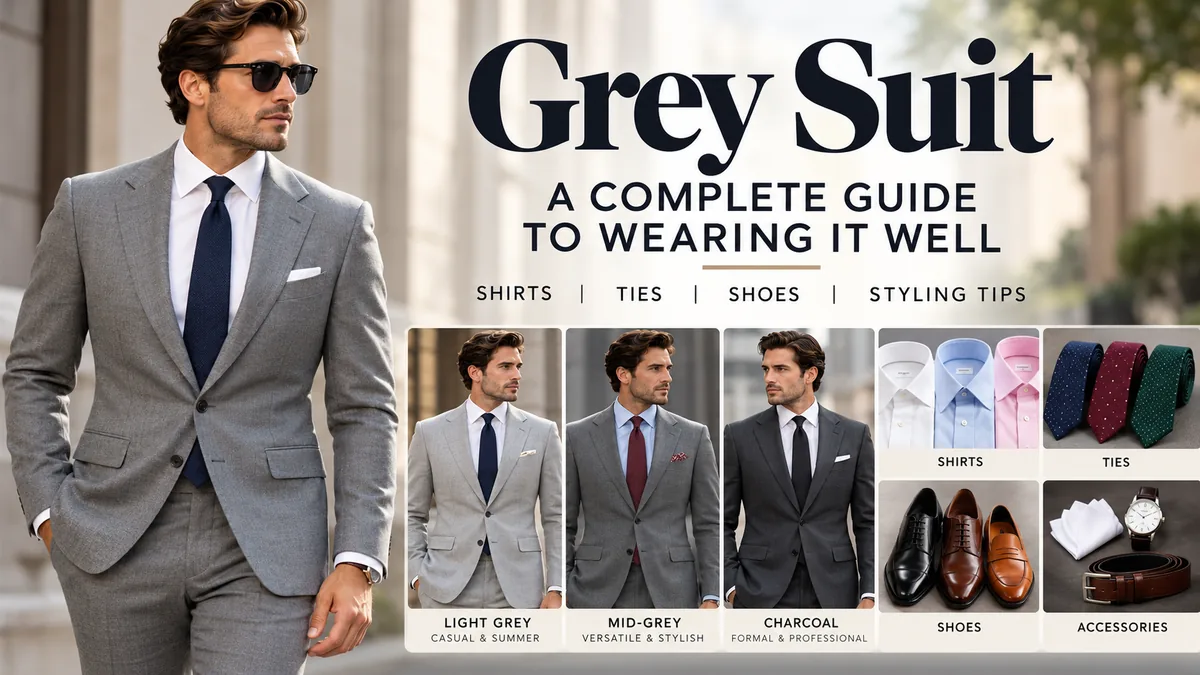
A grey suit is one of the most adaptable pieces in a man’s wardrobe. It can look authoritative in a business meeting, elegant at a wedding, relaxed at a dinner, or appropriately understated at a formal event. The key is choosing the right shade, fabric, shirt, tie, and shoes for the setting. Klein Epstein Parker
A grey suit works best when its shade matches the occasion: charcoal for formal and professional settings, mid-grey for maximum versatility, and light grey for daytime and warm-weather events. White and pale-blue shirts are reliable choices, while navy, burgundy, green, black, and brown accessories let you control how formal the outfit feels. Sam’s Menswear
Why a Grey Suit Is So Versatile
Grey is a neutral. Unlike stronger colors that dictate much of the rest of an outfit, grey provides a quiet foundation for different shirts, ties, shoes, and accessories.
That flexibility is why grey regularly sits alongside navy as a core menswear suit color. Current tailoring guides consistently distinguish three useful families: light grey, medium or mid-grey, and charcoal. Klein Epstein Parker
The shade makes a substantial difference.
| Grey shade | Formality | Best suited to | Typical shoe choice |
|---|---|---|---|
| Light grey | Smart-casual to semi-formal | Summer, daytime weddings, outdoor events | Brown, tan, loafers |
| Mid-grey | Semi-formal to formal | Office, weddings, dinners, events | Brown or black |
| Charcoal | Formal | Business, interviews, funerals, evening events | Black or dark brown |
This is the first principle to remember: don’t style every grey suit identically.
A pale tropical-wool suit worn to an outdoor summer wedding and a charcoal worsted suit worn to an important business meeting may share a color family, but they perform very different jobs.
Light Grey, Mid-Grey, or Charcoal?
Choosing the right grey is more important than choosing an interesting tie.
Light Grey Suit
A light grey suit feels relaxed, contemporary, and particularly natural during spring and summer. It reflects more light than charcoal and therefore attracts more attention to the texture and cut of the tailoring.
It works particularly well for:
- daytime weddings
- garden parties
- summer events
- less conservative offices
- lunches and daytime celebrations
- warm-weather smart dressing
White, pale blue, soft pink, and other muted shirts complement it easily.
For footwear, medium or dark brown is dependable. Tan can work when the event is genuinely relaxed, but very pale shoes can make the entire outfit look overly casual.
A lightweight fabric is equally important. Tropical wool, fresco and other breathable weaves make more sense in heat than thick flannel.
Mid-Grey Suit
If you want the most flexible grey, start here.
Mid-grey occupies the useful space between casual light grey and serious charcoal. Current tailoring guidance frequently identifies it as an especially adaptable choice because it can move between professional and social settings with relatively small accessory changes. Sam’s Menswear
For example:
Office:
Mid-grey suit + white shirt + navy tie + black Oxfords
Wedding:
Mid-grey suit + pale-blue shirt + burgundy tie + dark-brown shoes
Relaxed dinner:
Mid-grey suit + open-collar blue shirt + loafers
The suit hasn’t changed. The supporting pieces have changed its character.
Charcoal Grey Suit
Charcoal is the most formal member of the grey family and sits close to black on the traditional formality scale. It is particularly appropriate for conservative business environments, interviews, evening occasions, and other settings where understated tailoring is preferable. Room Ten
A classic combination is:
Charcoal suit + white dress shirt + navy tie + black Oxford shoes.
It’s difficult to misread that outfit.
Charcoal also works with pale-blue shirts and burgundy ties when you want slightly less severity.
For cooler weather, charcoal flannel adds visible texture and warmth. A smooth worsted wool produces a sharper, more corporate appearance.
What Shirt Goes With a Grey Suit?
The shirt determines much of the contrast around your face, so it deserves more attention than people sometimes give it.
White Shirt
White is the safest and most formal option.
It works with practically every shade of grey and gives you freedom with your tie. The stronger contrast is particularly effective with charcoal.
Try:
Charcoal grey + white + navy
Traditional and professional.
Mid-grey + white + burgundy
Classic with more warmth.
Light grey + white + dark green
Fresh without becoming overly colorful.
When you aren’t sure what an event requires, a clean white shirt is usually the sensible starting point.
Light Blue Shirt
A pale-blue shirt softens grey.
Compared with stark white, it produces a less severe appearance while remaining suitable for many workplaces and weddings.
Mid-grey + light blue + navy is particularly easy to wear.
Charcoal + light blue + burgundy adds controlled warmth to an otherwise conservative outfit.
Pink Shirt
Soft pink works because the warmth of the shirt contrasts with grey’s neutral character.
The operative word is soft.
Pale or dusty pink tends to integrate naturally with tailoring, whereas highly saturated pink becomes the center of the outfit.
Pair a pale-pink shirt with a mid- or light-grey suit, navy tie, and brown shoes for a particularly effective daytime combination. Men’s Wearhouse similarly recommends pale rather than bright pink for this type of pairing. Men’s Wearhouse
Patterned Shirts
Stripes and subtle checks can work, provided the patterns aren’t competing.
A blue Bengal-stripe shirt, for example, can give a plain mid-grey suit more character while preserving its traditional menswear foundation. Sam’s Menswear
When wearing a patterned shirt, simplify somewhere else.
A striped shirt usually looks better with a plain or subtly textured tie than with another large, aggressive pattern.
Best Tie Colors for a Grey Suit
Because grey doesn’t dominate the palette, your tie can become the controlled focal point.
Navy Tie
If you only owned one tie for your grey tailoring, navy would be difficult to beat.
It works with white, blue, pink, and striped shirts and with virtually every grey from silver to charcoal.
A dark navy grenadine or silk tie is particularly useful because texture creates interest without relying on a loud pattern.
Burgundy or Oxblood Tie
Burgundy adds warmth.
It looks especially good against pale blue because the cool shirt and warmer tie create balanced contrast.
A combination worth remembering is:
Mid-grey suit + pale-blue shirt + burgundy tie + dark-brown shoes.
It’s professional enough for many offices but less predictable than white and navy.
Forest Green Tie
Deep green is another useful option.
Forest green works particularly well when the rest of the outfit is restrained: grey tailoring, white shirt, dark shoes.
Avoid fluorescent or highly saturated greens. Deep, muted colors generally integrate better with traditional suiting.
Black Tie
A black tie can work with charcoal, especially when the intended effect is deliberately sober.
But context matters.
Pairing a dark grey shirt, charcoal tailoring, and black tie can eliminate too much contrast and make the outfit visually heavy. A lighter shirt usually creates better separation. Sam’s Menswear
Patterned Tie
Grey provides an excellent background for patterns.
Small dots, restrained stripes, paisley, and subtle geometric designs can all work.
The easiest principle is:
One dominant pattern at a time.
If your shirt is plain, the tie can carry more visual interest. If the shirt already has a noticeable pattern, simplify the tie.
What Shoes Go With a Grey Suit?
Black and brown both work with grey. The better choice depends on the shade and required formality.
Black Shoes
Black is the formal anchor.
It is particularly effective with:
- charcoal suits
- dark grey suits
- conservative business clothing
- interviews
- evening events
- funerals and solemn occasions
A charcoal worsted suit with polished black cap-toe Oxfords is one of the most traditional professional combinations.
Black Derby shoes offer a slightly less formal alternative.
Brown Shoes
Brown makes grey warmer and generally more relaxed.
Dark brown is especially versatile because it can work with mid-grey and many charcoal outfits without producing an extreme contrast.
Try:
Mid-grey + pale-blue shirt + navy tie + dark-brown Oxfords.
For lighter tailoring, medium brown and cognac can also work effectively.
Tan Shoes
Tan creates considerably more contrast.
That makes it better suited to light grey and casual daytime outfits than conservative charcoal tailoring.
Think summer wedding rather than boardroom presentation.
Oxblood Shoes
Oxblood sits between conservative brown and statement footwear.
Its reddish undertone works especially well with grey, navy, burgundy, and pale blue.
It can be an excellent way to add personality without abandoning classic dress shoes.
Loafers
Loafers move the suit toward smart casual.
Leather or suede loafers can complement a light- or mid-grey suit worn without a tie, particularly during warmer weather or in a relaxed office. Current grey-suit styling guides similarly position loafers as a useful casual alternative to traditional Oxfords and Derbies. SUITHARBOR
Grey Suit Combinations That Consistently Work
You don’t need dozens of shirts and ties. A few strong combinations cover most situations.
| Occasion | Shirt | Tie | Shoes |
|---|---|---|---|
| Formal business | White | Navy | Black Oxfords |
| Everyday office | Pale blue | Burgundy | Dark brown or black |
| Job interview | White | Navy or burgundy | Black |
| Summer wedding | White/pale blue | Navy/green | Brown |
| Evening wedding | White | Burgundy/navy | Black |
| Cocktail event | Pale blue | Deep green/burgundy | Oxblood |
| Smart casual | Blue/open collar | None | Loafers |
| Daytime event | Pale pink | Navy | Brown |
These aren’t rigid rules. Think of them as dependable starting points.
Once you understand why they work, you can vary texture, pattern, and accessories without losing balance.
How to Wear a Grey Suit to Work
For traditional professional environments, restraint usually looks better than novelty.
Start with charcoal or mid-grey.
Then add:
- White or pale-blue shirt
- Navy or burgundy tie
- Black or dark-brown leather shoes
- Matching leather belt
- Simple white pocket square, if appropriate
For conservative industries such as finance, law, or consulting, charcoal worsted wool is especially useful because the dark shade and smooth cloth communicate formality. Klein Epstein Parker
A less formal workplace gives you more flexibility.
You might wear mid-grey with a pale-blue shirt, no tie, and dark loafers. However, simply removing a tie from an extremely formal outfit doesn’t always create convincing business casual. Softer fabrics, less rigid collars, and less formal footwear make the transition look intentional.
How to Wear a Grey Suit to a Wedding
A grey suit can be an excellent wedding choice, but the venue, time, season, and dress code should determine the shade.
Spring and Summer Weddings
Choose light or medium grey.
Consider:
- white or pastel shirt
- navy, green, or burgundy tie
- brown shoes
- lightly patterned pocket square
- breathable wool
For outdoor ceremonies, lighter tailoring usually feels more natural than dark charcoal.
Autumn and Winter Weddings
Mid-grey and charcoal become stronger choices.
Burgundy, forest green, plum, navy, and textured ties complement cooler-weather tailoring particularly well. Business Casual men
Flannel can also be excellent when temperatures fall.
Evening Weddings
Move darker.
A charcoal suit with a white shirt, dark navy or burgundy tie, and black shoes gives you an appropriately polished evening look.
There is one important distinction: a normal charcoal business suit does not become a tuxedo simply because you add a black tie.
If the invitation specifies black tie, follow that dress code. For black-tie optional events, a very dark and conservatively styled suit may be appropriate depending on the event. Business Casual men
How to Wear a Grey Suit Without a Tie
Going tieless sounds simple, but a good open-collar outfit needs to look intentional.
Start by reducing formality elsewhere.
A mid-grey textured suit, pale-blue shirt, and dark-brown loafers makes more sense than a highly structured charcoal business suit with a stiff white French-cuff shirt and suddenly no tie.
Keep the collar crisp enough to frame your face.
Unfasten the top button, not half the shirt.
For summer, a linen or breathable cotton shirt can work with lightweight grey tailoring. During cooler months, fine-gauge knitwear can create a more relaxed approach, depending on the occasion.
Fabric Matters as Much as Color
Two suits in identical grey can look completely different because of their cloth.
Worsted Wool
Worsted wool is smooth, clean, and dependable.
It is particularly suitable for professional tailoring and can work across much of the year depending on weight and weave.
Flannel
Grey flannel is a menswear classic.
Its soft, slightly fuzzy surface creates more visual depth than smooth worsted wool and works especially well during autumn and winter. Charcoal flannel feels sophisticated; medium-grey flannel can appear somewhat more relaxed.
Tropical Wool
Tropical wool uses a lighter, more breathable construction and is useful in warmer climates.
Light and mid-grey are natural choices for this type of cloth.
High-Twist Wool and Fresco
Open, breathable weaves can make tailoring much more comfortable in heat while maintaining the drape and structure associated with wool.
They’re useful when you want proper tailoring without heavy fabric.
Textured Weaves
Birdseye, pick-and-pick, sharkskin, and herringbone introduce depth without necessarily making a suit look heavily patterned.
Texture is particularly valuable with grey because a completely flat neutral cloth can otherwise appear plain.
Fit Comes Before Accessories
A perfectly coordinated tie cannot rescue a badly fitting suit.
Start with the shoulders. The jacket’s shoulder line should sit naturally without deep divots or excessive overhang.
Then inspect the collar.
The jacket collar should sit cleanly against the shirt collar rather than leaving a noticeable gap.
Sleeves should expose a modest amount of shirt cuff, while trousers should hang cleanly without excessive fabric collecting over the shoes.
Pay attention to jacket length and button position too. Trends change, but proportions still need to look balanced on your body.
One practical mistake is buying an overly tight suit because “slim fit” sounds more stylish. A suit should create clean lines while still allowing you to sit, walk, and move normally.
Tailoring is about shape, not restriction.
Accessories for a Grey Suit
Accessories should support the outfit rather than compete with it.
Pocket Square
White linen is the safest choice.
It works with almost every shirt and tie combination and avoids the common mistake of wearing an identical matching tie-and-pocket-square set.
Your square can reference a color in your tie, but it doesn’t need to duplicate it.
Belt
Match the general leather family of your shoes.
Black shoes call for a black belt. Dark-brown shoes normally call for dark brown.
The shades don’t have to be chemically identical, but they should look related.
Socks
For conservative outfits, choose charcoal, grey, or navy socks.
They should generally create a visual bridge between trousers and shoes rather than dividing the leg with a dramatically contrasting band of color.
Watch
A restrained dress watch suits formal grey tailoring.
For relaxed combinations, there is more room for sportier designs, provided the watch isn’t visually overwhelming.
Patterns: Checks, Stripes, and Textured Grey
A grey suit doesn’t need to be plain.
Prince of Wales check, subtle windowpane, pinstripe, herringbone, and birdseye can all add character.
But pattern affects versatility.
A plain mid-grey suit can be worn repeatedly with different combinations without becoming immediately recognizable. A bold windowpane suit makes a stronger impression, which can make frequent wear more noticeable.
If this is your first or only grey suit, plain fabric or very subtle texture is usually the more practical choice.
Add bolder patterns later.
Which Grey Suit Should You Buy First?
There isn’t one answer for everyone.
If your wardrobe is primarily professional and conservative, charcoal is the strongest candidate. Multiple contemporary tailoring guides recommend it for business, interviews, and other formal situations because it sits toward the formal end of the grey spectrum. Room Ten
If you need something equally comfortable at work, weddings, dinners, and social occasions, mid-grey offers greater stylistic range.
If you already own navy and charcoal suits and want something for warm-weather events, light grey adds a genuinely different option.
Think about where you’ll actually wear the suit rather than which shade looks best on a hanger.
Common Grey Suit Mistakes
Grey is forgiving, but several errors can undermine it quickly.
Ignoring the event’s formality: A very light suit may feel out of place at a conservative evening function, while heavy charcoal flannel can feel unnecessarily severe at a sunny outdoor wedding.
Using too many patterns: Checked suit, striped shirt, patterned tie, colorful square, and statement socks rarely need to appear together.
Choosing shoes only by color: Style matters too. Black leather Oxfords and black chunky casual shoes are not interchangeable simply because both are black.
Overmatching accessories: Your tie and pocket square should coordinate rather than look like they came from a packaged matching set.
Ignoring fabric weight: Seasonality isn’t only about color. Heavy flannel in hot weather will feel wrong even when the shade technically suits the occasion.
Prioritizing trends over fit: Wider lapels, relaxed trousers, and other tailoring trends change. Clean shoulders, sensible proportions, and trousers that drape properly remain more important.
A Simple Formula for Getting a Grey Suit Right
When you’re standing in front of the wardrobe unsure what to choose, make the decisions in this order:
- Choose the shade for the occasion. Light for relaxed daytime wear, mid-grey for flexibility, charcoal for formality.
- Choose a simple shirt. White and pale blue cover most situations.
- Add one controlled accent. Navy, burgundy, forest green, or a restrained pattern works well for the tie.
- Match footwear to formality. Black is sharper; dark brown is warmer and more flexible; loafers are more relaxed.
- Check the fit. Shoulders, collar, sleeves, jacket length, and trouser drape matter more than decorative details.
- Keep accessories restrained. One or two points of interest are enough.
That’s the advantage of grey: you don’t need complicated styling to make it work.
Final Thoughts on the Grey Suit
A grey suit earns its place in a wardrobe because it adapts rather than dictates. Charcoal can handle serious professional and formal occasions, mid-grey moves easily between work and social events, and light grey brings tailoring into warmer, more relaxed settings.
Start with white or pale blue for the shirt, then use navy, burgundy, forest green, black, or brown to establish the mood. Black shoes sharpen the outfit; brown warms it; loafers relax it. Above all, choose a fabric suited to the season and get the fit right.
Once those fundamentals are in place, grey stops feeling plain. It becomes a neutral framework you can wear dozens of different ways.
