
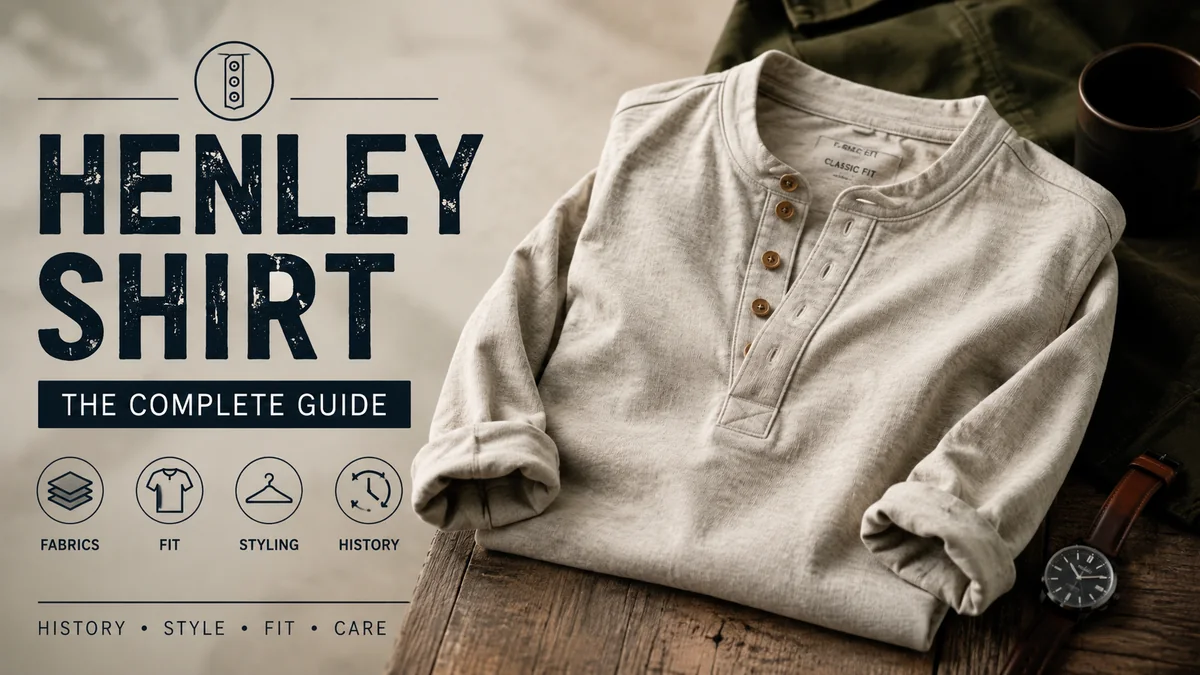
A henley shirt is one of those rare wardrobe pieces that looks simple but has a surprisingly rich history. With its collarless neckline and distinctive button placket, it offers the comfort of a T-shirt while adding enough structure and texture to make an outfit feel more considered.
Originally associated with nineteenth-century underwear and rowing clothing in England, the henley eventually became a familiar part of casual menswear. Today, it appears in everything from lightweight cotton summer shirts to heavyweight waffle-knit layers designed for colder weather.
A henley shirt is a collarless pullover top with a round neckline and a short vertical button placket, usually containing two to five buttons. It can have short or long sleeves and is commonly made from cotton, jersey, thermal knit, linen, merino wool, or blended fabrics.
Understanding its fabric, fit, buttons, sleeve length, and layering potential makes it much easier to choose a henley that actually works with the rest of your wardrobe.
What Is a Henley Shirt?
The easiest way to recognize a henley shirt is by looking at the neckline.
Instead of the plain round opening of a crew-neck T-shirt, a henley has a short placket running vertically down from the neck. Depending on the design, that placket generally contains two to five buttons or, occasionally, snaps.
Think of it as occupying the space between a crew-neck T-shirt and a polo shirt.
A polo has a collar and button placket. A henley keeps the placket but removes the traditional collar.
Typical features include:
- A round, collarless neckline
- A vertical button or snap placket
- Usually two to five fasteners
- Short- or long-sleeve construction
- Knitted rather than conventional woven-shirt construction
- Straight or occasionally curved hems
- Cotton, jersey, waffle, thermal, linen, wool, or blended fabrics
These characteristics leave plenty of room for variation.
One henley might be a thin cotton shirt that feels almost identical to a T-shirt. Another might use dense waffle-knit cotton, ribbed cuffs, and a substantial placket that makes it function more like a lightweight sweater.
That flexibility is a major reason the design has lasted so long.
Where Did the Henley Shirt Come From?
The history of the henley is closely connected to nineteenth-century Britain.
Before becoming everyday casualwear, similar collarless garments were worn as men’s undergarments. These shirts were sometimes known as undervests. The button opening was particularly practical before modern stretch fabrics became commonplace because it made the garment easier to pull over the head.
Its better-known identity, however, came through rowing.
The Henley-on-Thames Connection
The shirt takes its name from Henley-on-Thames, an English town strongly associated with rowing.
The Henley Royal Regatta traces its history to 1839. Rowers adopted collarless, placket-front shirts because the design offered comfort and ventilation without a loose collar getting in the way during physical activity.
That athletic connection explains several features that remain central to the shirt today: simplicity, freedom of movement, a relatively close fit, and an adjustable neckline.
The garment gradually moved beyond rowing and underwear into mainstream clothing.
By the twentieth century, the basic design had become familiar in workwear, athletic clothing, base layers, and eventually casual fashion. Modern interpretations range from heritage-inspired waffle henleys to polished merino versions.
So while the contemporary henley might look like a modified T-shirt, its history actually predates the modern T-shirt as we know it.
Henley Shirt vs. T-Shirt vs. Polo Shirt
These three garments overlap, but they create noticeably different looks.
| Feature | Henley Shirt | T-Shirt | Polo Shirt |
|---|---|---|---|
| Collar | No | No | Yes |
| Button placket | Yes | No | Yes |
| Typical neckline | Round | Crew/V-neck | Collared |
| Formality | Casual to smart casual | Casual | Casual to smart casual |
| Layering | Excellent | Excellent | Moderate |
| Texture/detail | Moderate | Minimal | More structured |
| Sleeve options | Short or long | Short or long | Usually short |
| Best use | Casual outfits and layering | Everyday casualwear | Polished casualwear |
A standard T-shirt is the simplest of the three.
A polo adds structure through its collar.
The henley sits between them. It retains the relaxed nature of a tee but the placket creates a visual focal point around the chest and neckline.
That small detail can make jeans and a plain shirt look more intentional without making the outfit feel formal.
What Makes a Good Henley Shirt?
A henley does not need complicated details to work well. In fact, simpler versions are usually easier to wear.
The quality comes down largely to fabric, fit, construction, placket design, and proportions.
Fabric Comes First
Fabric dramatically changes how a henley looks and behaves.
Cotton remains one of the most common choices because it is breathable, comfortable, relatively easy to care for, and suitable for different fabric weights. Cotton blends may add polyester or elastane/spandex for durability, stretch, or performance.
Other versions use linen, merino wool, cashmere, silk, synthetics, or technical fabrics.
The Placket Should Hold Its Shape
The button placket is the visual centerpiece of a henley.
A poorly constructed placket may twist, bunch, or collapse after washing. Better construction keeps the neckline looking relatively clean even when one or two buttons are undone.
Button size also changes the character of the garment.
Small, understated buttons create a cleaner look. Large contrasting buttons or a contrasting placket push the design toward workwear or heritage styling.
Seams and Cuffs Matter
Long-sleeve henleys frequently have ribbed cuffs, although open or hemmed cuffs are also available.
Raglan and semi-raglan sleeve constructions can provide additional movement, while traditional shoulder seams tend to create a cleaner everyday silhouette. Some performance-oriented designs also use flatlock seams to reduce friction.
These details seem minor on a hanger but can significantly affect comfort.
How Should a Henley Shirt Fit?
Fit is arguably the most common place people go wrong.
A henley generally looks best when it follows the shape of your body without clinging to it.
You want enough definition through the shoulders and chest to avoid a sloppy appearance, but enough room through the torso to move comfortably.
Check the Shoulders
For a conventional set-in sleeve, the shoulder seam should sit close to the edge of your shoulder bone.
If it drops significantly below the shoulder, the shirt may appear oversized unless that is an intentional relaxed design.
If it sits too far inward, the upper body may look cramped.
Watch the Chest
The fabric should lie relatively smoothly across your chest.
Horizontal pulling around the buttons is usually a sign that the shirt is too tight.
This matters especially with henleys because an overstretched placket immediately draws attention to poor fit.
Leave Some Room Through the Torso
Slim does not mean skin-tight.
A henley that clings aggressively to the stomach can resemble thermal underwear rather than a standalone shirt. Conversely, excessive fabric around the waist can remove the clean shape that makes a henley appealing.
Fashion editors generally recommend choosing a henley fit similar to the T-shirt silhouette you already find comfortable: slim if you prefer a closer shape, classic or relaxed if you like more room.
Get the Length Right
For an untucked outfit, the hem should generally extend past the waistband without becoming excessively long.
A curved hem can create a slightly more contemporary silhouette, while a straight hem tends to feel traditional.
If you plan to tuck the shirt in, additional length can help it stay secure.
Choosing the Right Henley Shirt Fabric
There is no universally best fabric. The right choice depends on temperature, intended use, layering, and the look you want.
Cotton Jersey
Cotton jersey is probably the easiest starting point.
It feels familiar because it behaves much like T-shirt fabric. Lightweight jersey works especially well in warmer weather and as a base layer.
A smooth cotton henley can also look relatively polished when the fit is clean.
Slub Cotton
Slub cotton contains subtle variations in yarn thickness that create visible texture.
That irregular surface gives a plain shirt more character without relying on graphics or patterns.
It works particularly well with denim, boots, chore jackets, and other casual pieces.
Waffle and Thermal Knit
Waffle-knit henleys have a textured, grid-like surface.
The style has strong connections with traditional thermal underwear, which gives it a rugged, heritage-inspired appearance.
Modern versions can work perfectly well as standalone shirts when the fabric is substantial and opaque. Fine waffle textures can also layer effectively during transitional weather.
Linen
Linen is useful in hot weather because of its lightweight, breathable character.
The tradeoff is wrinkling.
That is not necessarily a problem. Linen’s relaxed texture can complement the informal nature of a henley, particularly with shorts or lightweight trousers.
Merino Wool
Merino wool changes the character of the garment considerably.
It can provide temperature regulation and a smoother, more refined appearance than chunky thermal cotton. This makes a merino henley useful for cooler weather and travel wardrobes.
Merino versions are commonly found with long sleeves, although lightweight short-sleeve options also exist.
Synthetic and Performance Blends
Cotton-polyester, cotton-elastane, wool-nylon, and other blends can provide extra stretch, shape retention, moisture management, or durability.
These are particularly useful when the shirt is intended for active use.
The downside is that some synthetic-heavy fabrics can lose the natural texture that gives a classic henley its character.
Short-Sleeve vs. Long-Sleeve Henley Shirt
Neither version is inherently better.
They serve different purposes.
Short-Sleeve Henley
A short-sleeve henley is essentially an alternative to a T-shirt.
It works particularly well during spring and summer when you want a lightweight top with slightly more visual detail than a basic crew neck.
Wear it with:
- Chino shorts
- Lightweight chinos
- Casual trousers
- Jeans
- Canvas sneakers
- Minimal leather sneakers
Lighter colors can feel especially natural during warmer months.
Long-Sleeve Henley
The long-sleeve version offers considerably more layering potential.
Wear it alone during mild weather or underneath overshirts, denim jackets, field jackets, cardigans, and heavier outerwear when temperatures fall.
Thermal and waffle-knit versions are particularly suited to autumn and winter.
Rolling or pushing the sleeves slightly upward can also make a long-sleeve henley feel more relaxed.
How to Style a Henley Shirt
The key to styling a henley is recognizing what it does best.
It is not meant to replace a formal dress shirt. Instead, it improves simple casual outfits by adding texture and neckline detail without sacrificing comfort.
Henley Shirt With Jeans
This is the safest combination.
Try a grey, white, navy, charcoal, or olive henley with dark or medium-wash denim.
Finish the outfit with sneakers or casual boots.
Texture can make a big difference here. Slub cotton or a subtle waffle knit keeps a simple jeans-and-shirt outfit from looking flat.
Henley With Chinos
Chinos make the outfit slightly cleaner.
A well-fitting cotton henley with tan, olive, navy, or stone chinos works for relaxed lunches, weekend outings, travel, and many informal social situations.
Keep the footwear equally understated.
Henley With Shorts
Short sleeves are the obvious option, but lightweight long sleeves can work on cooler summer evenings.
Choose breathable fabric and avoid overly tight fits. A slightly looser garment allows more airflow in warm conditions.
Henley Under a Denim Jacket
This combination works because both pieces share casual and workwear influences.
The open neckline of the henley also prevents the layers around your neck from feeling crowded.
For an easy combination, pair a neutral henley with a blue denim jacket and contrasting trousers or dark jeans.
Henley Under an Overshirt
An unbuttoned overshirt creates a vertical frame around the henley’s button placket.
That makes the combination visually interesting despite consisting of simple pieces.
Flannel, twill, denim, corduroy, and lightweight canvas overshirts can all work depending on the season.
Henley With a Cardigan
Henleys also layer effectively beneath knitwear.
A V-neck or shawl-collar cardigan leaves enough of the shirt visible for the button placket to add depth. Menswear guides frequently highlight this layering ability as one of the henley’s major strengths.
How Many Henley Buttons Should You Leave Open?
There is no strict rule, but restraint usually works best.
For a typical three-button placket, leaving the top button undone creates an easy, balanced neckline.
Opening the top two creates a more relaxed look.
Keeping every button closed tends to look more conservative and can work when layering.
Leaving a very deep placket completely open may expose too much chest and make the shirt look less polished.
The proportions of the placket matter too. Some henleys have a short two-button opening, while others have four or five buttons and extend much farther down the chest.
Treat the neckline as an adjustable styling detail rather than assuming every button needs to be used the same way.
Can You Wear a Henley Shirt for Smart Casual Outfits?
Sometimes, but context matters.
A henley remains fundamentally a casual garment.
However, a smooth, solid-colored, well-fitting version can work in the more relaxed end of smart casual dressing.
The fabric is critical.
A crisp cotton or fine merino henley can appear considerably more polished than a loose thermal version with contrasting stitching.
For a cleaner outfit, combine one with:
- Dark jeans or tailored chinos
- Minimal leather sneakers
- Loafers or casual leather shoes
- An unstructured jacket
- A refined cardigan
Some style editors even suggest wearing a clean white henley beneath a blazer with jeans and loafers in casual offices or social settings.
Still, do not treat a henley as a universal substitute for a collared shirt. If the setting specifically calls for business attire or formal dress, choose appropriate shirting instead.
What Colors Work Best?
Neutral colors provide the most versatility.
White and off-white create a classic appearance and work particularly well under darker jackets.
Grey is forgiving, casual, and easy to combine with denim.
Navy feels slightly richer while remaining understated.
Black creates a sharper, more modern look but can make texture less visible.
Olive complements the garment’s workwear and military-inspired styling.
Burgundy, rust, and brown are especially effective in autumn wardrobes.
If you are buying your first henley, white, grey, navy, or another neutral shade will generally be easier to combine with existing clothes.
Solid colors also emphasize the placket and fabric texture rather than competing with them.
Common Henley Shirt Styling Mistakes
The simplicity of the garment means small mistakes become surprisingly noticeable.
Wearing One That Is Too Tight
This is probably the biggest issue.
A close fit can look flattering, but fabric pulling around the chest, stomach, or buttons usually means you need more room.
Choosing Fabric That Is Too Thin
Very lightweight white cotton can become transparent.
Check the shirt in natural light before treating it as a standalone top. Thin versions may work better as base layers.
Going Too Baggy
Relaxed fits can work, but a henley is not a hoodie.
Excessive fabric through the shoulders and torso can make the shirt look shapeless.
Overdoing the Rugged Look
A thermal henley, distressed jeans, heavy boots, leather jacket, and multiple rugged accessories can become costume-like.
One or two textured pieces are usually enough.
Treating It Like Formalwear
The placket makes a henley more detailed than a crew-neck tee, but it does not suddenly turn it into a dress shirt.
Know where the garment sits on the formality scale.
How to Layer a Henley Shirt
Layering is one of the strongest reasons to own one.
The placket adds visual depth that a standard T-shirt cannot provide, while the lack of a collar means it sits neatly underneath other garments.
For mild weather, try:
Henley → denim jacket
or:
Henley → overshirt
For colder conditions:
Henley → flannel shirt → heavier jacket
or:
Henley → cardigan → coat
Ape to Gentleman specifically highlights henleys as useful cold-weather layers, noting that the placket adds depth beneath pieces such as V-neck sweaters and shawl-collar cardigans.
Fabric weight should increase as you move outward. A lightweight base underneath a heavier middle layer generally feels more comfortable than stacking several thick pieces.
How to Care for a Henley Shirt
Always start with the care label because fabric composition matters more than the garment’s name.
Cotton versions are generally straightforward, but high heat can contribute to shrinkage and shorten the life of certain fabrics.
A practical routine for many cotton henleys is:
- Turn the shirt inside out.
- Fasten or partially fasten the placket to reduce unnecessary pulling.
- Wash with similar colors.
- Use cool or moderate water when the label permits.
- Avoid excessive heat when drying.
- Reshape the neckline and placket after washing.
- Air-dry delicate wool, linen, or specialty fabrics when instructed.
Merino wool and cashmere require more careful treatment than ordinary cotton jersey.
Heavy waffle knits can also change shape while wet, so avoid stretching them when moving them from the washing machine.
The manufacturer’s instructions should always override generic advice.
Is a Henley Shirt the Same as a Thermal Shirt?
No.
The two garments overlap, which creates confusion.
Henley describes the neckline and placket style.
Thermal primarily describes a garment designed to help provide warmth, often using waffle-knit or insulating fabric.
A shirt can therefore be both a henley and a thermal.
But not every henley is thermal.
A lightweight linen short-sleeve henley, for example, is designed for an entirely different environment from a heavyweight waffle-knit thermal henley.
Understanding this distinction makes online shopping much easier.
Can Women Wear Henley Shirts?
Absolutely.
Although henleys have strong historical associations with menswear, women’s versions are widely available and use the same fundamental collarless, placket-front construction.
Women’s designs may use different proportions, neck depths, fabrics, cropped lengths, fitted silhouettes, or oversized cuts.
The same styling principles still apply: fabric and fit determine whether the shirt reads as athletic, casual, rugged, minimalist, or slightly polished.
Is a Henley Shirt Worth Having?
For someone who already wears T-shirts regularly, a henley is an easy way to add variety without changing their entire style.
Its biggest strength is versatility.
A lightweight short-sleeve version can replace a basic tee in summer. A medium-weight cotton long-sleeve henley works well through transitional weather. A substantial waffle knit becomes an effective cold-weather layer.
And unlike a trend-dependent garment, the design has already survived generations of changing fashion.
Its history stretches from nineteenth-century undervests and rowing uniforms at Henley-on-Thames to contemporary casualwear.
The practical lesson is simple: choose a henley shirt based on what you actually need it to do. Prioritize a clean shoulder fit, comfortable room through the torso, a stable button placket, and fabric suited to the season. Get those details right, and this deceptively simple shirt can become one of the most useful pieces in a casual wardrobe.