
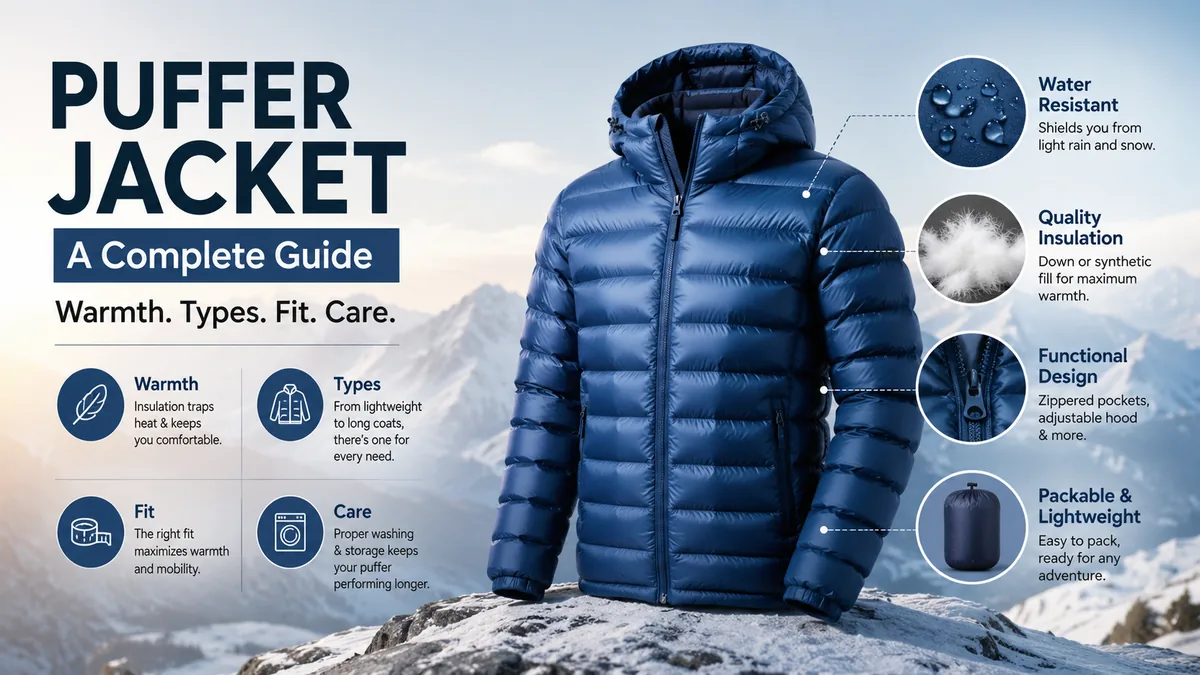
Few pieces of winter clothing are as recognizable as the puffer jacket. Its quilted construction, lightweight feel, and insulated chambers make it a practical cold-weather layer for everything from daily commuting to hiking and winter travel.
But the familiar “puffy” appearance is doing more than creating a style. Those insulated sections are designed to trap air and reduce heat loss. Depending on the jacket, the insulation may be natural down or synthetic fibers, while the outer shell is commonly made from lightweight materials such as nylon or polyester.
Quick answer: A puffer jacket is an insulated jacket constructed with quilted or baffled sections containing down or synthetic insulation. The insulation creates loft that traps warm air around the body, helping provide warmth without requiring the heavy, dense materials traditionally used in winter coats.
What Is a Puffer Jacket?
A puffer jacket—sometimes called a puffy jacket or, when appropriate, a down jacket—is an insulated outer or mid-layer characterized by its raised, padded sections.
The jacket typically consists of three basic components:
- An outer shell that protects the insulation
- Insulated chambers or baffles
- A lining that sits against your inner layers
The characteristic quilted sections help distribute the insulation rather than allowing all the filling to settle at the bottom.
Not every puffer is technically a down jacket. Some contain duck or goose down, while others use polyester-based synthetic insulation. That distinction matters because the two insulation systems behave differently in wet weather, compression, weight, maintenance, and cost.
How Does a Puffer Jacket Keep You Warm?
A common misconception is that the filling itself somehow generates heat.
It doesn’t.
Your body generates heat. The jacket’s job is to slow the rate at which that heat escapes.
Down clusters or synthetic fibers create thousands of tiny spaces that hold relatively still air. This loft forms an insulating barrier between your warm body and the colder environment.
Think of it less as a heater and more as a highly efficient thermal barrier.
Why the Puffy Sections Matter
Without internal construction to control the filling, insulation could migrate and create thin areas where warmth is lost.
Manufacturers therefore divide the jacket into chambers called baffles.
These can appear as:
- Horizontal channels
- Diamond quilting
- Square chambers
- Large box-shaped baffles
- Narrow micro-baffles
Baffle construction affects insulation distribution, appearance, weight, and potentially the number of cold spots created by seams.
The concept has deep roots in modern outdoor clothing. Eddie Bauer’s early down jacket used quilting specifically to keep down distributed throughout the garment. His Skyliner became one of the important milestones in the development of the modern puffer.
Down vs. Synthetic Puffer Jackets
One of the most useful decisions you can make when choosing or understanding a puffer is identifying its insulation.
Neither option is automatically better.
The right choice depends on where and how the jacket will be used.
| Feature | Down Insulation | Synthetic Insulation |
|---|---|---|
| Warmth-to-weight | Excellent | Good to excellent |
| Compressibility | Excellent | Usually good |
| Performance when damp | More vulnerable | Generally better |
| Drying speed | Slower | Usually faster |
| Maintenance | Requires more care | Often easier |
| Typical cost | Often higher | Often more affordable |
| Best suited to | Cold, relatively dry conditions | Damp or variable conditions |
Down Insulation
Natural down comes from the fine insulating plumage found beneath the exterior feathers of ducks and geese.
Its major advantage is loft.
High-quality down can create substantial insulating volume while remaining surprisingly light. It also compresses extremely well, which explains its long-standing popularity among backpackers, climbers, travelers, and anyone trying to minimize packed weight.
However, untreated down has a weakness: moisture.
When down becomes thoroughly wet, its clusters can clump together and lose loft. Less loft means less trapped air and therefore poorer insulation until the down dries and recovers.
Some modern garments use hydrophobic treatments intended to improve moisture resistance, although the jacket’s overall weather performance still depends on its shell and construction.
Synthetic Insulation
Synthetic puffers use manufactured fibers, commonly polyester-based materials, designed to mimic some of down’s air-trapping behavior.
Synthetic insulation generally handles damp conditions better and often dries faster.
That makes it particularly useful for:
- Wet climates
- Variable winter weather
- High-output outdoor activities
- Everyday jackets exposed to frequent moisture
- People who prefer easier maintenance
The trade-off is that synthetic insulation can be somewhat heavier or bulkier than high-quality down for comparable warmth, although modern synthetic insulation has improved considerably.
What Does Fill Power Mean?
When comparing down puffers, you will frequently encounter numbers such as:
550, 600, 700, 800 or 900 fill power.
Fill power measures the loft of down rather than simply telling you how warm the entire jacket will be.
Higher-quality down expands to occupy more volume for a given weight. For example, 800-fill down has greater loft per unit of weight than 600-fill down.
This generally allows manufacturers to create highly compressible garments with excellent warmth-to-weight performance.
Higher Fill Power Does Not Automatically Mean a Warmer Jacket
This distinction is easy to miss.
Imagine one jacket containing a small quantity of very high-fill-power down and another containing much more lower-fill-power down. The second jacket could potentially be warmer despite displaying the lower fill-power number.
Overall warmth depends on several variables, including:
- Fill power
- Total amount of insulation
- Baffle design
- Jacket length
- Hood construction
- Fit
- Shell material
- Cuffs and hem
- Wind exposure
So don’t use fill power as a stand-alone warmth rating.
Quick takeaway: Fill power tells you about down’s loft and efficiency. It does not, by itself, tell you exactly how warm a complete jacket will feel.
Different Types of Puffer Jackets
The term puffer covers a surprisingly broad family of garments.
Understanding the major styles makes it easier to match a jacket to its intended use.
Lightweight Puffer Jacket
A lightweight puffer uses relatively modest insulation and a thin shell to reduce bulk and weight.
It works particularly well for transitional temperatures, travel, layering, hiking, and cool days when a heavy winter coat would be excessive.
Many lightweight versions are highly compressible and can be packed into a small stuff sack or sometimes into one of their own pockets.
Midweight Puffer
A midweight jacket provides more insulation while remaining reasonably mobile.
For many people, this is the most versatile category because it can function as an everyday winter jacket without the bulk associated with expedition-style parkas.
Heavyweight Puffer Jacket
Heavy puffers prioritize insulation over minimal weight.
Expect deeper baffles, greater loft, more coverage, and often features such as insulated hoods and storm-protective closures.
They make more sense for prolonged exposure to genuinely cold conditions than for mild winter days.
Hooded Puffer
A hood reduces heat loss around the head and neck and provides additional protection against wind.
Technical models may use adjustable hoods designed to move with the wearer’s head, while casual versions tend to favor simplicity and comfort.
Puffer Vest
A puffer vest removes the sleeves while retaining insulation around the torso.
This makes it useful when you need core warmth without restricting your arms. Vests work especially well during spring and autumn or as part of a layered cold-weather system.
Long Puffer Coat
Long puffers extend insulation below the hips and sometimes toward the knees or calves.
The extra coverage can make a noticeable difference in cold urban environments, especially when standing outdoors for extended periods.
Packable Puffer
A packable jacket emphasizes low weight and compressibility.
These models are particularly useful for travel and outdoor activities where the jacket may spend part of the day inside a backpack.
Packing a puffer for transportation is convenient, but storing it compressed for long periods isn’t ideal. Allowing the insulation to remain lofted helps preserve its performance.
Puffer Jacket vs. Down Jacket: Is There a Difference?
These terms overlap, but they aren’t identical.
A puffer jacket describes the broader insulated, puffed construction and appearance.
A down jacket specifically identifies a garment insulated with natural down.
Therefore:
A down jacket can be a puffer, but a puffer does not have to contain down.
A synthetic insulated jacket with visible quilted baffles is still commonly described as a puffer.
This distinction becomes important when you’re evaluating moisture performance, washing requirements, compressibility, and insulation characteristics.
Is a Puffer Jacket Waterproof?
Not necessarily.
This is another common source of confusion.
A puffer can be warm without being waterproof.
Many lightweight puffers use shell fabrics treated with a durable water-repellent (DWR) finish. This can help light rain or snow bead up temporarily instead of immediately soaking into the fabric.
Water resistance, however, isn’t the same thing as waterproof construction.
A genuinely waterproof jacket generally requires additional features such as:
- Waterproof fabric or membrane
- Sealed or taped seams
- Weather-protective closures
- Appropriate hood construction
A typical puffer may cope well with dry snow or a brief light shower but should not automatically be treated as a rain jacket.
For extended wet conditions, an effective outdoor layering system often places a waterproof shell over the insulated layer.
How Should a Puffer Jacket Fit?
The ideal puffer should generally feel secure without becoming restrictive.
Too tight, and you may limit movement, compress insulation, or leave insufficient space for layers.
Too loose, and cold air can circulate excessively through openings.
A useful fitting test is simple:
- Put on the layers you normally expect to wear underneath.
- Zip the jacket completely.
- Raise both arms above your head.
- Reach forward as though hugging someone.
- Rotate your shoulders.
- Check the cuffs, hem, chest, and neck.
You should be able to move naturally without strong pulling across the shoulders or chest.
The North Face similarly recommends checking mobility through the arms, shoulders, and chest and trying the jacket with the thicker layers you actually intend to wear underneath.
Consider Your Intended Use
A fashion-oriented oversized puffer can deliberately have significant extra volume.
A technical puffer used underneath a shell may require a trimmer profile.
A cold-weather belay or stationary jacket may need enough space to fit over several layers.
Fit should therefore follow function rather than a single universal sizing rule.
What Should You Wear Under a Puffer Jacket?
Layering works best when every garment has a purpose.
For active cold-weather use, a practical system often contains three layers.
1. Base Layer
The base layer sits next to the skin and helps manage moisture.
Depending on conditions, this may be made from:
- Merino wool
- Polyester
- Nylon blends
- Other moisture-managing technical fabrics
2. Mid-Layer
The mid-layer adds insulation.
Common options include:
- Fleece
- Wool sweater
- Lightweight insulated layer
- Technical hoodie
You may not need a substantial mid-layer if your puffer already provides significant insulation.
3. Insulated or Protective Outer Layer
Your puffer can serve as the insulating outer layer in dry conditions.
When rain, sleet, or heavy wet snow is expected, a waterproof shell may be worn over it if the system is designed to accommodate one.
The objective isn’t simply to wear as many clothes as possible. Effective layering allows you to regulate heat and moisture as conditions or activity levels change.
How Warm Is a Puffer Jacket?
There is no universal temperature rating for all puffers.
A thin synthetic jacket intended for autumn and a high-loft expedition down parka both qualify as puffers, yet their thermal performance is dramatically different.
Warmth is influenced by:
Insulation quantity: More insulation can trap more air.
Insulation efficiency: High-loft down offers excellent warmth relative to its weight.
Baffle construction: Insulation must remain evenly distributed.
Jacket length: Greater coverage reduces exposed surface area.
Hood: An insulated hood protects the head and neck.
Wind resistance: Moving cold air can rapidly increase heat loss.
Fit: Large gaps may allow warm air to escape.
Activity level: Walking uphill generates far more body heat than standing still.
Base and mid-layers: The entire clothing system contributes to warmth.
This is why buying solely according to a temperature printed in a product description can be misleading. Your activity, wind, humidity, layering, and personal cold tolerance matter too.
Why Puffer Jackets Became So Popular
The modern puffer sits at an unusual intersection of outdoor engineering and fashion.
Its early development was driven primarily by practical cold-weather needs.
Outdoor outfitter Eddie Bauer experienced severe hypothermia during a winter fishing trip in Washington in the 1930s. Looking for an alternative to heavy wool outerwear, he experimented with goose down and quilting.
His Skyliner down jacket entered production in the 1930s, and Bauer received a U.S. patent for the design in 1940. The Museum of History & Industry in Seattle preserves an early 1936 example.
The basic idea—lightweight fabric containing lofted insulation—proved useful far beyond everyday winter clothing.
Down garments eventually became associated with:
- Mountaineering
- Backpacking
- Skiing
- High-altitude expeditions
- Military cold-weather clothing
- Urban winter wear
Fashion designers later embraced the exaggerated volume of padded outerwear, helping move the puffer from technical equipment into streetwear and luxury fashion.
Today, brands ranging from outdoor specialists such as The North Face and Patagonia to mainstream fashion labels produce variations of the design.
How to Choose the Right Puffer Jacket
Instead of asking which puffer is “best,” start with the environment in which you’ll actually wear it.
For Everyday Winter Wear
Prioritize comfort, durability, pockets, fit, wind protection, and enough insulation for your local climate.
Extreme warmth-to-weight performance usually isn’t necessary for short commutes and casual use.
For Hiking
Weight and moisture management become more important.
Look for a jacket that packs easily, works within your layering system, and provides enough warmth during rest stops without causing excessive overheating while you’re moving.
For Travel
Packability is particularly valuable.
A lightweight down jacket can provide excellent warmth for its packed size, while synthetic insulation may be preferable when you expect consistently damp conditions.
For Wet Climates
Pay closer attention to synthetic insulation, shell construction, and your waterproof layering strategy.
Remember that water-resistant and waterproof are not interchangeable descriptions.
For Very Cold Conditions
Consider total insulation rather than focusing exclusively on fill power.
A longer cut, substantial hood, protective cuffs, adjustable hem, and wind-resistant shell can be just as relevant as the insulation specification.
Common Mistakes When Choosing a Puffer
Even a high-quality jacket can disappoint when it doesn’t match the intended use.
Mistake 1: Buying Only by Fill Power
An 800-fill label looks impressive, but without knowing how much down is inside the jacket, it doesn’t tell the whole warmth story.
Mistake 2: Assuming Puffy Means Extremely Warm
Visual bulk can be deceptive.
Different insulation materials and construction methods produce different levels of thermal efficiency.
Mistake 3: Ignoring Rain Protection
Down insulation and prolonged moisture are not an ideal combination unless the jacket and layering system are specifically designed to handle it.
Mistake 4: Choosing a Fit Without Testing Layers
A jacket that fits perfectly over a T-shirt may feel restrictive over a fleece.
Try it with realistic winter clothing.
Mistake 5: Buying Too Much Jacket
An expedition-level parka isn’t necessarily comfortable for mild urban winters. Excess insulation can cause overheating, sweating, and unnecessary bulk.
Quick takeaway: Match insulation, construction, weather protection, and fit to your real environment—not the biggest specification number on the label.
How to Wash a Puffer Jacket
Washing instructions vary by manufacturer, insulation, and shell material, so the garment’s care label should always come first.
Many modern down and polyester puffers can be washed at home when their care labels permit it.
A typical process looks like this:
- Empty all pockets.
- Close zippers and other fasteners as directed.
- Inspect heavily soiled areas.
- Follow the specified washing-machine type and cycle.
- Use the cleaner recommended for the garment.
- Rinse thoroughly.
- Dry according to the care label.
- Make sure insulation is completely dry before storage.
For down garments, drying is particularly important because wet down tends to clump.
Some care instructions recommend tumble drying on low heat and using clean dryer balls to help separate down clusters and restore loft. Never assume this is appropriate for every jacket—verify the manufacturer’s instructions first.
Avoid Excessive Detergent
Residue can interfere with the performance of technical fabrics and insulation.
Down-specific cleaners are often recommended for natural down garments, while some synthetic jackets can be cleaned with mild detergent.
Again, the label on your specific garment overrides generic advice.
How to Restore a Puffer After Washing
Don’t panic if a freshly washed down jacket initially looks thin and lumpy.
The filling may simply be wet and clumped.
Proper drying allows the down clusters to separate and regain their loft. During an approved tumble-drying process, periodically removing the jacket and gently breaking apart stubborn clumps by hand can help.
The jacket isn’t truly finished drying just because the outer fabric feels dry.
Check the insulation carefully.
Moist filling can cause odors, clumping, and poor thermal performance.
How Should You Store a Puffer Jacket?
Compression is useful for transportation—not ideal for months of storage.
Once you’re home, remove the jacket from its stuff sack and allow it to regain its natural shape.
For long-term storage:
- Make sure the jacket is completely dry.
- Keep it in a dry, ventilated location.
- Avoid leaving it tightly compressed.
- Hang it when the manufacturer permits.
- Keep it away from excessive heat and direct sunlight.
- Clean obvious dirt before extended storage.
Preserving loft is especially important for down garments because loft is central to their insulating performance.
Can a Puffer Jacket Lose Its Warmth?
Yes.
Insulation works best when it maintains its loft and remains evenly distributed.
Performance can decline because of:
- Persistent compression
- Down clumping
- Moisture
- Improper washing
- Incomplete drying
- Damaged baffles
- Insulation migration
- General wear over many years
A jacket looking slightly flatter doesn’t automatically mean it needs replacing. Proper washing and drying can sometimes restore loft that has been reduced by dirt, body oils, or clumping.
Physical damage is different.
If insulation continually escapes through torn fabric or internal baffles fail, professional repair may be worthwhile—particularly for a high-quality technical jacket.
Are Puffer Jackets Good for Snow?
They can be excellent for snow, but the type of snow matters.
Cold, dry snow generally presents less of a moisture challenge than wet snow near freezing temperatures.
For casual use in light snow, a water-resistant puffer may be sufficient.
For prolonged exposure to wet snow, wind, or mixed precipitation, you’ll want stronger weather protection. That could mean a puffer with a waterproof outer construction or an insulated jacket combined with a separate waterproof shell.
Warmth and waterproofing solve different problems.
You often need both.
Are Puffer Jackets Good for Hiking?
Yes, particularly as an insulating layer during cold hikes, rest stops, camping, and cool evenings.
Down excels when low weight and packability matter and conditions are reasonably dry.
Synthetic insulation can be more forgiving in damp environments or activities where moisture is difficult to avoid.
However, a very warm puffer may be uncomfortable during strenuous uphill hiking.
Experienced hikers often adjust layers throughout the day rather than wearing their warmest insulation continuously. Staying comfortably warm without becoming soaked in sweat is usually more effective than simply maximizing insulation.
Puffer Jacket Style: Function Has Become Fashion
Although the puffer started as practical cold-weather equipment, its shape eventually became a fashion statement in its own right.
Modern versions range from close-fitting technical jackets to deliberately oversized streetwear silhouettes.
Common variations include:
- Cropped puffers
- Oversized puffers
- Longline coats
- Hoodless jackets
- High-collar designs
- Puffer vests
- Matte technical shells
- Glossy fashion shells
If a large puffer feels visually overwhelming, balancing the volume with cleaner or more fitted pieces can create contrast. Alternatively, oversized trousers and relaxed layers can intentionally continue the larger silhouette.
There isn’t one correct way to style one.
The key distinction is whether you’re buying primarily for fashion, technical performance, or a combination of both. A runway-inspired oversized jacket and an ultralight backpacking puffer may share the same basic insulation concept while serving completely different purposes.
How Long Can a Good Puffer Jacket Last?
There is no fixed lifespan.
A well-made jacket can remain useful for many years when its shell, seams, zippers, and insulation are cared for properly.
Longevity depends on:
- Frequency of use
- Fabric durability
- Insulation quality
- Washing habits
- Storage
- Abrasion
- Moisture exposure
- Repairability
Small tears don’t always justify replacing the whole garment. Outdoor repair patches and professional repair services can extend the life of otherwise functional jackets.
That is often cheaper—and less wasteful—than replacing an entire insulated garment because of a small damaged area.
Final Thoughts on Choosing and Using a Puffer Jacket
A puffer jacket is much more than a bulky winter coat. Its effectiveness comes from a straightforward principle: lofted down or synthetic insulation traps air, helping slow the loss of body heat while keeping overall weight relatively low.
For cold, dry conditions where weight and packability matter, down can be exceptionally efficient. Synthetic insulation often makes more sense in damp conditions or when easier maintenance is a priority. Fill power, baffle construction, shell material, hood design, fit, and total insulation should all be considered together rather than individually.
Most importantly, choose the jacket for the conditions you actually face. Give the insulation enough room to loft, layer intelligently, protect it from prolonged moisture, follow the care label when washing, and avoid storing it tightly compressed.
Do those things, and a well-made puffer can remain one of the most useful pieces in a cold-weather wardrobe for years.