
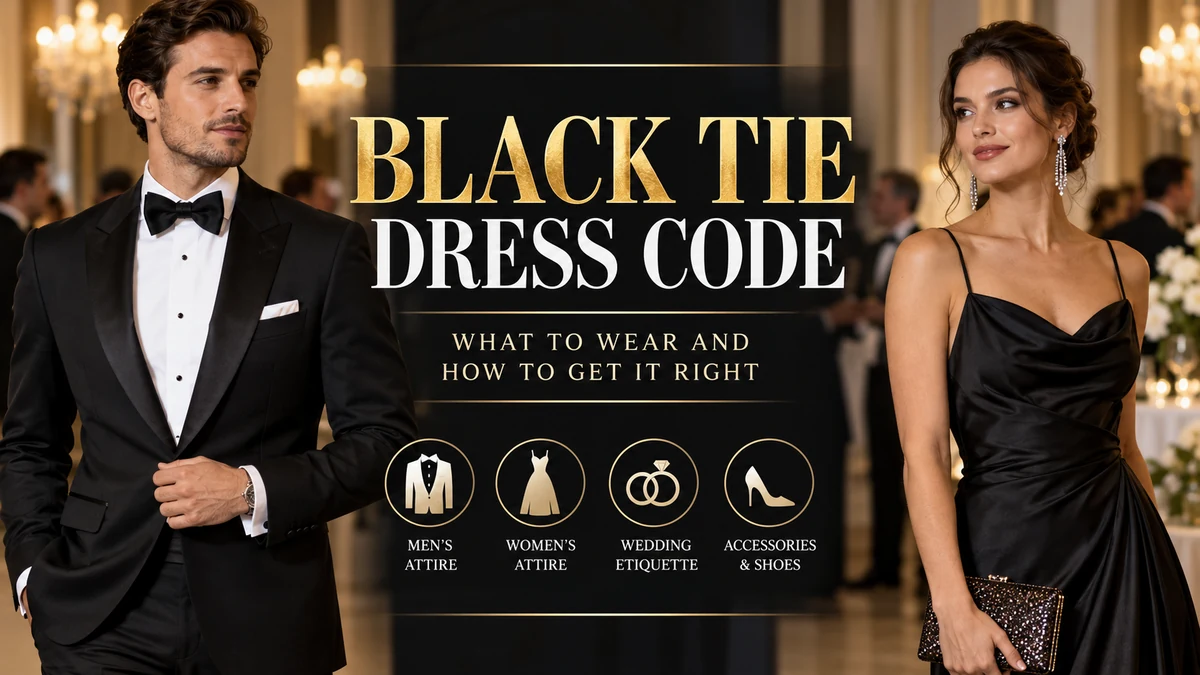
A black tie dress code sounds simple until an invitation actually lands in your hands. Does it require a tuxedo? Does a woman have to wear a floor-length gown? Can you wear color? And what exactly separates black tie from formal or black-tie optional?
Black tie is a formal evening dress code traditionally built around a tuxedo or dinner jacket for masculine dressing and an elegant evening gown for feminine dressing. It sits below white tie but above cocktail, semi-formal, and standard business attire. The goal is polished eveningwear rather than simply wearing expensive or dressy clothes.
Once you understand that distinction, the rules become much easier to follow.
What Does the Black Tie Dress Code Mean?
Black tie is one of the established levels of Western formal evening dress. It is traditionally associated with weddings, galas, formal dinners, balls, award ceremonies, theatre occasions, charity events, and other celebrations where the host wants guests to dress to a consistently high standard.
Despite the name, black tie does not simply mean putting a black necktie on a regular suit.
For traditional masculine eveningwear, it refers to a complete dinner suit or tuxedo ensemble: dinner jacket, matching formal trousers, white evening shirt, black bow tie and formal black shoes. Current etiquette guidance from Emily Post similarly distinguishes black tie from an ordinary business suit and places it immediately below white tie in formality.
For feminine eveningwear, a formal floor-length gown remains the safest interpretation. Depending on the event, an exceptionally dressy cocktail dress or similarly sophisticated formal outfit may also be appropriate.
Where Black Tie Sits on the Formality Scale
Understanding neighboring dress codes prevents many mistakes.
| Dress Code | Typical Level | Common Interpretation |
|---|---|---|
| White tie | Most formal | Tailcoat and white bow tie; full evening gown |
| Black tie | Very formal | Tuxedo/dinner jacket; formal evening gown |
| Black-tie optional | Formal | Tuxedo preferred, dark formal suit acceptable |
| Cocktail / semi-formal | Moderately formal | Suit; cocktail or sophisticated shorter dress |
| Dressy casual | Smart | Blazer/separates; polished dress or equivalent |
| Casual | Relaxed | Neat everyday clothing |
White tie therefore isn’t another name for black tie. It is a separate and more formal category with its own traditional requirements.
Black Tie Dress Code for Men
For men—or anyone choosing traditional masculine eveningwear—the tuxedo is the foundation of authentic black tie.
The safest formula is remarkably consistent:
Dinner jacket + formal trousers + white dress shirt + black bow tie + formal black shoes.
A normal dark business suit may look sophisticated, but under a strict black tie invitation it is not the traditional equivalent of a tuxedo. GQ’s current guidance likewise describes black tie as a specific eveningwear system rather than simply a particularly smart suit.
The Dinner Jacket
A classic dinner jacket is usually black or midnight blue.
Its distinguishing feature is the lapel facing, traditionally made from contrasting silk, satin or grosgrain. Common styles include:
- Peak lapels
- Shawl collars
- Less traditionally, notch lapels
Peak and shawl lapels generally create the most recognizably formal evening appearance.
Midnight blue is also an established alternative to black, rather than a modern loophole. The objective is still to create the streamlined appearance associated with evening dress.
A white dinner jacket can be appropriate in warm climates, tropical destinations, summer settings and certain cruise environments, normally paired with black formal trousers. Emily Post specifically recognizes this variation for summer, tropical and cruise occasions.
Black Tie Trousers
Tuxedo trousers should match the dinner jacket unless you are intentionally wearing an accepted contrasting dinner-jacket combination.
Traditional trousers commonly have satin or grosgrain detailing along the outside seam. They are designed to maintain a clean waistline, so belts are generally avoided.
Braces or suspenders can be worn underneath the jacket when needed for fit.
The result should be smooth and uninterrupted rather than resembling office tailoring.
The Right Shirt
A crisp white formal shirt remains the standard choice.
Traditional options include pleated-front and piqué-front shirts, while a restrained plain-front formal shirt is common in contemporary black tie.
Depending on the shirt design, studs and cufflinks may replace ordinary buttons. Emily Post’s traditional black tie specification includes a formal white shirt, shirt studs and cufflinks.
The shirt should complement the tuxedo rather than become the visual centerpiece.
Bow Tie or Regular Tie?
Wear a black bow tie.
This is one of the easiest places to misunderstand the dress code. A long black necktie with a business suit does not create black tie attire.
Traditionally, the bow tie is silk, satin or another material that coordinates with the lapel facing.
A self-tied bow tie is the classic choice. A well-made pre-tied bow tie can still create a neat appearance, particularly for someone unfamiliar with tying one, but it should look proportionate to the collar and lapels.
Waistcoat or Cummerbund
Traditional black tie may include a low-cut evening waistcoat or cummerbund.
Their purpose is partly visual: they cover the waistband area between the shirt and trousers when the jacket opens.
Modern tuxedos are frequently worn without either, particularly when the jacket and trousers fit cleanly. But for a highly traditional event, a waist covering can make the ensemble feel more complete.
What Shoes Go With Black Tie?
Black footwear is standard.
Traditional choices include:
- Black patent-leather evening shoes
- Highly polished black Oxford shoes
- Formal opera pumps in particularly traditional settings
Black dress socks complete the look. Emily Post lists black patent shoes and black dress socks as the conventional combination.
Brown shoes, casual loafers, sneakers and heavy boots usually reduce the formality too much for a strict black tie event.
Quick takeaway: If you’re uncertain about masculine black tie, don’t reinvent it. A properly fitted black or midnight-blue tuxedo, white shirt, black bow tie and polished black shoes will work for almost any conventional black tie occasion.
Black Tie Dress Code for Women
The rules for women’s black tie attire allow more variation in silhouette, color and styling, but the expected level of formality remains high.
A floor-length evening gown is the safest and most traditional choice. Vogue’s guidance emphasizes long eveningwear in elevated fabrics such as silk, velvet, chiffon and lace, while Emily Post also recognizes a particularly dressy cocktail dress in appropriate circumstances.
The key distinction is not simply dress length. The entire outfit should read as eveningwear.
Does a Black Tie Dress Have to Be Floor Length?
Not absolutely in every modern setting, but floor length is the least ambiguous choice.
A full-length gown works particularly well for:
- Formal weddings
- Galas
- Charity balls
- Award ceremonies
- Luxury evening receptions
- Traditional formal dinners
Some contemporary black tie events accept sophisticated cocktail-length dresses, especially when the host has adopted a more relaxed interpretation. However, Vogue recommends assuming a long evening look when the invitation provides no other clues.
If you’re deciding between a slightly underdressed cocktail dress and a refined full-length gown, the gown generally aligns more reliably with the invitation.
Can You Wear a Midi Dress to Black Tie?
A midi dress occupies a gray area.
Length alone doesn’t determine formality. A structured or beautifully draped midi made from luxurious evening fabric can look considerably more formal than a basic floor-length maxi dress.
Even so, traditional black tie favors longer eveningwear. For weddings in particular, current fashion guidance commonly treats floor-length gowns as the safest interpretation.
Consider the venue, invitation wording, time and host before choosing a shorter hemline.
Can Women Wear a Tuxedo?
Yes.
A sharply tailored tuxedo or formal evening trouser ensemble can satisfy the spirit of black tie when the styling genuinely looks like eveningwear rather than businesswear.
Pay attention to fabric, tailoring, footwear and accessories. A standard office pantsuit worn with everyday shoes will generally feel too casual, whereas silk lapels, refined tailoring and evening accessories can create the appropriate level of formality.
Do You Have to Wear Black?
No.
“Black tie” describes the dress code, not a requirement that every guest wear black.
Formal gowns can appear in jewel tones, deep neutrals, metallics, pastels and other sophisticated colors. Seasonal and venue considerations can help guide the palette.
For masculine traditional black tie, black and midnight blue remain the established dinner-jacket choices, although creative black tie provides more freedom.
For weddings, guests should also consider ordinary wedding etiquette surrounding colors closely associated with the couple’s attire or cultural traditions.
Fabrics Matter
Black tie is as much about material and finish as silhouette.
Evening-appropriate fabrics commonly include:
- Silk
- Satin
- Velvet
- Chiffon
- Crepe
- Lace
- Tulle
- Embellished or beaded textiles
Vogue specifically identifies fabrics including velvet, chiffon, silk and lace as appropriate signals of evening formality.
By contrast, casual cotton, jersey, denim and obviously daytime fabrics can make an otherwise elegant shape feel underdressed.
Black Tie Dress Code for Weddings
A black tie wedding asks guests to contribute to the level of formality the couple has chosen for the celebration.
For traditional masculine dressing, that generally means a tuxedo rather than an ordinary wedding suit.
For traditional feminine dressing, a formal evening gown is the straightforward choice. Current wedding guidance from The Knot describes black-tie wedding attire around this elevated evening standard, while distinguishing it from the more flexible black-tie optional category.
Consider the Venue and Time
Black tie historically belongs to evening dressing, and many formal black tie events take place later in the day.
But the invitation takes priority. If a couple explicitly specifies black tie for their celebration, follow the requested dress code rather than downgrading your outfit simply because the ceremony begins earlier.
The venue can still influence practical decisions.
A ballroom may accommodate delicate formal shoes easily. A garden, historic estate or outdoor destination wedding might require footwear that can handle grass, gravel or uneven surfaces.
Vogue similarly recommends considering the physical setting when choosing formal footwear.
Avoid Competing With the Wedding Party
Being formal doesn’t require becoming the center of attention.
Very dramatic trains, bridal-looking gowns or styling that clearly imitates the wedding party may be inappropriate unless the couple has specifically encouraged extravagant dressing.
The objective is to honor the requested level of formality while remaining a guest.
Black Tie vs Black-Tie Optional
These two phrases are frequently confused.
Black tie traditionally expects black tie attire.
Black-tie optional gives guests more flexibility.
For someone choosing masculine clothing, a tuxedo remains appropriate for black-tie optional, but a dark formal suit, white shirt, conservative tie and dress shoes are also acceptable.
For feminine clothing, both formal evening gowns and polished cocktail dresses or dressy separates can work.
That distinction is reflected in Emily Post’s guidance: black-tie optional retains the formal atmosphere of black tie while allowing alternatives to the complete tuxedo or full evening-gown formula.
| Detail | Black Tie | Black-Tie Optional |
|---|---|---|
| Tuxedo | Traditionally expected | Preferred but optional |
| Dark suit | Usually too informal | Acceptable |
| Floor-length gown | Safest choice | Appropriate but not essential |
| Formal cocktail dress | Sometimes acceptable | Generally acceptable |
| Overall mood | Formal eveningwear | Formal with more flexibility |
When an invitation simply says formal, expectations can vary more widely, making the venue, host and event type useful clues.
Black Tie vs White Tie
White tie is more formal than black tie.
Traditional masculine white tie consists of a black evening tailcoat, formal trousers, stiff white shirt, white waistcoat and white bow tie. Traditional feminine white tie calls for a full-length formal evening gown, with long gloves sometimes worn depending on the occasion.
Black tie replaced white tie for many formal social occasions because it preserves a high degree of ceremony while being easier to wear.
The simple hierarchy is:
White tie → Black tie → Black-tie optional/formal → Cocktail/semi-formal → Smart casual → Casual
That hierarchy is useful whenever invitation wording becomes confusing.
What Is Creative Black Tie?
Creative black tie preserves the formal foundation while allowing greater personality.
The tuxedo or formal evening silhouette remains recognizable, but color, texture and accessories can become more expressive.
Examples might include a velvet dinner jacket, unusual evening accessories, a colored or patterned bow tie, statement jewelry, distinctive formal shoes or a gown with stronger fashion detailing.
Emily Post describes creative black tie as maintaining black-tie formality while permitting more freedom through color, texture and accessories.
The word creative does not mean casual.
A novelty outfit with no formal foundation misses the point. Establish the appropriate level of evening dress first, then introduce personality.
Shoes, Jewelry and Accessories for Black Tie
Accessories should support the formality of the outfit rather than fight it.
For men, classic choices include cufflinks, shirt studs, a restrained pocket square and an elegant watch. Avoid overloading a tuxedo with accessories simply because the occasion is formal.
For women, evening jewelry, a clutch or small formal bag and refined footwear can complete the outfit.
Statement earrings or a necklace can transform a simple gown, but not every accessory needs to compete for attention simultaneously.
What About Watches?
A discreet dress watch is widely worn with modern black tie.
Historically, strict evening etiquette could discourage conspicuous timekeeping at formal social occasions. Contemporary black tie is more relaxed, making a slim, understated watch a practical choice.
Large sports watches and rugged smartwatches can look visually disconnected from a tuxedo or evening gown.
Outerwear Matters Too
Guests often perfect the outfit and forget that the first thing anyone sees may be the coat.
For cold weather, consider a formal wool overcoat, evening coat, elegant wrap, shawl or similarly refined outer layer rather than a casual puffer or everyday sports jacket where practical.
You don’t need to buy special outerwear for a few minutes outdoors, but maintaining the overall level of polish creates a more coherent look.
Common Black Tie Dress Code Mistakes
Most black tie mistakes happen because someone focuses on one garment instead of the outfit as a complete system.
1. Wearing a Regular Suit With a Black Tie
A black necktie does not turn a business suit into black tie.
For strict masculine black tie, the defining garment is the tuxedo or dinner jacket.
2. Treating “Black Tie” as “Wear Black”
Guests can wear color. The phrase refers to a category of formal evening dress.
3. Going Too Casual With Shoes
Excellent formal clothing paired with sneakers or everyday footwear can undermine the whole outfit unless the host has explicitly encouraged a nontraditional interpretation.
4. Confusing Cocktail With Black Tie
Cocktail attire offers substantially more flexibility in length and styling. Black tie sits above it in the traditional hierarchy of formality.
5. Ignoring Fit
An inexpensive tuxedo that fits beautifully can look more convincing than an expensive one with sleeves and trousers at the wrong length.
The same principle applies to gowns. Hem length matters both aesthetically and practically, particularly when walking or dancing.
6. Dressing for the Photograph Instead of the Event
An outfit can look dramatic online yet be uncomfortable during a five-hour wedding reception.
Make sure you can sit, walk, eat and dance comfortably. Formality and practicality are not opposites.
7. Overcorrecting
Black tie doesn’t automatically require tiaras, gloves, tails, extravagant trains or theatrical accessories.
Some of those details belong more naturally to white tie, ceremonial clothing or specialized events.
Quick takeaway: The easiest way to look appropriate at black tie is not to make the outfit louder. Make it more refined.
How to Interpret a Black Tie Invitation
When the invitation says only “black tie,” start with the traditional standard and adjust only when there is a clear reason.
Use these clues:
- Read the complete invitation. Look for additional wording such as traditional, creative, optional, festive or preferred.
- Consider the occasion. A diplomatic dinner, gala and modern destination wedding may interpret the same dress code somewhat differently.
- Look at the venue. A grand hotel ballroom generally suggests a stricter interpretation than a beach reception.
- Consider the host’s style. Some hosts use black tie very traditionally; others use it primarily to communicate “dress exceptionally well.”
- Ask when genuinely uncertain. Contacting the host for clarification is better than inventing your own definition.
Vogue likewise recommends checking with the host when an invitation leaves the expected level of formality unclear.
Does Black Tie Still Have Strict Rules?
Yes, but contemporary black tie has more flexibility than historical evening dress.
The traditional framework remains useful precisely because it removes uncertainty. A tuxedo with a white shirt and black bow tie remains immediately recognizable. So does a sophisticated evening gown.
What has expanded is the range of people wearing each style, the acceptable colors and silhouettes within women’s eveningwear, and the opportunity for personal expression at less traditional events.
That flexibility shouldn’t be confused with the disappearance of the dress code.
If an invitation explicitly says black tie, arriving in chinos, an ordinary blazer, a casual day dress or sneakers because modern fashion is relaxed can still leave you visibly underdressed.
A Simple Black Tie Checklist
Before leaving for the event, check the entire outfit rather than individual pieces.
For traditional masculine black tie:
- Black or midnight-blue tuxedo/dinner jacket
- Matching formal trousers
- White formal shirt
- Black bow tie
- Optional waistcoat or cummerbund
- Black formal shoes
- Black dress socks
- Restrained formal accessories
For traditional feminine black tie:
- Floor-length evening gown or exceptionally formal alternative
- Evening-appropriate fabric
- Elegant formal footwear
- Refined jewelry
- Small evening bag or clutch
- Formal outer layer when necessary
Those aren’t the only possible black tie outfits, but they provide a dependable baseline.
Final Thoughts on the Black Tie Dress Code
The black tie dress code becomes far less intimidating once you stop interpreting it as simply “dress nicely.” It is a recognizable category of formal eveningwear with a traditional foundation and some modern flexibility.
For classic masculine dressing, a tuxedo or dinner jacket, white formal shirt, black bow tie and polished black shoes remain the dependable formula. For classic feminine dressing, a floor-length evening gown is the safest choice, although particularly formal alternatives may work depending on the event.
Pay attention to the invitation, venue, occasion and host. When those clues suggest a traditional event, lean toward the classic interpretation. When the invitation explicitly says creative or optional, use the extra flexibility intentionally.
The purpose isn’t to wear the most extravagant outfit in the room. It is to understand the level of occasion, dress accordingly, and look as though you belong there.