
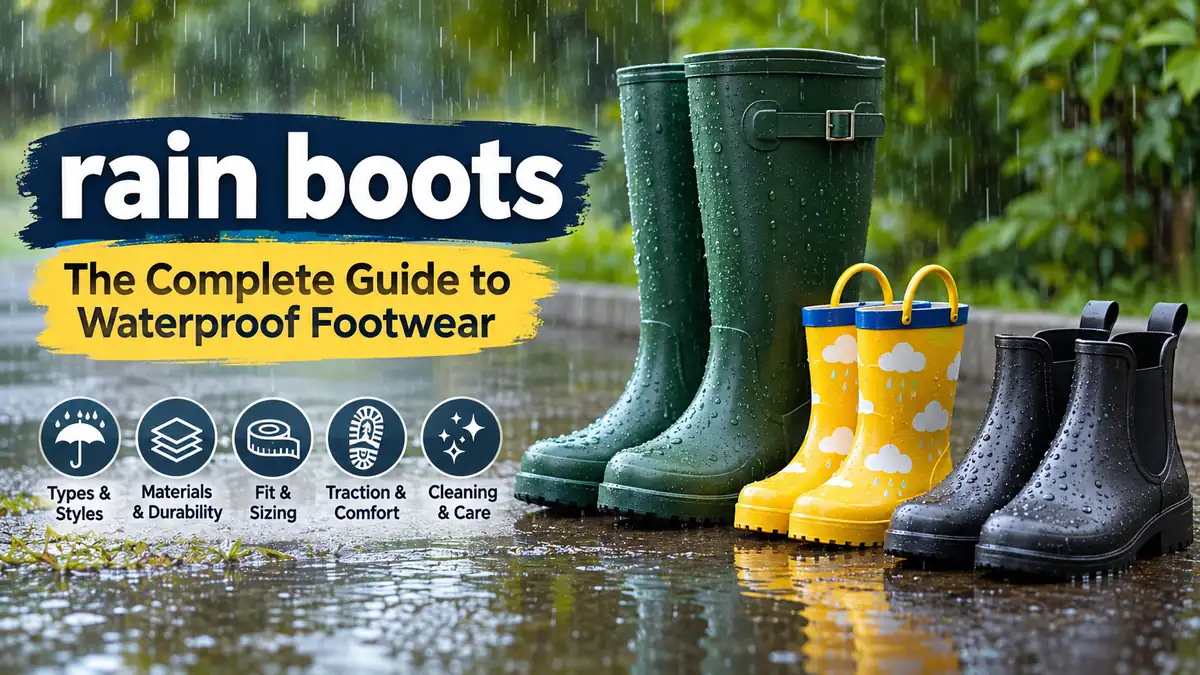
A rainy day can turn an ordinary walk into an uncomfortable experience when water seeps through your shoes. Wet socks, slippery sidewalks, muddy paths, and cold feet make even short outdoor activities unpleasant.
Rain boots offer a practical solution, but not every pair provides the same protection, comfort, or grip. Understanding how these boots work helps you choose appropriate footwear for different weather conditions and activities.
Rain boots are waterproof footwear designed to keep feet dry in rain, mud, puddles, and other wet environments. Typically made from natural rubber, synthetic rubber, or PVC, they feature water-resistant construction, protective uppers, and textured outsoles. Different styles provide varying levels of coverage, insulation, flexibility, and traction.
What Are Rain Boots and How Do They Work?
Rain boots are protective footwear designed to prevent external water from reaching your feet. Unlike ordinary sneakers or leather shoes, traditional rain boots use waterproof materials that resist water penetration.
They are also commonly called:
- Wellington boots or wellies, particularly in the United Kingdom.
- Rubber boots, referring to their traditional construction.
- Gumboots, a common term in Australia, New Zealand, and other regions.
- Waterproof boots, a broader category that also includes hiking and work footwear.
How Rain Boots Keep Your Feet Dry
Their waterproof performance depends on three main design features.
Waterproof upper: Rubber or PVC creates a physical barrier against rainwater and mud.
Sealed construction: Molded shells, bonded components, or properly sealed seams prevent water from entering through the sides.
Protective shaft: The boot extends above the ankle, helping prevent splashes and shallow puddle water from reaching the foot.
However, waterproof boots are not automatically breathable. Sweat can accumulate inside because rubber and PVC limit moisture vapor escape.
That distinction matters during long walks, warm weather, and physically demanding activities.
Are Rain Boots Completely Waterproof?
Most traditional rubber rain boots are waterproof when their shells and seams are intact.
Nevertheless, water can still enter through the opening at the top, damaged seams, worn material, or cracks.
A waterproof boot also does not guarantee that your feet will remain dry from perspiration.
For reliable protection, consider the boot’s construction, shaft height, condition, and intended water exposure.
Different Types of Rain Boots
Rain boots come in several styles, each designed for particular activities and conditions.
Common rain boot styles and their uses
| Type | Main characteristics | Suitable use |
|---|---|---|
| Tall rain boots | Knee-high coverage | Deep puddles, mud, gardening |
| Mid-calf boots | Moderate shaft height | Outdoor chores, everyday rain |
| Ankle rain boots | Short, lightweight design | Urban walking, commuting |
| Chelsea rain boots | Elastic-sided ankle style | Casual wear, light rain |
| Insulated rain boots | Thermal lining or insulating layers | Cold, wet conditions |
| Work rain boots | Heavy-duty soles and protective features | Farming, industrial work |
| Children’s rain boots | Easy-on designs, flexible uppers | Puddles, playgrounds |
Tall Rain Boots
HUNTER | Original Tall Wellies | Wellingtons | SportsDirect.com
Women’s Original Gloss Chelsea Boots – Black | Hunter Boots
Dunlop Boots Blizzard black ab 39,95 € | Preisvergleich bei idealo.de
7
Tall rain boots extend toward the knee, offering greater protection against splashes, wet grass, and muddy ground.
They are particularly useful for gardening, walking through fields, agricultural work, and outdoor events.
Their main drawback is that they can feel heavier and less ventilated than shorter styles.
Ankle and Chelsea Rain Boots
Ankle-height rain boots are practical for everyday urban use.
They are easier to put on, typically less bulky, and more convenient for walking between home, public transport, and indoor spaces.
Chelsea-style waterproof boots feature elastic side panels and pull tabs. The elastic area and its construction determine how well these boots resist water.
Because the opening is lower, ankle boots provide less protection in deep puddles.
Insulated Rain Boots
Standard rubber boots block external water but provide limited thermal insulation.
Insulated designs incorporate materials such as neoprene, fleece, foam, or other thermal linings to reduce heat loss.
They can be useful in cold rain, slush, and winter conditions, although their warmth varies considerably.
A boot described as waterproof should not automatically be considered suitable for snow or freezing temperatures.
What Materials Are Rain Boots Made From?
The material affects durability, flexibility, weight, comfort, and performance in different temperatures.
Natural Rubber
Natural rubber is a traditional material for Wellington boots.
It provides a flexible waterproof barrier and can accommodate repeated movement when the compound and construction are appropriate.
Advantages include:
- Flexible construction
- Good water resistance
- Comfortable movement when properly fitted
- Availability in tall and short designs
Disadvantages include potential cracking with age, sensitivity to prolonged heat and sunlight, and occasional surface discoloration.
Natural rubber also contains latex proteins, which can matter for people with latex allergies.
PVC Rain Boots
Polyvinyl chloride, commonly called PVC, is a synthetic plastic used in many molded waterproof boots.
PVC boots are often relatively affordable and easy to clean.
However, some PVC formulations become stiff in cold weather and may feel less flexible than natural rubber.
Their durability depends on material formulation, thickness, and manufacturing quality.
Neoprene and Synthetic Rubber
Neoprene is a synthetic rubber often used in flexible boot shafts or insulating linings.
It is frequently combined with waterproof rubber foot sections to create boots suited to outdoor work and colder conditions.
Neoprene can improve flexibility and thermal comfort, but insulation thickness, fit, and construction affect the actual warmth.
Material Comparison
| Material | Flexibility | Insulation | Main consideration |
|---|---|---|---|
| Natural rubber | Generally good | Limited alone | Requires appropriate care |
| PVC | Varies; may stiffen in cold | Limited alone | Often economical |
| Neoprene | Generally flexible | Can provide insulation | May retain heat in warm weather |
| Synthetic rubber | Depends on compound | Varies | Performance differs by formulation |
No single material is universally superior. The best construction depends on the climate, activity, and expected frequency of use.
How to Choose Rain Boots That Fit Properly
Proper sizing is one of the most important factors affecting rain boot comfort.
A waterproof boot that is too tight can create pressure points, while an oversized boot may cause excessive heel movement and blisters.
How Should Rain Boots Fit?
Rain boots should feel secure around the foot without squeezing the toes.
Your toes need enough space to move naturally, particularly when wearing thicker socks.
The heel may move slightly in some pull-on styles, but excessive slipping indicates a poor fit.
A suitable fit generally includes:
- Enough toe room for natural movement
- A secure heel without uncomfortable pressure
- Adequate width across the forefoot
- Sufficient calf clearance
- Room for intended socks
Should You Size Up in Rain Boots?
Not automatically.
Many rain boot styles are available only in whole sizes, which makes sizing more complicated for people who normally wear half sizes.
The appropriate choice depends on the manufacturer’s size chart, the shape of your feet, and the socks you plan to wear.
Hunter, for example, recommends checking individual product sizing guidance and considering a larger size when between sizes and using thick boot socks. Hunter Boots
Choosing a boot that is unnecessarily large can create instability and friction.
Why Calf Circumference Matters
Tall boots must fit both the foot and the lower leg.
Measure the widest part of your calf and compare it with the manufacturer’s boot circumference measurements.
Remember that the listed calf measurement may vary by boot size.
People with wider calves may find adjustable gussets, buckles, or wide-calf designs more comfortable.
How to Measure Your Feet
- Place a sheet of paper on a flat surface against a wall.
- Stand with your heel against the wall.
- Mark the position of your longest toe.
- Measure from the wall edge to the mark.
- Repeat for the other foot.
- Compare the larger measurement with the manufacturer’s sizing chart.
Measure while wearing the type of socks you expect to use with the boots.
Are Rain Boots Comfortable for Walking?
Rain boots can be comfortable for short walks and everyday activities, but comfort varies significantly by design.
Traditional molded rubber boots may provide less cushioning, arch support, and flexibility than purpose-built walking shoes.
Features That Improve Comfort
Cushioned insoles: Help reduce pressure under the feet during walking.
Arch support: May improve comfort for people who benefit from additional foot support.
Flexible soles: Allow more natural movement through the walking cycle.
Appropriate boot weight: Reduces the effort required to lift each foot repeatedly.
Moisture-managing linings: Help reduce the uncomfortable feeling of perspiration accumulating inside.
Removable footbeds: Make drying and cleaning easier and may allow suitable replacement insoles.
Can You Wear Rain Boots All Day?
Yes, some people can wear properly fitted rain boots for extended periods, especially when the boots are designed for their activity.
However, prolonged wear may cause sweaty feet, friction, fatigue, or discomfort.
For longer periods, use appropriate socks, take breaks when practical, and allow boots to dry between uses.
If you regularly walk long distances, waterproof walking footwear with supportive soles may be more comfortable than traditional rain boots.
What Socks Work Best With Rain Boots?
Socks influence warmth, moisture control, and friction.
Merino wool blends and moisture-wicking synthetic socks are often useful because they help manage perspiration.
Thicker socks may improve warmth but should not make the boots excessively tight.
Cotton socks can retain moisture and feel uncomfortable after prolonged wear.
Rain Boots for Different Weather Conditions
The best rain boot design changes with the weather and environment.
Rain Boots for Heavy Rain
For frequent heavy rain, prioritize a waterproof upper, reliable seams, appropriate shaft height, and an outsole designed for wet conditions.
Tall boots are useful when splashing and puddles are unavoidable.
Shorter boots may be sufficient when walking on paved surfaces with limited standing water.
Rain Boots for Snow
Rain boots can keep snowmelt away from the feet, but ordinary uninsulated rubber boots may feel cold in winter.
For snowy conditions, consider insulated footwear, adequate tread, and a shaft height that helps prevent snow entering from above.
On ice, ordinary rubber outsoles may provide inadequate traction.
Footwear specifically designed and tested for icy surfaces is more appropriate when slipping is a major concern.
Rain Boots for Summer
In warm weather, lightweight, uninsulated designs may feel more comfortable.
Shorter shafts can improve ventilation around the lower leg, although waterproof materials still restrict airflow through the boot itself.
Moisture-wicking socks and regular drying are especially helpful in humid conditions.
Rain Boots for Gardening and Mud
Gardening often involves wet soil, uneven ground, and repeated bending.
Look for flexible shafts, easy-to-clean surfaces, and deeply patterned outsoles.
Boots with pronounced tread can help with muddy conditions, although mud may accumulate between the lugs and reduce grip.
For agricultural or industrial hazards, use footwear with the specific protective certification required for the task.
How to Choose Rain Boots With Good Traction
Waterproofing protects against moisture, while traction helps reduce the likelihood of slipping.
These are separate performance characteristics, and a boot that excels at one may not perform equally well at the other.
Understanding Outsole Tread Patterns
Rain boot outsoles commonly feature raised patterns, grooves, or lugs.
Deep lugs can help provide grip in loose soil and mud, while shallower patterns may be more appropriate for paved surfaces.
The rubber compound also affects friction, especially on smooth, wet flooring.
Look for:
- Defined tread patterns suitable for the intended terrain.
- Flexible outsole materials that maintain contact with the ground.
- Grooves that help channel water or release mud.
- Reliable slip-resistance testing information where available.
No outsole guarantees slip prevention on every surface.
Are Rain Boots Slip-Resistant?
Not necessarily.
The term waterproof describes resistance to water penetration, not slip performance.
For occupational footwear, ASTM F3445 addresses slip-resistance performance, while ASTM F2413 covers several protective footwear properties, including impact and compression protection. Intertek+1
If footwear is intended for a workplace, confirm that its protective ratings match the hazards identified for that environment.
How to Clean and Maintain Rain Boots
Regular maintenance helps preserve waterproof materials, reduce odors, and prevent premature deterioration.
Cleaning is especially useful after exposure to mud, road salt, or other contaminants.
Step-by-Step Cleaning Instructions
- Remove loose mud and debris using a soft brush or damp cloth.
- Rinse the exterior with cool or lukewarm water, following the manufacturer’s instructions.
- Clean stubborn dirt using mild soap and a soft sponge.
- Wipe away soap residue with clean water.
- Remove detachable insoles and allow them to dry separately.
- Air-dry the boots in a shaded, ventilated area.
- Store them upright once completely dry.
Avoid placing rubber boots directly beside radiators, heaters, or other strong heat sources.
Hunter’s published care guidance similarly recommends gentle cleaning, natural drying, and storage away from direct sunlight. Hunter Malaysia
How to Remove Odors From Rain Boots
Odors usually develop when perspiration and moisture remain trapped inside footwear.
To reduce unwanted smells, remove damp socks promptly, allow the lining to dry completely, and clean removable insoles according to their care instructions.
A footwear deodorizer compatible with the lining may also help.
Avoid pouring harsh cleaning chemicals into the boots, as they may damage internal materials or adhesives.
Why Do Rubber Rain Boots Turn White?
Natural rubber sometimes develops a white, powdery surface film known as rubber bloom.
This occurs when certain ingredients within the rubber migrate toward the surface.
Blooming is generally cosmetic and does not necessarily indicate a manufacturing defect or loss of waterproof performance.
Hunter identifies blooming as a normal characteristic of natural rubber and recommends suitable rubber-care products for restoring the appearance. Hunter Boots
How to Prevent Rain Boots From Cracking
Rubber can deteriorate with prolonged exposure to heat, ultraviolet light, harsh chemicals, and repeated stress.
To help preserve it:
- Store boots away from direct sunlight.
- Avoid folding tall shafts for extended periods.
- Clean away dirt and chemical residues.
- Use only compatible rubber-care products.
- Keep boots dry and upright between uses.
Inspect areas that bend repeatedly, particularly near the toes and ankles, because cracking can compromise waterproof protection.
Rain Boots for Women, Men, and Children
Although rain boots are often marketed by gender or age, the most meaningful differences are usually fit, proportions, and intended use.
Women’s Rain Boots
Women’s designs commonly include narrower heel shapes, varied calf circumferences, and a broad selection of shaft heights.
Some styles prioritize everyday appearance, while others focus on outdoor functionality.
Foot width and calf measurements are more useful than style labels alone.
Men’s Rain Boots
Men’s rain boots often include wider size ranges and designs intended for outdoor work, commuting, or recreation.
However, construction quality and comfort should be assessed individually rather than assumed from the product category.
Kids’ Rain Boots
Children’s rain boots should be easy to put on and remove while providing secure footing.
Important considerations include flexible soles, appropriate weight, adequate toe space, and a shaft height suitable for the child’s activities.
Bright colors and reflective details can improve visibility in some environments, although they do not replace appropriate supervision.
How Much Growing Room Should Children’s Boots Have?
Children need some additional toe room, but excessively oversized boots can make walking awkward.
Use the manufacturer’s sizing guidance and check that the heel does not slip excessively.
Children’s feet grow quickly, so fit should be reassessed regularly rather than relying on the original size.
Common Rain Boot Problems and How to Fix Them
Even well-made rain boots can develop problems through regular use.
Understanding the cause helps distinguish maintenance issues from damage requiring replacement.
| Problem | Possible cause | Practical solution |
|---|---|---|
| Wet socks | Cracks, leaks, or water entering from above | Inspect shell and seams |
| Heel slipping | Oversized or poorly shaped boot | Reassess sizing and fit |
| Sweaty feet | Limited breathability | Use moisture-wicking socks |
| Unpleasant odor | Trapped moisture | Clean and dry the interior |
| White surface marks | Natural rubber blooming | Use appropriate rubber care |
| Slippery soles | Worn tread or unsuitable compound | Assess traction and replace if necessary |
| Calf discomfort | Shaft too narrow | Consider adjustable or wide-calf styles |
| Cracking rubber | Aging, heat, or material deterioration | Replace boots with structural damage |
Can Leaking Rain Boots Be Repaired?
Small punctures or localized damage may sometimes be repairable using a flexible adhesive or patch specifically compatible with the boot material.
Clean and dry the affected area before following the repair product’s instructions.
However, repairs are not always reliable.
Extensive cracking, damaged seams, or deterioration around major flex points can make replacement the safer option.
For protective workplace footwear, do not assume a home repair preserves its original safety certification.
How Long Do Rain Boots Last?
There is no universal lifespan.
Durability depends on material quality, frequency of use, storage conditions, exposure to chemicals, and the amount of bending and abrasion.
A pair used occasionally for short rainy-day walks may last substantially longer than boots worn daily for demanding agricultural work.
Inspect boots regularly rather than relying on age alone.
Rain Boots vs. Waterproof Hiking Boots
Rain boots and waterproof hiking boots serve overlapping but different purposes.
Rain boots generally emphasize water protection and ease of cleaning. Waterproof hiking boots typically prioritize walking support, stability, and traction on varied terrain.
| Feature | Rain boots | Waterproof hiking boots |
|---|---|---|
| Waterproof protection | Usually waterproof shell | Depends on membrane and construction |
| Breathability | Usually limited | Often better, but varies |
| Ankle support | Varies; often minimal | Often more structured |
| Mud cleaning | Usually easy | Can require more effort |
| Long-distance comfort | Design-dependent | Generally optimized for walking |
| Deep puddle protection | Better with tall shafts | Limited by boot opening |
| Typical use | Rain, mud, gardening | Trails, hiking, uneven terrain |
Which Is Better for Walking in the Rain?
For short walks through puddles, rain boots can be convenient and effective.
For longer distances, uneven trails, or activities requiring greater foot support, waterproof hiking boots may be more appropriate.
The decision should reflect the terrain and activity rather than waterproofing alone.
Environmental Considerations and Responsible Rain Boot Use
Rain boots use materials with different environmental impacts.
Natural rubber comes from rubber-producing trees, while PVC and many synthetic rubber compounds are derived from industrial chemical processes.
Manufacturing, additives, transportation, product longevity, and disposal all contribute to environmental impact.
Are Rain Boots Recyclable?
Some rain boot materials can be recycled through specialized programs, but recycling options vary considerably.
Multi-material construction, attached linings, and mixed compounds can complicate processing.
Most rain boots should not automatically be placed in household recycling bins.
Check whether a manufacturer or local recycling service accepts the specific material.
How to Reduce Waste
One practical approach is to maintain boots properly and use them for their intended purpose.
Keeping footwear clean, storing it correctly, and avoiding unnecessary exposure to damaging conditions can extend its useful life.
When boots are no longer wearable, investigate local footwear recycling or material recovery programs.
Final Thoughts on rain boots
Rain boots provide reliable protection against rain, puddles, and muddy conditions when their materials, construction, and fit are appropriate.
The most useful features depend on how the boots will be worn. Tall rubber boots offer greater splash protection, ankle styles are convenient for everyday activities, and insulated designs can improve comfort in cold weather.
Pay particular attention to sizing, calf circumference, outsole traction, and interior comfort. Waterproofing alone does not guarantee warmth, breathability, or slip resistance.
With regular cleaning, natural drying, and proper storage, a suitable pair of rain boots can remain a practical part of your wet-weather footwear for years.