
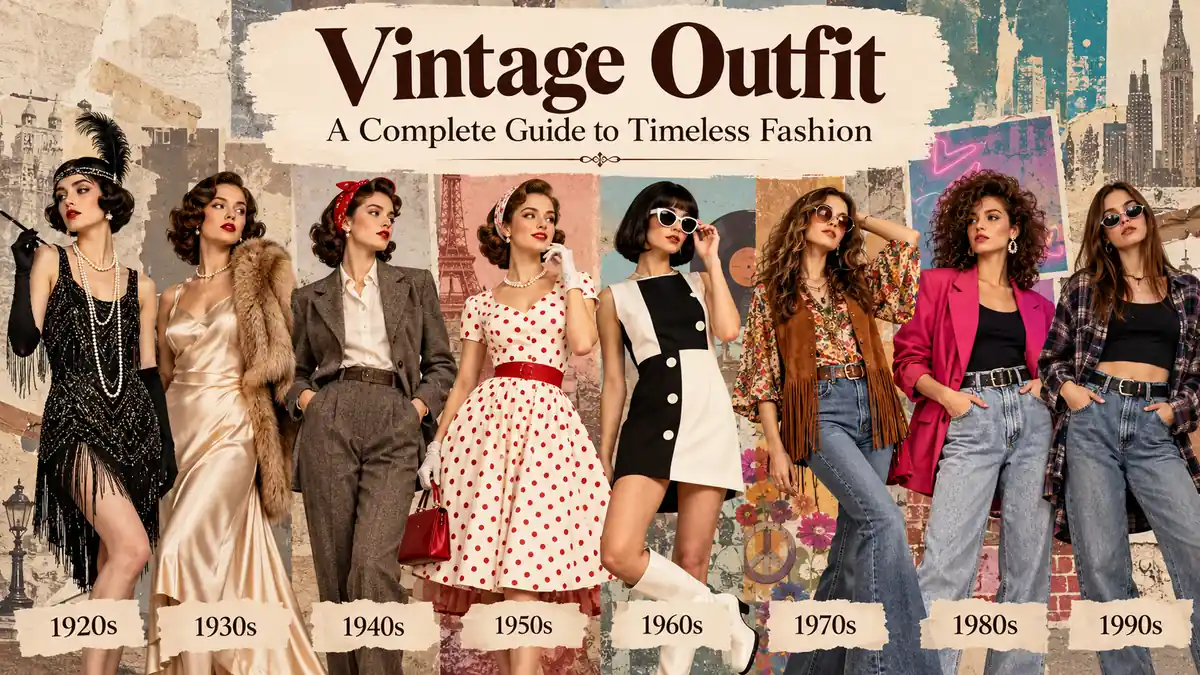
A great vintage outfit does more than bring back an old fashion trend. It combines distinctive silhouettes, memorable details, and personal style to create something that feels relevant today.
From the elegant dresses of the 1950s to the relaxed denim of the 1990s, vintage fashion offers countless ways to express individuality without following every passing trend.
A vintage outfit is a coordinated look featuring clothing or accessories from a previous fashion era, typically at least 20 years old. It can also describe a modern ensemble inspired by historical styles. Popular examples include 1950s swing dresses, 1970s flared jeans, 1980s oversized blazers, and 1990s minimalist clothing.
Understanding how different decades influenced fashion makes it easier to identify authentic pieces, combine old and new clothing, and develop a wardrobe that reflects your personality.
What Is a vintage outfit?
A vintage outfit usually features garments, footwear, and accessories associated with a particular period in fashion history.
True vintage clothing generally refers to original garments that are at least 20 years old. However, the definition varies among collectors, fashion historians, and secondhand clothing retailers.
Three related terms are often confused:
| Fashion term | Meaning | Example |
|---|---|---|
| Vintage | Original clothing from an earlier era | An authentic 1970s suede jacket |
| Retro | Newly produced clothing inspired by older styles | Modern bell-bottom trousers |
| Antique | Historical clothing generally 100+ years old | An original Edwardian blouse |
| Vintage-inspired | Contemporary styling that references past fashion | A modern dress paired with a 1950s-style cardigan |
A complete vintage look does not necessarily require every item to come from the same decade.
For example, a 1990s denim jacket can complement contemporary straight-leg trousers, while a vintage silk scarf can add character to a simple modern outfit.
The distinction matters because clothing can look historically inspired without being genuinely old.
How Vintage Fashion Changed Through the Decades
Each fashion decade developed recognizable silhouettes, materials, colors, and cultural influences.
Learning these differences helps you identify clothing more accurately and create outfits that feel intentional.
1920s: Flapper Dresses and Art Deco Elegance


13
The 1920s introduced a dramatic shift toward looser, straighter silhouettes, particularly in fashionable women’s clothing.
Popular features included dropped waists, decorative beadwork, fringe, cloche hats, and Mary Jane shoes.
A 1920s-inspired look might include a straight-cut dress, a long necklace, low-heeled shoes, and a small structured handbag.
Not every 1920s dress was short or heavily fringed. Everyday clothing was generally more restrained than the glamorous flapper costumes commonly associated with the decade.
1930s and 1940s: Tailoring and Practical Elegance


12
During the 1930s, bias-cut dresses became an important element of fashionable eveningwear. Designers such as Madeleine Vionnet helped popularize fluid garments that followed the body’s natural lines.
The 1940s brought more structured silhouettes, influenced partly by wartime fabric restrictions and practical clothing needs.
Recognizable elements included padded shoulders, tailored jackets, knee-length skirts, shirt dresses, and sensible footwear.
For a wearable 1940s-inspired outfit, combine high-waisted trousers with a tucked-in blouse, a fitted cardigan, and leather loafers.
1950s: Full Skirts and Classic Silhouettes


12
The 1950s are strongly associated with defined waists, full skirts, fitted bodices, and polished accessories.
Christian Dior’s 1947 New Look influenced the feminine silhouettes that remained prominent throughout much of the following decade.
Common pieces included:
- Swing dresses and circle skirts
- Pencil skirts and fitted cardigans
- Cat-eye sunglasses
- Pearl necklaces
- Ballet flats and low-heeled pumps
A fitted blouse tucked into a high-waisted circle skirt creates a recognizable 1950s-inspired look.
For a more understated version, try cropped trousers, a simple knit top, and ballet flats.
1960s: Mod Fashion and Youth Culture


15
The 1960s introduced bold experimentation with clothing proportions, colors, and patterns.
British designer Mary Quant became closely associated with youth-oriented fashion and the popularization of miniskirts, although the garment’s origins involved several designers and cultural movements.
Typical 1960s clothing included A-line minidresses, geometric prints, turtlenecks, tailored coats, and knee-high boots.
To recreate the style, pair a solid-colored shift dress with ankle boots and simple geometric accessories.
1970s: Bohemian Style, Denim, and Disco


16
The 1970s embraced several distinct aesthetics, including hippie fashion, bohemian clothing, disco glamour, and increasingly casual denim.
Common pieces included flared jeans, peasant blouses, crochet tops, suede jackets, platform shoes, and maxi dresses.
Earth tones such as rust, mustard, olive, and brown were especially recognizable, although bright colors and metallic fabrics also appeared.
A practical 1970s-inspired combination is high-waisted flared jeans, a tucked-in blouse, and ankle boots.
1980s: Power Dressing and Bold Statements


14
The 1980s became known for exaggerated proportions, prominent shoulders, athletic influences, and expressive color combinations.
Power dressing reflected changing workplace fashion, while music and youth culture popularized denim, leather jackets, oversized sweatshirts, and statement accessories.
A contemporary interpretation could combine a structured oversized blazer with straight-leg jeans, a simple shirt, and loafers.
The key is controlling proportions rather than wearing every bold trend simultaneously.
1990s and Early 2000s: Minimalism, Grunge, and Y2K


10
The 1990s offered contrasting styles, from minimalist slip dresses and neutral tailoring to grunge-inspired flannel shirts and distressed denim.
Common elements included straight-leg jeans, baby tees, slip dresses, chunky boots, and small shoulder bags.
The early 2000s introduced recognizable Y2K features such as low-rise jeans, metallic accessories, cargo trousers, and fitted graphic tops.
As of 2026, original clothing from the early 2000s can qualify as vintage under the commonly used 20-year guideline.
However, historical authenticity depends on the garment’s actual production date, not simply its appearance.
How to Style a vintage outfit for Everyday Wear
One of the easiest ways to incorporate vintage fashion into a modern wardrobe is to start with a single statement piece.
Rather than recreating an entire historical ensemble, use older clothing to introduce texture, structure, or an interesting silhouette.
1. Choose One Vintage Statement Piece
Begin with a garment that defines the look.
This could be a leather jacket, a patterned blouse, a pleated skirt, or high-waisted trousers.
For example, an oversized 1980s blazer works well with a contemporary white T-shirt and straight-leg jeans.
Keeping the remaining pieces simple allows the vintage garment to stand out without overwhelming the outfit.
2. Balance Vintage and Modern Clothing
Combining clothing from different periods creates a more wearable look.
Try these combinations:
| Vintage piece | Modern pairing | Overall style |
|---|---|---|
| 1950s cardigan | Straight-leg jeans | Classic casual |
| 1960s shift dress | Minimalist ankle boots | Mod-inspired |
| 1970s suede jacket | Plain T-shirt and trousers | Relaxed retro |
| 1980s oversized blazer | Fitted top and tailored pants | Smart casual |
| 1990s slip dress | Contemporary knitwear | Minimalist |
| Vintage denim jacket | Wide-leg trousers | Everyday casual |
Fashion editors continue to highlight this approach, particularly when adapting distinctive vintage pieces for everyday wardrobes.
Vogue
+1
3. Pay Attention to Proportions
Vintage garments often have different proportions from contemporary clothing.
A voluminous skirt generally looks balanced with a fitted top, while wide-leg trousers can work well with a tucked-in shirt.
If you are wearing an oversized blazer, consider pairing it with a narrower or more structured lower half.
These are styling guidelines rather than strict rules. Experimenting with contrasting shapes can produce equally interesting results.
4. Coordinate Colors and Patterns
Vintage fashion is often associated with bold prints, but not every historical look needs bright colors.
Neutral combinations such as cream and brown, navy and white, or black and beige can create a refined appearance.
For patterned garments, choose one or two colors from the print and repeat them through your accessories.
This makes even an elaborate floral dress or geometric blouse feel coordinated.
vintage outfit Ideas for Different Occasions
The most useful vintage outfits combine historical character with the comfort and practicality required by the occasion.

Casual Everyday Outfit
Pair straight-leg vintage jeans with a striped T-shirt, leather belt, and comfortable sneakers. Add a denim jacket for a relaxed 1990s influence.
Style inspiration: 1980s–1990s

Office or Smart-Casual Outfit
Combine a structured vintage blazer with high-waisted trousers, a neutral blouse, and polished loafers. Keep jewelry understated.
Style inspiration: 1940s and 1980s tailoring

Dinner or Special Event Outfit
Choose a fitted midi dress with a defined waist, delicate jewelry, and classic heels. A structured handbag completes the look.
Style inspiration: 1950s elegance

Summer Vintage Outfit
A floral maxi dress, leather sandals, woven handbag, and oversized sunglasses create a lightweight bohemian look.
Style inspiration: 1970s boho fashion

Winter Vintage Outfit
Layer a wool coat over a turtleneck and tailored trousers. Finish with leather boots and a plaid scarf for warmth and texture.
Style inspiration: Mid-century classic fashion
Essential Clothing and Accessories for a Vintage Wardrobe
Building a vintage wardrobe does not require collecting dozens of garments.
A few versatile pieces can provide the foundation for numerous outfits.
Vintage Dresses and Skirts
A-line dresses, shirt dresses, slip dresses, pencil skirts, and pleated skirts are particularly adaptable.
A 1950s-inspired midi skirt can work with a modern knit top, while a 1990s slip dress can be layered over a T-shirt or under a cardigan.
Consider fabric weight and movement when choosing a garment. Some older dresses were designed for specific undergarments, which can affect how they fit.
Denim and Trousers
High-waisted jeans, flared trousers, corduroy pants, and pleated wool trousers are useful vintage wardrobe staples.
Classic Levi’s 501 jeans are a recognizable example of denim with a long design history.
However, not every pair of Levi’s 501 jeans is vintage. The production period determines whether an individual garment qualifies.
Jackets and Outerwear
Leather jackets, trench coats, denim jackets, wool coats, and tailored blazers are among the easiest vintage garments to incorporate into contemporary clothing.
A traditional trench coat can work across multiple seasons, while a cropped leather jacket creates a stronger retro silhouette.
Pay special attention to shoulder fit, lining condition, and sleeve length when evaluating older outerwear.
Shoes and Accessories
Accessories can communicate a historical style without requiring an entire period-specific wardrobe.
Common options include silk scarves, brooches, pearl necklaces, cat-eye sunglasses, structured handbags, leather belts, and vintage watches.
Footwear such as Mary Janes, loafers, ballet flats, platform shoes, and ankle boots can reinforce different decades.
For example, a silk scarf and loafers can make a simple outfit feel more classic, while platform boots create a stronger 1970s influence.
How to Identify Authentic Vintage Clothing
An older-looking garment is not necessarily vintage.
Modern manufacturers frequently reproduce historical silhouettes, patterns, and decorative details.
Authenticating clothing requires examining several characteristics together.
Examine Clothing Labels
Brand labels, care tags, country-of-origin information, and union labels can provide clues about production dates.
Labels may change over time as companies update logos, manufacturing locations, and textile regulations.
Older garments sometimes have woven labels, distinctive typography, or care instructions that differ from modern clothing.
However, labels alone are not definitive proof of age.
Study Fabric and Construction
Construction details can reveal how a garment was made.
Look for hand-finished hems, metal zippers, distinctive seam finishes, lining materials, and fabric composition.
Certain techniques were more common during particular periods, although manufacturers often continued using them for decades.
Fashion historians also use garment construction and labeling details when dating older clothing.
Vogue
+1
Check Measurements Instead of Tag Sizes
Vintage sizing can differ considerably from contemporary sizing.
A dress labeled size 12 several decades ago may fit very differently from a modern size 12.
Measure the garment’s bust, waist, hips, shoulders, inseam, and overall length, depending on its design.
Compare these measurements with clothing that already fits comfortably.
Look for Signs of Age and Wear
Authentic older clothing may show fading, minor repairs, softened fabric, or natural wear around seams.
However, these characteristics are not reliable proof by themselves. Modern clothing can be deliberately distressed.
Check for fabric weakness, damaged fastenings, discoloration, and alterations before deciding whether a piece is wearable.
Common Mistakes When Styling Vintage Fashion
Vintage fashion is flexible, but a few common mistakes can make outfits less comfortable or practical.
Wearing too many statement pieces: Combining a dramatic printed jacket, heavily patterned trousers, oversized jewelry, and bold accessories can create visual competition. Start with one dominant element and build around it.
Ignoring fit: A beautiful vintage garment may still require alterations. Poorly fitting shoulders, restrictive armholes, or an uncomfortable waistband can limit how often it gets worn.
Confusing costume styling with everyday fashion: Recreating a complete historical outfit is appropriate for themed events or historical interpretation. Everyday vintage styling usually benefits from combining period details with contemporary pieces.
Overlooking fabric condition: Some older fabrics become fragile with age. Silk, rayon, elastic, and certain synthetic materials may require special attention.
Assuming vintage always means sustainable: Reusing existing garments can extend their useful life and reduce demand for new production. However, environmental benefits depend on factors such as transportation, cleaning, repair, and purchasing habits.
How to Care for Vintage Clothes
Older garments often require more careful handling than modern everyday clothing.
Before washing any vintage item, identify its fiber content and inspect its construction.
A garment with delicate embroidery, unstable dye, or weakened seams may not tolerate ordinary machine washing.
For practical care:
- Read existing care labels, but consider the garment’s current condition.
- Test colorfastness before attempting wet cleaning when appropriate.
- Avoid excessive heat, harsh detergents, and aggressive agitation.
- Store delicate knitwear folded rather than hanging.
- Use padded hangers for suitable structured garments.
- Keep clothing away from prolonged direct sunlight and moisture.
- Consult a textile conservator for historically significant or extremely fragile pieces.
Leather and suede need different care from cotton or linen. Beaded dresses and delicate silk garments may also require specialist cleaning.
Proper storage and careful handling can extend the life of older clothing and preserve details that are difficult to replace.
Vintage Fashion Trends in 2026
Vintage-inspired styling remains relevant in 2026, particularly through 1990s minimalism, archival designer fashion, classic tailoring, and clothing that mixes different decades.
Recent fashion coverage has highlighted renewed interest in slip dresses, vintage denim, tailored jackets, and distinctive archival pieces.
British Vogue
+2
Rather than dressing entirely according to one historical period, many contemporary looks combine influences.
A 1970s jacket might appear alongside 1990s denim, while a mid-century brooch can complement a contemporary cardigan.
This approach makes vintage clothing more adaptable because individual pieces can remain useful even as current fashion preferences change.
For anyone developing a personal style, the most effective approach is to focus on silhouette, comfort, fabric quality, and versatility rather than attempting to reproduce every passing revival.
Final Thoughts on Creating a vintage outfit
A thoughtfully styled vintage outfit combines the character of earlier fashion with the practicality of modern clothing.
Understanding the differences between decades, recognizing authentic garments, and learning how to balance proportions makes vintage dressing easier and more enjoyable.
You do not need a wardrobe full of rare designer clothing to develop a recognizable vintage style. A well-fitting blazer, an interesting scarf, a classic denim jacket, or a carefully chosen dress can make a meaningful difference.
Start with one piece that reflects a decade you enjoy, pair it with clothing you already own, and gradually develop combinations that feel natural to wear.