
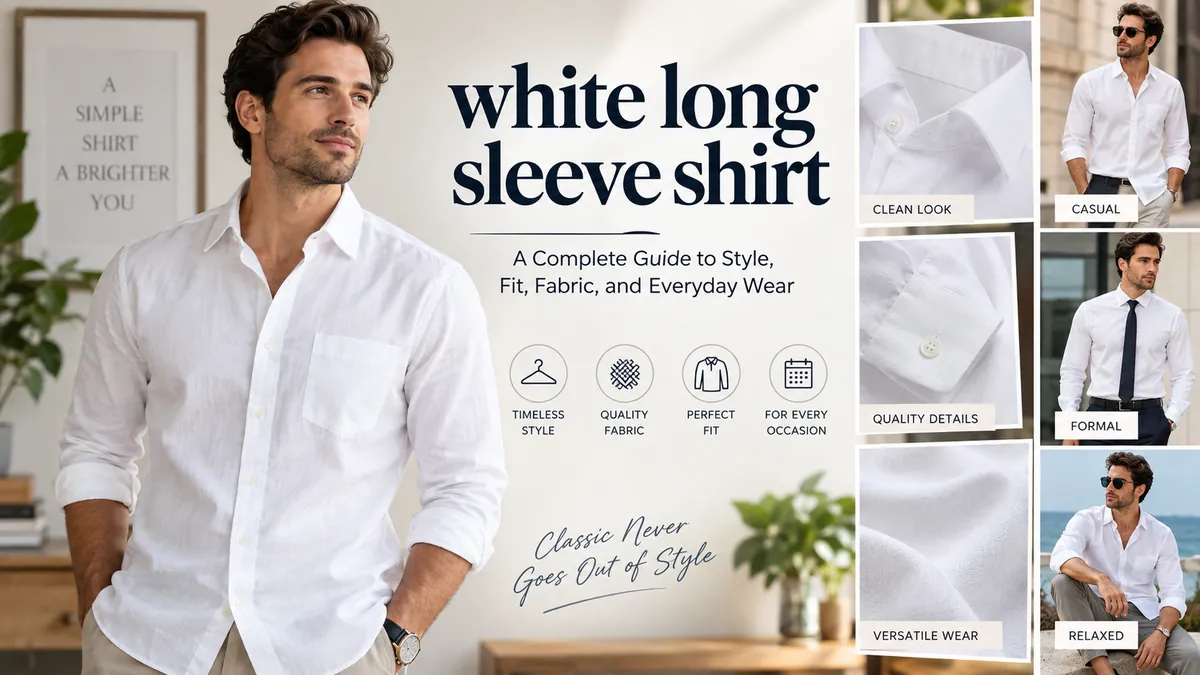
A white long sleeve shirt looks simple, but small differences in fabric, fit, collar, weight, and styling can completely change how it works. One version can sit neatly beneath a suit; another can be worn open over a T-shirt; a soft jersey style can become an everyday layering piece.
That versatility explains why the white long sleeve remains relevant across seasons. Recent fashion coverage has highlighted both classic button-down versions and simple white long-sleeve tees as useful layering staples, while contemporary styling ranges from tailored trousers to denim, skirts, sweaters, and jackets.
A white long sleeve shirt is a versatile wardrobe basic with sleeves extending to the wrist, typically made from cotton, poplin, Oxford cloth, linen, jersey, or blended fabric. It can be styled casually with denim, professionally with tailored trousers, formally beneath a suit, or used as a neutral layering piece throughout the year.
What Is a White Long Sleeve Shirt?
The term covers more clothing than it initially seems to.
In its traditional sense, a white long sleeve shirt is a woven, button-front garment with a collar, cuffs, and long sleeves. Think of the classic white dress shirt worn with tailoring or the slightly heavier Oxford button-down worn with chinos.
In everyday fashion, however, the phrase can also describe:
- White long-sleeve T-shirts
- Oxford shirts
- Poplin button-downs
- Linen shirts
- Oversized shirts
- Fitted blouses
- Collarless or grandad-collar shirts
- Ribbed long-sleeve tops
- Performance shirts
- Formal dress shirts
This distinction matters because the right garment depends heavily on what you want it to do.
A crisp poplin shirt makes sense beneath a blazer. A soft cotton jersey top is more comfortable as a base layer. Linen suits warm conditions, while Oxford cloth offers more texture and usually feels less formal.
Current style guides similarly emphasize that fabric and silhouette strongly influence whether a white shirt appears polished or relaxed.
White button-down vs white long-sleeve T-shirt
These two garments sometimes appear under the same search term, but they serve different purposes.
| Feature | White button-down shirt | White long-sleeve T-shirt |
|---|---|---|
| Structure | Crisp to moderately structured | Soft |
| Collar | Usually yes | Usually crew, V, boat, or similar neckline |
| Front closure | Buttons | Pullover |
| Typical fabric | Poplin, Oxford, twill, linen | Cotton jersey, rib knit, blends |
| Formality | Casual to formal | Primarily casual |
| Layering | Over or under other pieces | Usually underneath |
| Best uses | Work, events, smart casual | Everyday wear, layering, travel |
Neither is inherently more useful. They simply fill different wardrobe roles.
How to Choose the Right White Long Sleeve Shirt
A white shirt may look uncomplicated on a hanger, but five characteristics have an outsized effect on how it actually wears: fabric, weight, opacity, fit, and construction.
Start with the fabric
Fabric affects breathability, texture, drape, wrinkle resistance, opacity, and formality.
Cotton is the safest all-purpose option. It is breathable, familiar against the skin, and available in numerous weaves.
Poplin has a smooth, relatively crisp surface. A cotton poplin white shirt works particularly well for offices, suits, and polished outfits.
Oxford cloth has more visible texture and typically feels somewhat heavier. The Oxford button-down has strong associations with casual and smart-casual dressing.
Twill has a subtle diagonal weave. It can drape differently from poplin and often works well when you want a substantial dress shirt.
Linen is airy and relaxed. Its natural wrinkling is part of its character, making it particularly appropriate for casual warm-weather clothing.
Jersey is knitted rather than woven and is common in white long-sleeve tees. It stretches more naturally and generally feels softer.
Cotton blends may introduce elastane for stretch or synthetic fibers for easier care, shape retention, or wrinkle resistance. For example, some contemporary poplin shirts use a small percentage of elastane alongside cotton to create a closer fit with more movement.
Consider fabric weight
Not every cotton shirt behaves the same way.
Lightweight fabric can be comfortable in warm weather and easier to layer. The trade-off is that very light white material may reveal more underneath.
Mid-weight cotton is a useful compromise for year-round wear. It generally has enough substance to hold its shape while remaining comfortable under knitwear and jackets.
Heavier fabrics such as substantial Oxford cloth create more structure and can work especially well for relaxed standalone outfits.
Quick takeaway: Choose the fabric according to purpose rather than assuming every white cotton shirt will perform similarly.
How to Find a White Shirt That Is Not See-Through
Transparency is one of the most common practical problems with white clothing.
White fabric reflects a lot of visible light, but thin or loosely constructed material can still allow skin, underwear, or an undershirt to show through. Fabric thickness alone does not determine opacity; weave density and construction matter too.
When assessing a shirt, hold the fabric up to natural light. Then place your hand behind it. This simple test reveals far more than examining it folded on a shelf.
Look for:
- Dense fabric construction
- Medium rather than ultra-light weight
- Closely woven cotton
- Oxford or substantial poplin
- Double layers around pockets or plackets where appropriate
- Minimal contrast between your base layer and skin
What should you wear under a white shirt?
A white undershirt seems like the obvious answer, but it can sometimes create a visible outline.
For a cleaner result, an undershirt close to the wearer’s skin tone often attracts less attention beneath thin white fabric. Seamless options can also reduce visible edges.
With a casual overshirt, transparency matters less because another tee or tank is intentionally part of the outfit.
Getting the Fit Right
Fit changes the personality of a white long sleeve shirt almost as much as fabric does.
A slim shirt creates sharper lines. A regular fit provides more room and tends to be easier to wear across different settings. Relaxed and oversized shirts create volume and are particularly effective in casual outfits.
Contemporary styling covers this entire range, from fitted silhouettes to oversized, boxy long-sleeve tops.
Slim or tailored fit
A tailored white shirt works particularly well with:
- Suits
- Blazers
- Tailored trousers
- Pencil skirts
- Fitted knitwear
- Formal outfits
There should still be enough room to sit, reach forward, and move your arms without pulling sharply across the chest.
Regular fit
This is arguably the most adaptable silhouette.
It can be tucked into trousers for work, worn with jeans for dinner, or layered under a sweater. If you want one shirt to cover multiple situations, a clean regular fit is difficult to beat.
Relaxed and oversized fit
An oversized white shirt creates a deliberately looser silhouette.
It works particularly well with straight-leg or fitted bottoms, though wide-leg trousers can also work when proportions are carefully balanced.
An oversized shirt can be worn:
- Open over a tank or tee
- Half tucked into jeans
- Fully untucked
- Beneath a roomy coat
- With leggings or slim trousers
- Over shorts in warm weather
- Layered over a fitted dress
Oversized should still look intentional. A shirt that is simply several sizes too large may have awkward shoulder placement and excessive sleeve length.
How should the shoulders and sleeves fit?
For a traditional fitted shirt, the shoulder seam should sit close to the edge of the shoulder.
The cuff should generally reach around the wrist area when your arms are relaxed. Sleeves that are significantly too short become obvious when you bend your elbows.
With deliberately oversized clothing, dropped shoulders and longer sleeves are design features rather than fitting mistakes.
Collar and Cuff Styles Matter
A white long sleeve shirt can move from relaxed to highly formal based on its collar and cuffs.
Common collar styles include point collars, spread collars, button-down collars, cutaway collars, band collars, and grandad collars. Men’s shirting collections commonly offer several of these variations because each changes the overall level of formality.
A point or spread collar is a versatile choice for business clothing.
Button-down collars generally lean more casual and work particularly well with Oxford cloth, chinos, denim, and knitwear.
Band or grandad collars remove some of the visual formality associated with traditional shirting. They pair naturally with relaxed tailoring and casual trousers.
Cuffs matter as well. Simple button cuffs cover most everyday situations, while French or double cuffs are more closely associated with dressier tailoring and cufflinks.
How to Style a White Long Sleeve Shirt Casually
One reason this garment lasts through changing trends is that it does not require complicated styling.
White shirt with jeans
Denim is the easiest starting point.
A white shirt with blue jeans creates contrast without introducing competing colors. Dark indigo makes the combination slightly smarter, while faded denim pushes it toward casual territory.
Current style guides repeatedly use white shirts with straight, skinny, wide-leg, or tailored denim, showing how easily the formula adapts to different silhouettes.
Try changing only the tuck:
Full tuck: More defined and polished.
Half or front tuck: Relaxed while still defining the waist.
Untucked: Casual and especially effective with a shirt designed with an appropriate hem length.
Then adjust the footwear. Sneakers make the outfit relaxed, loafers sharpen it, and boots give it more visual weight.
White shirt with chinos
For something between denim and formal trousers, chinos are an easy partner.
Navy, olive, stone, tan, charcoal, and beige all work because white provides a neutral foundation.
Brown leather shoes or loafers create a traditional smart-casual combination. Minimal sneakers make the same shirt-and-chino pairing feel more contemporary.
Roll the sleeves
Rolling sleeves changes a button-down immediately.
For a clean result, undo the cuff, fold it back once, then make one or two reasonably even folds. Stop around the lower forearm or below the elbow rather than creating a bulky roll high on the arm.
This technique works particularly well with jeans, chinos, shorts, and casual skirts.
White Long Sleeve Shirt Outfits for Work
A white shirt has long been associated with office dressing because it works easily with dark tailoring and does not compete with other colors.
For a straightforward professional combination, pair crisp white cotton with navy, charcoal, grey, or black trousers. A blazer can add another layer of structure.
Traditional business outfit
Use:
- Crisp white poplin or twill shirt
- Navy or charcoal tailored trousers
- Structured blazer
- Leather belt where appropriate
- Loafers, Oxfords, pumps, or another streamlined dress shoe
Keep the collar neat and tuck the shirt fully.
Business-casual outfit
Remove some structure.
Try a white Oxford or softer cotton shirt with chinos, tailored ankle trousers, or dark jeans where workplace dress codes allow them.
Leaving the collar open makes the combination less formal. A cardigan, unstructured blazer, or fine-gauge knit can provide an additional layer.
White shirt with a suit
White remains one of the easiest shirt colors to coordinate with traditional suiting.
Navy, charcoal, grey, and black all pair naturally with it. Because the shirt itself is neutral, ties, pocket squares, jewelry, or other accessories can provide controlled color without creating visual conflict.
For a formal suit, choose a shirt with enough structure to sit cleanly beneath the jacket. Avoid a very oversized cut, because excess fabric can bunch around the waist and arms.
How Women Can Style a White Long Sleeve Shirt
The women’s white shirt can function as a blouse, structured button-down, lightweight jacket, base layer, or oversized top.
With tailored trousers
Tuck a crisp poplin shirt into high-waisted trousers for a defined silhouette.
Wide-leg trousers create a particularly strong contrast with a more fitted shirt. With oversized shirting, a partial tuck can prevent excessive volume.
With a skirt
A white shirt works with pencil, pleated, A-line, denim, satin, and midi skirts.
The fabric combination determines much of the mood. Crisp cotton with satin introduces textural contrast; a softer shirt with denim feels more relaxed.
Under a sleeveless dress
A fitted white long-sleeve top can extend the usefulness of sleeveless dresses into cooler conditions.
Contemporary guides specifically suggest layering white long sleeves beneath slip dresses, creating contrast between the base layer and smoother satin or silk-like outer fabric.
Oversized with fitted pieces
An oversized button-down works well over a fitted tank, camisole, or simple tee.
Wear it buttoned, partially buttoned, or completely open. The combination is useful because the shirt becomes a lightweight outer layer rather than simply a top.
How Men Can Style a White Long Sleeve Shirt
For men, the same white shirt can move through several levels of formality.
Casual
Pair a relaxed Oxford or cotton shirt with jeans and sneakers.
Leave one or two upper buttons open and consider rolling the sleeves. An untucked hem can work if the shirt is cut to be worn that way.
Smart casual
Combine the shirt with navy, beige, olive, or charcoal chinos.
Add loafers, minimalist leather sneakers, or suede shoes. A lightweight blazer can sharpen the look without turning it into formal business attire.
Formal
Choose a crisp, appropriately fitted dress shirt.
Wear it tucked into tailored trousers or beneath a suit. A spread or point collar generally works more naturally here than a casual button-down or collarless design.
This ability to move between casual gatherings, dinners, workplaces, weddings, and other formal occasions is one reason white long-sleeve shirts remain so common in menswear.
How to Layer a White Long Sleeve Shirt
Layering is where a plain white shirt becomes especially useful.
White creates separation between darker garments and can brighten an outfit without requiring a strong accent color.
Under a sweater
Wear a button-down underneath a crew-neck or V-neck sweater and allow a small amount of the collar and cuffs to remain visible.
This combination works with:
- Wool sweaters
- Cotton knits
- Cardigans
- Sweater vests
- Cashmere
- Quarter-zips
A relatively smooth shirt works better than a heavily oversized one because excess material can bunch underneath knitwear.
Under a blazer
A blazer plus white shirt is an obvious pairing, but the result changes with the shirt.
Crisp poplin creates a business-oriented appearance. A relaxed Oxford makes the blazer feel more casual. A white long-sleeve T-shirt can create an even more pared-back look.
Under jackets and coats
White works beneath denim, leather, suede, utility jackets, trench coats, and heavier overcoats.
Because it is neutral, it can create a visual break between pieces with stronger texture or color.
Wear the shirt as an outer layer
A relaxed white button-down can itself become the top layer.
Leave it open over a tank or T-shirt with jeans or trousers. This is particularly useful in transitional weather when a jacket feels unnecessary but a single lightweight top is not enough.
Quick takeaway: When layering, choose the shirt’s fit based on what goes over it. Slimmer shirts sit better beneath fitted knitwear; relaxed shirts work better as outer layers.
What Colors Go With a White Long Sleeve Shirt?
Almost any color can work with white, which is one of the garment’s greatest practical advantages.
For understated outfits, start with:
| Bottom or layer | Overall effect |
|---|---|
| Black | Strong, clean contrast |
| Navy | Classic and polished |
| Grey | Neutral and understated |
| Beige | Soft and warm |
| Camel | Rich neutral contrast |
| Olive | Relaxed and earthy |
| Blue denim | Classic casual |
| Brown | Warm and traditional |
| Burgundy | Deeper accent |
| Pastels | Light and softer |
Black and white produces the strongest neutral contrast. Beige, cream, ivory, and ecru create a softer tonal palette.
A monochromatic outfit does not require every garment to be exactly the same white. Mixing white with cream and ivory can actually create more depth, particularly when the pieces also have different textures.
Bright colors work too. Because the shirt itself is visually quiet, stronger trousers, skirts, jackets, shoes, or accessories can become the focal point.
Can You Wear a White Long Sleeve Shirt Year-Round?
Yes, but fabric choice should change with the weather.
Spring
Light cotton and poplin work well as temperatures begin to rise.
Wear the shirt alone or beneath a light jacket, cardigan, or trench coat.
Summer
Long sleeves may sound counterintuitive in hot weather, but breathable linen or lightweight cotton can still work.
A loose fit encourages airflow, while rolling the sleeves provides flexibility. Linen’s relaxed appearance also suits shorts and casual summer trousers.
Fall
This is prime layering territory.
Wear the shirt beneath a sweater, knit vest, denim jacket, leather jacket, or blazer. White long-sleeve tees have also appeared prominently in recent fall styling as lightweight layers paired with denim, skirts, and outerwear.
Winter
Use the shirt as the first visible layer beneath heavier knitwear and coats.
A heavier Oxford or twill may feel more substantial than lightweight poplin, though indoor comfort and outerwear will ultimately matter more than shirt thickness alone.
Common White Shirt Styling Mistakes
The garment is forgiving, but a few mistakes can make even a good shirt look wrong.
Ignoring transparency
Check white fabric under bright or natural light before relying on it for work or formal occasions.
Indoor fitting-room lighting can hide transparency that becomes obvious outdoors.
Choosing the wrong fit for layering
A very loose shirt beneath a fitted sweater creates bunching. A skin-tight shirt worn open as an overshirt can look equally awkward.
Decide how the shirt will usually be worn before selecting the silhouette.
Confusing oversized with poorly fitted
Purposeful oversized clothing has controlled proportions.
Simply sizing up can produce sleeves, armholes, shoulders, and hems that sit incorrectly.
Overloading the outfit
A crisp white shirt already creates a clean visual base.
You do not necessarily need multiple statement accessories, competing patterns, and several bright colors. Often one strong element is enough.
Wearing the wrong shirt for the occasion
A soft linen shirt can look excellent at a summer lunch but may feel too relaxed for a conservative formal setting.
Likewise, a highly structured dress shirt may look unnecessarily stiff with casual shorts.
Match the fabric, collar, cuffs, and fit to the setting.
How to Keep a White Long Sleeve Shirt White
White garments reveal discoloration faster than darker clothing, so care matters.
First, read the garment’s care label. Fiber composition, trims, and finishes can change what washing methods are appropriate.
Wash whites thoughtfully
Where practical, separate white clothing from strongly colored items. Dye transfer can gradually dull bright whites.
Treat visible stains before washing rather than repeatedly drying them into the fabric.
Pay particular attention to collars and cuffs. These areas collect skin oils, sweat, cosmetics, and everyday dirt faster than the rest of a button-down.
Avoid unnecessary heat
High heat can contribute to shrinkage and can be hard on some fibers and finishes.
Cotton is particularly prone to shrinking when exposed to excessive heat, so follow the temperature instructions on the care label rather than automatically selecting the hottest cycle.
Deal with stains quickly
Blot liquid spills instead of aggressively rubbing them deeper into the fibers.
The correct treatment depends on the stain. Oil, coffee, makeup, blood, and ink do not all respond to the same cleaning method.
Avoid putting a visibly stained shirt into a hot dryer until the mark is gone, because heat can make some stains substantially harder to remove.
Store it clean
Do not leave a worn white shirt sitting in a wardrobe for months.
Invisible perspiration and body oils can become more noticeable over time. Washing the garment according to its label before long-term storage reduces this problem.
How Many White Long Sleeve Shirts Do You Need?
There is no universal number.
Someone who wears business clothing five days a week will naturally benefit from several. Someone with a casual wardrobe may need only one or two.
A useful approach is to own different versions rather than duplicates.
For example, a compact wardrobe could contain:
- A crisp white poplin shirt for formal and professional outfits.
- A white Oxford shirt for smart-casual wear.
- A soft white long-sleeve tee for casual outfits and layering.
Those three pieces cover substantially different situations even though all could be described as white long-sleeve shirts.
Is a White Long Sleeve Shirt Still in Style?
Yes, though the way it is styled continually changes.
The traditional white button-down has persisted because it is useful rather than dependent on one trend cycle. Current fashion coverage also shows renewed interest in simple white long-sleeve tees, including fitted, boxy, oversized, boat-neck, and sporty versions.
What changes is the silhouette around it.
One period may favor skinny jeans and fitted shirts. Another may emphasize wide-leg trousers, oversized shirting, midi skirts, or layered sleeves. The underlying white garment remains useful because it adapts to those shifts.
That makes it different from a highly distinctive trend piece.
Choosing Between Poplin, Oxford, Linen and Jersey
If the fabric terminology feels confusing, focus on where you intend to wear the shirt.
| Fabric/style | Feel | Appearance | Best suited to |
|---|---|---|---|
| Poplin | Smooth, lightweight | Crisp | Work, tailoring, smart outfits |
| Oxford | Textured, substantial | Relaxed structure | Casual, smart casual |
| Twill | Smooth with diagonal texture | Polished | Work, dress shirts |
| Linen | Airy, naturally wrinkled | Relaxed | Warm weather |
| Cotton jersey | Soft, stretchy | Casual | Everyday wear, layering |
| Rib knit | Stretchy, textured | Fitted/casual | Base layers |
| Cotton-elastane | Flexible | Clean and fitted | Close-fitting shirts |
| Performance blend | Varies | Usually smooth | Travel, easy-care wardrobes |
If you need one button-front shirt for the broadest range of situations, medium-weight cotton in a regular or lightly tailored fit is usually the easiest place to start.
If comfort and layering matter more than formality, jersey is more practical.
The Most Versatile Ways to Wear a White Long Sleeve Shirt
You do not need dozens of outfit formulas. A handful covers most real-life situations.
For casual days, combine it with denim and sneakers. For smart casual, switch to chinos or tailored trousers and loafers. For work, tuck a crisp version beneath a blazer. For cooler weather, add a sweater or cardigan.
An oversized shirt can be worn open over a fitted base layer. A white long-sleeve tee can sit beneath a denim or leather jacket. Women can pair structured shirting with skirts or wide-leg trousers, while men can move from jeans to tailoring simply by changing the shirt’s styling and footwear.
The important variables are proportion, texture, and formality, not complicated fashion rules.
A crisp shirt generally works best with polished clothing. A softer shirt accommodates relaxed pieces. A slim silhouette layers beneath fitted garments, while an oversized silhouette works naturally as a visible outer layer.
Final Thoughts on the White Long Sleeve Shirt
A white long sleeve shirt earns its place in a wardrobe through adaptability. Poplin can handle professional settings, Oxford cloth brings texture to casual outfits, linen works in warmer weather, and jersey provides an easy everyday layer.
Focus first on fabric, opacity, fit, and intended use. Then build outfits around proportion: tailored with tailored, relaxed with deliberate contrast, and lightweight layers beneath heavier pieces.
The result does not need to be complicated. A properly fitting white shirt, appropriate fabric, and a few reliable combinations with denim, trousers, skirts, knitwear, or tailoring are enough to make this simple garment useful across seasons and dress codes.