
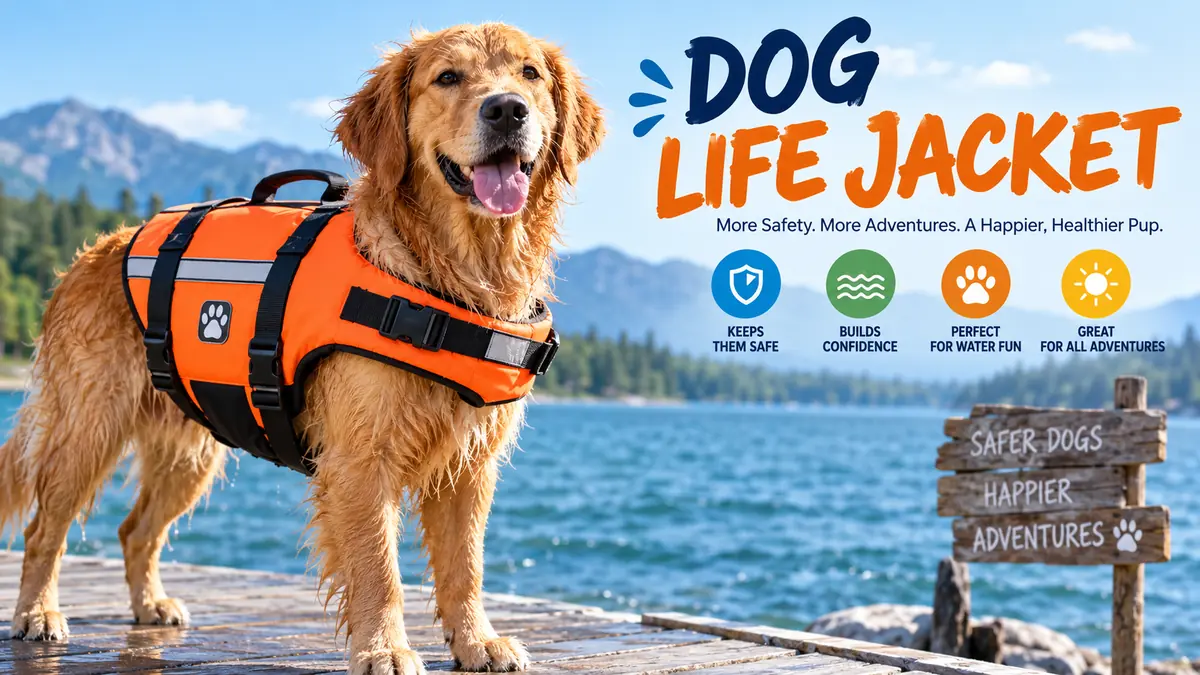
A dog may look completely at home in the water and still get into trouble surprisingly quickly. Fatigue, waves, currents, cold water, an unexpected fall from a boat, or simply swimming farther than expected can turn an ordinary outing into an emergency.
A dog life jacket is a canine flotation device designed to provide extra buoyancy, improve visibility, support a safer swimming position, and give owners a secure way to assist a dog in the water. A properly fitted jacket is useful for beginners and experienced swimmers alike, particularly during boating, kayaking, paddleboarding, and deep-water swimming.
This guide explains when dogs need flotation, how to choose the right design, how to measure for the correct size, what features matter, and how to use the jacket safely.
Why a Dog Life Jacket Matters
Many people assume that dogs instinctively know how to swim. Most dogs will make paddling movements when they enter water, but that doesn’t necessarily make them capable or safe swimmers.
Breed, body composition, age, fitness, swimming experience, water temperature, waves, and currents can all affect a dog’s ability to remain afloat.
Even an experienced swimmer can become tired or disoriented. A flotation jacket reduces the amount of effort required to remain at the surface, helping the dog conserve energy.
Buoyancy is about more than swimming ability
Natural buoyancy differs between dogs. Body fat, muscle mass, lung capacity, body shape, leg length, and propulsion can all affect how efficiently a dog stays at the surface.
Some dogs naturally float with relatively little effort. Others must paddle continuously just to maintain a workable swimming position.
A flotation jacket adds external buoyancy, reducing reliance on the dog’s natural ability to stay afloat. This can be especially valuable once fatigue begins.
It improves visibility
Finding a wet dog’s head among waves, reflections, boats, and other swimmers isn’t always easy.
Bright colors such as orange, yellow, lime, or red make a dog easier to spot. Reflective trim adds another layer of visibility in dim conditions.
Visibility isn’t merely cosmetic. Being able to locate your dog immediately can make responding to a problem much faster.
It provides a practical rescue point
A sturdy top handle lets you grab and guide a dog.
That becomes particularly useful when helping a dog:
- climb onto a boat
- get back onto a paddleboard
- reach a dock
- exit a swimming pool
- move toward shallow water
- regain direction after becoming frightened
The handle should be securely integrated into the jacket rather than functioning as a decorative accessory.
Quick takeaway: A flotation jacket doesn’t replace swimming ability or supervision. It adds buoyancy, visibility, and a practical way to assist your dog.
Do All Dogs Need a Dog Life Jacket?
For swimming or time aboard boats and other watercraft, using a properly fitted flotation device is a sensible safety precaution even for strong swimmers. The American Kennel Club recommends life jackets for dogs participating in water activities because capable swimmers can still encounter fatigue, currents, or unexpected accidents.
Certain dogs have an even stronger need for flotation support.
Puppies and first-time swimmers
A puppy doesn’t automatically understand how to position its body efficiently in water.
Some inexperienced dogs paddle heavily with their front legs while their hindquarters drop. Supporting the torso can help establish a more horizontal swimming position and allow the dog to concentrate on paddling rather than simply staying above water.
Never teach swimming by throwing a puppy or adult dog into deep water. A frightening first experience can create lasting anxiety around swimming.
Senior dogs
Older dogs may have less stamina, strength, or mobility than they once did.
A senior dog that happily swam for long periods when younger may tire much sooner now. Flotation reduces the physical effort required to stay at the surface.
Dogs with medical conditions, injuries, or mobility problems should have veterinary guidance before beginning swimming or hydrotherapy.
Short-muzzled dogs
Brachycephalic breeds have shortened skulls and muzzles. Keeping the nose and mouth comfortably clear of the water can be more difficult for some of these dogs.
A well-designed flotation device with appropriate front or neck support may help maintain a safer swimming position.
These dogs still require particularly close supervision.
Dogs with low natural buoyancy
Lean, muscular dogs and certain body types can have less natural flotation than people expect. AKC notes, for example, that Whippets can have relatively low buoyancy because of their low body-fat levels.
Strong swimmers
A Labrador Retriever, Golden Retriever, or other water-loving dog may be a superb swimmer.
That doesn’t make flotation unnecessary.
Distance from shore, cold water, waves, currents, panic, injury, and exhaustion can affect any breed. A strong swimmer may simply need less assistance under normal conditions than a weak swimmer.
Dog Life Jacket vs Dog Life Vest: What’s the Difference?
You’ll frequently see the terms life jacket, life vest, PFD, and flotation device used for canine water gear.
They aren’t always used consistently by manufacturers.
The American Kennel Club distinguishes a dog life jacket as generally providing greater coverage and flotation, making it particularly appropriate for boating and deeper water. A lighter life vest may provide less coverage and suit controlled activities such as relaxed pool swimming.
| Feature | Life Jacket | Lighter Life Vest |
|---|---|---|
| Flotation | Generally higher | Usually lighter |
| Body coverage | More extensive | Less extensive |
| Deep water | Better suited | Depends on design |
| Boating | Strong choice | Depends on flotation |
| Pool use | Suitable | Often suitable |
| Mobility | Depends on design | Often very flexible |
| Rescue handle | Common | May be included |
| Visibility | Usually high | Varies |
Don’t choose solely according to what the manufacturer calls the product. Examine the actual flotation, coverage, fit, construction, and intended use.
What to Look for in a Good Dog Life Jacket
The safest jacket isn’t necessarily the thickest, most expensive, or most complicated one.
It is the one that provides sufficient flotation while staying securely positioned without interfering with normal movement.
1. Adequate flotation
Flotation material should support the torso and help the dog maintain an efficient swimming position.
Some designs also include flotation toward the front of the body or underneath the chin. This can be useful for dogs that struggle to keep their head comfortably above water.
Full-torso flotation is particularly worth considering for inexperienced or weak swimmers.
2. A strong rescue handle
The top handle is one of the most practical features on a canine personal flotation device.
Test it before relying on it.
Hold the handle while your dog is standing on the ground and apply gentle upward pressure. Look for excessive stretching, weak stitching, or movement that causes the entire jacket to slide.
Large and heavy dogs put considerably more force on a handle than small dogs.
3. Adjustable straps
Dog body shapes vary enormously, even at similar weights.
Adjustable chest, belly, and neck areas make it easier to create a secure fit without restricting the shoulders.
Buckles and adjustment hardware should remain secure once positioned.
4. Comfortable belly support
Thin straps can concentrate pressure when a dog is lifted.
Wider panels or padded belly sections distribute that pressure across a larger area. This becomes especially useful if you expect to assist your dog onto a dock, boat, kayak, or paddleboard.
5. Bright colors and reflective trim
Visibility matters.
Choose a color that strongly contrasts with the surrounding water rather than selecting purely for appearance. Reflective elements are useful around dawn, dusk, and low-light conditions.
6. Freedom around the shoulders
A dog needs unrestricted shoulder movement to paddle efficiently.
A jacket extending too far forward or fitting too tightly around the front legs can interfere with the dog’s natural swimming stroke.
7. Durable materials
Common materials include nylon, polyester, flotation foam, webbing, plastic buckles, and hook-and-loop closures.
Inspect construction quality around:
- handles
- buckles
- strap anchors
- seams
- flotation panels
- leash attachment points
These areas experience considerable stress during real-world use.
8. D-ring or leash attachment
A D-ring can be convenient when walking near docks, beaches, pools, and launch areas.
However, don’t assume every D-ring is designed to withstand heavy pulling. Follow the manufacturer’s instructions regarding its intended purpose.
Most importantly, never tether a dog to a boat, kayak, raft, or similar watercraft. If the craft capsizes, tethering could trap the dog.
How Should a Dog Life Jacket Fit?
Fit is just as important as flotation.
A jacket that is too loose can rotate, shift backward, interfere with the front legs, or potentially allow the dog to slip out.
A jacket that is excessively tight can restrict breathing and normal shoulder movement.
A good fit should be snug, stable, and comfortable while still allowing the dog to walk, sit, lie down, and swim normally.
AKC recommends being able to fit roughly two fingers underneath the straps of a properly fitted jacket.
How to measure your dog
Don’t select a size based solely on breed.
Two dogs of the same breed can have very different proportions.
Measure your dog while they’re standing naturally.
Chest girth
Measure around the widest part of the rib cage, typically just behind the front legs.
Chest girth is often the most important measurement because it determines whether the main body section can be securely positioned.
Neck circumference
Measure around the area where the front or neck portion of the jacket will sit.
It should be secure without pressing into the throat.
Back or body length
Measure along the back according to the specific manufacturer’s instructions.
Some companies measure from the base of the neck toward the base of the tail, but methods can differ.
Body weight
Record an accurate weight as well.
Some manufacturers use weight ranges alongside chest measurements. If measurements and weight point toward different sizes, consult that particular manufacturer’s sizing instructions rather than assuming weight takes priority.
The dry-land fit test
Put the jacket on before going anywhere near water.
Your dog should be able to:
- Walk normally.
- Turn in both directions.
- Sit comfortably.
- Lie down.
- Move both shoulders freely.
- Breathe without restriction.
Check whether the straps rub behind the front legs or whether any buckle presses against sensitive areas.
Next, gently move the jacket from side to side.
A small amount of movement is normal. Significant rotation around the torso suggests that the fit needs adjustment.
Test Your Dog Life Jacket in Shallow Water First
A life jacket shouldn’t make its debut during a boating trip.
Once the dry fit looks correct, perform a controlled water test.
Choose calm, shallow water with an easy exit. Keep your dog within immediate reach and allow them to enter gradually.
Watch four things closely:
| Check | What You Want to See |
|---|---|
| Buoyancy | Dog remains comfortably supported |
| Position | Body stays reasonably level |
| Stability | Jacket doesn’t rotate or slide |
| Movement | Legs and shoulders paddle freely |
Pay particular attention to the head and mouth.
The flotation should help rather than force the dog into an awkward position.
Check the straps again once the material becomes wet because the jacket may behave differently in water.
If the vest rotates, rides up, presses into the throat, traps a front leg, or substantially interferes with paddling, return to shallow water and adjust or replace it.
How to Introduce Your Dog to a Life Jacket
Some dogs accept new equipment immediately. Others freeze, scratch at it, roll around, or refuse to move.
Introduce the jacket before the water outing.
Step 1: Let your dog investigate it
Put the jacket on the floor and allow your dog to sniff it.
Reward calm interaction.
Step 2: Practice putting it on
Place the jacket on briefly, reward your dog, then remove it.
Keep the first sessions short.
Step 3: Increase wearing time
Once your dog appears comfortable, allow them to wear it around the house.
Then practice walking outside.
Step 4: Introduce water gradually
Start somewhere calm with a gently sloping entry rather than immediately entering deep water.
Allow the dog to decide when to move deeper.
Step 5: Practice swimming while wearing it
Your dog needs to learn how the equipment feels in the water.
AKC kayaking guidance recommends familiarizing dogs with their PFD on land and practicing swimming in it before relying on the equipment during a water trip.
Never assume that a dog comfortable wearing the jacket on land will automatically feel comfortable swimming in it.
Dog Life Jacket Safety for Swimming
Flotation equipment reduces risk; it doesn’t eliminate it.
Close supervision remains essential whenever a dog is in or around water.
Start with calm water
First swimming sessions should ideally happen in calm, relatively warm water with a gradual entry and easy exit.
Avoid strong currents and waves while your dog is developing confidence.
Never force a dog into the water
Don’t throw, push, or drag a hesitant dog into deep water.
Instead, use positive reinforcement, toys, treats, and your presence to make entering voluntarily rewarding.
A frightened dog may panic rather than develop an effective swimming rhythm.
Watch for fatigue
Swimming can be physically demanding.
Signs that your dog needs a break can include:
- slower paddling
- repeatedly trying to exit
- heavy breathing
- reduced coordination
- dropping lower in the water
- reluctance to continue
- unusual weakness after leaving the water
End the session before exhaustion becomes obvious.
Bring fresh drinking water
Don’t depend on the lake, river, pool, or ocean as your dog’s drinking source.
Bring clean, fresh water and offer it regularly during breaks. AKC specifically recommends bringing drinking water rather than allowing dogs to rely on natural bodies of water for hydration.
Know the exit before entering
Dogs sometimes enter water easily and then struggle to find their way back out.
Pools with vertical sides, steep banks, docks, and rocky shorelines deserve particular attention.
Show your dog where the exit is before allowing free swimming.
Using a Dog Life Jacket for Boating and Kayaking
Boats introduce hazards that don’t exist during an ordinary swim.
A dog can unexpectedly fall overboard because of waves, sudden turns, slippery surfaces, or loss of balance.
That is why flotation should be worn before the boat leaves shore rather than stored somewhere for emergencies.
Practice on land first
If you’re planning to kayak, canoe, or paddleboard with your dog, introduce the craft on dry land.
Let the dog explore it, climb onto it, sit in the expected position, and become comfortable with the equipment before dealing with movement on water.
AKC recommends gradual exposure to unstable surfaces and watercraft so dogs learn what to expect.
Don’t tether your dog to the craft
Attaching a dog permanently to a kayak or boat can create a serious entanglement hazard if the craft overturns.
Maintain control around launch points and docks, but avoid creating a situation where your dog cannot separate from a capsized vessel.
Practice using the rescue handle
Before going into deep water, learn how you’ll actually assist your dog back aboard.
A 10-pound dog and an 80-pound dog present very different lifting challenges.
For a large dog, the handle may be more useful for guiding and supporting than for lifting the dog’s entire body vertically.
Dog Life Jacket for Small Dogs vs Large Dogs
Size isn’t the only difference to consider.
Small dogs
A small dog may benefit from:
- lightweight construction
- proportionate flotation
- comfortable belly support
- neck or chin flotation
- small, securely positioned buckles
- a handle designed for its body size
Avoid oversized hardware that rubs against the legs or shoulders.
Large dogs
For large breeds, pay extra attention to:
- handle strength
- reinforced stitching
- buckle durability
- broad belly support
- adequate flotation volume
- secure chest adjustment
A handle that works perfectly for a small terrier might not tolerate the forces involved in assisting a much heavier dog.
Deep-chested and unusually shaped dogs
Greyhounds, Whippets, Bulldogs, Dachshunds, and other dogs with distinctive proportions may not fit generic sizing particularly well.
This is where chest, neck, length, and actual fit matter more than a label saying “medium” or “large.”
What About Dogs That Can’t Swim Well?
A flotation device can help a weak swimmer, but it should never be treated as permission to place a non-swimming dog in difficult water.
Dogs may struggle because of body shape, poor technique, fear, age, physical limitations, or simply lack of experience.
For these dogs, prioritize:
- Higher flotation.
- Stable torso support.
- Head and neck support where appropriate.
- A strong rescue handle.
- Excellent visibility.
- Very close supervision.
- Calm, controlled swimming environments.
Keep initial sessions brief and remain within immediate reach.
Dogs with arthritis, orthopedic injuries, neurological conditions, recent surgery, or other health problems should be evaluated by a veterinarian before swimming for exercise or rehabilitation. Professional canine hydrotherapy may be more appropriate in those circumstances.
Common Dog Life Jacket Mistakes
Even good flotation equipment can become less effective when used incorrectly.
Buying according to weight alone
Weight doesn’t tell you a dog’s proportions.
Always check chest girth and the other measurements required by the manufacturer.
Choosing a loose jacket for comfort
Loose isn’t necessarily comfortable.
Excess space can allow the jacket to rotate or a leg to become caught. AKC water-safety guidance specifically warns that loose flotation equipment can create problems around the front legs.
Tightening every strap excessively
The opposite mistake is equally problematic.
Over-tightening can interfere with breathing, movement, and the dog’s swimming stroke.
Aim for secure rather than restrictive.
Assuming a strong swimmer doesn’t need flotation
Swimming ability isn’t protection against exhaustion, disorientation, currents, waves, or an unexpected fall from a boat.
Ignoring wear and tear
Inspect flotation equipment before every significant outing.
Pay attention to:
- torn fabric
- deteriorating foam
- loose stitching
- damaged buckles
- frayed webbing
- stretched straps
- weakened handles
Replace damaged equipment rather than relying on a repair that might fail under load.
Leaving a dog unsupervised
No flotation device makes unsupervised swimming safe.
Remain close enough to respond quickly.
How to Care for a Dog Life Jacket
Water, sand, mud, salt, sunlight, and repeated pulling on straps can gradually damage equipment.
After swimming, rinse the jacket with clean fresh water, especially after ocean use.
Allow it to dry completely in a ventilated area before storing it. Keeping damp equipment in a closed container encourages odors and material deterioration.
Periodically inspect the seams and flotation panels.
Check the rescue handle by applying controlled pressure on land rather than discovering that it has weakened during an emergency.
Follow the manufacturer’s washing instructions because machine washing, heat, or harsh detergents may damage certain flotation materials.
Can a Dog Wear a Human Life Jacket?
A human personal flotation device isn’t designed around canine anatomy.
Dogs swim horizontally, use all four limbs for propulsion, and require freedom around their shoulders and legs. Human flotation equipment is designed around an upright human torso.
A properly sized canine flotation device is therefore the more appropriate choice.
The shape of a dog life jacket is intended to distribute flotation around a dog’s body while allowing normal paddling. It also commonly provides features specifically useful for canine handling, including a top rescue handle.
Can a Dog Life Jacket Prevent Drowning?
A life jacket can reduce drowning risk by adding flotation, but it cannot guarantee that a dog will remain safe.
The distinction matters.
A dog can still encounter dangerous circumstances while wearing one, including:
- strong currents
- rough waves
- entanglement
- cold water
- extreme fatigue
- poor fit
- equipment failure
- inability to exit the water
Think of flotation as one layer of a broader water-safety system.
Proper fit, close supervision, suitable water conditions, accessible exits, rest periods, and knowing your dog’s limitations are equally important.
When Should a Dog Wear a Life Jacket?
For many owners, the simplest approach is to use one whenever the consequences of unexpectedly entering the water could be serious.
That includes:
| Activity | Life Jacket Use |
|---|---|
| Boating | Strongly recommended |
| Kayaking | Strongly recommended |
| Canoeing | Strongly recommended |
| Paddleboarding | Strongly recommended |
| Deep-water swimming | Strongly recommended |
| River swimming | Important because of currents |
| Ocean swimming | Important because conditions change |
| First swimming lessons | Highly useful |
| Controlled pool swimming | Useful, especially for beginners |
| Canine hydrotherapy | Often used under professional guidance |
Even when a dog isn’t expected to swim, boating creates the possibility of an accidental fall overboard.
Put the flotation device on before reaching that risk point.
A Simple Pre-Swim Safety Check
Before every water session, spend a minute checking the equipment and conditions.
- Inspect the jacket. Check fabric, flotation, buckles, straps, seams, and the rescue handle.
- Check the fit. Confirm it remains snug without restricting breathing or shoulder movement.
- Check the water. Look for currents, waves, obstacles, boat traffic, temperature, and safe exit points.
- Bring fresh water. Prevent your dog from depending on pool, lake, river, or seawater.
- Plan rest periods. Don’t wait for obvious exhaustion.
- Stay close. Supervision should be continuous while the dog is swimming.
Conditions can change during an outing, so repeat the assessment rather than assuming that water that was safe earlier will remain that way.
Choosing the Right Dog Life Jacket
There is no single design that’s ideal for every dog.
Start with the dog’s body rather than the product’s appearance.
Measure chest girth, neck circumference, body length, and weight. Then compare those measurements with the manufacturer’s specific sizing chart.
Next, consider how the jacket will be used.
A confident swimmer enjoying a controlled backyard pool has different needs from an inexperienced dog accompanying its owner on a kayak.
Prioritize these fundamentals:
- sufficient buoyancy
- secure adjustable fit
- unrestricted shoulder movement
- strong rescue handle
- comfortable belly support
- durable construction
- bright, visible material
- reflective detailing when useful
- additional front flotation when the dog needs head support
Finally, perform both dry-land and shallow-water tests.
The real test of a flotation device isn’t how good it looks when your dog is standing beside the water. It’s whether the jacket remains securely positioned and supports comfortable, efficient movement once your dog is actually swimming.
Final Thoughts on Dog Life Jacket Safety
A dog life jacket is useful for far more than dogs that cannot swim. It provides additional buoyancy when a capable swimmer becomes tired, makes a dog easier to see, and gives you a practical point for assisting them out of the water.
The key is choosing and using it correctly. Measure your dog rather than guessing the size, look for adequate flotation and a secure rescue handle, check shoulder movement, and test the fit in shallow water before relying on it during a real outing.
Most importantly, treat the jacket as backup rather than a substitute for supervision. Pair properly fitted flotation with gradual water training, safe conditions, fresh drinking water, regular rest periods, and an easy exit route. Those layers of protection give your dog a much safer way to enjoy swimming, boating, kayaking, and other adventures on the water.