
Dog hair has an annoying talent for showing up exactly where you do not want it: black trousers before work, a clean sweater before dinner, or freshly washed clothes straight from the laundry basket. Worse, simply throwing hairy clothes into the washing machine often does not solve the problem.
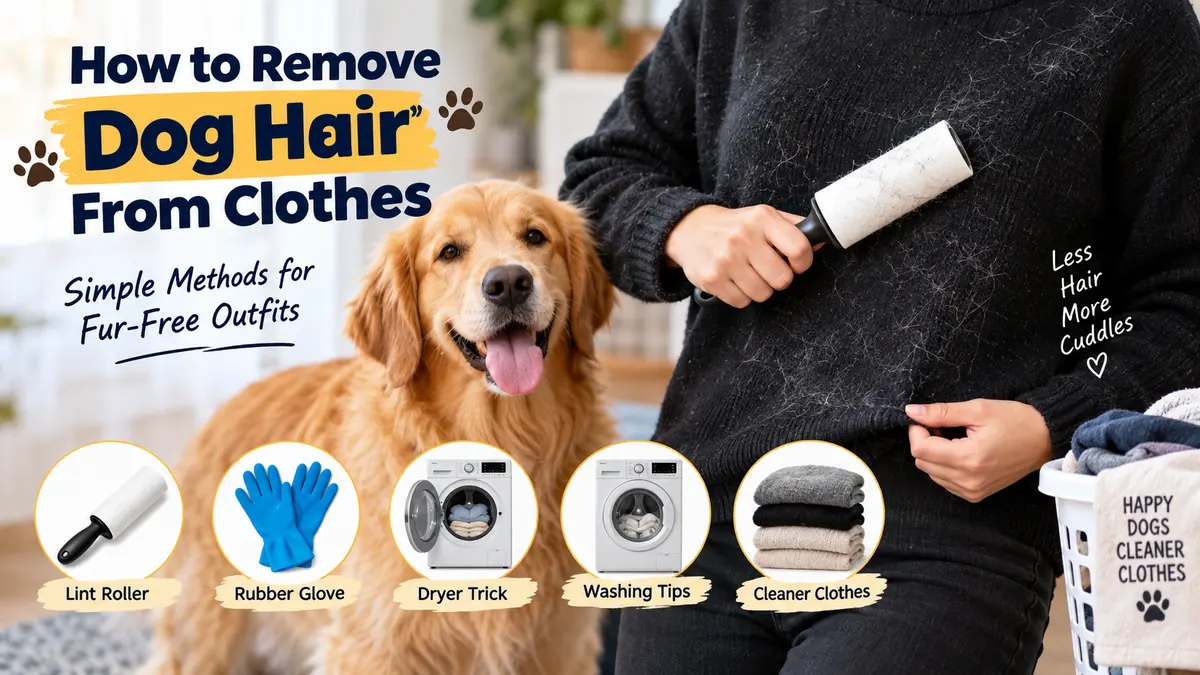
If you are wondering how to remove dog hair from clothes, the most reliable approach is to remove loose fur while the fabric is dry, tumble dryer-safe items briefly on an air-only setting, wash according to the care label without overloading the machine, and then dry normally. Lint rollers, damp rubber gloves, dryer sheets, and dryer balls can help with stubborn hair.
The key is the order in which you do these things. Pet hair is easier to deal with before it becomes wet and forms clumps inside your laundry.
Why Dog Hair Sticks to Clothes So Easily
Dog fur does not simply sit on the surface of clothing. Several factors help it cling.
Static electricity is one of the biggest culprits. Synthetic fabrics can develop static charges through friction, making lightweight hairs cling tightly to the material.
Fabric texture matters too. Smooth, tightly woven cotton usually releases hair more easily than fleece, knits, wool-like fabrics, polyester, and other textured materials. Fine hairs can work their way between fibers, where a normal wash may not dislodge them.
Friction makes matters worse. Sitting on a pet-covered couch, hugging your dog, or carrying a shedding pet can press loose fur deeper into clothing.
Water introduces another problem. Consumer Reports notes that water and pet hair can form clumps that stick to fabrics and the washer drum, with excessive hair potentially affecting drainage. That is one reason removing as much fur as possible before washing is worthwhile.
Long-haired and double-coated dogs can make the problem especially noticeable during periods of heavy shedding. But the same basic removal methods work for short dog hair, cat hair, and most other loose pet fur.
How to Remove Dog Hair From Clothes Before Washing
The most useful habit is surprisingly simple: deal with the visible hair before your clothes enter the washer.
1. Shake the Clothes Outside
Take heavily covered clothes outdoors and give each item several firm shakes.
This will not remove embedded hairs, but it gets rid of a surprising amount of loose fur without transferring it to your washer, floor, or other clothing.
Pay particular attention to:
- Sleeves and cuffs
- Trouser legs
- Waistbands
- Pockets
- Seams
- Hoodie linings
- Fleece surfaces
After shaking, move on to a lint roller or another manual removal method.
2. Use a Lint Roller
A lint roller remains one of the quickest tools for removing dog hair from clothing.
Lay the garment on a flat surface or keep it stretched slightly taut. Roll from top to bottom using overlapping passes. Replace the adhesive sheet once it becomes covered because a loaded sheet quickly loses effectiveness.
Reusable fabric rollers are another option if you regularly deal with shedding.
Recent Good Housekeeping testing recommends lint rollers, reusable fabric rollers, and rubber-sided tools for clothing and delicate materials, while warning that some metal-toothed pet-hair tools can snag fabrics.
For a five-minute cleanup before leaving home, a lint roller is hard to beat.
3. Try Sticky Tape When You Do Not Have a Lint Roller
No lint roller nearby? Ordinary masking or similar household tape can work for a small area.
Wrap a piece around your fingers with the sticky side facing outward and gently dab the hairy areas. Replace the tape when it stops picking up fur.
Maytag also recommends masking tape as an alternative for blotting hair-covered areas when a lint roller is unavailable.
Avoid aggressive tape on delicate fabrics because strong adhesives may pull fibers or leave residue.
4. Wipe With a Damp Rubber Glove
A rubber household glove is particularly useful when hair has spread across a larger area.
Put on the glove and dampen it slightly. It should be moist, not dripping wet.
Run your hand across the garment in one direction. Friction between the rubber and fabric helps gather loose hairs into small clumps that you can pick off.
This technique works particularly well on:
- Coats
- Trousers
- Cotton clothing
- Upholstery
- Fabric bags
- Larger garments
Rinse accumulated fur from the glove and repeat as necessary.
5. Use a Slightly Damp Microfiber Cloth
A microfiber cloth provides another reusable option.
Lightly dampen the cloth, wring out excess water, and wipe the garment in one direction rather than scrubbing back and forth.
The goal is to gather fur into manageable clumps instead of redistributing it.
For delicate clothing, test any rubbing method on an inconspicuous area first.
How to Remove Dog Hair From Clothes With a Dryer
Here is one of the most useful tricks for heavily covered, dryer-safe laundry:
Use the dryer before the washing machine.
It sounds backwards, but there is a practical reason for doing it.
Tumbling dry clothing helps separate loose fur from fabric. Airflow then moves some of that hair toward the lint screen instead of allowing it to turn into wet clumps inside the washer.
Maytag recommends a “dry, wash and dry” approach for conventional laundry machines: tumble hairy clothes on a no-heat setting first, wash them normally, and then dry them.
The 10-Minute Pre-Wash Dryer Method
For garments whose care labels permit tumble drying:
- Shake off as much loose fur as possible.
- Put the dry garments in the dryer.
- Select air fluff, air-only, or another no-heat setting.
- Tumble for approximately 10 minutes.
- Remove the garments.
- Clean the lint screen.
- Wash the clothes according to their care labels.
- Dry them normally if permitted.
Good Housekeeping’s Home Care & Cleaning Lab tested a roughly 10-minute air-fluff pre-wash method and found that it removed most of the pet fur in its test, although it did not eliminate every strand.
That last point matters: think of the dryer trick as a highly useful preparation step rather than a guarantee of completely fur-free clothing.
Quick Takeaway: For dryer-safe clothing covered in substantial dog hair, remove obvious fur first and try about 10 minutes of no-heat tumbling before washing. Clean the lint screen immediately afterward.
How to Remove Dog Hair From Clothes in the Washing Machine
Once most loose hair is gone, you can wash the garment.
The washing machine should be the second stage of removal rather than the place where you dump a heavily fur-covered item and hope for the best.
Do Not Overload the Washer
Clothing needs enough room to move during the wash cycle.
Stuffing the drum too tightly reduces movement and makes it more difficult for water and detergent to carry loosened debris away.
Maytag specifically advises against overloading the washer when dealing with pet hair and recommends following the garment’s care label for the appropriate settings and cycle.
A smaller load is generally easier to manage when several garments are heavily covered in fur.
Separate Heavily Covered Items
Do not automatically wash a dog-hair-covered blanket with your otherwise clean work shirts.
Loose fur can move between items during laundering. If a few pieces are particularly hairy, washing them separately helps contain the problem.
Pet bedding, washable furniture covers, blankets, and heavily contaminated clothes are sensible candidates for their own loads.
Follow the Garment Care Label
Internet laundry hacks frequently recommend a particular water temperature for removing fur, but fabric care should come first.
Use the temperature and cycle appropriate for the garment.
A cotton T-shirt, wool sweater, waterproof jacket, and pair of synthetic leggings do not necessarily tolerate the same washing or drying conditions. If the care label conflicts with a generic cleaning hack, follow the label.
Should You Add White Vinegar?
Distilled white vinegar is commonly recommended online as a laundry aid for pet hair, with many guides suggesting roughly half a cup during the rinse.
The idea is that it can help soften fabrics and make clinging hair easier to release. However, vinegar should not be treated as the essential ingredient in pet-hair removal.
The better-supported strategy is mechanical removal: remove dry fur first, provide adequate room in the washer, and let the dryer and lint screen capture loosened hair.
If you use vinegar in your particular washing machine, follow the appliance manufacturer’s instructions. Never casually combine household cleaning chemicals. In particular, do not mix vinegar with chlorine bleach.
How to Remove Dog Hair From Clothes After Washing
Sometimes you do everything correctly and still pull a shirt from the washer with visible hairs attached.
That does not necessarily mean you need to wash it again.
Shake Each Garment
Before transferring washed clothes to the dryer, separate tangled items and shake them individually.
This can dislodge some loose hair and improves airflow between garments.
Use the Dryer If the Care Label Allows It
The dryer is often better at capturing loose pet hair than the washing machine because loosened material can collect on the lint screen.
Dry the garment according to its care instructions.
When the cycle finishes, inspect the lint screen. In homes with shedding pets, it can accumulate significant amounts of fur.
Consider Dryer Sheets
Dryer sheets can reduce static, making it harder for pet hair to remain attached to fabric and easier for loose material to reach the lint screen.
Good Housekeeping’s 2026 testing found strong pet-hair removal performance from a pet-hair-focused dryer sheet on a test sweater.
However, dryer sheets are not suitable for every textile.
Good Housekeeping advises avoiding them with certain materials, including microfiber, towels, some sportswear, flame-resistant clothing, and water-repellent fabrics because the coating can interfere with the material’s intended properties.
Check the garment instructions first.
Try Dryer Balls
Dryer balls are a reusable alternative worth considering.
As they move between clothes, they help separate garments and can reduce static, allowing loose hair to move toward the lint screen. Maytag lists dryer balls as an alternative to dryer sheets for reducing static and minimizing pet hair cling.
They will not magically pull deeply embedded fur from every fabric, but they can complement a good pre-wash routine.
Best Dog Hair Removal Method for Different Situations
There is no single tool that works best on every garment.
| Situation | Good First Choice | Why |
|---|---|---|
| A few hairs on a shirt | Lint roller | Fast and precise |
| No lint roller available | Masking tape | Useful emergency substitute |
| Large hairy surface | Damp rubber glove | Covers more area quickly |
| Reusable everyday method | Fabric roller | No disposable adhesive sheets |
| Heavy hair before laundry | No-heat dryer tumble | Loosens dry fur before washing |
| Static-heavy laundry | Dryer balls or suitable dryer sheet | Helps reduce static cling |
| Delicate garment | Gentle lint roller or fabric brush | Less aggressive on fibers |
| Hair after washing | Dryer, if care label permits | Lint screen can capture loosened hair |
For heavily covered clothes, combining methods works better than repeatedly using one.
How to Remove Dog Hair From Black Clothes
Black clothing makes even a small amount of pale dog fur obvious.
Start with a lint roller while the garment is completely dry. Use good lighting and work systematically from the shoulders downward so you do not repeatedly cover the same section.
A damp rubber glove can handle larger patches, followed by the lint roller for finishing.
For washable black clothes, use the pre-wash dryer method when the care label permits it.
Once clean, keep dark clothing away from dog beds, upholstered furniture, and the surfaces where your pet spends most of its time. Prevention makes a bigger difference with black clothing because every stray hair is visible.
How to Remove Stubborn Dog Hair From Fleece and Leggings
Fleece can be especially frustrating because its textured surface gives fine hairs plenty of places to lodge.
Start with the garment completely dry.
Use a rubber-sided pet hair tool, reusable fabric roller, or lint roller. Work in one direction and repeat from different angles if necessary.
For dryer-safe fleece, a short no-heat tumble can loosen what remains before washing.
Leggings present a slightly different problem. Synthetic fibers can develop substantial static, which makes fine dog hairs cling closely to the surface.
A slightly damp rubber glove works well for manual removal. During drying, an appropriate anti-static method can help, provided it is compatible with the garment.
Avoid aggressively scraping either material with sharp or metal-edged tools. Good Housekeeping’s testing found that some metal-toothed hair removers could snag or damage clothing fabrics.
What If You Do Not Have a Dryer?
You can still remove dog hair effectively without one.
Use this sequence:
- Shake the garment outside.
- Lay it on a flat surface.
- Remove surface fur with a lint roller.
- Use a damp rubber glove for stubborn areas.
- Wash according to the care label without overcrowding the machine.
- Shake the garment again after washing.
- Air-dry normally.
- Finish with a lint roller once completely dry if necessary.
The process takes more manual work because you do not have a lint screen collecting loosened hair, but it avoids putting inappropriate garments in a dryer simply for the sake of fur removal.
How to Remove Dog Hair From Delicate Clothes
Silk, wool, embellished garments, structured jackets, and other delicate clothing deserve a gentler approach.
Do not automatically use the 10-minute dryer trick.
Instead, check the care label and begin with the least aggressive method available.
Lay the garment flat and use a suitable lint roller or soft fabric brush with light strokes. A slightly damp rubber glove may work on some fabrics, but test a hidden area first.
Avoid aggressive rubbing because it can disturb the surface of delicate fibers.
If an item is labeled dry-clean only, follow the label rather than experimenting with washing-machine or dryer hacks.
Why Washing Clothes Alone Often Does Not Remove Dog Hair
A common mistake is assuming that water and detergent will simply wash fur away.
Pet hair behaves differently from soluble dirt.
Water does not dissolve normal animal hair during an ordinary laundry cycle. Instead, loose strands can clump together, remain attached to fabrics, collect around the washer, or move onto another garment.
Consumer Reports warns that wet pet-hair clumps can stick to fabrics and the washer drum and potentially clog drain pumps.
That is why this sequence works better:
Remove → loosen → wash → capture.
First remove as much dry hair as possible. Then loosen remaining fur through tumbling or manual friction. Wash the clothing. Finally, let the dryer lint screen capture more of what has been released, when machine drying is safe for the garment.
Common Mistakes That Make Dog Hair Worse
Putting Extremely Hairy Clothes Straight Into the Washer
This moves the entire removal job into the appliance.
Shake, roll, brush, or tumble the clothing first.
Overloading the Washing Machine
A packed drum gives garments less room to move and can reduce the effectiveness of the cleaning process.
Use manageable loads.
Ignoring the Lint Screen
If you use your dryer for pet-hair removal, cleaning the lint screen is part of the process, not an optional extra.
Good Housekeeping warns that accumulated pet hair can contribute to clogged dryer venting, reducing efficiency and creating a potential fire hazard.
Using Aggressive Tools on Delicate Fabrics
A tool that works brilliantly on a sofa may be too harsh for a sweater.
Metal blades, toothed scrapers, and aggressive brushes can snag clothing. Choose lint rollers, fabric rollers, or rubber tools for garments.
Ignoring Care Labels
The most effective pet-hair hack is not useful if it damages the clothing.
“No heat” does not automatically mean every garment belongs in a tumble dryer. Check the label first.
Expecting One Wash to Fix Severe Buildup
A sweater that has spent an afternoon on a dog-covered sofa may need manual treatment before and after laundering.
Removing the bulk of the fur while it is dry is usually faster than repeatedly rewashing the item.
How to Clean Dog Hair Out of Your Washing Machine
Your clothes are only half the problem.
Repeatedly washing pet bedding and hairy clothing can leave fur around the washer drum, door seal, filter, and drainage system.
After a particularly hairy load:
- Remove visible hair from the drum.
- Wipe accessible surfaces with a damp microfiber cloth.
- Check rubber door seals on front-loading machines.
- Inspect and clean user-serviceable filters according to the owner’s manual.
- Follow the manufacturer’s recommended washer-cleaning procedure.
Maytag notes that excessive pet hair can collect in washing-machine filters or drain lines and recommends cleaning the washer after hairy loads.
Do not dismantle inaccessible filters or drain components unless your appliance manual specifically provides instructions for doing so.
How to Keep Dog Hair Off Clothes in the First Place
Removing fur becomes much easier when less of it reaches your wardrobe.
Groom Your Dog Regularly
Regular brushing captures loose fur before it ends up on your trousers, bedding, sofa, and carpets.
The ideal grooming frequency depends on coat type, breed, season, and the individual dog. Double-coated breeds often require extra attention during seasonal shedding.
Clean Your Dog’s Favorite Areas
If the couch is covered in fur, your clothes will be too.
Vacuum or otherwise clean:
- Dog beds
- Sofas
- Chairs
- Blankets
- Car seats
- Carpets
- Fabric covers
This interrupts the constant cycle of hair transferring from dog to furniture to clothing.
Wash Pet Bedding Separately
Dog blankets and beds can carry far more hair than normal clothing.
Where practical, remove loose hair first and wash washable pet bedding separately from everyday garments.
Store Clean Clothes Away From Pets
Freshly cleaned clothes left on a bed or chair can become furry again within minutes.
Put laundry away promptly and keep work clothes, formal outfits, and dark garments in drawers or wardrobes.
Keep a Hair Remover Where You Need It
One lint roller by the front door is often more useful than five hidden in a laundry cupboard.
Consider keeping a reusable roller or other suitable clothing tool near your wardrobe, entryway, desk, or car for last-minute touch-ups.
Quick Takeaway: The easiest dog hair to remove is the hair that never becomes embedded. Regular grooming, cleaner pet resting areas, separate pet laundry, and prompt clothing storage can dramatically reduce daily cleanup.
A Simple Routine for Hair-Free Laundry
If dog hair is a constant problem, you do not need a collection of complicated cleaning hacks.
Use one repeatable routine:
- Shake heavily covered clothes outside.
- Lift visible hair with a lint roller, reusable fabric roller, rubber glove, or appropriate brush.
- Tumble dryer-safe garments for about 10 minutes on air-only/no heat when significant hair remains.
- Clean the lint screen before moving on.
- Wash according to each garment’s care instructions without overloading the machine.
- Shake and separate washed garments before drying.
- Dry according to the care label, using compatible dryer balls or dryer sheets if desired.
- Clean the lint screen again after drying.
- Wipe the washer and inspect accessible filters after unusually hairy loads.
- Finish manually with a lint roller if a few stubborn strands remain.
The strongest part of this method is not any particular gadget. It is removing fur at several stages instead of expecting the washing machine to handle everything.
Final Thoughts on How to Remove Dog Hair From Clothes
Learning how to remove dog hair from clothes becomes much easier once you stop treating it as an ordinary washing problem.
Remove loose fur while clothes are dry, use a lint roller or damp rubber glove for visible buildup, and consider a short no-heat dryer tumble before washing dryer-safe garments. Then wash according to the care label, avoid overloading the machine, and let the dryer’s lint screen capture remaining loose hair where appropriate.
For everyday prevention, regular dog grooming and cleaning the places where your pet sleeps and lounges can make the biggest long-term difference. Keep a lint roller nearby for the inevitable stray hairs, and dog ownership no longer has to mean wearing part of your dog’s coat everywhere you go.