
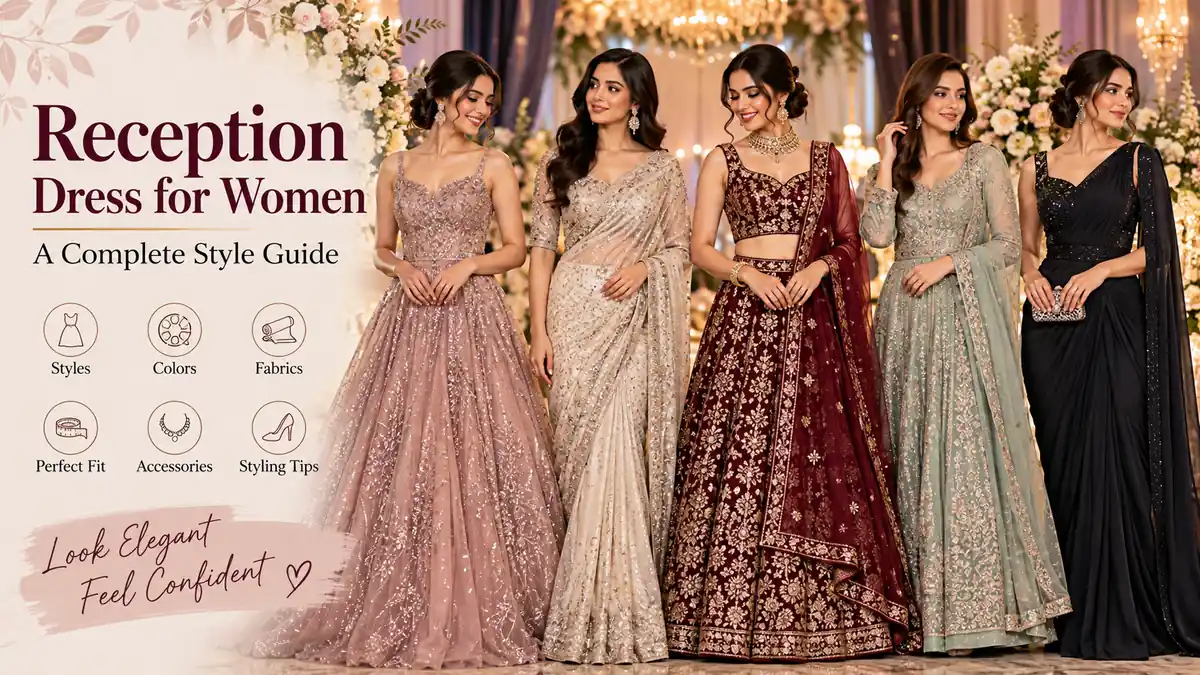
A wedding reception calls for an outfit that feels special without becoming difficult to wear. You may spend hours greeting people, posing for photographs, eating, walking, and dancing, so the most impressive outfit is not necessarily the heaviest one.
Choosing the right reception dress for women comes down to balancing the formality of the event with personal style, comfort, fabric, color, and silhouette. Popular choices include elegant gowns, sarees, lehengas, Anarkali suits, sharara sets, and Indo-Western outfits, with lighter embellishment and comfortable tailoring often working best for long celebrations.
Reception fashion also gives women more room to experiment than many traditional wedding ceremonies. A bride might move from heavily traditional ceremony wear to a contemporary gown, while a guest can choose a graceful saree, sharara, or understated lehenga.
How to Choose a Reception Dress for Women
Before deciding between a gown, saree, lehenga, or suit, think about the reception itself.
Is it a formal ballroom-style evening? An outdoor celebration? A traditional South Asian reception? A daytime event? Are you the bride, bridesmaid, sister of the bride or groom, or a guest?
These details change what works.
Consider Your Role at the Reception
For a bride, the reception outfit can be one of the most glamorous looks of the wedding celebrations. Bridal gowns, embellished lehengas, statement sarees, and fusion outfits all work well.
Bridesmaids and close family members can also wear richly detailed clothing, although coordinating rather than competing with the bride usually creates a more polished visual effect.
Guests generally benefit from a simpler approach. An elegant saree, Anarkali suit, sharara set, long dress, or moderately embellished lehenga feels festive without resembling bridal wear.
Match the Dress to the Venue
The venue should influence fabric and construction.
A formal hotel reception can support structured gowns, silk sarees, velvet, sequins, crystals, and elaborate embroidery. Outdoor venues generally favor lighter fabrics and easier silhouettes.
For a garden or warm-weather reception, chiffon, georgette and organza can feel considerably easier to carry than dense velvet or heavily layered designs.
Don’t Sacrifice Comfort for Decoration
Comfort becomes more important as the evening progresses.
A beautiful outfit that restricts your arms, requires constant dupatta adjustment, or becomes painfully heavy after an hour can quickly lose its appeal.
Reception collections increasingly include designs intended to combine visual impact with movement and wearability.
Quick takeaway: Decide on your role, venue and desired level of formality first. Then choose the silhouette. Starting with embroidery or color often makes the decision unnecessarily complicated.
Best Reception Dress for Women Styles
There isn’t one universally correct reception outfit. Indian and Pakistani wedding fashion now includes traditional, contemporary and fusion silhouettes, giving women far more flexibility than a single prescribed style.
| Reception style | Best suited to | Main advantage | Consider before wearing |
|---|---|---|---|
| Gown | Brides, sisters, formal guests | Elegant evening silhouette | Length and movement |
| Saree | Brides and guests | Timeless and versatile | Secure draping |
| Lehenga | Brides and close family | Strong festive impact | Skirt weight |
| Anarkali | Guests and family | Graceful and comfortable | Hem length |
| Sharara set | Guests, bridesmaids, sisters | Easy movement | Overall proportions |
| Indo-Western outfit | Modern receptions | Contemporary character | Event dress code |
| Long frock | Brides and family | Flowing traditional look | Fabric volume |
| Kaftan | Relaxed formal events | Comfort | Correct level of formality |
Reception Gown
A reception gown creates a distinctly formal evening look.
A-line and softly flowing gowns are relatively forgiving silhouettes, while fitted, mermaid, off-shoulder and one-shoulder designs make a stronger statement. Contemporary bridal reception fashion also includes cape details and sculpted or structured silhouettes.
An embellished gown works particularly well when you want a dramatic look without managing a separate skirt, blouse and dupatta.
The practical test is simple: sit down, walk, raise your arms and turn around while wearing it. A reception gown should survive all four tests comfortably.
Saree
The saree remains one of the most adaptable choices for wedding receptions.
Silk creates a richer traditional appearance, while georgette and chiffon offer softer movement. Organza gives more structure and can photograph beautifully when the pleats and pallu are styled correctly.
For evening receptions, embroidery, sequins, rhinestones, zari, stone work and statement blouses can make a saree feel appropriately formal without requiring an excessively heavy drape. Sarees remain prominent across current reception collections.
A pre-stitched saree is another option for women who like the appearance of a saree but want less adjustment throughout the evening.
Reception Lehenga
A lehenga is particularly suitable for brides, sisters and close family members because it provides the visual grandeur expected at a major wedding celebration.
Traditional reception lehengas can feature zari, zardozi, sequins, pearls, crystals and detailed hand embroidery. Modern versions may use cleaner embroidery and lighter construction to improve movement.
A heavily embellished skirt doesn’t automatically produce a better look. If the lehenga already contains dense embroidery, keeping the blouse, dupatta placement or jewellery slightly restrained can create better balance.
Anarkali Suit
Anarkali suits are useful when you want traditional elegance without the management required by a saree or lehenga.
Their flared silhouette gives movement while retaining a formal appearance. Floor-length versions with embroidery or a carefully styled dupatta can work particularly well for receptions.
This is often a practical choice for mothers, sisters, bridesmaids and guests who expect to remain at the event for several hours.
Sharara Set
A sharara combines a festive appearance with comparatively easy movement.
The flared trousers create volume, while the kurta and dupatta maintain the traditional character of the outfit. Sharara suits are commonly positioned as reception choices for guests and close family members because they balance celebration and comfort.
Pay attention to proportions. A heavily flared sharara generally looks more balanced with a relatively controlled upper silhouette.
Indo-Western and Fusion Outfits
Fusion dressing is especially appropriate for receptions because the event often has fewer clothing conventions than the primary wedding ceremony.
Options can include:
- Draped skirts with structured blouses
- Cape-style outfits
- Contemporary lehengas
- Jacket sets
- Pre-draped sarees
- Peplum dresses
- Gowns incorporating traditional embroidery
- Modern co-ord sets with festive detailing
Pakistani reception fashion also includes long frocks, kaftans and contemporary bridal gowns alongside lehenga choli and other traditional silhouettes.
The strongest fusion looks usually have one clear focal point rather than combining every trend at once.
Reception Dress for Women: Colors That Work Beautifully
Color can change the entire character of a reception outfit.
Evening lighting tends to reward colors with depth, texture or subtle reflective details. That doesn’t mean everything needs to sparkle; rather, consider how the fabric and embellishment will react to artificial light and flash photography.
Pastels and Soft Neutrals
Pastel reception outfits create a romantic, refined appearance.
Popular directions include blush pink, dusty rose, champagne, beige, ivory, powder blue, lilac, peach and muted mint.
Pakistani bridal reception and walima styling frequently incorporates ivory, champagne, silver, beige and soft neutral tones, particularly in contemporary formalwear.
Brides choosing these colors can introduce dimension through pearls, crystals, metallic threadwork or tonal embroidery rather than relying on strong color contrast.
Jewel Tones
Emerald, wine, burgundy, ruby, plum and deep blue suit evening receptions particularly well.
These colors can carry substantial visual presence even when the outfit itself is comparatively simple. Velvet and silk can make jewel tones look especially rich.
Metallic Shades
Silver, champagne, pewter and muted gold can create a modern reception look.
Metallic clothing needs careful styling, however. When the fabric and embroidery already reflect considerable light, heavy jewellery can make the overall look feel crowded.
Black for a Reception
Black can work beautifully at many modern receptions, particularly for guests.
An embroidered black saree, formal gown, Anarkali or Indo-Western ensemble can feel sophisticated in an evening setting.
Cultural expectations matter, though. Some families or wedding traditions may prefer particular colors or avoid others, so context should take priority over general fashion advice.
Should a Reception Outfit Be Red?
Not necessarily.
Red remains strongly associated with South Asian bridal fashion, but receptions allow considerably broader experimentation. Pastels, jewel tones, metallics, ivory and darker shades are all seen in contemporary reception wear.
For guests, be especially aware of the bride’s planned palette when you know it. Avoiding an outfit that closely resembles the bridal look is a simple courtesy.
Choosing the Right Fabric for Reception Wear
Fabric determines more than appearance. It affects temperature, movement, drape, weight and how long you can comfortably wear an outfit.
Current bridal and reception collections commonly use chiffon, raw silk, organza, velvet, net, jamawar and tissue, with embellishments ranging from pearls and crystals to zari and sequins.
Chiffon
Chiffon is lightweight and fluid.
It suits sarees, dupattas and gowns where soft movement matters. It is particularly useful when the reception involves dancing or warm weather.
Georgette
Georgette provides fluid movement while generally feeling slightly more substantial than very delicate chiffon.
It works well for sarees, gowns, suits and flowing reception silhouettes. Easy-to-drape fabrics such as chiffon and georgette are also practical for bridesmaids who prioritize movement.
Organza
Organza provides shape without the dense appearance of some heavier fabrics.
It is especially attractive in sarees, lehengas and dupattas where you want visible structure and volume. Because it can be crisp, make sure the garment construction doesn’t create unwanted bulk.
Silk and Raw Silk
Silk provides richness even with relatively restrained embellishment.
Raw silk works particularly well for structured lehengas and formal separates, while softer silk varieties can create elegant sarees and flowing outfits.
Velvet
Velvet brings depth and formality to evening clothing.
It is particularly suited to cooler weather and jewel-toned reception outfits. The drawback is weight and warmth, so it is rarely the first choice for hot or humid venues.
Net
Net is frequently used as an overlay, sleeve fabric or decorative layer in gowns and lehengas.
It can support detailed embellishment without making the underlying silhouette visually dense, although quality matters because rough net can irritate the skin.
Quick takeaway: For long receptions, prioritize breathable lining, manageable embroidery and freedom of movement before deciding based purely on the appearance of the outer fabric.
How to Choose a Reception Dress for Your Body Shape
“Flattering” shouldn’t mean hiding your body. A better goal is finding proportions that create the visual effect you want while allowing you to move confidently.
A-Line Silhouettes
An A-line gown or lehenga gradually widens toward the hem.
It is a versatile option because it provides skirt movement without requiring the dramatic volume of a very full lehenga.
Empire and High-Waisted Shapes
Higher waistlines shift visual emphasis upward and allow fabric to fall more freely through the lower half.
They can also be comfortable for long events because the outfit doesn’t depend on a very tightly fitted natural waist.
Mermaid and Fitted Gowns
Mermaid gowns create a more sculpted silhouette and work particularly well for formal evening receptions.
The trade-off is movement. Take several full strides and sit down before committing to a highly fitted design.
Vertical Details
Long panels, continuous embroidery lines, monochromatic dressing and uninterrupted draping can create a visually lengthened silhouette.
This is more reliable than choosing clothing based on rigid “body type rules.”
Necklines Matter Too
The neckline changes how jewellery, hairstyle and the upper half of the outfit work together.
V-necks and open necklines provide space for necklaces, while heavily embroidered or high-neck designs often need little or no neck jewellery.
Bridal Reception Dress vs. Guest Reception Dress
The bride and guest are dressing for the same event but performing very different roles.
A bridal reception outfit is normally expected to hold visual focus in photographs and during formal entrances. Bridal options therefore tend to support more embroidery, dramatic silhouettes and statement jewellery.
Guest clothing should still look festive, but restraint usually creates a more appropriate result.
Reception Dress for the Bride
A bride can consider:
- An embellished evening gown
- A reception lehenga
- A silk or embellished saree
- A contemporary fusion gown
- A long embroidered frock
- A peplum or structured formal ensemble
The wedding ceremony outfit and reception outfit don’t have to follow the same visual formula. Reception wear often provides more freedom to combine traditional craftsmanship with modern silhouettes.
Reception Dress for Bridesmaids
Bridesmaids can use complementary colors rather than identical outfits.
A-line lehengas, flowing gowns and lightweight sarees can provide a coordinated appearance while allowing comfortable movement.
Matching one element—such as color family, embroidery style or fabric—is often enough to create visual consistency.
Reception Outfit for Female Guests
Guests should begin with the stated dress code.
For a formal Indian or Pakistani reception, a saree, sharara, Anarkali, lehenga or polished fusion outfit can be appropriate. For a Western-style formal reception, a midi, maxi or evening dress may make more sense.
When the invitation doesn’t explain the dress code, venue, timing and cultural context provide useful clues.
Day vs. Evening Reception Dresses
Time of day is an underrated styling consideration.
Daytime Reception
Day celebrations usually suit:
- Softer colors
- Floral embroidery
- Pastels
- Lightweight silk
- Chiffon
- Organza
- Georgette
- Moderate embellishment
Natural light makes fabric texture and color particularly noticeable, so you don’t need excessive sequins to create impact.
Evening Reception
Evening events can comfortably support:
- Jewel tones
- Metallic accents
- Velvet
- Silk
- Sequins
- Crystals
- Stone work
- Zari or zardozi
- Structured gowns
Artificial lighting can make reflective detailing more visible, which is why shimmer and delicate embellishment often work particularly well at receptions.
How to Style a Reception Dress for Women
The outfit is only one part of the final look.
Jewellery, footwear, makeup, hair and accessories should operate as a single composition rather than competing for attention.
Choose One Jewellery Focus
If your gown, saree or lehenga is heavily embroidered, you probably don’t need an oversized necklace, earrings, maang tikka and multiple other statement pieces simultaneously.
Pick a focal point.
A polki necklace can complement traditional bridal wear, while diamonds and crystals can suit contemporary gowns. Chandeliers or statement earrings work particularly well when the neckline itself already has decorative detail.
Coordinate Hair With the Neckline
High necklines and detailed blouses benefit from pulled-back hair because it exposes the design.
Open necklines can pair beautifully with loose waves or softer hairstyles. Sleek buns, braided updos, ponytails and hair accessories are all reception-friendly options depending on the outfit.
Keep Makeup Balanced
Evening makeup doesn’t have to mean heavy makeup.
A polished base, defined eyes and a lip color chosen around the clothing palette are usually enough. Darker clothing can support a deeper lip, while pastel outfits often pair naturally with softer makeup.
Wear Shoes You Can Actually Walk In
Reception footwear needs to survive more than photographs.
Block heels and wedges provide additional stability, while embellished flats or juttis work naturally with traditional outfits.
If your dress is being altered, wear your actual reception shoes during the fitting. Even a small heel-height change can affect the hem.
Carry a Small Bag
A clutch, potli or compact metallic evening bag is usually enough for a phone, lipstick and essentials without disrupting the silhouette.
Reception Dress Mistakes That Can Ruin an Otherwise Beautiful Look
Some styling problems don’t become obvious until the reception starts.
Choosing an Outfit That’s Too Heavy
Dense hand embroidery, stones, crystals, layered net and a large skirt can create significant weight.
If you can barely move comfortably during the fitting, you are unlikely to enjoy wearing it for five hours.
Ignoring the Lining
Beautiful outer fabric cannot compensate for uncomfortable lining.
Check for scratchy embroidery edges, irritating net, transparent sections and seams that rub against the skin.
Altering the Outfit Too Late
Formal clothing frequently needs adjustments around the bust, waist, shoulders, sleeves and hem.
Leave enough time to try the complete outfit after alterations rather than assuming measurements alone will produce the right fit.
Wearing New Shoes for the First Time
Break in reception footwear before the event.
A stunning pair of heels becomes irrelevant once foot pain changes the way you walk.
Over-Accessorizing
Heavy embroidery plus heavy jewellery plus dramatic makeup plus an elaborate hairstyle can leave the eye with nowhere to rest.
Balance is usually more memorable than sheer quantity.
Forgetting Photography
Take test photographs in daylight and artificial light.
Certain metallic fabrics, sheer panels and reflective embellishments can look substantially different under flash than they do in a fitting-room mirror.
A Practical Reception Outfit Checklist
Before finalizing your reception look, put everything on together—not separately.
Check the following:
- You can sit comfortably.
- You can take normal-sized steps.
- Your arms move freely.
- The blouse or bodice stays securely in place.
- The saree or dupatta does not require constant adjustment.
- The hem works with your chosen shoes.
- Embroidery doesn’t scratch your skin.
- Jewellery doesn’t catch on the fabric.
- The outfit looks balanced in photographs.
- You can wear it comfortably for several hours.
For brides, do one final movement test while wearing the complete outfit, jewellery and shoes. Small problems become much easier to spot when every component is worn together.
How to Create an Elegant Reception Look Without Overdoing It
The easiest formula is to decide what you want people to notice first.
If it is the dress, simplify the accessories.
If it is statement jewellery, choose a neckline and embroidery pattern that give the jewellery visual space.
If it is the saree fabric, don’t bury it beneath unnecessary layers.
If it is a heavily embroidered lehenga, use cleaner hair and makeup to give the craftsmanship room to stand out.
Reception fashion has increasingly moved toward this balance of traditional detail and contemporary styling. Modern gowns, lighter lehengas, sarees, fusion couture and comfortable formal silhouettes can all create the required sense of occasion.
Final Thoughts on Choosing a Reception Dress for Women
The best reception dress for women is not simply the outfit with the most embroidery, the newest trend, or the biggest silhouette. It is the one that suits the role you have at the wedding, matches the venue and time of day, photographs well, and remains comfortable through hours of celebration.
Gowns bring contemporary evening elegance; sarees provide timeless versatility; lehengas create traditional grandeur; Anarkalis and shararas combine movement with festive style; and Indo-Western outfits offer room for experimentation.
Start with the occasion and silhouette, then select the fabric and color. Finish with balanced jewellery, comfortable footwear and a hairstyle that complements the neckline. When those elements work together, a reception outfit can feel polished and memorable without becoming excessive.