
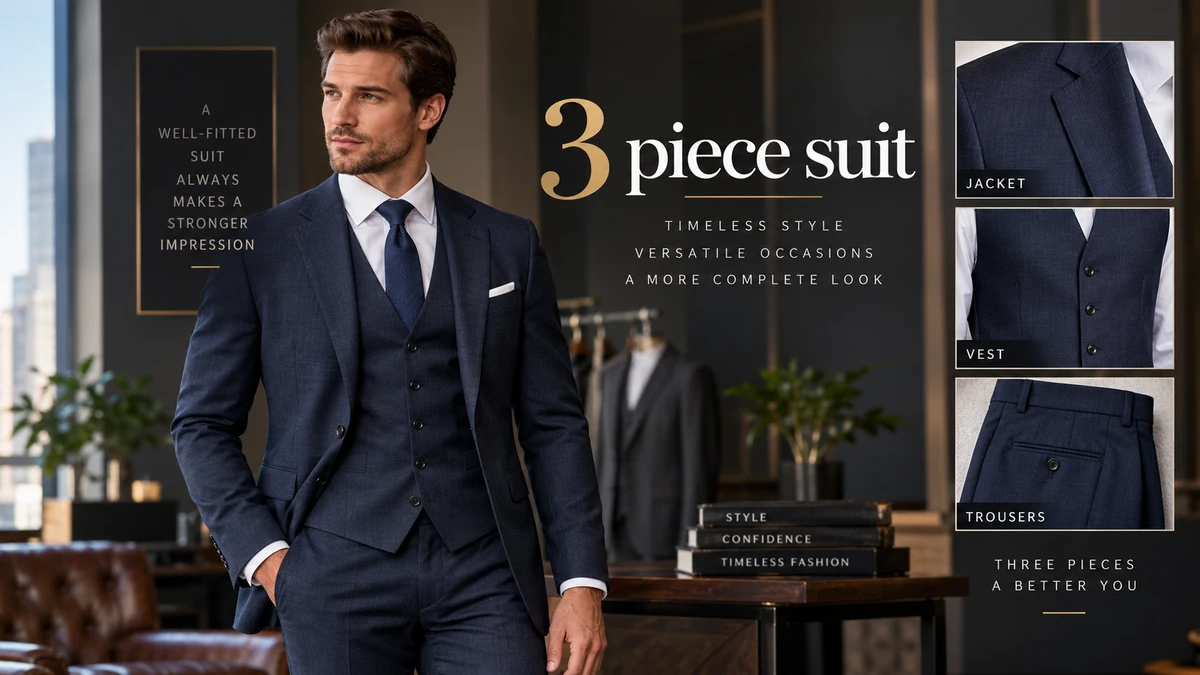
A 3 piece suit can look exceptionally polished, but the extra garment also leaves less room for mistakes. A waistcoat that is too short, trousers that sit too low, or a jacket that becomes tight over the added layer can make an otherwise good suit look awkward.
The key is treating the jacket, trousers, and waistcoat as one coordinated outfit rather than three separate garments.
A 3 piece suit consists of a suit jacket, matching trousers, and a waistcoat (also called a vest), traditionally cut from the same cloth. The waistcoat adds structure and formality while keeping the outfit looking complete when the jacket is open or removed. Correct fit and proportion matter more than extra decoration.
What Is a 3 piece suit?
A traditional 3 piece suit contains:
- A suit jacket
- Matching trousers
- A matching waistcoat or vest
The waistcoat is the defining third component. In a classic three-piece, all three garments are made from the same or deliberately matching suiting cloth. Adding an unrelated vest to an existing two-piece suit creates a coordinated outfit, but it is more accurately described as an odd or contrasting waistcoat rather than a traditional three-piece suit.
In British English, the third piece is generally called a waistcoat. In American English, vest is more common.
The waistcoat changes more than the number of garments. It fills the visual space between the shirt, jacket, and trousers, producing a continuous tailored line through the torso. When the jacket comes off, the wearer also remains more formally dressed than someone wearing only a shirt and trousers.
What Does the Waistcoat Actually Do?
The waistcoat has three practical and visual jobs.
First, it adds another structured layer around the torso. Second, it covers the trouser waistband and keeps the shirt from becoming the dominant part of the outfit when the jacket is open. Third, it increases the overall formality of a conventional lounge suit.
This is why waistcoat length matters so much. The bottom of the waistcoat should overlap the top of the trousers. A visible strip of shirt between them interrupts the continuous line that a three-piece is designed to create.
Quick takeaway: The waistcoat should connect visually with the trousers, not float several centimeters above them.
3 piece suit vs Two-Piece Suit: What Is the Difference?
The basic distinction is simple: a two-piece suit has a jacket and trousers, while a three-piece adds a waistcoat.
The effect of that extra piece, however, is significant.
| Feature | 3 piece suit | Two-Piece Suit |
|---|---|---|
| Main garments | Jacket, trousers, waistcoat | Jacket, trousers |
| Traditional fabric | All three pieces match | Jacket and trousers match |
| Formal appearance | Generally more dressed-up | More versatile |
| Warmth | Warmer because of extra layer | Cooler |
| Jacket removed | Waistcoat maintains structure | Shirt becomes main upper layer |
| Fit complexity | Higher | Lower |
| Best suited to | Weddings, formal occasions, dressier business settings | Business, interviews, events, everyday tailoring |
| Styling flexibility | High, but requires careful coordination | Very high |
A two-piece is usually easier to wear frequently because it has fewer layers and can move between professional and social settings without attracting much attention.
A three-piece has more presence. That can work particularly well at weddings, formal dinners, celebrations, ceremonies, and occasions where photographs are important.
It is not automatically the better option. Climate, dress code, personal style, and the amount of time you expect to spend wearing the jacket all matter.
How Should a 3 piece suit Fit?
Fit is particularly important with a three-piece because each garment affects the others.
A jacket that fits perfectly over a shirt might become restrictive when a waistcoat is added underneath. Similarly, a correctly sized waistcoat can still look too short if the trousers have an unusually low rise.
A well-fitted three-piece should follow your body without looking stretched or excessively tight. You should be able to stand, sit, walk, reach forward, and breathe normally while maintaining a clean silhouette.
Jacket Fit
Start with the shoulders because major shoulder alterations are difficult.
The shoulder seam should end close to your natural shoulder. The jacket collar should sit neatly against the shirt collar rather than leaving a large gap.
When the jacket is buttoned, the lapels should lie relatively flat and the front should close without severe pulling. A pronounced X-shaped crease around the fastening button often indicates excessive tightness.
The jacket also needs enough room to accommodate the waistcoat underneath.
Check the fit while wearing the complete outfit rather than trying on the jacket over only a shirt.
Waistcoat Fit
The waistcoat is the part that most often reveals a poor three-piece fit.
It should sit close to the torso without straining. The fabric should remain relatively smooth across the chest and stomach, and the buttons should fasten without pulling the two sides apart.
Most importantly, the waistcoat needs to be long enough to cover the trouser waistband.
Signs of a waistcoat that is too tight include:
- Pulling around the buttons
- Strong horizontal creases
- Front edges spreading apart
- Restricted breathing or sitting
- Armholes digging into the body
A waistcoat that is too loose can be just as distracting. Gaping armholes, sagging fabric, and large folds around the waist suggest excessive room.
Many waistcoats include an adjuster at the back. Use it for minor refinement, not as a substitute for buying the correct size.
Trouser Fit and Rise
Trouser rise becomes especially important with a waistcoat.
The trousers should sit high enough that the waistcoat comfortably overlaps their waistband. Very low-rise trousers can create a visible shirt gap even when the waistcoat itself is correctly proportioned.
Traditional three-piece tailoring therefore works particularly well with mid-rise or higher-rise trousers.
The trousers should sit securely at the waist, remain smooth across the seat, and provide enough room through the thighs for normal movement.
At the hem, trouser length is partly a matter of style. A slight break remains a versatile choice, although cleaner no-break or very slight-break finishes can work with contemporary tailoring.
Test the Suit While Sitting
A suit is clothing, not a mannequin display.
Before deciding that the fit is correct, sit down.
Unbutton the jacket first, then check whether you can breathe comfortably and whether the waistcoat remains reasonably smooth. The trouser waistband should not dig sharply into your body, and the waistcoat should not ride so high that your shirt becomes exposed.
Then stand, walk, reach forward, and move your arms.
Some fabric movement and creasing are normal. A tailored suit should follow the body; it should not immobilize it.
How to Wear a 3 piece suit Correctly
Once the fit is right, the styling rules become fairly straightforward.
The goal is visual continuity. Your shirt, tie, waistcoat, jacket, trousers, shoes, and accessories should look related without competing for attention.
Leave the Bottom Waistcoat Button Undone
One of the best-known conventions of classic menswear is leaving the lowest button of a single-breasted waistcoat undone.
The convention is commonly associated with Edward VII and also provides a little additional movement around the waist when sitting. Modern waistcoat construction varies, however, so the design of the garment should also be considered.
With a conventional five- or six-button single-breasted waistcoat, leaving the bottom button open remains the familiar approach.
Button the Jacket Normally
A waistcoat does not change the basic buttoning rules of a single-breasted suit jacket.
With a common two-button jacket, fasten the upper button while standing and leave the lower one undone. Unbutton the jacket before sitting.
The waistcoat can remain buttoned when seated provided it fits comfortably.
Keep the Shirt Tucked and Hidden at the Waist
A strip of shirt showing between the waistcoat and trousers is one of the clearest signs that the proportions are not working.
This can happen because:
- The waistcoat is too short
- The trousers sit too low
- The waistcoat rides upward
- The shirt is excessively bulky
- The trousers gradually slip down
Correcting the relationship between trouser rise and waistcoat length usually fixes the problem.
Should You Wear a Belt?
You can, but it is often not the cleanest solution.
A large belt buckle can create a bump underneath a fitted waistcoat. Properly fitted trousers with side adjusters produce a smoother line.
Suspenders, also called braces, are another traditional option because they hold the trousers at a consistent height and remain concealed underneath the waistcoat.
If a belt is necessary, a relatively slim design and discreet buckle reduce bulk.
What Shirt and Tie Go With a 3 piece suit?
Because a three-piece already contains more visual information than a two-piece, simple shirt-and-tie combinations are often the easiest to execute.
White Shirt
A crisp white dress shirt is the most adaptable option.
It works with navy, charcoal, grey, brown, black, and patterned tailoring while giving the waistcoat a clean background.
Light Blue Shirt
Light blue softens the overall appearance and works particularly naturally with navy, mid-grey, charcoal, and many brown suits.
It is useful when you want a three-piece to feel less ceremonial.
Patterned Shirts
Stripes and subtle checks can work, but consider the suit and tie first.
If the suit already has a visible check, windowpane, or pinstripe, adding another strong pattern can make the center of the outfit unnecessarily busy.
A useful principle is to vary pattern scale. For example, a finely striped shirt can sit comfortably beneath a broader patterned suit when the colors remain restrained.
Choosing a Tie
Silk ties are the conventional option for dressier occasions. Grenadine, textured silk, and wool ties can make the outfit feel less glossy and more relaxed.
Tie width should also make sense beside the jacket lapels. Extremely narrow ties can look disconnected from traditionally proportioned lapels.
For formal events, restrained colors and patterns usually allow the tailoring itself to do the work.
Best Colors for a 3 piece suit
Color changes how formal and versatile a three-piece feels.
Navy 3 piece suit
Navy is among the easiest colors to style.
It works with white and pale-blue shirts, brown or black shoes depending on the shade and occasion, and a broad range of ties.
A dark navy three-piece can move comfortably between weddings, dinners, professional events, and other formal settings.
Charcoal 3 piece suit
Charcoal is restrained and traditionally business-friendly.
The darker tone makes the additional waistcoat feel less visually prominent, which can be useful when you want the structure of a three-piece without making the outfit overly decorative.
Grey 3 piece suit
Mid-grey and lighter grey tailoring tends to feel less severe.
Grey combines easily with white, blue, pale pink, and other restrained shirt colors. The lighter the cloth, however, the more casual the suit generally appears.
Black 3 piece suit
Black creates a strong, formal-looking silhouette, but context matters.
A black lounge suit is not the same thing as black tie. Traditional black-tie dress centers on a dinner jacket or tuxedo with specific eveningwear details.
For that reason, seeing “black tie” on an invitation should not be interpreted as simply wearing a black three-piece suit.
Brown and Earth Tones
Brown, tobacco, olive, and other earthy colors can make a three-piece feel more relaxed and distinctive.
They work particularly well in textured fabrics and cooler seasons, where the additional depth of tweed, flannel, or brushed wool complements the waistcoat.
Choosing the Right Fabric
The third layer makes fabric choice more consequential than it is with a standard two-piece.
Worsted Wool
Worsted wool is a versatile foundation for traditional suiting.
Its relatively smooth surface gives a three-piece a clean appearance, while different cloth weights make it possible to adapt wool tailoring to a range of seasons.
Flannel
Flannel has a softer, more textured surface and is particularly comfortable in cool weather.
A grey or charcoal flannel three-piece can look rich without relying on bold patterns.
The disadvantage is warmth. Wearing a shirt, waistcoat, and jacket in heavier flannel can become uncomfortable indoors or in warm climates.
Tweed
Tweed brings considerably more texture.
It is associated with cooler-weather tailoring and can make a three-piece feel less corporate and more rustic or heritage-inspired.
Because tweed already has visual character, simple shirts and accessories usually work best.
Linen and Lightweight Fabrics
Lightweight wool, wool blends, linen, and other breathable fabrics can make three-piece styling more manageable in warm conditions.
Pure linen wrinkles readily, which is part of its character. It also produces a much more relaxed effect than smooth worsted wool.
In genuinely hot weather, however, adding a waistcoat still means adding another layer. Sometimes a two-piece suit is simply more practical.
Quick takeaway: Choose fabric according to temperature and setting, not just appearance. The extra layer makes heavy cloth noticeably warmer.
When Should You Wear a 3 piece suit?
Three-piece tailoring works best when its extra formality makes sense in the room.
Weddings
Weddings are one of the most natural settings for a three-piece.
Grooms, groomsmen, fathers of the couple, and guests can all wear one when the dress code supports it. The waistcoat also keeps the outfit looking composed if the jacket comes off later during a long reception.
Color and fabric should match the season and level of formality rather than following a single universal wedding rule.
Business Settings
A three-piece can work in professional environments, especially in industries where traditional tailoring remains common.
It has more visual presence than an ordinary business suit, however. A conservative navy or charcoal cloth with a simple waistcoat is generally quieter than bold checks, contrasting buttons, dramatic lapels, or a bright tie.
In workplaces where suits themselves are uncommon, a three-piece may look noticeably more formal than the surrounding dress code.
Formal Dinners and Celebrations
Anniversary dinners, receptions, award events, ceremonies, and similar occasions can suit three-piece tailoring well.
Again, check the actual dress code. A formal-looking lounge suit does not automatically satisfy specialized dress codes such as black tie or white tie.
Funerals
A dark, understated suit can be appropriate for many funerals depending on local customs and the family’s expectations.
If wearing a three-piece, keep it subdued: dark cloth, plain shirt, restrained tie, and minimal accessories.
The aim is respect rather than drawing attention to the tailoring.
Job Interviews
A three-piece is possible, but it is not universally necessary.
For most conventional interviews, a well-fitting navy or charcoal two-piece already provides an appropriately professional appearance. A three-piece may suit highly formal environments, but understanding the culture of the organization matters more than adding another garment.
Single-Breasted vs Double-Breasted Waistcoats
The waistcoat itself can take several forms.
Single-Breasted Waistcoat
This is the most versatile design.
It commonly has five or six buttons and a V-shaped opening. It may be made without lapels, which keeps the front clean and prevents too many design elements from competing with the jacket.
For someone new to three-piece tailoring, this is usually the easiest style to understand and wear.
Double-Breasted Waistcoat
A double-breasted waistcoat creates a broader and more decorative front.
It can work particularly well with traditional tailoring and formal outfits, but the extra buttons and overlapping fabric give it stronger visual presence.
Some double-breasted waistcoats also include lapels, increasing the effect further.
The proportions of the jacket and waistcoat should therefore be planned together rather than treating the vest as an afterthought.
Matching vs Contrasting Waistcoats
A classic three-piece uses matching cloth across all three garments.
A contrasting waistcoat creates a different effect.
For example, grey trousers and jacket might be paired with a complementary checked or textured waistcoat. This can look stylish, particularly at weddings and social events, but technically it moves away from the strict definition of a matching three-piece.
If using contrast, avoid making every garment compete.
A strongly patterned waistcoat works better when the jacket, trousers, shirt, and tie are relatively restrained.
Shoes to Wear With a 3 piece suit
Shoes influence the formality of the entire outfit.
Oxford Shoes
Oxfords are among the cleanest options for formal tailoring.
Black Oxfords work naturally with charcoal and other dark suits, while brown versions pair easily with navy and many shades of grey.
Derby Shoes
Derbies are slightly more relaxed because of their open-lacing construction.
They remain entirely compatible with many three-piece suits and can be particularly useful when the event is smart rather than highly formal.
Monk Straps
Single- or double-monk shoes introduce a more distinctive detail.
Because the suit already contains a waistcoat, keep the rest of the accessories controlled if the shoes themselves are visually prominent.
Loafers
Loafers can work with relaxed summer tailoring, lightweight fabrics, and less formal events.
They are less natural with a highly conservative business three-piece or particularly formal ceremony.
Accessories: Keep Them Controlled
A waistcoat creates more opportunities for accessories, but more does not necessarily mean better.
A pocket square can add interest to the jacket. A tie bar can work if positioned correctly and not hidden awkwardly behind the waistcoat. A traditional pocket watch and chain can also be worn with certain waistcoat styles.
But combining a bold tie, lapel pin, pocket square, tie bar, pocket watch, patterned shirt, and statement shoes in one outfit can overwhelm the tailoring.
Choose one or two details to carry visual interest.
Common 3 piece suit Mistakes
A good three-piece often looks simple because the proportions are doing most of the work. Problems usually appear when fit or styling becomes overly complicated.
1. Wearing the Waistcoat Too Short
This exposes the shirt above the trouser waistband.
Correct the trouser rise, waistcoat length, or both.
2. Buying the Waistcoat Too Tight
Button strain does not make a garment look more tailored.
A waistcoat should contour the body while still allowing normal breathing and sitting.
3. Wearing Low-Rise Trousers
Low trousers create a gap underneath the waistcoat and disrupt the continuous silhouette.
Mid- or higher-rise trousers generally integrate more naturally with three-piece tailoring.
4. Making the Jacket Too Tight
Remember that the jacket must fit over both the shirt and waistcoat.
Always assess its buttoning and movement while wearing all three pieces.
5. Using Too Many Patterns
A checked suit, patterned waistcoat, striped shirt, patterned tie, and decorative pocket square create too many focal points.
Let one or two elements lead.
6. Ignoring the Weather
Three-piece tailoring is warmer by design.
Heavy wool plus a waistcoat may be excellent in winter and uncomfortable in hot, humid weather.
7. Confusing a Three-Piece With Black Tie
A three-piece lounge suit and a tuxedo or dinner suit belong to different dress categories.
If an invitation specifies black tie, follow black-tie conventions rather than assuming any dark formal suit is equivalent.
8. Leaving Every Button Fastened
On a conventional single-breasted waistcoat, the bottom button is traditionally left open. The bottom button of a standard single-breasted suit jacket is also normally left undone.
Can You Wear the Waistcoat Without the Jacket?
Yes, particularly after arriving at an event or when the setting becomes more relaxed.
One advantage of the three-piece is that the waistcoat maintains a structured appearance after the jacket is removed.
That does not mean the jacket should automatically be left at home.
For a formal event, arriving in the complete suit generally creates the intended appearance. Removing the jacket later because of heat, dancing, or a more relaxed atmosphere is different from treating the waistcoat and trousers as a substitute for the full suit from the beginning.
This is also where excellent waistcoat fit becomes particularly visible.
Can You Wear a 3 piece suit Without a Tie?
You can, although removing the tie changes the character of the outfit.
A three-piece is inherently structured, while an open collar introduces informality. The combination can work at relaxed weddings, parties, dinners, and fashion-oriented events.
For traditional business dress and formal ceremonies, a tie usually creates a more coherent result.
If you skip it, make sure the shirt collar stands cleanly rather than collapsing beneath the waistcoat and jacket.
Is a 3 piece suit More Formal?
Generally, yes. Adding a matching waistcoat makes an ordinary lounge suit look more dressed-up and complete.
But formality is not determined by the number of garments alone.
Fabric, color, pattern, lapels, shirt, tie, shoes, and the event’s dress code all affect the result. A textured brown tweed three-piece, for example, can look less formal than a dark navy two-piece in fine worsted wool.
Think of the waistcoat as one part of the formality equation rather than an automatic guarantee.
A Brief History of the Three-Piece Suit
The roots of three-piece menswear extend back centuries.
In 1666, England’s King Charles II established a court style involving a coat, waistcoat, cravat, and breeches. The garments and proportions were very different from today’s business suit, but this coordinated approach helped establish the foundation from which later three-piece tailoring developed.
Over time, waistcoats became shorter, tailoring changed, trousers replaced breeches, and the modern lounge suit emerged during the nineteenth century.
The waistcoat eventually became optional for ordinary business suits, which is why today’s standard suit is usually sold as a jacket-and-trouser combination.
The three-piece nevertheless survived because it offers something a two-piece cannot: a continuous tailored appearance even when the jacket opens or comes off.
How to Choose the Right 3 piece suit
Instead of beginning with trends, start with how and where you will actually wear the suit.
Use this order:
- Decide the occasion. A business suit, wedding suit, and relaxed summer suit may need different cloth and styling.
- Consider the climate. Choose a fabric weight you can realistically wear for several hours.
- Fit the jacket shoulders first. They provide the structural foundation.
- Check the waistcoat length. It must overlap the trouser waistband.
- Check the trouser rise. The trousers and waistcoat should meet naturally.
- Button everything. Make sure the jacket still closes cleanly over the waistcoat.
- Sit and move. Test the outfit in real positions rather than only standing before a mirror.
- Simplify the styling. Add shirts, ties, shoes, and accessories only after the core suit fits properly.
If alterations are required, prioritize proportion and comfort over making the suit as tight as possible.
Final Thoughts on the 3 piece suit
A 3 piece suit works because the jacket, waistcoat, and trousers create one continuous silhouette. The third piece adds structure, visual interest, and a degree of formality while allowing the outfit to remain polished when the jacket is removed.
The waistcoat should fit close without pulling, its hem should cover the trouser waistband, and the trousers should sit high enough to maintain that overlap. The jacket must still button comfortably over the additional layer.
From there, styling becomes simpler. Navy, charcoal, and grey provide versatile foundations; worsted wool suits a broad range of occasions; and restrained shirts, ties, shoes, and accessories prevent the outfit from becoming overly busy.
Most importantly, do not confuse tightness with tailoring. A properly fitted three-piece should look clean while you are standing and remain comfortable when you sit, walk, and move. Get those proportions right, and the extra piece feels like an integral part of the suit rather than an unnecessary layer.